 listicle
Branded Polo Shirts for Corporate Events: A 2026 Guide
Table of Contents
- Why Branded Polo Shirts Matter for Corporate Events
- Printed vs Embroidered Polo Shirts for Events: Which Method Works Best
- How to Choose Polo Shirt Sizes for Staff: Fit and Comfort Essentials
- Best Practices for Corporate Branding on Clothing
- Choosing the Right Fabric for Corporate Wear
- Turnaround Times, Minimum Order Quantities, and Delivery
- Event-Specific Styling Guide: Making Your Team Stand Out
- How to Order Custom Polo Shirts for Your Event
Last Updated: August 15, 2026
Why Branded Polo Shirts Matter for Corporate Events
Branded polo shirts create a unified visual identity that reinforces your brand message and builds credibility instantly. When your staff wears matching, professionally branded apparel, attendees perceive your team as organised, professional, and intentional.
They function as walking advertisements, extending your brand visibility long after the event ends. Employees wearing branded apparel experience improved team cohesion and confidence, which translates into better customer interactions and assured representation of your brand.
For businesses in Norfolk and surrounding areas, Workwear East specialises in creating durable, custom apparel that enhances your brand identity. Whether you're hosting a trade show, conference, or client appreciation event, the right branded polo shirts communicate professionalism before anyone speaks a word.
Printed vs Embroidered Polo Shirts for Events: Which Method Works Best
The choice between printed and embroidered polo shirts fundamentally shapes how your brand appears and how long that appearance lasts. Each method has distinct advantages depending on your design complexity, budget, durability needs, and timeline.
Screen Printing for Large Orders
Screen printing is a cost-effective solution for large quantities of branded polo shirts. The process pushes ink through a mesh screen onto fabric, creating a durable print that bonds with the garment surface.
Screen printing excels for solid-colour designs with limited colour variations. For orders of 100+ shirts with two or three colours, it delivers exceptional value and consistency. The per-unit cost drops significantly with volume, making it ideal for large-scale corporate events. The durability is excellent, withstanding regular washing and outdoor wear without cracking or peeling. However, it struggles with photographic images or highly detailed designs with many colours. Setup costs can be higher upfront, making it uneconomical for smaller orders.
DTF Printing for Detailed, Vibrant Designs
Direct-to-Film (DTF) printing transfers designs printed onto special film directly onto fabric using heat and pressure, allowing photographic-quality detail and unlimited colours in a single print.
DTF printing is ideal when your branded polo shirts need photographic images, gradients, or designs with 10+ colours. It produces vibrant, detailed prints that screen printing cannot match and handles smaller orders without prohibitive setup costs. Durability has improved with modern formulations, lasting through dozens of washes without significant fading. The trade-off is cost per unit, which can be higher than screen printing for large orders.
Embroidery for Durability and Professional Finish
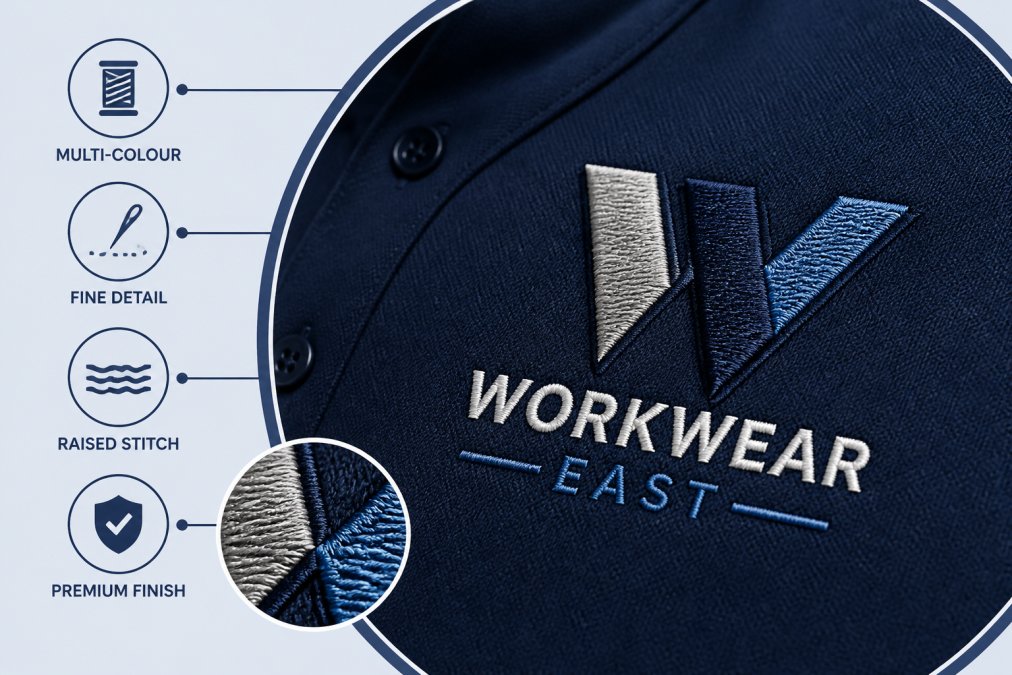
Embroidery represents the premium option for branded polo shirts. The process stitches your design directly into fabric using thread, creating a raised, tactile element that conveys craftsmanship and investment.
Embroidered logos project an unmistakably professional appearance with exceptional durability, surviving hundreds of washes without degradation. However, embroidery works best with logos featuring solid colours and clear outlines. Complex photographic designs don't translate well to thread. Embroidery also requires higher minimum order quantities than DTF printing. For businesses in Norfolk seeking workwear that projects professionalism and withstands daily wear, embroidered polo shirts from Workwear East offer consistency and durability that justify the investment.
| Method | Best For | Durability | Minimum Order |
|---|---|---|---|
| Screen Printing | Large orders, simple designs | Excellent | 50-100 units |
| DTF Printing | Detailed designs, small orders | Good | 10-20 units |
| Embroidery | Professional finish, long-term wear | Excellent | 20-50 units |
How to Choose Polo Shirt Sizes for Staff: Fit and Comfort Essentials
Sizing errors undermine even the best design. A perfectly branded polo shirt that doesn't fit creates frustration and reduces the likelihood your team will wear it at your event.
Sizing varies across manufacturers. Request sample sizes from your chosen supplier and have team members try them on. Most quality manufacturers offer size guides with chest measurements, length specifications, and sleeve dimensions. Workwear East provides these details to ensure you select appropriate sizes.
Collect actual measurements from your staff rather than relying on stated sizes. Many people wear sizes that don't match their actual measurements. Fabric composition affects sizing because different materials shrink differently. A 100% cotton polo may shrink 3-5% after washing, while polyester blends shrink less. Ask your supplier about pre-shrinking processes.
For teams with diverse body types, offer size options from XS through XXL. Many suppliers, including Workwear East, offer workforce portals that allow individual team members to select their size, simplifying ordering and ensuring everyone receives proper fit.
Best Practices for Corporate Branding on Clothing
How you apply your brand to polo shirts determines whether the final product enhances your corporate identity or undermines it.
Logo Placement and Sizing
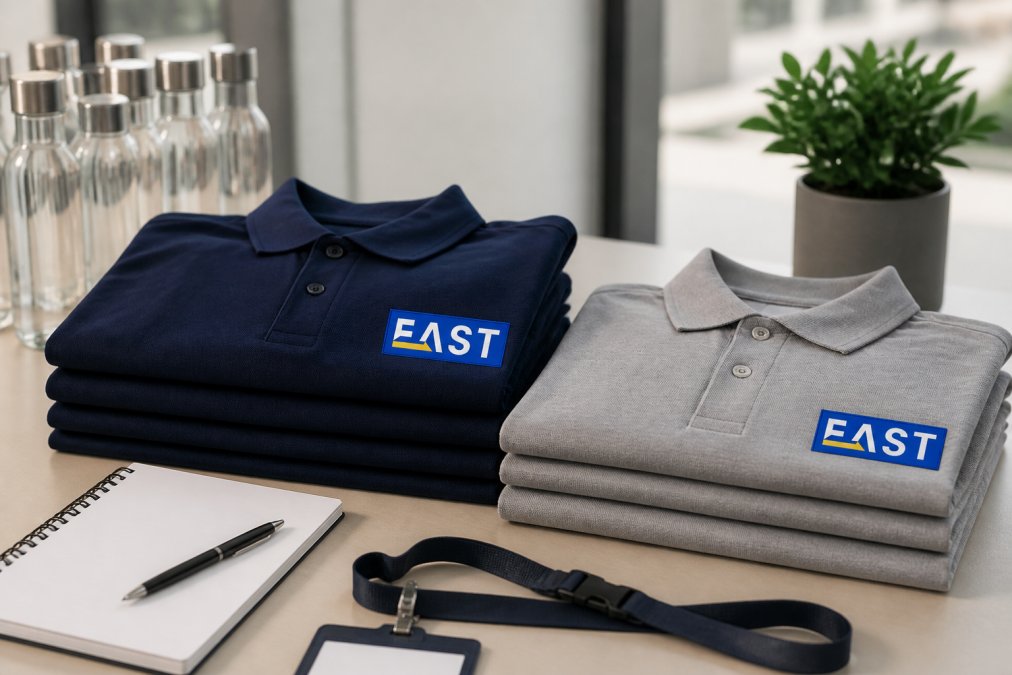
The left chest position is standard for corporate wear. It's visible during conversation, professional in appearance, and doesn't overwhelm the garment. Most branded polo shirts feature logos positioned for optimal visibility and balance.
Logo sizing matters significantly. A logo that's too small becomes illegible from normal conversation distance. A logo that's too large overwhelms the garment and looks amateurish. The ideal size for chest placement allows for clear readability without dominating the garment, typically around 5-10 cm wide, depending on your logo complexity.
Colour Matching and Brand Consistency
Pantone colour matching ensures your logo appears consistently across every polo shirt. When you specify your brand colours using Pantone codes, suppliers can match those colours reliably across different batches.
Fabric colour affects how your logo appears. A navy logo on white looks crisp and professional. Choose high contrast combinations: dark logos on light shirts, or light logos on dark shirts. Request colour samples before committing to full production.
Choosing the Right Fabric for Corporate Wear
Fabric choice determines comfort, durability, and how your branded polo shirts look after repeated wear and washing.
Pique knit is the industry standard for polo shirts because it balances comfort, durability, and professional appearance. The raised knit pattern creates texture that looks intentional and professional, resisting wrinkles better than smooth knits.
Polyester blends (typically 65% polyester, 35% cotton) offer enhanced durability and moisture-wicking properties, ideal for outdoor events or situations where staff will be active. 100% cotton polo shirts feel softer and more comfortable against skin, particularly in warm weather, but wrinkle more easily and shrink more than blends.
Fabric weight, measured in GSM (grams per square metre), affects durability and comfort. Lighter fabrics (160-180 GSM) feel soft but wear out faster. Heavier fabrics (200+ GSM) last longer and project quality. For branded polo shirts needing extended wear, choose 190-210 GSM weight.
Turnaround Times, Minimum Order Quantities, and Delivery
Understanding production timelines and ordering requirements prevents stress and rushed orders.
Screen printing typically requires 7-14 working days from order confirmation to delivery, with minimum order quantities starting at 50 units. DTF printing offers faster turnaround, often 3-7 working days, with lower minimum order quantities of 10-20 units. Embroidery turnaround depends on design complexity, typically 5-10 working days for simple logos and 2-3 weeks for complex multi-colour designs, with minimum orders starting at 20 units.
Most suppliers offer standard delivery within 3-5 working days of production completion. If your event is in three weeks, confirm that the supplier's standard timeline includes both production and delivery. For businesses coordinating with Workwear East, clarify your event date early and discuss realistic timelines. Planning ahead, ideally 4-6 weeks before your event, allows for standard production and delivery without premium charges.
Event-Specific Styling Guide: Making Your Team Stand Out
How your team wears branded polo shirts affects their impact. Strategic styling choices amplify your brand message and ensure your team looks cohesive and professional.
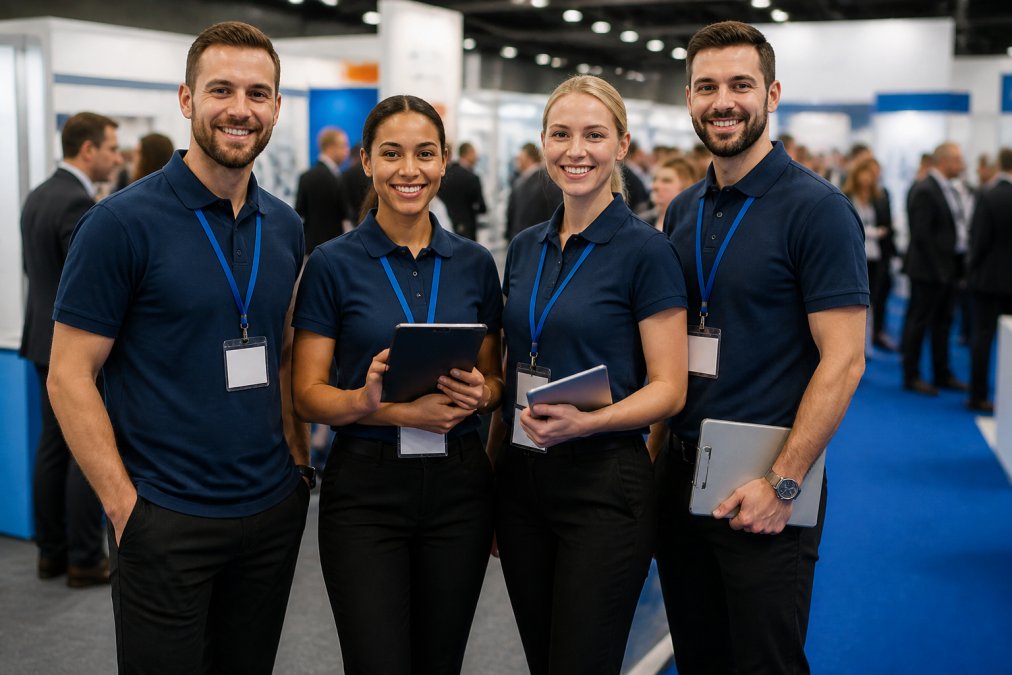
Client-Facing Roles: Pair branded polo shirts with tailored trousers or chinos in neutral colours, charcoal, navy, or black. This combination projects authority and professionalism.
Outdoor or Active Events: Pair polo shirts with moisture-wicking shorts or athletic trousers. Choose fabrics that complement the polo's material for intentional coordination.
Layering for Temperature Control: For indoor events in air-conditioned spaces, consider offering branded blazers or cardigans that team members can layer over polo shirts.
Footwear and Accessories: Specify professional closed-toe shoes in advance. Ensure staff are groomed professionally and avoid excessive jewellery that distracts from your branding.
Identification: Choose badges that complement your branded polo shirts. Lanyards in your brand colours or simple clip badges work better than bulky, multi-coloured identification.
How to Order Custom Polo Shirts for Your Event
The ordering process involves multiple decisions and coordination points. Understanding the workflow prevents mistakes.
Step 1: Define Your Design and Specifications
Clarify your design requirements. What logo or branding will appear? Will you use embroidery, screen printing, or DTF printing? What colours do you need? Prepare your logo in vector format (AI, EPS, or PDF files).
Step 2: Determine Quantities and Sizing
Decide how many branded polo shirts you need. Collect actual size information from your team, not assumed sizes. Create a size breakdown showing how many shirts you need in each size. Consider ordering 10-15% extra units beyond your calculated need to account for sizing issues or future team additions.
Step 3: Select Your Supplier and Request Samples
Research suppliers offering your chosen printing or embroidery method. For businesses in Norfolk, Workwear East specialises in all three methods. Request sample sizes in your chosen colours and fabric weight. Have team members try on samples and provide feedback.
Step 4: Confirm Timelines and Costs
Discuss your event date with your supplier and confirm realistic production timelines. Ask about rush options if your timeline is tight. Email info@workweareast for a quote tailored to your specific requirements.
Step 5: Approve Design Mockups
Most suppliers provide digital mockups showing how your design will appear on the polo shirt. Review these carefully and request revisions if needed. Approval of mockups is your final opportunity to catch issues before production begins.
Step 6: Place Your Order and Track Production
Confirm your order in writing with all specifications documented. Request a production timeline and tracking information.
Step 7: Inspect Upon Delivery
When your branded polo shirts arrive, inspect them before accepting delivery. Check that sizes are correct, colours match approved mockups, and printing or embroidery quality meets your expectations.
Conclusion
Branded polo shirts for corporate events are far more than clothing, they're a visible representation of your company's professionalism and brand identity. The choice between screen printing, DTF printing, and embroidery shapes not just the initial appearance but the longevity of your investment.
Success requires planning ahead, collecting accurate team measurements, and selecting a supplier who understands your specific needs. For businesses in Norfolk and surrounding areas, Workwear East offers all three customisation methods with expertise in corporate apparel.
The real difference between a successful branded apparel project and a frustrating one comes down to communication and timeline. Discuss your event date, design specifications, and team measurements with your supplier early. Request samples, approve mockups carefully, and allow adequate production time.
For a personalised quote tailored to your event requirements, email info@workweareast for details on quantities, sizing, and your preferred customisation method. Visit https://www.workweareast.co.uk/ to explore their branded polo shirt options and see examples of completed projects.
Frequently Asked Questions
What's the difference between embroidered and printed branded polo shirts for corporate events?
Embroidery uses thread to stitch your logo directly into the fabric, creating a durable, textured finish that withstands repeated washing and heavy wear. DTF printing applies your design directly onto the garment using ink, offering vibrant full-colour detail and photographic quality. Screen printing works best for large orders with simple designs. For corporate events where durability matters, embroidery typically outlasts printing by several seasons, though printing delivers sharper detail for complex logos. Your choice depends on logo complexity, order size, and how long the shirts need to last.
How do I prevent logos from cracking or peeling after washing?
Durability depends on the decoration method and garment quality. Embroidery, when done on quality pique knit fabric with proper thread tension, resists cracking because the design is stitched into the material itself. DTF printing on premium polyester blends offers wash-fastness when applied with correct heat-setting and curing. Screen printing on heavyweight fabric (minimum 180gsm) provides excellent durability for bulk orders. Always choose a supplier using industrial-grade equipment and quality materials. Ask for wash-test results before ordering, and confirm that your supplier follows proper curing procedures. Email info@workweareast for details on how their embroidery and DTF printing withstand your specific wash cycles.
What's the typical lifespan of embroidered workwear for a small team?
Quality embroidered polo shirts typically last 2-3 years of regular daily wear when cared for properly. Durability depends on fabric weight (look for 200gsm pique knit or heavier), stitch density, and thread quality. High-quality embroidery with proper tension resists fraying and thread migration even after 50+ wash cycles. Polyester blends (65/35 polyester-cotton) tend to outlast 100% cotton in heavy-use environments. For a construction or trade firm with 15 staff, investing in quality embroidered gear upfront saves replacement costs. Workwear East uses advanced embroidery machines designed for durability, ensuring consistent results across multiple garments. Contact info@workweareast for a quote on embroidered polo shirts built to last.
Can you handle urgent orders for branded polo shirts without sacrificing quality?
Rush orders are possible, but timing depends on your chosen decoration method and order size. Screen printing on large orders (50+ shirts) can often be expedited because the setup is minimal once artwork is approved. Embroidery typically requires 5-10 working days for production once designs are finalised, though some suppliers offer express turnaround. DTF printing falls between the two, usually 3-7 working days. For a 40-shirt order with a three-week deadline, all three methods are feasible. Quality remains consistent if you work with a supplier using automated, high-precision equipment. Workwear East operates locally and can discuss rush timelines based on your specific requirements. Email info@workweareast to discuss your event date and receive a quote with realistic turnaround times.
How do I manage sizing and fit across 50 staff members in different departments?
Managing multiple sizes and fits is straightforward with the right supplier system. Request a sizing chart that includes unisex and tailored fit options, chest measurements, and sleeve lengths. Most suppliers offer XS to 4XL or larger, and some provide extended sizing. Create a simple spreadsheet with staff names, sizes, and department, then share it with your supplier or use their online portal system. Many suppliers now offer workforce portals where staff can self-select their sizes, reducing errors and administration time. For 50 people across departments, a portal system saves time and ensures accuracy. Workwear East provides workforce portal solutions designed for exactly this scenario. Visit https://www.workweareast.co.uk/page/workforce-portal-video to see how the system works, or email info@workweareast for a tailored quote.
This article was written using GrandRanker