 Listicle
What Are the Most Eco Friendly Garment Decoration Methods?
Last Updated: October 29, 2026
Quick Summary
Eco friendly garment decoration means choosing printing and embroidery methods that use less water, fewer harsh chemicals and less wasted stock. Embroidery, DTG, DTF, screen printing, sublimation and heat transfer each suit different fabrics and order sizes, so match the method to the garment and how hard it will be worn. Ask suppliers about water-based inks, valid certifications and wash-test samples before committing.
- Embroidery is the most durable option for logos on mixed-fabric uniforms.
- DTG and DTF printing suit small to medium runs and reduce overproduction.
- Sublimation works on polyester only but uses little water and creates minimal waste.
- Ask suppliers for GOTS, RCS, GRS or OEKO-TEX Standard 100 certificates with a valid scope.
- Request a wash-test sample that survives fifty industrial washes before ordering.
Table of Contents
- Why Eco Friendly Garment Decoration Matters for Business Uniforms
- Eco-Friendly Garment Printing Methods Compared
- How Water-Based Ink Garment Printing Cuts Chemical Use
- Sustainable Embroidery: Durable Branding With Less Waste
- Choosing Organic Cotton Workwear and Recycled Fabrics
- Certifications, Verification and Supplier Questions to Ask
- Total Cost, Garment Lifespan and End-of-Life Recycling
- Request a Quote for Branded Workwear
- Frequently Asked Questions
Why Eco Friendly Garment Decoration Matters for Business Uniforms
Eco friendly garment decoration methods for businesses are the printing and embroidery techniques that put your logo on staff clothing while using less water, fewer harsh chemicals and less wasted stock than conventional processes. Businesses across Norfolk often ask a simple question: can branded uniforms look sharp without costing the earth?
The short answer is yes, but only if you choose the decoration method to match the garment, the order size and how hard the clothing will be worn. A construction polo that gets washed three times a week has different requirements from a promotional tote bag handed out at a trade show.
Below, we compare the main options side by side, weigh cost against durability, and give you the questions to put to any supplier before you commit. Start with our eco-friendly workwear branding options guide if you want the wider picture first.
Eco-Friendly Garment Printing Methods Compared
No single method wins on every measure. The table below summarises how the main decoration routes compare on the factors that actually drive a purchasing decision: environmental impact, suitable order size, fabric compatibility, and finish.
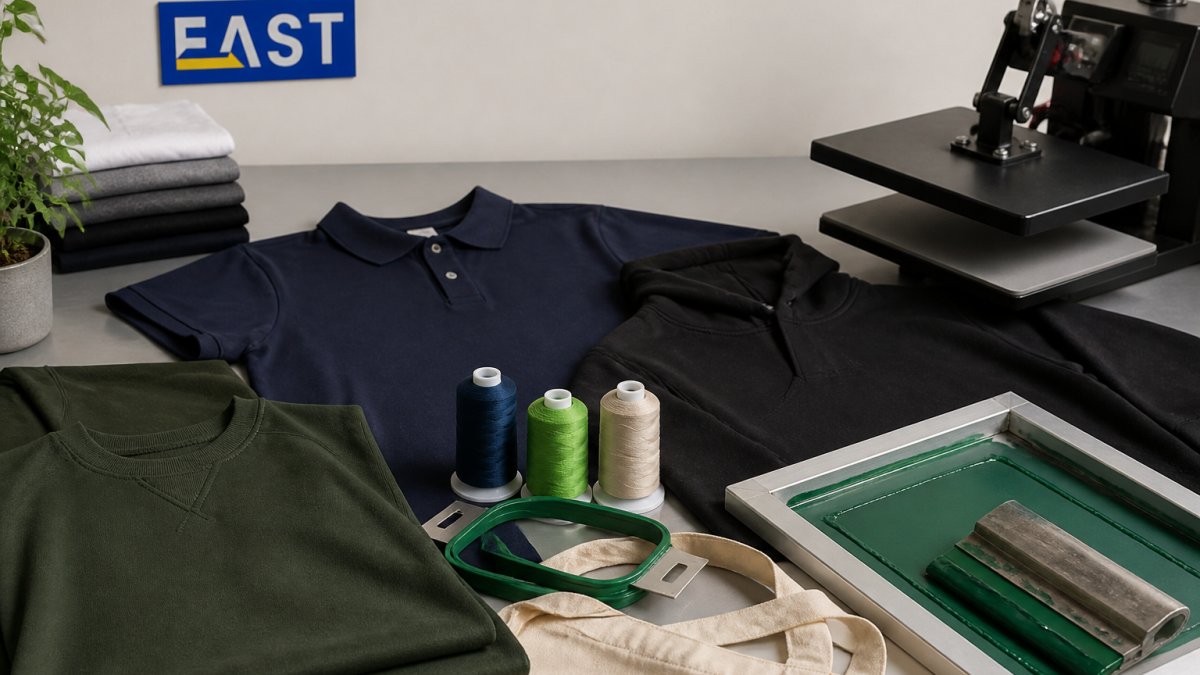
| Method | Best For | Order Size | Fabric Compatibility | Durability | Environmental Notes |
|---|---|---|---|---|---|
| Embroidery | Polos, fleeces, hi-vis | Any size | Almost any fabric | Very high | Thread applied directly, minimal water use, no chemical cleanup |
| DTG printing | Detailed multi-colour logos on cotton | Small to medium | Cotton and blends | High | Water-based inks common, efficient for short runs, less overproduction |
| DTF printing | Detailed multi-colour logos on synthetics | Small to medium | Polyester, blends, cotton | High | Efficient for short runs, less overproduction, film waste needs management |
| Screen printing | Large single-colour runs | Large | Cotton, blends | High | Durable but ink and screen cleanup matter; water-based options reduce chemical load |
| Sublimation | Polyester performance wear | Medium | Polyester only | High | Low water use, minimal waste, but limited to polyester |
| Heat transfer | Small runs, complex artwork | Small | Most fabrics | Medium | Can use water-based transfers, but carrier film waste is a consideration |
The trade-offs matter more than the marketing. Here is how each one behaves in practice.
Direct-to-Garment and DTF Printing
DTF printing transfers a full-colour design onto a garment using a printed film and heat press, which suits detailed, full-colour images on a range of materials. Ask suppliers how they manage film offcuts and other print waste.
If you are weighing this against other techniques, our guide to choosing between DTF and screen printing breaks down the head-to-head decision.
Screen Printing and Its Environmental Trade-Offs
Screen printing pushes ink through a mesh stencil and is well suited to large orders. Each colour needs its own screen, so setup is a factor to weigh against your order size. For the full practical guide to screen printing for workwear, including techniques, costs and turnaround times, see our complete guide.
Sublimation and Heat Transfer
Embroidery remains the most durable option for logos on mixed-fabric uniforms.
When you are ready to compare options for your team, email info@workweareast for a quote and we will match the method to your garments and order size.
How Water-Based Ink Garment Printing Cuts Chemical Use
When evaluating any garment printing supplier, ask whether their inks are water-based or low-solvent and how the print performs after repeated industrial washing.
Sustainable Embroidery: Durable Branding With Less Waste
Embroidery is a durable way to brand business uniforms, as thread is applied directly to the garment. Our guide to professional embroidery for trade companies covers digitisation, turnaround times, bulk ordering and quality standards.
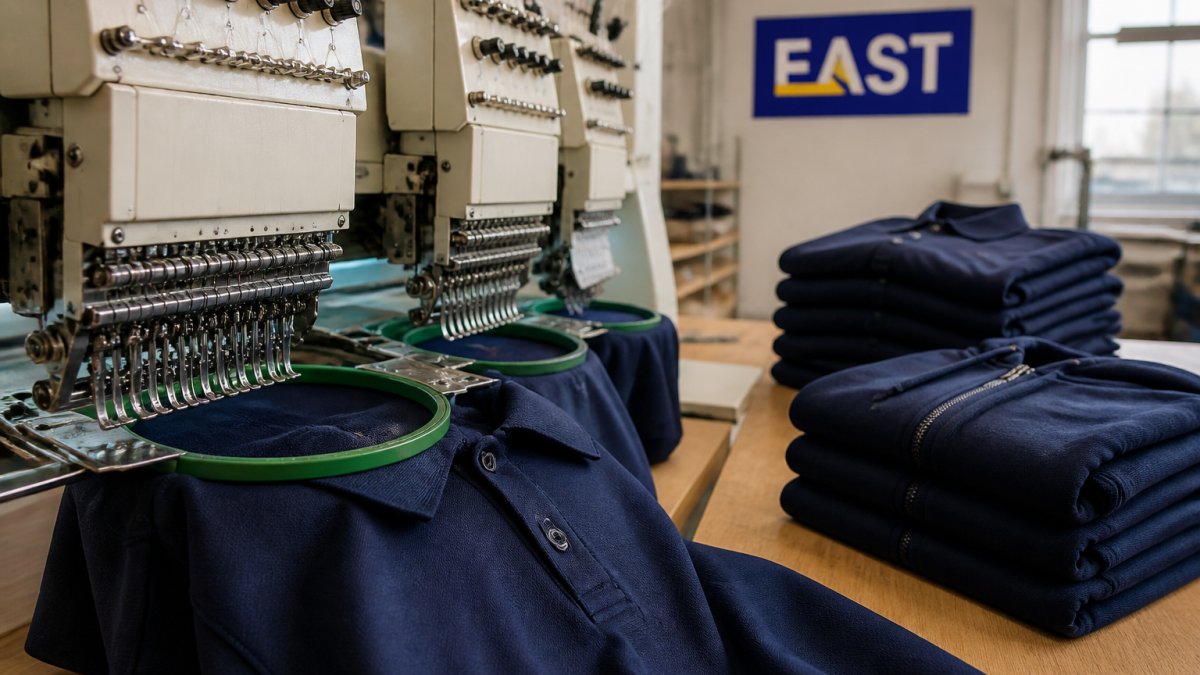
Durability matters for the environmental footprint of uniforms, since a garment that lasts needs replacing less often.
Choosing Organic Cotton Workwear and Recycled Fabrics
Organic cotton and recycled polyester are two fabric choices that can reduce a uniform's environmental footprint before decoration begins.
Fabric choice and decoration method must work together, so confirm that the chosen method suits the fabric you specify.
Certifications, Verification and Supplier Questions to Ask
Certifications are where green claims are either backed up or exposed. A supplier claiming eco-friendly printing should be able to name the standards behind the claim and show the paperwork. Look for recognised certifications such as GOTS (Global Organic Textile Standard) for organic cotton, RCS (Recycled Claim Standard) or GRS (Global Recycled Standard) for recycled content, and OEKO-TEX Standard 100 for chemical safety. For printing inks, ask whether they meet the criteria for water-based or low-solvent formulations, and whether the supplier can provide safety data sheets.
Verification goes beyond logos. Ask to see certificates with a valid scope that covers the specific fabric or process you are buying. A certificate for a different product line is not proof. For recycled content, check whether the supplier uses a chain-of-custody standard so the recycled material is tracked from source to finished garment.
Put these questions to any supplier before ordering:
- Which inks do you use, and are they water-based or low-solvent?
- Can you confirm the recycled or organic content of the fabric with a valid certificate?
- Which certification body issued the certificate, and what is the scope?
- How does the decoration perform after repeated industrial washing?
- What is your minimum order quantity, and can you print on demand?
- How do you handle offcuts, misprints and screen waste?
- Can you supply references from similar businesses?
A supplier who cannot answer these clearly is guessing. Email info@workweareast for a quote and to ask about any of these points.
Total Cost, Garment Lifespan and End-of-Life Recycling
The cheapest garment is rarely the lowest total cost, since a uniform that lasts longer can cost less per year than one replaced often.
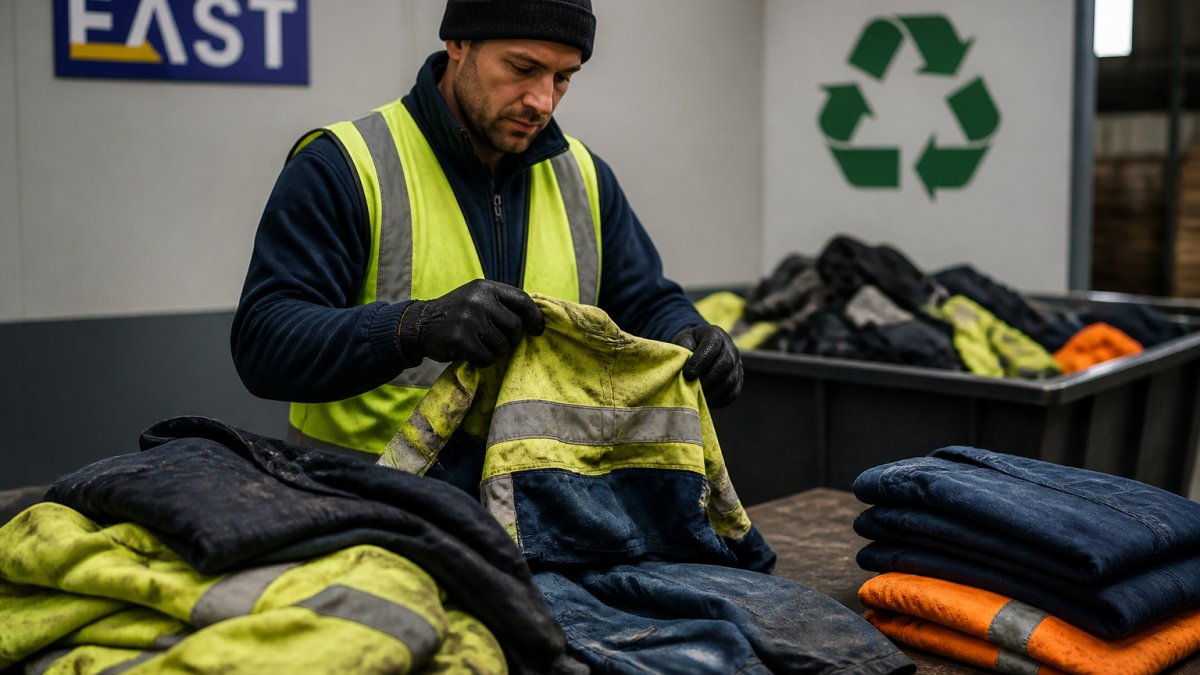
End-of-life matters too. Decorated garments can be harder to recycle than plain fabric, so consider how the decoration method affects the fibre when retiring branded clothing. Our sustainable workwear recycling programs UK guide explores the options in depth.
Request a Quote for Branded Workwear
Choosing the right eco friendly garment decoration comes down to matching method, fabric and order size to how your team actually works. Get that right and you cut waste, extend garment lifespan and keep your branding sharp.
Workwear East handles embroidery, DTF printing and screen printing from our base in Thetford, with advanced embroidery machines for intricate multi-colour designs, versatile DTF printing for detailed full-colour images, and cost-effective screen printing for large orders. Explore our branded polo shirts or hi-vis ranges, or visit workwear portals for more information.
Get started with Workwear East and email info@workweareast for a quote on durable, branded uniforms for your team. Visit https://www.workweareast.co.uk/ for more information.
Frequently Asked Questions
What is the most eco-friendly way to decorate garments?
There is no single winner, but embroidery and water-based printing usually come out ahead for business workwear. Embroidery applies thread directly to the garment, which is a low-waste process that holds up to repeated industrial washing. The bigger environmental lever is often the garment itself: choosing organic cotton workwear or recycled polyester and ordering only what you need cuts waste far more than swapping one print method for another.
Is embroidery more sustainable than printing?
For most business uniforms, yes. Embroidery applies thread directly to the fabric, and embroidered logos can hold up well on garments that go through frequent washing. Printing still makes sense for large, full-colour designs or very detailed artwork, where DTF or screen printing gives results embroidery cannot match.
Can businesses use organic or recycled garments for branded workwear?
Yes. Organic cotton workwear and garments made from recycled polyester are widely available in polo shirts, sweatshirts and t-shirts suitable for branding. Organic cotton and recycled polyester garments are available in several styles suitable for branding. Check the fabric weight and wash performance before committing, because lighter fabrics can wear faster in trade environments. Ask your supplier for the material composition in writing.
How can businesses make printed uniforms last longer?
Wash at lower temperatures, turn garments inside out and avoid tumble drying where the care label allows. Print durability depends on the decoration method and the supplier's process, so ask how a print performs after repeated washing. Embroidery is a hard-wearing option for logos on workwear that faces daily wear. Ordering the right fabric weight for the job also matters more than most buyers expect.