 listicle
Custom Branded Workwear for Small Business
Table of Contents
- Why Custom Branded Workwear Matters for Small Business
- Best Printing Methods for Uniforms: Embroidery, Screen Printing, and DTF
- Low Minimum Order Custom Workwear: Flexibility for Growing Teams
- Workwear Branding Best Practices for Professional Impact
- How to Order Custom Branded Workwear: A Step-by-Step Process
- Common Mistakes to Avoid When Ordering Branded Workwear
- Workwear Durability and Maintenance: Protecting Your Investment
- Frequently Asked Questions
Last Updated: August 14, 2026
Why Custom Branded Workwear Matters for Small Business
Custom branded workwear for small business is a practical investment in how your team is perceived. Matching, professionally branded apparel signals competence, reliability, and unity to clients and the public.
Small teams often feel trapped between generic off-the-shelf uniforms that offer no brand recognition and custom gear that seems prohibitively expensive. Modern production methods and flexible minimum order quantities have changed this entirely. Small teams can now access professional branding techniques without large-order commitments or premium price tags.
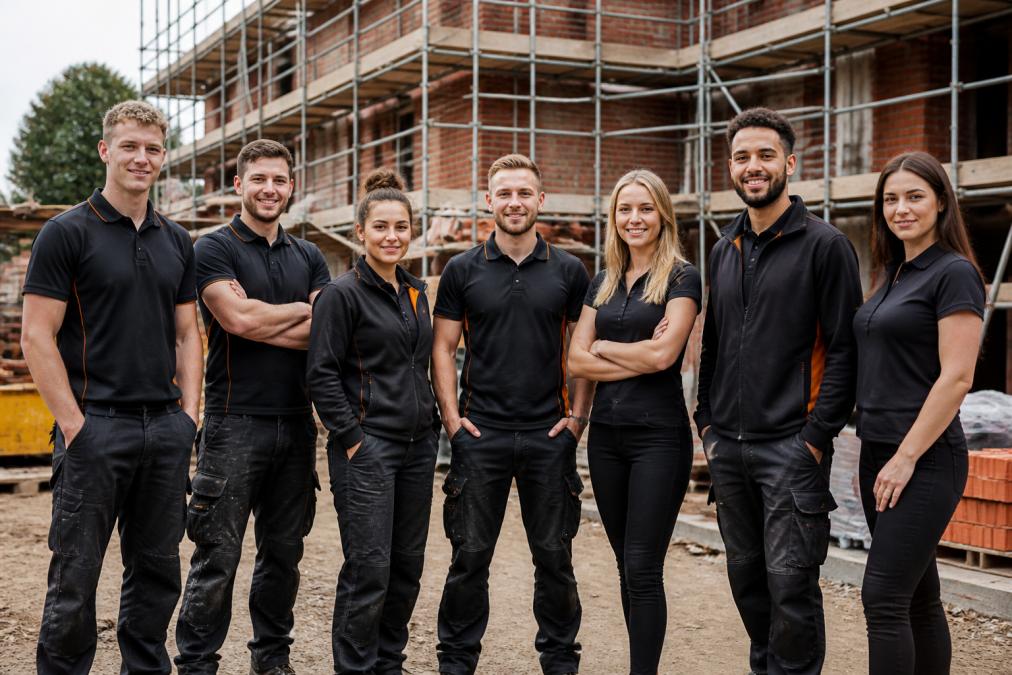
At Workwear East, we provide high-quality embroidered and printed workwear solutions tailored to meet the professional needs of businesses in Thetford, Norfolk. Teams that invest in custom branded workwear see tangible benefits immediately: electricians look more professional on job sites, admin staff project competence in client meetings, and delivery drivers become mobile advertisements for your business.
Branded workwear also builds team cohesion. When everyone wears the same gear with your company logo, there's a subtle psychological shift, people feel more connected to the business and to each other. That translates into retention and morale.
Best Printing Methods for Uniforms: Embroidery, Screen Printing, and DTF
The decoration method you choose determines durability, appearance, cost, and longevity.
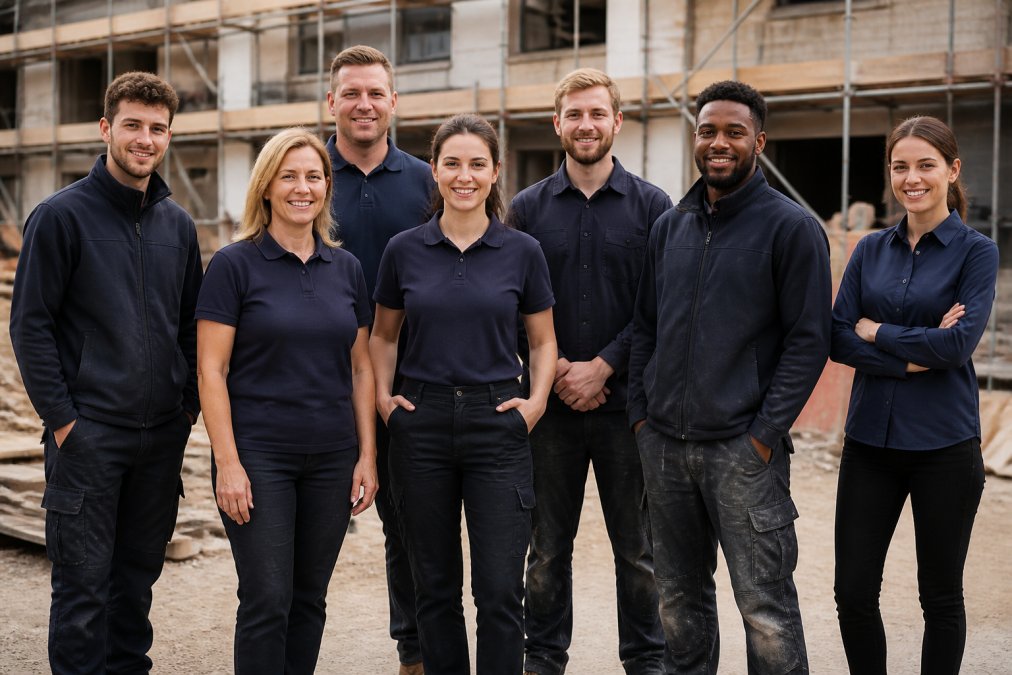
Embroidery for Durability and Premium Appearance
Embroidery is the gold standard for workwear that needs to survive heavy use. Thread stitched directly into fabric doesn't crack, peel, or fade like printed designs. Embroidered designs last through hundreds of industrial washes because the stitching becomes part of the garment structure.
The trade-off is cost and complexity. Embroidery requires digitising your logo, which adds a setup fee. For small orders, that fee gets absorbed into the per-unit cost more heavily than for bulk runs. Embroidery also handles simple, solid designs better than intricate, multi-colour artwork.
For construction firms or trade businesses, embroidered workwear branded with your logo sends a professional signal that outlasts cheaper alternatives. Workwear East uses advanced embroidery machines capable of intricate, multi-colour designs that maintain quality across all order sizes.
Screen Printing for Cost-Effective Bulk Orders
Screen printing is the workhorse of uniform decoration. It's fast, cost-effective at scale, and produces vibrant, durable colour. If you're ordering 50 or more units, screen printing becomes economical in a way embroidery simply isn't.
The process involves creating a mesh screen for each colour in your design, then pressing ink through onto the garment. Each colour adds cost and production time. A design with five colours requires five screens. Photorealistic or gradient designs don't work well with screen printing.
For small businesses, screen printing makes sense if you're willing to order 25 units or more. Below that threshold, setup costs become prohibitive.
DTF Printing for Detailed, Full-Colour Designs
DTF (Direct-to-Fabric) printing is the newest technology, changing what's possible for small-batch custom workwear. DTF prints full-colour, photorealistic designs directly onto fabric with no minimum order requirement. Complex, multi-colour designs that would be expensive or impossible with embroidery or screen printing become straightforward.
The advantage is flexibility and visual quality. You can print one garment or one hundred with the same per-unit cost. The trade-off is durability. DTF prints are durable through normal washing, but after 50-100 industrial washes, they can show wear. For workwear replaced seasonally or for promotional items, DTF is excellent.
Workwear East offers versatile DTF printing for detailed, full-colour images on various materials, ideal for small businesses needing professional custom gear without large minimums.
| Printing Method | Best For | Durability | Cost (Small Order) | Setup Time |
|---|---|---|---|---|
| Embroidery | Premium, long-term wear | 200+ washes | Higher per unit | Longer |
| Screen Printing | Bulk orders, solid colours | 100+ washes | Lower at scale | Medium |
| DTF | Small runs, full colour | 50-100 washes | Moderate per unit | Quick |
Low Minimum Order Custom Workwear: Flexibility for Growing Teams
Modern suppliers, including Workwear East, now offer low minimum order quantities, allowing small businesses to access professional custom branding without overcommitting inventory or cash.
Low minimums matter because teams grow unevenly. You hire new staff mid-quarter, need branded apparel for a temporary crew, or want to test a new design before rolling it out company-wide. Traditional minimum order requirements made all of this impossible.
With low minimums, you order what you actually need, when you need it. This reduces waste, manages cash flow better, and lets you respond quickly to business changes. For a small business with 10-20 staff, this flexibility is transformative.
The trade-off is that per-unit costs are higher on small orders than on bulk runs. But the flexibility often justifies the premium, especially when you factor in the cost of storing excess inventory.
Workwear Branding Best Practices for Professional Impact
Getting technical details right matters, but strategic decisions matter more. How you position your logo, which colours you choose, and which garments you prioritise all affect how your branding lands.
Logo Placement and Size Guidelines
Logo placement is one of the most common mistakes. Too small and your branding becomes invisible. Too large and it looks aggressive or unbalanced.
For embroidery on polo shirts or work shirts, a common size for a chest or shoulder logo is between 7.5 cm and 10 cm. For back embroidery on jackets, logos can be between 12.5 cm and 15 cm. For screen printing, a logo between 10 cm and 12.5 cm on the front of a t-shirt reads as branded without being obnoxious. Sleeve logos work best at 5 cm to 7.5 cm.
DTF printing offers more flexibility because you can print larger designs without cost penalties. A 15 cm to 20 cm full-colour design on a polo shirt can look premium rather than overdone.
Your logo should be visible from three metres away but not so dominant that it overwhelms the garment. Test this with samples before committing to production.
Colour Selection and Brand Consistency
Your workwear colours should align with your brand identity. Consistency matters more than perfection. If all your branded workwear uses the same colour palette and logo treatment, you build visual recognition.
When choosing fabrics and colours, remember that dyes fade and colours shift over time and through washing. Work with your supplier to understand colour stability, especially for workwear that endures heavy use.
Fabric Choice and Garment Longevity
The fabric you choose determines how long your workwear investment lasts. A cheap polyester blend might seem economical until it starts pilling after 15 washes. A quality cotton-polyester blend or performance fabric costs more upfront but delivers months or years of reliable wear.
For workwear, 65% polyester / 35% cotton is a standard blend that balances durability, comfort, and cost. For heavy-duty work environments, higher polyester content or specialist fabrics like Cordura or canvas make sense.
Workwear durability also depends on garment construction, seam quality, hem finishing, and button/zip durability. When evaluating workwear options, feel the fabric, inspect the seams, and ask about wash durability.
How to Order Custom Branded Workwear: A Step-by-Step Process
The ordering process is straightforward if you know what to expect.
Step 1: Define Your Requirements and Budget
Start by answering basic questions: How many units do you need? What garment types? What's your budget per unit? Do you have a deadline?
Write down your requirements in detail: garment types, sizes needed, colours, logo or design, and any special requests. This clarity saves time with your supplier and prevents misunderstandings.
Budget honestly. Cheap workwear looks cheap. If you're investing in branded apparel, invest enough to get quality.
Step 2: Select Garments and Decoration Method
Choose which garments work for your business. Polo shirts are versatile and professional. T-shirts are casual but cost-effective. Work shirts or coveralls are appropriate for trade and construction. Hoodies or jackets work for outdoor or seasonal teams.
For each garment, decide on the decoration method based on your design and budget. Request samples from your supplier. Hold the garments, feel the fabric, inspect the seams. See how the decoration looks on an actual sample. This is non-negotiable.
Step 3: Submit Your Design and Artwork
Your supplier will need your logo or design in a format they can work with. For embroidery, they'll digitise your logo. For screen printing or DTF, they'll need high-resolution artwork files.
Provide clear, high-quality artwork. Be specific about placement, size, and any colour adjustments.
Step 4: Review Proofs and Approve Production
Your supplier will provide proofs showing how your design will look on the actual garments. Review these carefully. Check logo placement, size, colour, and overall appearance.
This is your last chance to make changes before production starts. Once you approve the proof, production begins. Turnaround times vary depending on the decoration method and order size, but expect 5-10 working days for most custom orders.
Common Mistakes to Avoid When Ordering Branded Workwear
Most problems with branded workwear stem from preventable mistakes.
Ordering without samples. Samples cost money upfront but save far more by preventing bad orders.
Underestimating sizing variation. Order a range of sizes and a few extras for new hires or replacements.
Choosing decoration methods based only on price. Choose based on your actual needs, not just the lowest quote.
Ignoring fabric quality. Invest in quality fabric that will survive the wear and washing your team puts it through.
Vague design specifications. Be specific about placement, size, colours, and any special requests.
Missing deadlines by not planning ahead. Order at least 3-4 weeks in advance. Rush orders cost more and sometimes compromise quality.
Workwear Durability and Maintenance: Protecting Your Investment
Once your branded workwear arrives, maintenance determines how long it actually lasts.
Embroidered workwear should be washed in cool water, inside out, and dried on low heat or air-dried. Avoid bleach and harsh detergents, which fade colours and weaken fabric.
Screen-printed workwear benefits from similar care: cool water, gentle detergent, low heat drying. Turn garments inside out before washing to protect the printed design.
DTF-printed workwear is durable through normal washing but benefits from the same care protocol. Avoid excessive heat and harsh chemicals.
For work environments that demand heavy-duty cleaning, discuss garment care with your supplier when ordering. Some fabrics and decoration methods handle industrial washing better than others.
Regular maintenance also means replacing worn items before they become embarrassing. Budget for replacement cycles, typically every 12-24 months depending on wear intensity.
Custom branded workwear for small business is an investment in how your team is perceived, both externally and internally. The right approach, choosing the correct decoration method, selecting quality garments, managing the ordering process carefully, and maintaining your gear properly, delivers professional branding that actually lasts.
If you're ready to explore options for your team, Workwear East offers embroidered uniforms, DTF printing, and screen printing tailored to small business needs. Visit workweareast.co.uk to see our range of custom branded workwear solutions, or email info@workweareast for a quote tailored to your requirements and budget.
Frequently Asked Questions
What are the main benefits of custom branded workwear for small businesses?
Custom branded workwear creates a professional, unified appearance that strengthens team cohesion and builds brand recognition. When employees wear branded garments with your logo, they become mobile advertisements for your business. This investment also improves customer confidence by signalling professionalism and stability. For small teams, branded workwear eliminates confusion about who works for you and creates a sense of belonging among staff, which can boost morale and retention.
What's the difference between embroidery and screen printing for workwear?
Embroidery uses thread to create a raised, textured design that's extremely durable and looks premium. It works best for logos and designs with fewer colours and withstands repeated washing and heavy wear. Screen printing applies ink directly onto fabric and is more cost-effective for large orders with simple designs. DTF (direct-to-film) printing handles detailed, full-colour designs and photographic images with vibrant results. Choose embroidery for longevity and professional appearance, screen printing for budget-friendly bulk orders, and DTF for complex artwork.
Can I order custom branded workwear in small quantities?
Yes. Many suppliers now offer low minimum order custom workwear with no quantity restrictions, making it ideal for small businesses. Whether you need five polo shirts or fifty, you can order without meeting large minimums. This flexibility allows you to start small, test designs, and scale up as your team grows. Email info@workweareast for a quote on small orders and to discuss options that fit your budget and timeline.
How long does it take to receive custom branded workwear?
Turnaround time typically ranges from 7 to 14 days for standard orders, depending on the decoration method and supplier. Embroidery and DTF printing usually take slightly longer than screen printing due to setup complexity. Many suppliers offer fast-track options if you need items urgently for an event or campaign launch. Contact your supplier early to confirm turnaround times and discuss rush options if needed.
How do I ensure the quality of my custom branded workwear won't fade or crack?
Quality depends on the decoration method, fabric choice, and supplier expertise. Embroidery is the most durable option because thread bonds directly to fabric fibres and resists cracking or peeling even after hundreds of washes. DTF printing on quality polyester blends also provides excellent longevity when applied correctly. Always request digital proofs before production, choose reputable suppliers who perform quality checks on every item, and ask about garment care instructions to maximise lifespan. Workwear East uses advanced techniques and in-house quality control to ensure prints and embroidery withstand daily industrial wear.
This article was written using GrandRanker