 ultimate-guide
Beauty Salon Uniforms: The 2026 UK Buying Guide
Table of Contents
- Why Beauty Salon Uniforms Shape Client Trust and Team Confidence
- The Complete Beauty Salon Uniform Range: Tunics, Trousers, Dresses and Scrubs
- The Benefits of Custom Workwear for Salons
- Custom Embroidered Salon Tunics: Getting the Branding Right
- How to Choose Salon Uniform Colours That Work for Your Brand
- Uniform Maintenance and Fabric Care: Making Beauty Salon Uniforms Last
- Sizing, Group Orders and Styling for Every Body Type
- Frequently Asked Questions
Last Updated: September 20, 2026
Why Beauty Salon Uniforms Shape Client Trust and Team Confidence
Beauty salon uniforms signal hygiene, professionalism and brand identity the moment a client walks through the door. This guide from Workwear East breaks down how to choose salon wear that holds up to daily wear, protects your brand and keeps staff comfortable.
The Complete Beauty Salon Uniform Range: Tunics, Trousers, Dresses and Scrubs
The core beauty salon uniform range covers four categories: tunics and scrub tops, trousers and dresses, scrub sets, and spa or hairdressing-specific pieces with aprons. Each suits a different role and environment.
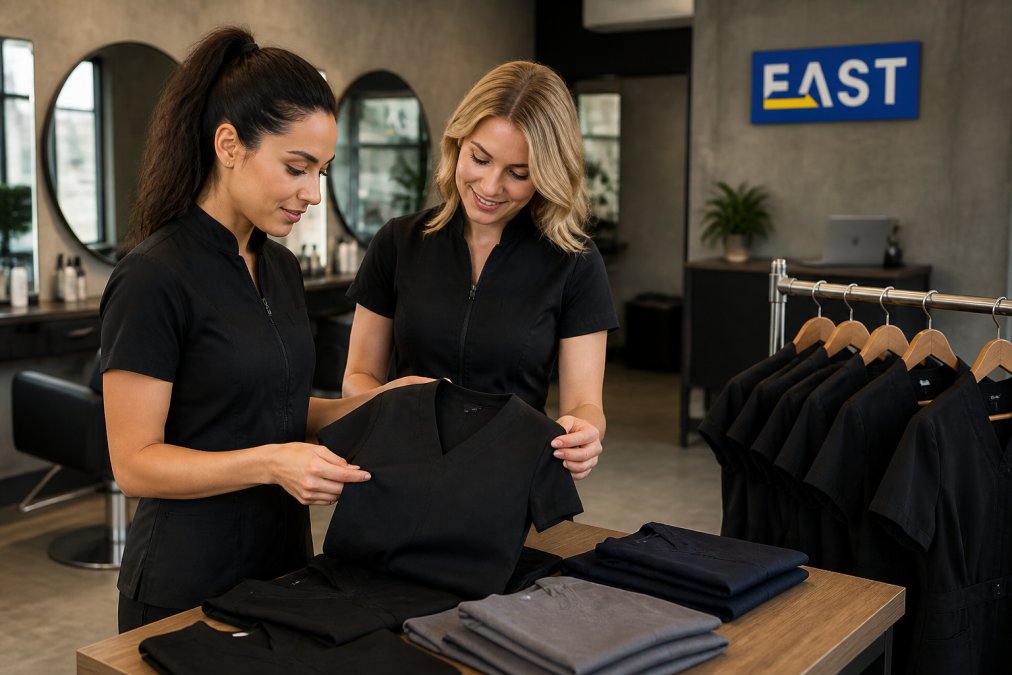
Beauty Tunics and Scrub Tops
Beauty tunics are the workhorse of salon wear: look for functional pockets, a tailored fit that allows full movement, and durable fabrics that survive frequent washing. Scrub tops suit treatment rooms where a clinical look fits.
Salon Trousers, Beauty Dresses and Scrub Sets
Salon trousers need stretch fabric and a cut that does not restrict bending, reaching or crouching. Beauty dresses offer a polished single-piece option for front-of-house, while scrub sets give teams a coordinated, easy-care uniform.
Spa Uniforms, Hairdressing Workwear and Aprons
Spa uniforms lean calmer and softer in tone. Hairdressing workwear has to handle colour, bleach and heat, so stain-resistant, colour-fast fabrics matter most. Aprons and disposables protect the layers underneath during colour work and wet treatments.
| Category | Best For | Fabric Priority |
|---|---|---|
| Tunics and scrub tops | Treatment rooms, therapists | Breathable, easy-care |
| Trousers and dresses | Front of house, all roles | Stretch, tailored fit |
| Scrub sets | Spa and wellness teams | Durable, colour-fast |
| Aprons and disposables | Colour and wet work | Stain-resistant |
The Benefits of Custom Workwear for Salons
Custom workwear turns a generic uniform into a brand asset. The benefits of custom workwear for salons come down to three things: consistent team presentation, stronger corporate identity, and clothing built around how your team works.
Custom Embroidered Salon Tunics: Getting the Branding Right
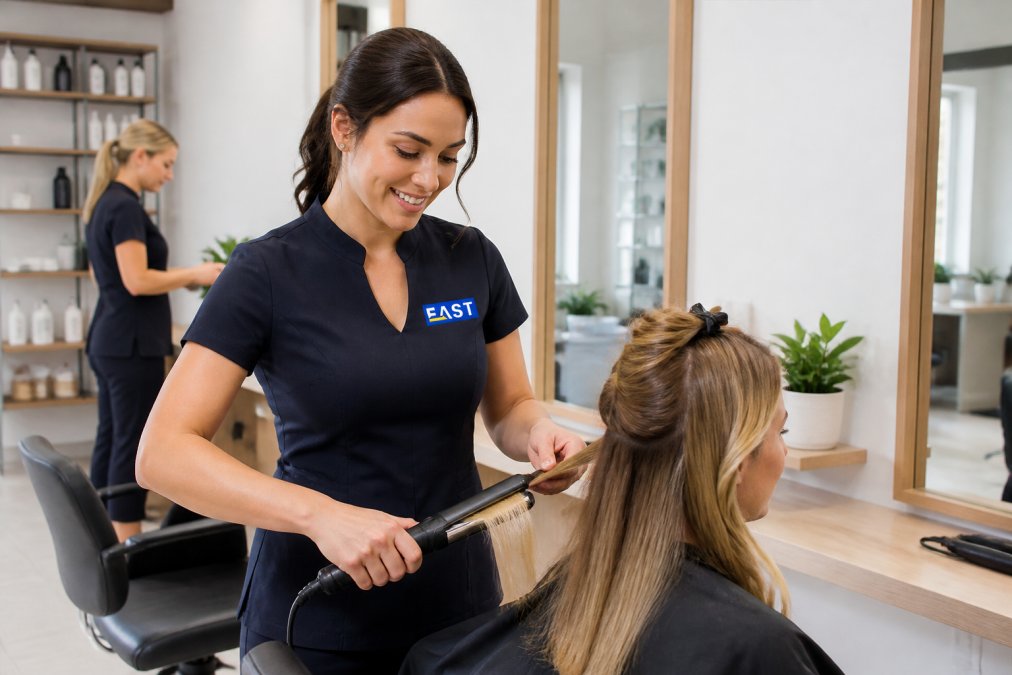
Custom embroidered salon tunics carry your logo in a way print cannot match for longevity. Embroidery is stitched into the fabric rather than sitting on top, so it holds shape and colour through repeated commercial washing.
How to Choose Salon Uniform Colours That Work for Your Brand
Choosing salon uniform colours starts with your existing brand palette, not with what is trending. Colour shapes how clients read your salon before a single treatment begins: darker, structured tones signal competence and authority, while softer, lighter tones signal calm and care.
- Black and charcoal hide colour stains, hair clippings and product splashes, and suit a sleek, modern aesthetic. They can read severe in a soft-toned spa, so balance with lighter aprons or trims.
- Navy reads clinical and trustworthy, which works well for treatment-led salons and anyone handling sensitive skin or advanced treatments.
- Lighter tones (white, cream, pale grey) look fresh and hygienic but show every mark. Reserve them for front-of-house and retail roles rather than back-of-house colour work.
- Warm tones (terracotta, blush, mustard) can feel welcoming and on-brand for boutique salons, but check they do not clash with your interior lighting, which can shift warm shades dramatically.
Practical rules for picking a palette:
- Match your primary brand colour for the main garment, and use a neutral for trousers and aprons
- Avoid pure white for anyone handling colour products
- Test your chosen shade in daylight and under your salon's interior lighting before ordering, a tunic that looks navy in the showroom can look purple under warm salon bulbs
- Keep the same palette across departments so the team still reads as one business
- Consider how the colour photographs, clients share salon photos constantly, and a palette that works in person but muddies on camera costs you free marketing
Uniform Maintenance and Fabric Care: Making Beauty Salon Uniforms Last
Beauty salon uniforms fail in the wash long before they fail on the salon floor. Most premature wear comes down to washing too hot, overloading the machine, and tumble drying on high heat. But the bigger problem is stains, and how you treat them in the first five minutes matters more than the wash cycle.
Removing Beauty Product Stains
Different products need different approaches. Treating them all the same way is why so many uniforms end up permanently marked.
- Hair colour and tint: Blot, never rub, with a clean cloth, then rinse in cool water before the colour sets. Warm water opens the fabric fibres and locks the pigment in. For dried colour, apply a small amount of glycerine to loosen it, then wash as normal. Never use bleach on a colour stain unless the garment is white and bleach-safe, as it can set the pigment rather than remove it.
- Wax: Let it harden completely, then scrape off the bulk with a blunt edge. Place the garment between two sheets of absorbent paper and press with a warm iron, the wax transfers to the paper. Repeat with fresh paper until no more transfers, then wash. Do not iron directly over wax, as it will spread and stain the iron.
- Oils and massage products: These are the most common salon stain and the easiest to miss because they do not show immediately. Apply a small amount of washing-up liquid directly to the mark, work it in gently, and rinse in warm water before washing. For heavy oil saturation, a pre-wash soak in warm water with a scoop of biological detergent lifts most of it.
- Bleach splashes: Rinse immediately in cool water. Bleach damage is chemical, not a stain, once the colour is lifted from the fabric, it cannot be restored. This is why aprons and disposables matter for anyone handling bleach.
- Acrylic and gel product residue: These set hard and can stiffen fabric. Soak in warm water with a small amount of white vinegar before washing to break down the residue.
Getting Real Lifespan Out of Your Workwear
Once stains are handled, the wash cycle determines how long the uniform lasts:
- Wash at the temperature on the care label, and no higher
- Turn garments inside out before washing to protect embroidery and prints
- Avoid fabric softener, which coats fibres and dulls colour over time
- Air dry where possible, or use a low tumble setting
- Wash embroidered and printed items separately from towels and aprons, which shed lint and can abrade logos
- Zip up any zips and fasten hooks before washing to prevent snagging
When to Replace Rather Than Repair
- Embroidery that has frayed or lost thread colour, once the stitching breaks down, it cannot be repaired invisibly
- Printed logos that have cracked or peeled, this is permanent and only replacement fixes it
- Fabric that has thinned at stress points (elbows, knees, seat) even if the colour still looks good
- Elastic that has lost its stretch in waistbands and cuffs
- Colour fading that makes team members look mismatched even though the garments are the same age
For teams managing uniforms across departments, a simple care card in the staff room, listing wash temperature, stain treatment steps and what not to do, prevents most of the damage that leads to early replacement.
Sizing, Group Orders and Styling for Every Body Type
Size inclusivity is not a nice-to-have in salon wear; it is the difference between a team that wears the uniform and one that quietly stops.
Frequently Asked Questions
What uniform do beauticians typically wear in a professional setting?
Most beauty therapists wear a tunic with salon trousers, or a beauty dress for a softer look. Tunics usually have short sleeves, functional pockets for tools, and a tailored fit that allows movement around a treatment couch. Scrub tops and sets are popular in spas and clinics because they are easy-care and hold their shape after repeated washing. Fabric choice matters more than style: breathable material with a little stretch keeps staff comfortable during back-to-back appointments, and colour-fast finishes stop salon uniforms fading after a few months.
What are the best fabric choices for beauty salon uniforms?
Look for a polyester-cotton blend for everyday salon wear. It resists creasing, holds colour well and stands up to frequent washing at higher temperatures. Stretch fabric with elastane adds comfort for therapists who are on their feet all day. For rooms where oils, tint and wax are used, a stain-resistant finish saves time and keeps uniforms looking presentable between washes. Avoid thin, single-layer cotton, which creases quickly, fades, and shows every mark after a long shift.
How often should beauty salon uniforms be replaced to maintain a professional look?
With correct care, embroidered tunics and scrub sets usually last around 18 to 24 months of regular wear before colour fade, thinning fabric or stretched cuffs become noticeable. Rotating two or three sets per staff member extends that lifespan and keeps staff presentation consistent. Replace items sooner if embroidery threads fray, stains set permanently, or fabric loses its shape. Keeping a small stock of spare tunics in common sizes means a damaged item never leaves someone in mismatched clothing during a shift.
How can custom branding improve the professional image of a salon?
Custom embroidery turns a plain tunic into a visible part of your corporate identity. A logo on the chest or sleeve helps clients identify staff instantly, which matters in busy salons where therapists move between stations. It also reinforces team branding across tunics, aprons and spa uniforms without shouting. For group orders, consistent placement and thread colours keep the whole team looking coordinated. Workwear East handles embroidery, DTF printing and screen printing in-house, so you can order branded salon wear and promotional items together.