 Ultimate guide
Garment Printing Methods Compared for UK Workwear
Quick Summary
Garment printing is the process of applying a design, logo or message to finished clothing, using methods such as DTF printing, screen printing, vinyl transfer and embroidery. The best choice depends on how many items you need, how many colours your logo uses and how the garments will be washed. For detailed multi-colour designs on small to medium runs, DTF printing is a strong option.
- DTF printing suits detailed, full-colour designs for small to medium runs.
- Screen printing is a cost-effective choice for large orders with bold logos.
- Setup cost per colour makes screen printing expensive for small runs.
- Embroidery gives a premium, durable finish that outlasts most prints.
- Tumble drying on high heat is the most common reason prints crack or fade early.
Table of Contents
- What Garment Printing Covers and Who It Suits
- DTF Printing on Clothing: How It Works and Where It Fits
- Screen Printing on Garments: Best for Larger Runs
- Comparing Printing Methods Side by Side
- Garment Printing Artwork Requirements Before You Order
- How to Wash Printed Clothing So the Print Lasts
- Getting a Quote for Your Next Workwear Order
- Frequently Asked Questions
What Garment Printing Covers and Who It Suits
Last Updated: November 8, 2026
Garment printing is the process of applying a design, logo or message to finished clothing, and it covers several distinct methods, each suited to different order sizes, fabrics and artwork. For most UK workwear buyers, the right choice depends on how many items you need, how many colours your logo uses and how the garments will be washed. At Workwear East, we print and embroider workwear for businesses across Thetford and Norfolk.
Garment printing suits teams that need consistent branding across staff uniforms, site clothing and promotional apparel. Construction firms, trade companies, event organisers and small businesses all use it to present a professional, recognisable image on every shift or every event.
Not every job calls for the same method. A single-colour logo on forty polo shirts is a very different job from a full-colour photographic design on a handful of hoodies. Understanding what each method does well helps you avoid paying for capability you do not need, or choosing a process that cannot deliver the finish you expect.
DTF Printing on Clothing: How It Works and Where It Fits
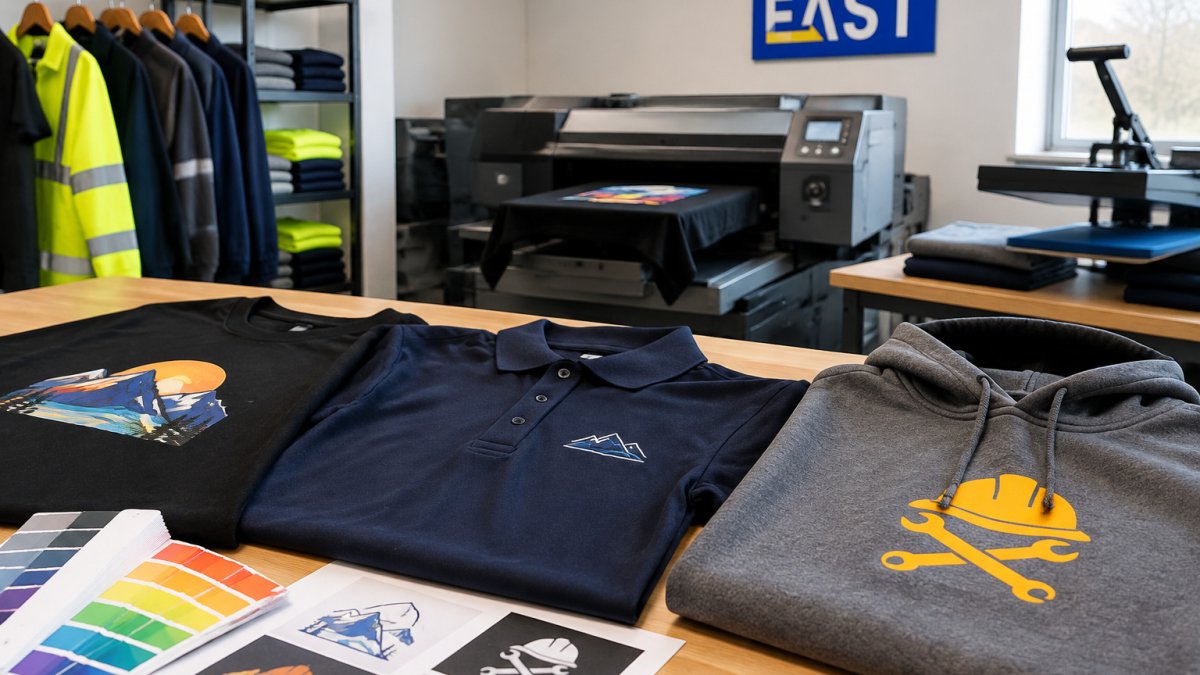
Direct-to-film (DTF) printing is a full-colour printing method for detailed artwork, which Workwear East offers for team clothing.
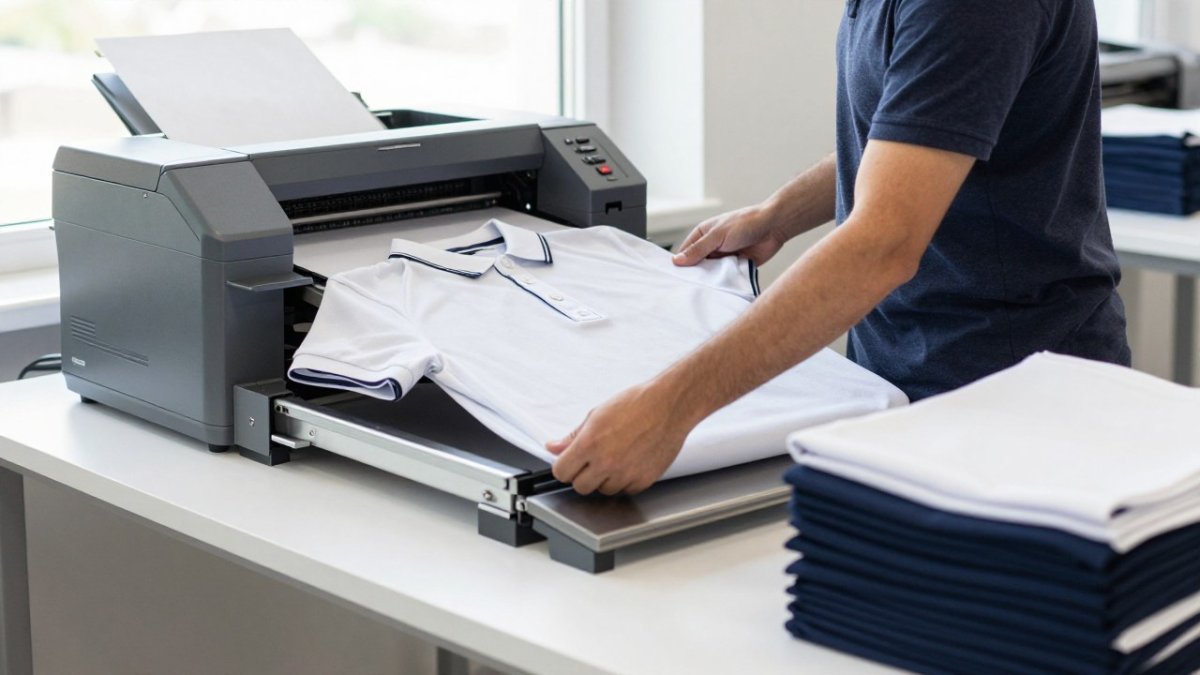
DTF printing suits detailed, full-colour designs for teams that need a versatile printing option.
Pricing depends on quantity, dates and delivery, so please visit Workwear East for current prices or email info@workweareast for a quote.
Screen Printing on Garments: Best for Larger Runs
Screen printing is a cost-effective choice for large orders, which Workwear East offers.
Screen printing is a cost-effective option for bigger orders. The Suffolk screen printing guide covers production steps and what to expect on larger runs.
If your order is small or your artwork is complex, our team can talk through the options with you.
Comparing Printing Methods Side by Side
The table below summarises how the main options compare for workwear orders. It is a guide to the trade-offs, not a substitute for a quote tailored to your artwork.
| Method | Best for | Colour detail | Suitable fabrics | Finish and feel | Durability | Typical run size | Main trade-off |
|---|---|---|---|---|---|---|---|
| DTF printing | Detailed, multi-colour designs | Full colour, photographic | Cotton, blends, many synthetics | Smooth, slightly raised | Good through repeated washing if cared for | Small to medium | Film can feel stiff on very stretchy fabrics |
| Screen printing | Bold logos, limited colours | Solid spot colours | Cotton, blends, some synthetics | Flat, soft on thin inks | Excellent on industrial laundering | Medium to large | Setup cost per colour makes small runs expensive |
| Vinyl transfer | Simple names, numbers, single-colour marks | Single colour per layer | Cotton, blends, some synthetics | Slightly raised, crisp edges | Good but can peel at edges if washed hot | Small to medium | Limited to simple shapes and text |
| Embroidery | Premium, durable branding | Thread colours, textured finish | Most woven fabrics, polos, jackets | Raised, textured stitch | Excellent, outlasts most prints | Small to large | Fine detail and small text can be lost in thread |
Embroidery deserves a mention alongside printing. Embroidery gives a premium, durable finish for corporate branding. For a wide range of options, see our Branded Polo shirts, which take both printed and embroidered logos well.
To choose a method, consider how many colours your design uses, the garment fabric, the number of items you need and how the garment will be washed. To weigh the two most common options directly, read the DTF vs screen printing side-by-side comparison. For a small run, the screen printing special offer for multi-item orders shows how costs change when you order several items together. Our team can advise on the best fit for your order.
If you are unsure which method fits, tell us your quantity, logo, number of colours and garment type. Email info@workweareast.co.uk for a quote and we will confirm the details for your order.
Garment Printing Artwork Requirements Before You Order
Good artwork makes the difference between a crisp print and a disappointing one. Before ordering, check that your logo file meets the basics. High-resolution artwork files give the best results for printing and embroidery.
If brand colours must match, send your colour references with your artwork so we can match them as closely as the chosen method allows.
Keep these points in mind:
- Confirm the exact print size and placement.
- Send the correct colour references if brand colours must match.
We can review your artwork before production. Please check any proof carefully against the garment colour you have chosen.
We can review your artwork before production and flag anything that may not reproduce well. Contact us at info@workweareast.co.uk to send files and request a quote, or visit Workwear East to learn more about our services.
How to Wash Printed Clothing So the Print Lasts
Care has a large effect on how long a print survives. Wash garments inside out, use a mild detergent and avoid high heat. Tumble drying on a high setting is the most common reason prints crack or fade early, so air drying or a low setting is worth the extra time.
Avoid fabric softeners, which can coat the print surface and reduce adhesion over time. Do not iron directly over the print; if you must iron, turn the garment inside out and use a low temperature. Following these steps helps DTF and screen prints stay vibrant through many wash cycles, and it extends the working life of embroidered logos too.
Getting a Quote for Your Next Workwear Order
Every order is different, so the most accurate way to find out what your workwear will cost is to ask. You can request a quote for your workwear order and our team will come back with pricing for your requirements. Tell us the garment types, quantities, logo details and delivery date, and we will put together a quote that reflects your requirements. If you are planning a full team kit, our Workwear Bundles bring several garments together in one order, and our Hi-Vis range covers high-visibility clothing for site teams.
For a quote, email info@workweareast.co.uk or visit Workwear East. Our team is based in Thetford and serves Norfolk, and we are happy to talk through the best method for your team.
Frequently Asked Questions
What is garment printing?
Garment printing is the process of applying a design, logo or image directly onto fabric or finished clothing. Common methods include direct-to-garment (DTG), DTF (direct-to-film), screen printing and embroidery. Each method suits different fabrics, order sizes and levels of detail. For workwear, the choice usually comes down to how many items you need, how detailed the artwork is and how often the garments will be washed. Workwear East can advise on the most suitable method for your team, and you can email info@workweareast for a quote.
Which garment printing method is best for workwear?
There is no single best method, because it depends on the garment, the artwork and the order size. DTF printing handles full-colour, detailed designs well on a range of fabrics. Screen printing is usually more economical for large runs of one design in a few colours. Embroidery gives a hard-wearing, professional finish that suits corporate uniforms and hi-vis garments. Describe your staff numbers, the garment type and the logo you want, and the team at Workwear East can recommend a method. Email info@workweareast for a quote tailored to your order.
What is the difference between DTF and screen printing?
DTF printing suits detailed, full-colour artwork. Screen printing is a cost-effective option for larger orders. Both methods are offered by Workwear East, and you can email info@workweareast for a quote.
How do you wash printed workwear without damaging the design?
Washing garments inside out at a low temperature with a mild detergent can help printed workwear stay in good condition for longer. For specific guidance on your garments, contact Workwear East or email info@workweareast for a quote.