 Comparison
Screen Printing Suffolk: The Complete 2026 Guide
Table of Contents
- Screen Printing in Suffolk: What You Need to Know
- Screen Printing vs DTF Printing Workwear: Which Suits Your Team?
- Screen Printing Minimum Order: What to Expect
- Screen Printing Artwork Requirements
- Screen-Printed Workwear Care: Making Prints Last
- Turnaround, Delivery and Collection for Screen Printing in Suffolk
- Choosing a Screen Printing Supplier
- Frequently Asked Questions
Last Updated: October 21, 2026
Screen Printing in Suffolk: What You Need to Know
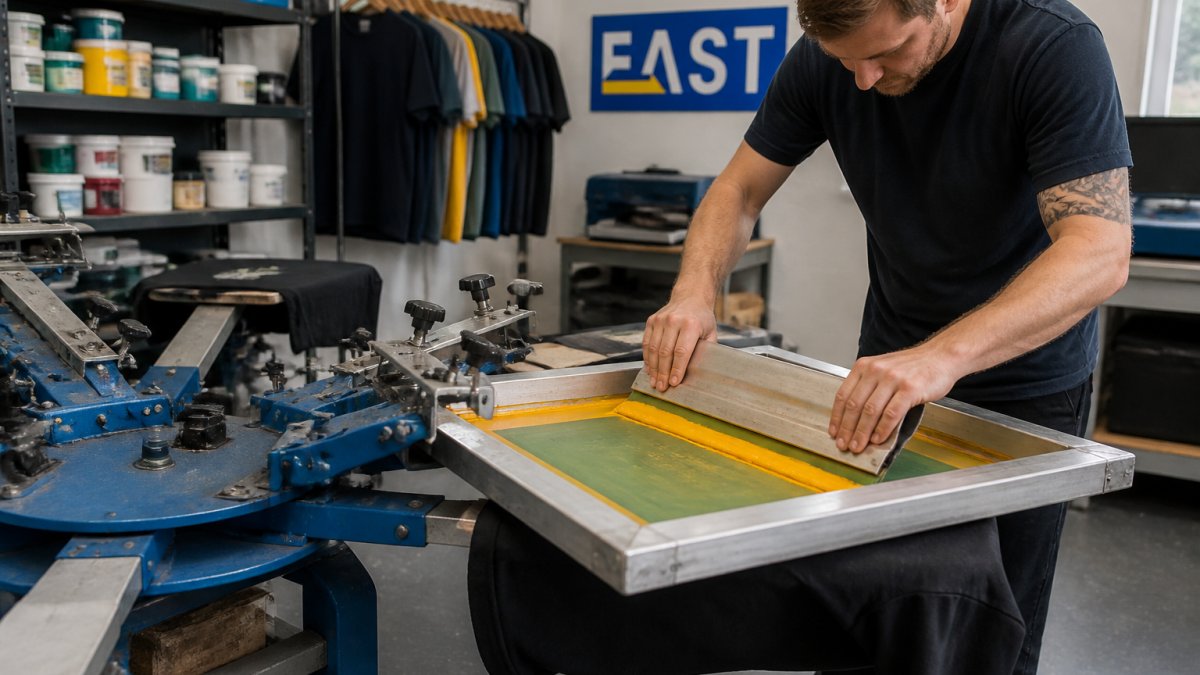
Screen printing in Suffolk is a garment decoration method where ink is pushed through a fine mesh screen onto fabric, one colour at a time. At Workwear East, we run screen printing alongside embroidery and DTF printing for teams across the region, and it remains the most cost-effective route for larger runs of printed workwear.
Here is the short answer most buyers want: screen printing wins on volume and colour vibrancy, embroidery wins on durability and prestige, and DTF wins on small runs with photographic detail. Choose by order size and garment type, not by habit.
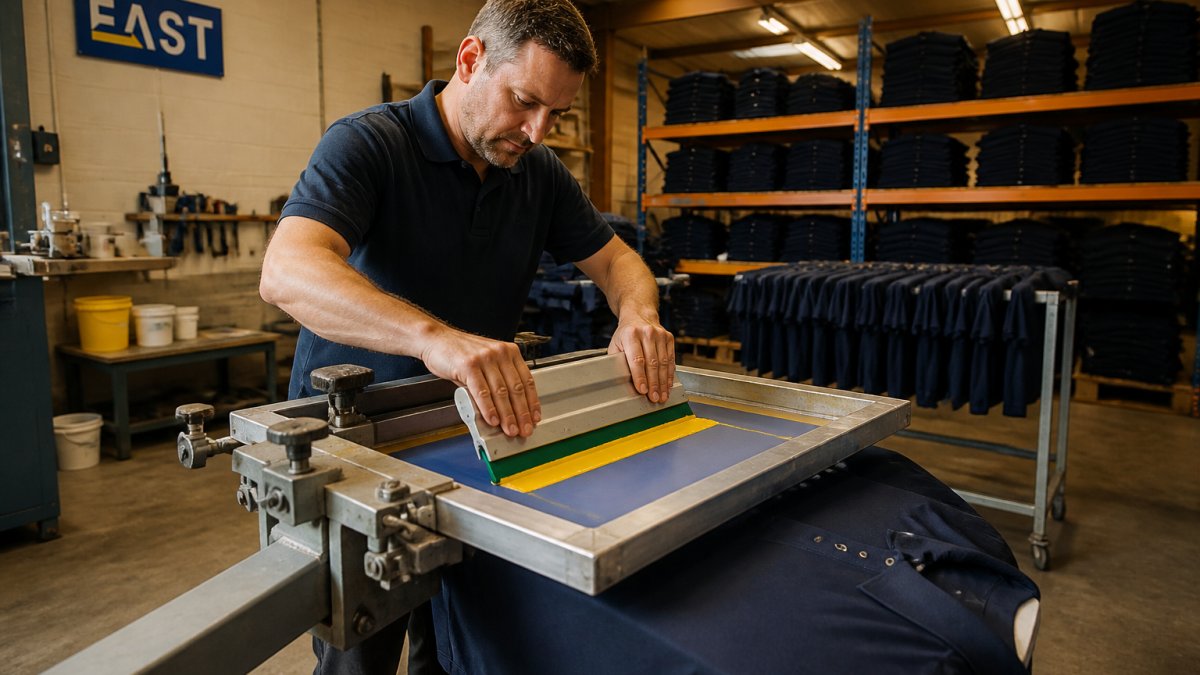
The process itself is straightforward. A design is separated into individual colours, each colour gets its own screen, and garments pass through a dryer between layers. That setup work is why unit costs fall sharply as quantities rise.
Screen Printing vs DTF Printing Workwear: Which Suits Your Team?
The honest comparison comes down to three variables: quantity, fabric, and how detailed your artwork is.
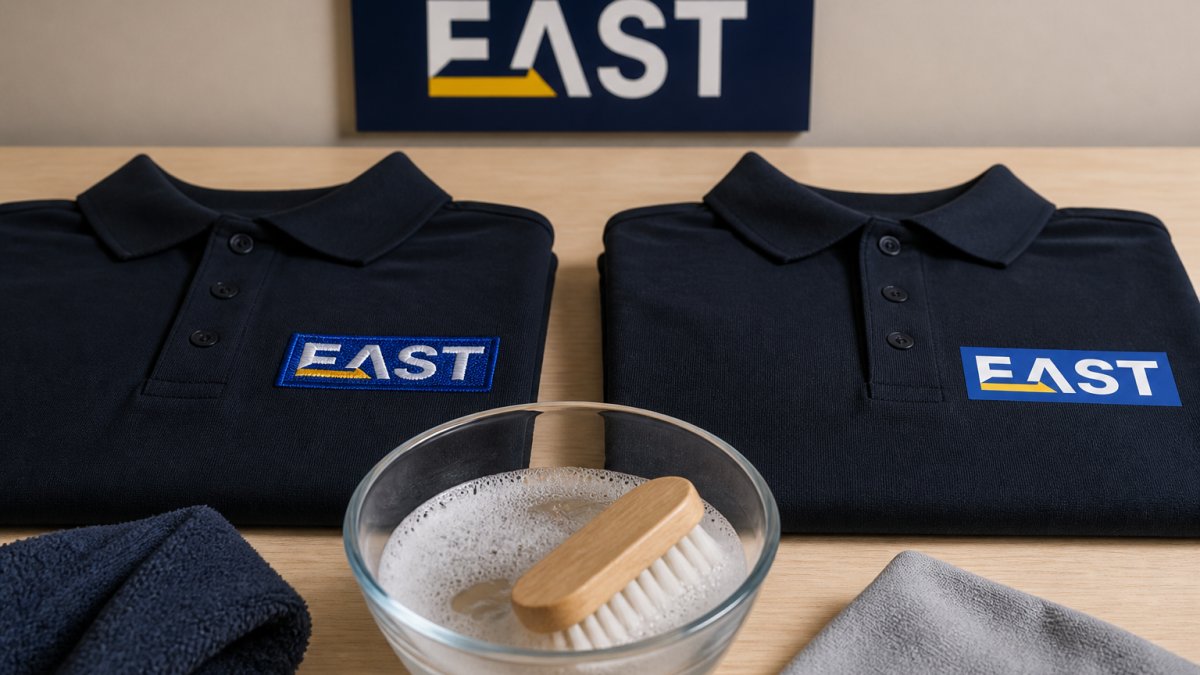
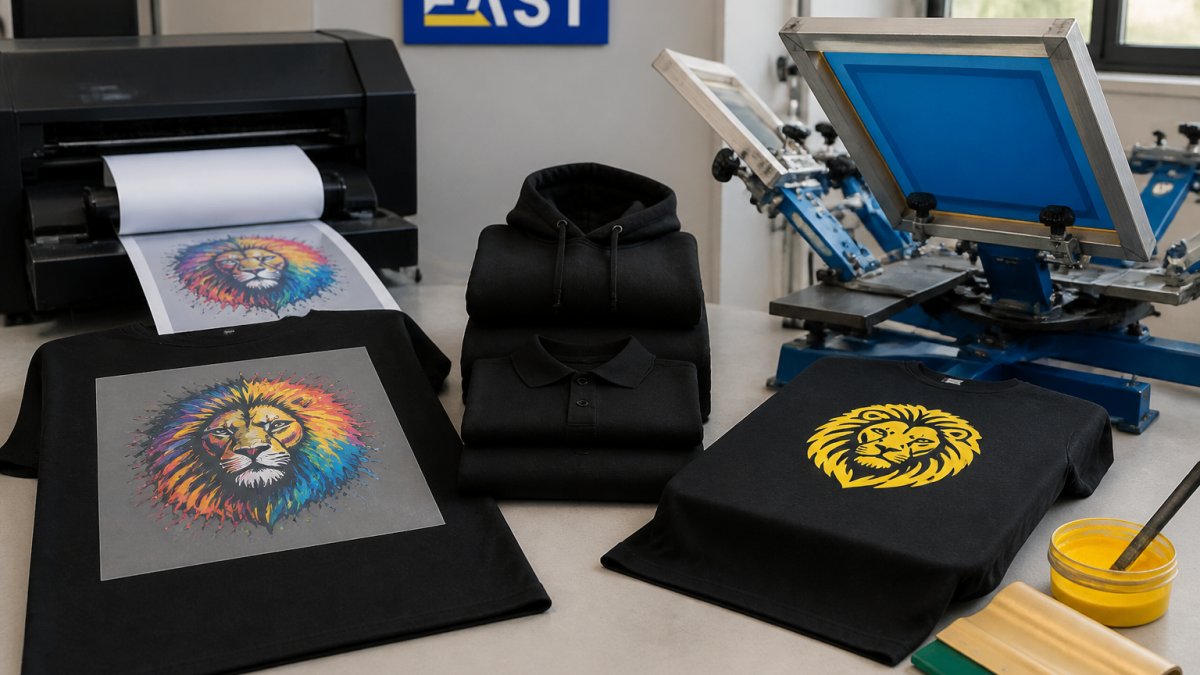
Screen printing uses thick, opaque ink that sits on the garment surface. It handles bold logos, block text, and simple shapes superbly, and the per-unit cost drops as volume climbs. DTF printing workwear uses a printed transfer film bonded to the fabric, which means full-colour gradients, photographs, and fine detail are all possible without setup screens.
| Method | Best For | Setup | Detail Level | Durability |
|---|---|---|---|---|
| Screen printing | Large runs, bold logos | Screens per colour | Simple to moderate | High on flat fabric |
| DTF printing | Small runs, photos, gradients | None | Very high | High, watch wash care |
| Vinyl printing | Names, numbers, single colours | Cutting file | Low | Good on cotton |
| Embroidery | Polos, corporate wear | Digitising file | Moderate | Excellent |
A common mistake is ordering DTF for a 200-piece uniform rollout, or screen printing a 12-shirt order with a six-colour design. Match the method to the job.
Screen Printing Minimum Order: What to Expect
Screen printing minimum order quantities exist for a physical reason: every colour in your design needs its own mesh screen prepared, registered, and cleaned down afterwards. That setup is a fixed cost per colour, so suppliers set a floor per design to keep the economics workable. The floor rises with the number of colours, not just the number of garments.
A useful way to think about it is the setup-to-run ratio. A one-colour logo on 50 garments spreads one screen's setup across 50 units. A four-colour logo on the same 50 garments spreads four screens' setup across the same 50 units, so the per-unit cost is materially higher even though the garment count has not changed. This is why consolidating colours is the single biggest lever on unit cost at low volumes.
Ask two questions before you commit:
- What is the minimum per design?
- What is the minimum per garment size within that design?
The second one catches people out. A run of 50 shirts split across six sizes can leave a supplier short on one size, and a short reprint carries its own setup cost again. If your team has an unusual size spread, several smalls, one or two large, flag it early so stock and screens can be planned together.
For mixed teams, our workwear bundles let you combine garments under one design rather than running separate minimums for each item. If you are unsure whether your quantity clears the floor for your colour count, email info@workweareast with your design and size breakdown and we will tell you honestly whether screen printing, DTF, or a split run is the better route.
Screen Printing Artwork Requirements
Good screen printing artwork requirements are simple to meet: vector files, clean colour separations, and outlined text. Send us an SVG, EPS, AI, or high-resolution PDF and the job moves quickly.
What causes delays is artwork that looks fine on screen but fails in production:
- Raster logos that pixelate when enlarged
- Live text that shifts when the file opens on a different machine
- Gradients in a spot-colour design, which cannot be separated cleanly
- Very fine lines below roughly a millimetre, which fill in on mesh
- Low-contrast colour pairings, such as navy on black
Send a finalised design with fonts converted to outlines and a Pantone or hex reference for each colour. If you only have a low-resolution image, we can redraw it, but build that into your timeline.
Screen-Printed Workwear Care: Making Prints Last
Screen-printed workwear care comes down to heat, friction, and chemistry. Wash inside out at 30°C or lower, avoid fabric conditioner on printed areas, and never tumble dry a printed garment.
The enemy is heat. A plastisol print softens in a hot dryer and creases against other garments, which is where cracking starts. Line drying or a low-heat cycle protects the print for far longer.
A few habits that make a measurable difference:
- Turn garments inside out before washing
- Use a gentle cycle with similar colours
- Skip bleach and biological detergents on printed panels
- Iron on the reverse only, never directly on the print
- Store printed garments flat rather than on tight hangers
For teams in trade and industrial settings, hi-vis printed garments need the same care, plus checks that the reflective tape is not abraded in storage.
Turnaround, Delivery and Collection for Screen Printing in Suffolk
Turnaround for screen printing depends on three things: artwork approval, screen setup, and garment stock. Once a finalised design is approved and stock is confirmed, production slots in quickly.
The realistic sequence looks like this:
| Stage | What Happens | Typical Duration |
|---|---|---|
| Artwork check | File review, colour separation, approval | 1-2 working days |
| Stock and sizing | Garment availability confirmed | 1-3 working days |
| Screen setup | Screens burned and registered | 1-2 working days |
| Production | Printing and drying | 2-5 working days |
| Dispatch or collection | Delivery or pickup arranged | 1-2 working days |
Rush jobs are possible when stock is available and artwork is clean, so ask early rather than assuming. For teams ordering across departments, our workwear portal keeps sizing and ordering organised in one place.
Choosing a Screen Printing Supplier
Most supplier pages tell you what they print. Very few help you compare. The framework below is the one we would use ourselves if we were buying, and it is deliberately built around the things that actually change the outcome rather than the things that look good on a homepage.
Compare on five axes, not on the quote alone:
| Axis | What to Ask | Why It Matters |
|---|---|---|
| Method fit | Do they screen print, DTF, vinyl, and embroider in-house? | A supplier who only screen prints will push a 12-piece order through screens it does not suit |
| Minimums | Minimum per design and per colour? | Determines whether your quantity is viable at all |
| Artwork support | Do they redraw raster logos, or reject them? | A rejected file can add days you did not plan for |
| Reprint policy | What happens on misprints and sizing errors? | The real test of a supplier is the second order, not the first |
| Turnaround | Realistic date on a 50-piece run, in writing? | Verbal turnaround is not a commitment |
Match the method to the job before you shortlist. Screen printing suits larger runs of bold, low-colour logos on flat fabric. DTF suits small runs, photographs, and gradients with no setup screens. Vinyl suits names, numbers, and single-colour detail. Embroidery suits polos, corporate wear, and anything that needs to survive industrial washing. A supplier who can run all four in-house will tell you which one your job actually needs; a single-method supplier will tell you their method is the right one.
The thing nobody tells you about cheap quotes is where the saving comes from. Usually it is thinner garments, fewer colour checks, or subcontracting to a third party. That shows up six washes later, when the print cracks or the garment pills. Ask directly whether the work is done on site and whether the garment is the one you specified or a substitute.
A shortlist of questions worth putting in writing:
- What is your minimum order per design and per colour?
- Do you print, embroider, and DTF in-house, or subcontract?
- What is your policy on misprints and sizing errors?
- Can you supply garments, or do we provide them?
- What is your realistic turnaround on a 50-piece run?
If your team also needs polos, our branded polo shirts can be printed or embroidered to match your existing uniform range. You can see our full range at workweareast.co.uk, and for a quote tailored to your quantities and garment choices, email info@workweareast.
Frequently Asked Questions
Is screen printing or DTF printing better for workwear?
It depends on the order. Screen printing is cost-effective for larger runs of the same design on similar garments, with bold, durable colour. DTF printing workwear suits smaller runs, full-colour detail and varied fabric types. For a mixed order of polos, hoodies and hi-vis, DTF gives more flexibility. For 100 identical sweatshirts, screen printing usually wins on value. Workwear East offers both and can advise which suits your numbers, so email info@workweareast for a quote.
How many garments do you need for a screen printing minimum order?
Minimums vary by supplier and design. Screen printing needs a separate screen for each colour, so setup costs are spread across the run. Smaller orders are possible but cost more per garment. If you need 10 to 20 items, DTF or vinyl may be better value. For 50 or more, screen printing becomes competitive. Ask for the minimum order before you commit, and confirm whether it applies per design, per colour or per garment style.
How durable is screen printing on workwear?
A well-printed screen print on a suitable fabric can last the life of the garment. Durability depends on the ink, the fabric and how the workwear is washed. Industrial washing and high-temperature drying shorten print life. For trade and construction teams, choose prints rated for frequent washing and follow the care label. Embroidered logos often outlast prints on heavy-use garments, so consider embroidery for names and screen printing for large back designs.
What artwork file is best for screen printing?
Vector files such as AI, EPS, PDF or SVG give the best results because they scale without losing quality. If you only have a JPEG or PNG, it needs to be high resolution, ideally 300 dpi at the final print size. Supply Pantone references if you need an exact brand colour. Avoid screenshots and images pulled from websites, as these are usually too low resolution. Workwear East can check your file before printing, so email info@workweareast with your artwork.
Getting branded workwear right on the first order saves reprints, downtime, and awkward conversations with staff about sizing. Workwear East handles screen printing, DTF printing, and embroidery in-house, with durable garments, consistent colour matching, and a local service built around how teams actually order. Email info@workweareast for a quote and we will confirm minimums, turnaround, and garment options for your design.