 how-to
Extending the Life of Printed Staff Uniforms
Table of Contents
- Why Extending the Life of Printed Staff Uniforms Matters
- How to Wash Printed Workwear Without Damaging the Design
- Drying Methods That Prevent Cracking and Peeling
- Storage and Handling Practices for Printed Uniforms
- Staff Uniform Maintenance Checklist
- How Often to Replace Staff Uniforms
- Troubleshooting Common Print Damage Issues
- Frequently Asked Questions
Last Updated: October 13, 2026
Why Extending the Life of Printed Staff Uniforms Matters
Your team's uniforms are walking billboards for your brand. When printed logos fade, crack, or peel after a few washes, it sends the wrong message to customers and wastes money on branded apparel.
The good news: printed staff uniforms last significantly longer with the right care. Proper washing, drying, and storage prevent damage, so your investment pays off for months or years instead of weeks.
At Workwear East, we've seen how poor maintenance ruins otherwise durable uniforms. This guide covers the steps to keep printed workwear looking professional.
How to Wash Printed Workwear Without Damaging the Design
The way you wash printed uniforms determines whether logos stay vibrant or fade. Temperature, detergent, cycle settings, and load size all interact, and the right combination depends on how the garment was decorated.
Pre-wash preparation and temperature settings
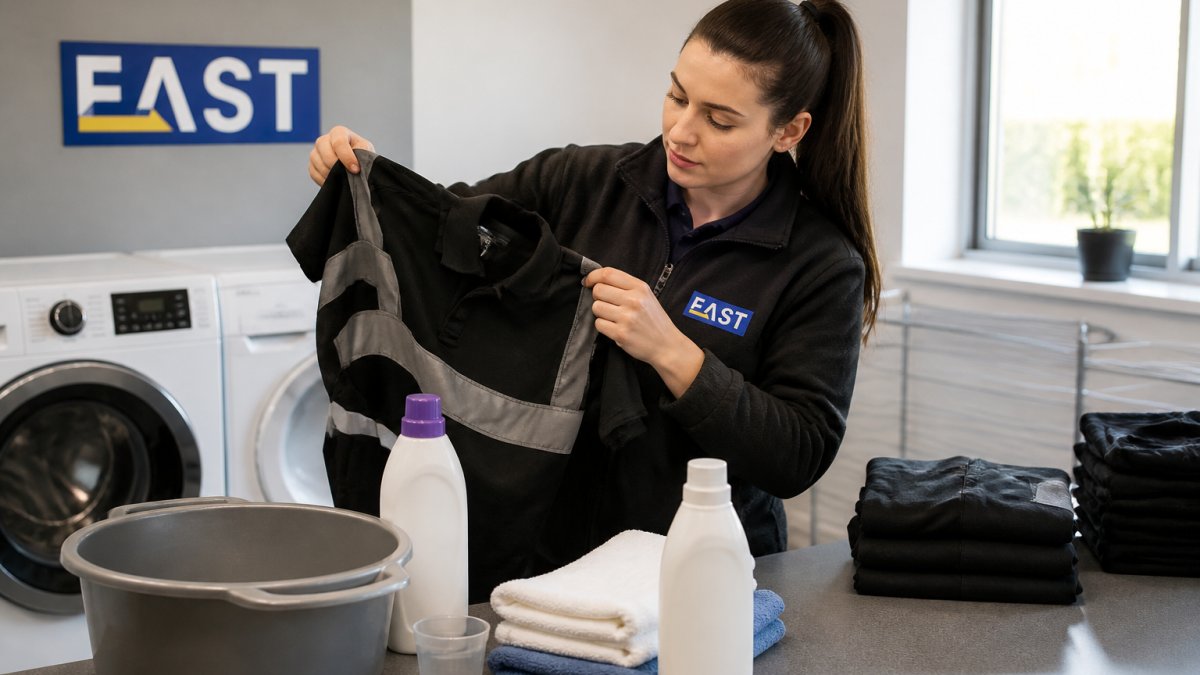
Before washing, turn printed workwear inside out to protect the design from friction and abrasion, especially heat transfer prints, where the bond is most vulnerable to rubbing. Close all zips and fasten all buttons, open zips abrade prints in the drum, and loose buttons snag on printed areas.
Use cold water, 30°C or below. Hot water breaks down ink bonds and causes colours to bleed, while cold water cleans effectively and is gentler on prints. Check the care label on each garment, fabrics and print methods differ, and when in doubt, choose the gentler option.
Detergent selection and cycle choice
Choose a mild, colour-safe liquid detergent. Avoid bleach, optical brighteners, and fabric softener, bleach and brighteners attack ink, while softener coats fibres and stops adhesive gripping, so heat transfer and vinyl prints lift over time. Use roughly a quarter to half the recommended amount; more soap leaves residue that dulls colours and stiffens fabric.
Select a gentle or delicate cycle to reduce agitation against prints, and avoid heavy-duty cycles. Do not overload the drum, leave it roughly two-thirds full.
How print method changes the wash approach
Not all printed uniforms should be washed the same way. The decoration method determines how much care the print actually needs.
Screen-printed garments are the most robust.
Heat transfer and vinyl prints need the most care.
DTG prints sit within the fabric fibres, so they crack less but fade more.
Embroidered garments are the most wash-tolerant, but the backing can pucker at high heat. Wash at 30°C and air dry to keep stitching flat.
Hand washing and spot treatment
For heavily soiled garments or delicate prints, hand wash in cool water with a little mild detergent, agitate gently rather than scrubbing, and rinse thoroughly.
For spot treatment, blot with cold water and a little mild liquid detergent, working from the outside inward. Never scrub a printed area with a brush or abrasive cloth, you will abrade the ink and leave a dull patch.
If you are unsure how a particular garment should be washed, or you are sourcing new printed uniforms and want to know which decoration method will hold up best for your team's working conditions, email info@workweareast for a quote. You can also visit workweareast.co.uk to explore the range of Workwear Bundles and Branded Polo shirts available.
Drying Methods That Prevent Cracking and Peeling
How you dry printed workwear matters as much as how you wash it. Heat and mechanical stress are the main culprits behind cracked or peeling prints.
Air drying versus machine drying
Air drying is best for printed staff uniforms. Hang garments on a line or rack away from direct sunlight, UV fades colours, so shade drying preserves vibrancy much longer.
Machine drying creates heat and tumbling action that damages prints. If you must use a dryer, use the lowest heat setting and remove garments while still slightly damp.
Air drying takes longer but extends uniform life significantly, reducing replacement costs.
Handling printed uniforms during the drying process
Never hang wet uniforms by the printed area, the weight of water pulls on the design and can cause peeling. Hang by the shoulders or lay flat instead. Avoid direct sunlight on prints, as UV rays fade colours; dry in shade or indoors, and if drying outdoors, turn garments inside out or cover the printed side. Don't wring out water forcefully, gently squeeze excess moisture, then hang to dry.
Storage and Handling Practices for Printed Uniforms
How you store uniforms between wears affects their lifespan. Fold uniforms neatly and store in a cool, dry place, avoid damp areas like basements or unventilated storage rooms, since moisture encourages mildew and ink degradation.
Don't stack heavy items on stored uniforms, pressure causes creasing and stress on prints. Keep uniforms away from direct heat sources like radiators or heaters, which dry out fabric and weaken ink bonds. Avoid storing uniforms in plastic bags for long periods; plastic traps moisture, so use breathable storage containers or open shelving instead.
Staff Uniform Maintenance Checklist
Use this checklist to keep your printed staff uniforms in top condition:
| Maintenance Task | Frequency | Notes |
|---|---|---|
| Turn uniforms inside out before washing | Every wash | Protects printed design from friction |
| Wash in cold water | Every wash | Prevents colour fading and ink breakdown |
| Use mild, colour-safe detergent | Every wash | Avoid bleach and brighteners |
| Air dry in shade | Every wash | Never machine dry on high heat |
| Check for damage or fading | Monthly | Catch problems early |
| Store in cool, dry location | Always | Prevents moisture and heat damage |
| Inspect seams and hems | Quarterly | Address wear before it spreads |
- Establish a washing routine with staff
- Provide care instructions at uniform distribution
- Monitor uniforms for early signs of wear
- Replace damaged garments promptly
- Document replacement dates and costs
- Review care practices annually
How Often to Replace Staff Uniforms
Printed staff uniforms don't last forever. Knowing when to replace them helps you budget and maintain professional appearance.
With proper care, quality printed uniforms can last a significant period of regular wear, though this varies with job demands and washing frequency.
Heavy-use environments like construction or manufacturing shorten uniform life; office environments allow longer garment life.
Signs it's time for replacement
Replace uniforms when prints show visible cracking, peeling, or fading that affects your brand image, a few small cracks are normal, but large areas of damage look unprofessional. Fading that makes your logo hard to read means replacement is due.
Seams coming loose, hems unravelling, or fabric thinning indicate the garment has reached the end of its useful life, and these issues spread quickly. Stains that won't come out, especially on visible areas, also warrant replacement.
Planning a replacement schedule
Track when uniforms are issued and monitor their condition to predict replacement needs and budget accordingly.
For most businesses, a rolling replacement schedule works best, replace a portion of uniforms every quarter or six months rather than everything at once, spreading costs and keeping staff looking professional. Using a Workwear Portal can help you manage uniform distribution and track replacement schedules efficiently across your team.
Consider the season, winter workwear may need replacing at different times than summer uniforms.
Troubleshooting Common Print Damage Issues
Most print failures trace back to heat stress, mechanical abrasion, chemical attack, or a bond never fully cured at production. Identifying the mechanism tells you whether the garment is salvageable or needs replacing.
Diagnosing by print method
Different decoration methods fail in different ways, and the fix depends on which one you're dealing with.
Screen printing lays a thick ink layer on the fabric surface. It is the most abrasion-resistant method but the most vulnerable to cracking when the ink film is stretched or overheated.
Heat transfer and vinyl prints sit on top of the fabric as a bonded layer and are the most prone to peeling, since the bond is only as strong as the adhesive interface.
Embroidery fails differently again, threads can snag, pull, or fray, and the backing can pucker if dried at high heat.
Matching the symptom to the cause
Fading that is even across the whole print points to cumulative chemical or UV exposure.
Cracking along fold lines is a heat-and-stretch problem, almost always from tumble drying. Switching to air drying stops further cracking, but existing cracks will not heal.
Colour bleeding between adjacent print areas suggests the garment was washed too hot or a dark dye was not fully fixed at manufacture.
Stains trapped in or around the print need treating before they set. Blot with cold water and a little mild liquid detergent, working from the outside inward.
What can be repaired and what cannot
A useful rule of thumb: surface problems can sometimes be managed, structural problems cannot.
- Snagged embroidery thread, repairable with a blunt needle.
- Loose or frayed seam, repairable by a seamstress or tailor before it spreads.
- Minor stain on a dark garment, often concealable with careful spot treatment.
- Cracked screen print, not repairable; the ink film is broken.
- Peeling heat transfer, not reliably repairable; re-pressing may hold briefly but usually fails again within a few washes.
- Faded DTG print, not repairable; the ink has degraded within the fibre.
- Colour bleeding, not repairable; the dye has migrated.
When to escalate to replacement
If more than roughly a quarter of the printed area is affected by cracking, peeling, or fading, replacement is more economical than repair. A partially damaged logo damages brand perception more than a clean, new garment, customers notice inconsistency far more than a slightly worn uniform.
If you are unsure whether a batch of uniforms is worth repairing or replacing, get a professional opinion before committing to either. Email info@workweareast for a quote and we can advise on whether re-decoration or replacement is the better route for your garments. You can also visit workweareast.co.uk to see the range of durable printed workwear available.
Frequently Asked Questions
How should you wash printed staff uniforms to prevent the design from fading or peeling?
Turn printed uniforms inside out before washing, use cold water on a gentle cycle, and choose a mild detergent without bleach. Wash separately from items with zips or rough textures that could snag the print. Air dry whenever possible rather than tumble drying, as heat accelerates print deterioration. These practices significantly extend the lifespan of your branded workwear investment.
Can printed uniforms go in a tumble dryer?
Tumble dryers expose printed uniforms to sustained heat that can cause cracking, peeling, and fading. If you must use a dryer, select the lowest heat setting and remove garments while still slightly damp. Air drying flat or on a hanger is the safest option for preserving print quality and extending uniform durability over time.
How often should staff uniforms be replaced?
Replacement frequency depends on usage intensity, fabric quality, and print method. Monitor for fading prints, fabric thinning, and colour loss. A structured replacement schedule prevents workforce downtime and maintains a professional appearance across your team.
What causes printed workwear to crack or peel, and how do you stop it?
Cracking and peeling result from heat exposure, harsh chemicals, and friction during washing and drying. Prevent damage by washing in cold water, using gentle cycles, avoiding bleach, and air drying. Never iron directly over a printed logo, and store garments flat or folded loosely. Proper care from the first wash significantly improves print longevity and maintains vibrant branding on your uniforms.