 Ultimate guide
Choosing Aprons for Work: Styles, Fabrics and Care
Quick Summary
Choosing aprons for work comes down to three decisions: the style that suits the task, the fabric that survives your laundry routine, and a fit that keeps the apron in place all day. Bib aprons offer the most protection, waist aprons suit front-of-house roles, and polycotton is the practical default for busy kitchens and workshops.
- Bib aprons cover the chest, torso and thighs, making them the most protective option for messy or heavy work.
- Polycotton blends cotton with polyester, giving added strength and crease resistance for frequent hot laundering.
- Measure the people who will wear each apron rather than relying on a generic size chart.
- Choose a padded or wide neck strap if a bib apron is worn all day.
- Email info@workweareast.co.uk for a quote, or browse the range at https://www.workweareast.co.uk/.
Table of Contents
- Aprons Explained: Styles and Where Each One Works
- Fabric Options and How They Perform
- Choosing the Right Size and Fit
- Pockets, Straps and Practical Features
- Custom Embroidered Aprons for Your Team
- Apron Printing Services and Workwear Maintenance Tips
- Planning Your Team's Apron Order
- Frequently Asked Questions
Choosing aprons for work comes down to three decisions: the style that suits the task, the fabric that will survive your laundry routine, and the fit that keeps the apron where it needs to be all day. Get those right and an apron does its job for months rather than weeks. This guide from Workwear East walks through each decision, so you can narrow your options before you request a quote.
Aprons are one of the simplest pieces of workwear, but they are also one of the easiest to get wrong. A bib apron that is too short leaves the lower body exposed, and a lightweight apron can be unsuitable for a busy prep line. For guidance on choosing and caring for printed aprons, including how logos hold up through washing, see printed aprons explained. The sections below cover the main styles, what each fabric does well, how to size an apron, the practical features that matter, and how to plan a team order.
Aprons Explained: Styles and Where Each One Works
The right style depends on how much protection the work needs and how much movement it involves. Most teams end up using two or three styles across different roles.
Bib aprons
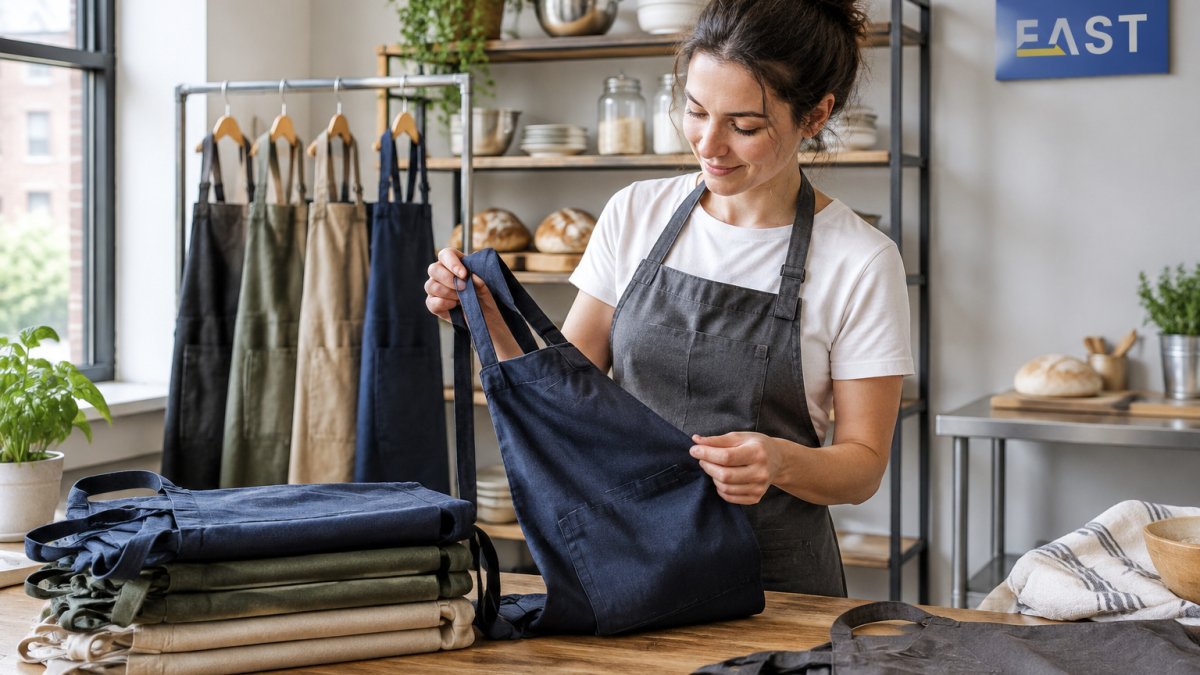
A bib apron covers the chest, torso and thighs, held up by a neck strap and tied at the waist. It is the most protective option for messy or heavy work, and it suits kitchen staff, workshop technicians and anyone whose clothing needs cover from the chest down. The neck strap can rub on bare skin during long shifts, so look for a padded or wide strap if your team wears an apron all day.
Waist aprons and full-length aprons
A waist apron ties at the waist only and covers the front of the body from the waist to the knee or below. It is quick to put on, light to wear and ideal for front-of-house staff, baristas and hospitality roles where a smart look matters as much as protection. A full-length apron covers more of the leg and suits tasks such as butchery, brewing or heavy cleaning, though it can restrict movement if the fabric is stiff.
Fabric Options and How They Perform
Fabric determines how an apron handles stains, heat, wear and washing, and the right choice depends on which of those matters most for the job. Most workwear aprons fall into four groups: cotton, polycotton, linen-blend, and heavier canvas or denim. Wipeable and coated finishes sit alongside these as a separate option, and they are covered below.
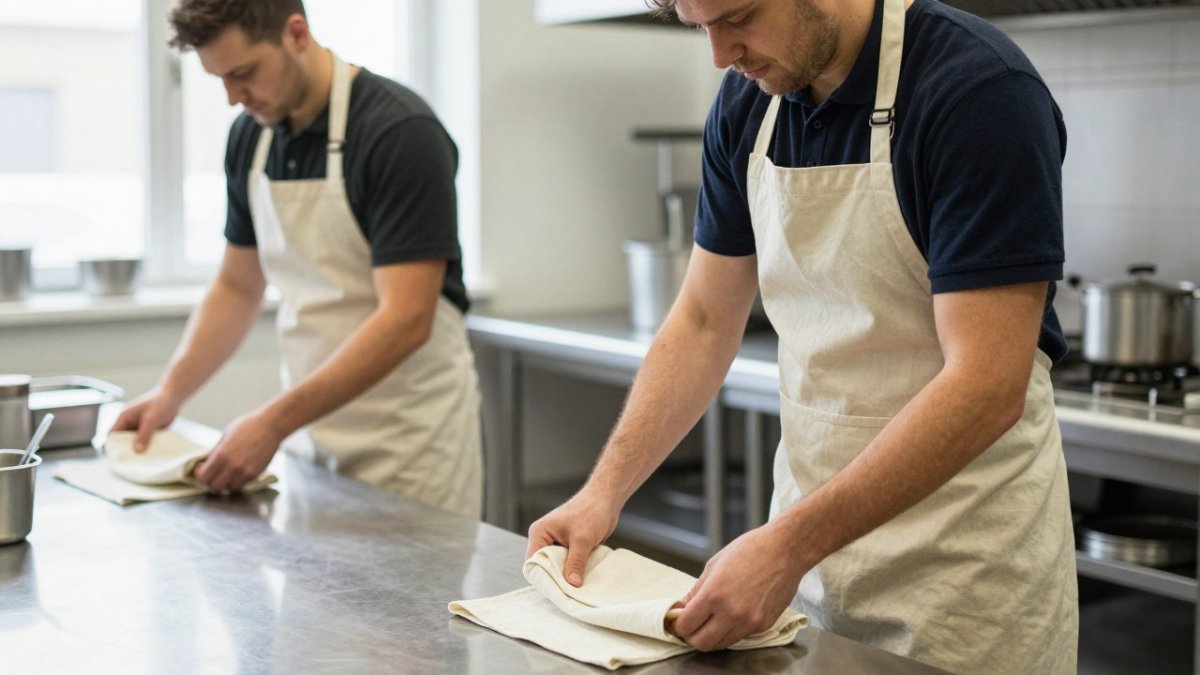
Cotton is breathable and comfortable against the skin. For a deeper explanation of GSM, weaves, fibres and durability, read how to choose durable workwear fabric. It absorbs liquid quickly, so spills can soak through unless treated promptly, and it creases readily. Cotton suits front-of-house roles, light prep and any job where comfort over a long shift matters more than resistance to heavy soiling.
Polycotton blends cotton with polyester, combining the feel of cotton with added strength and crease resistance. For a comparison of polycotton, cotton and blends for durability on embroidered uniforms, see the best fabric for embroidered staff uniforms guide. Its weakness is breathability: in a hot kitchen or a warm workshop it can feel clammy. For most busy kitchens and general workshops it is the practical default, because it survives frequent hot laundering without shrinking.
If you want help matching a fabric to your specific roles, email info@workweareast.co.uk for a quote, or view the range at https://www.workweareast.co.uk/ before you decide. Where a team needs matching kit across several roles, the Workwear Bundles option can be a useful place to start.
The table below summarises how each fabric group performs in everyday use.
| Fabric | Best for | Key difference |
|---|---|---|
| Cotton | Front-of-house and light prep | Breathable but absorbs spills quickly |
| Polycotton | Busy kitchens and general workshops | Stronger and crease resistant, less breathable |
| Linen-blend | Comfort-focused service roles | Lighter feel for long shifts |
| Heavy canvas or denim | Messy or heavy-duty work | Most durable against wear |
Choosing the Right Size and Fit
A poor fit causes more complaints than any other apron problem. An apron that rides up, slips off the shoulders or leaves the lower body exposed will not be worn properly, however good the fabric. Sizing is also the part of an apron order that is easiest to get wrong at the quoting stage, because most catalogues list only a generic size band.
Start by measuring the people who will wear the apron rather than guessing from a standard size chart.
For waist aprons, the critical figure is the waist tie. Measure the circumference of the wearer's waist over the clothing they will actually wear on shift, then add enough length for a secure double knot. Thick jackets, aprons worn over fleece in cold storage, and chef whites with a double-breasted jacket all change the figure, so measure over the layer rather than over a thin shirt.
Next, compare the apron's listed dimensions with your measurements rather than the size label. Size labels can vary between products, so two items marked as the same size may differ in length or strap drop. Check three numbers on any product sheet: overall length from the neck point, the neck strap adjustment range, and the width across the bib or waist.
Body shape matters as well as height. A longer torso needs a longer bib and a longer neck strap, while a shorter wearer can find a standard bib drags at the back and rides up at the front. Wider hips or a fuller bust may need a waist apron with longer ties and a bib that sits above the bust line.
If you are ordering for a whole team, measure a sample of the largest and smallest people first, then fill the middle sizes. Keep a spare or two in each size so that a new starter or a replacement can be fitted the same day without waiting for a re-order.
If you are unsure which sizes to order for your team, email info@workweareast.co.uk with the measurements you have and the roles involved, and ask for a quote. You can also browse the full range at https://www.workweareast.co.uk/ to compare dimensions before you choose.
Pockets, Straps and Practical Features
Small features make a large difference to daily comfort. Pockets should be sized for what staff actually carry, such as a pen, a notepad, a phone or a set of kitchen tools. A deep pocket is useful for tools, but a pocket that is too large pulls the apron out of shape when it is full.
Straps and ties deserve equal attention. Halter-style neck straps with a slide adjuster allow fine control over the fit. Cross-back straps spread weight across the shoulders and help keep a bib apron in place during movement. Long ties let the wearer tie the apron at the back and reduce strain on the waist. Brass or metal eyelets and rivets reinforce stress points, which matters on aprons that are tied and untied many times a day.
When comparing specific products, check the dimensions for the neck strap, main pocket and overall length. These figures tell you more about the actual fit than a general description.
Custom Embroidered Aprons for Your Team
Embroidery is a durable way to put a logo or name on an apron. The stitches sit within the fabric, which suits logos and text that need to last. Embroidery can be applied to the front of a bib apron or the chest area of a waist apron.
We can talk you through embroidery options and send a quote on request by emailing info@workweareast.co.uk.
Apron Printing Services and Workwear Maintenance Tips
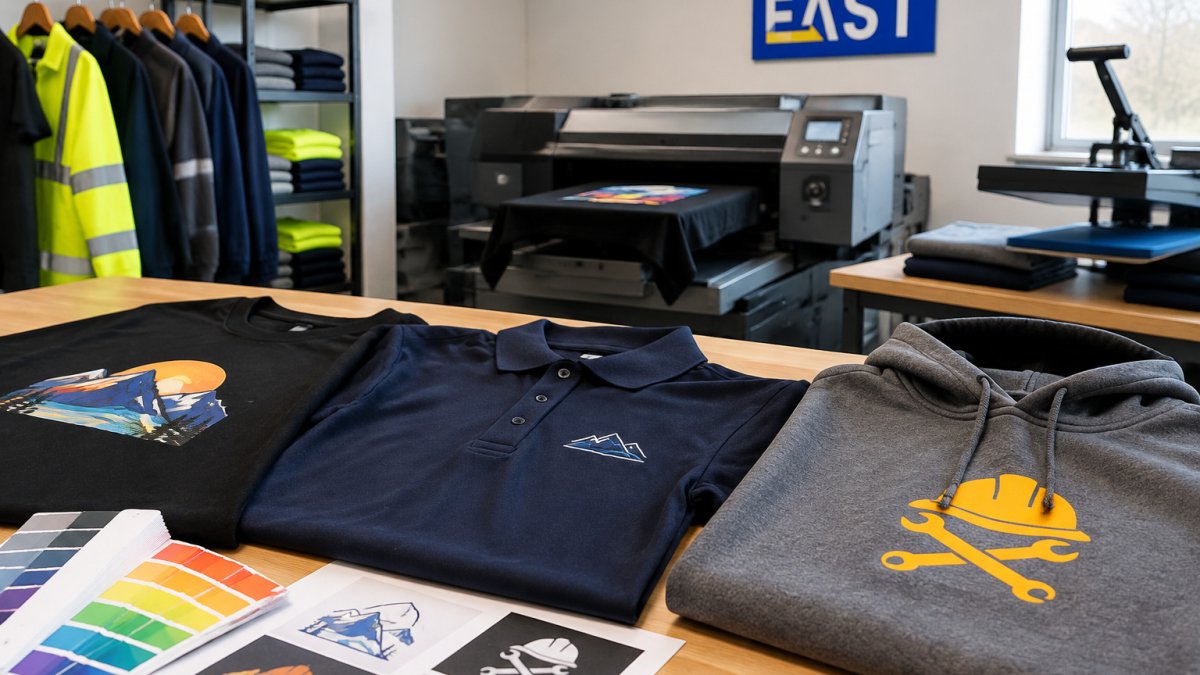
Printing suits designs with many colours or detailed artwork. Workwear East offers DTF printing and screen printing, and the right method depends on the artwork and the number of garments required. Choose the method based on your artwork and the number of aprons you need, not on which sounds most impressive. For branded tops to pair with aprons on the same team, the Branded Polo shirts range is worth a look.
Care has a large effect on how long any print or embroidery lasts. Follow the care label on each garment, wash aprons inside out where possible, and dry them on a low setting rather than at high heat. Rotate your stock so that no single apron takes all the heavy use, and replace any apron once its fabric thins or its stitching loosens at the ties.
Planning Your Team's Apron Order
Start by listing the roles that need aprons and the style each one requires. A kitchen team may need bib aprons for prep and waist aprons for service, while front-of-house staff may only need waist aprons. Count the number of people in each role, then add a spare for each one so that aprons can be rotated between washes.
Next, decide on decoration and sizing. Confirm the logo or name, the colour, the fabric and the size mix before you request a quote. Where staff also need Hi-Vis clothing for site or outdoor roles, include those items in the same planning list so the order is handled in one go. Lead times depend on quantity, decoration method and delivery date, so plan ahead of busy periods and new starters. Pricing depends on quantity, decoration and delivery, so the most accurate figure comes from a direct quote. Email info@workweareast.co.uk with your numbers and requirements, or visit the Workwear East website at https://www.workweareast.co.uk/ to browse the full range and start an order.
Choosing the right aprons for work is a matter of matching style, fabric and fit to the tasks your team actually performs. Start with the roles, check the fabric and sizing, and then choose a decoration method that will last. Workwear East can help at each stage, from selecting the right apron to producing a durable, professionally finished team order.
Frequently Asked Questions
What is the best material for a professional work apron?
Cotton and polycotton blends are the most common choices for professional work aprons. Pure cotton feels comfortable and absorbs moisture well, which suits kitchen and hospitality work. Polycotton blends cotton with polyester for added strength and crease resistance. For wet or messy jobs, a wipeable or coated fabric makes cleaning quicker. The right choice depends on the task, how often the apron is washed, and how much wear it will take. Workwear East can advise on fabric options for your team; email info@workweareast for a quote.
Are embroidered aprons better than printed aprons for durability?
Embroidery stitches the design into the fabric, which suits logos and text that need to last. Embroidery suits logos and text that need to last, while printing suits detailed, full-colour artwork. Workwear East offers both embroidered and DTF printing, so the right method can be matched to the design and the garment. Ask for a sample if you want to compare finishes before ordering.
How should I maintain my workwear aprons to ensure longevity?
Wash aprons at the temperature recommended on the care label, and avoid overloading the machine. Turn printed aprons inside out before washing to protect the design. Dry them fully before storing. Treat stains promptly with a suitable pre-treatment rather than letting them set. Check straps and seams regularly and replace aprons that are badly frayed. Rotating a set of aprons spreads the wear evenly across a team.
How do I choose the right apron style for my staff?
Match the style to the task. Bib aprons give chest and upper-body coverage for prep and serving work. Waist aprons suit tasks where the upper body needs freedom of movement. Full-length aprons offer the most coverage for messy or heavy-duty jobs. Consider whether staff need pockets for tools or small items, and whether adjustable neck and waist straps will suit a mixed team. Grouping roles by task helps you order the right mix of styles without buying more than you need.