 Ultimate guide
How to Choose and Care for Printed Aprons
Quick Summary
Printed aprons are cotton or polycotton aprons decorated with a logo, slogan, name or artwork, used by workplaces across catering, retail, trades and events to put a brand in front of staff and customers. Choosing the right one depends on your artwork, the printing method, the fabric and how often the apron will be washed.
- Screen printing suits simple, bold logos in one to three colours across larger quantities.
- DTF transfer suits full-colour artwork and detailed images.
- Embroidery suits intricate multi-colour designs and tends to hold up well on heavy-use bib aprons.
- Supply a vector file such as SVG, AI, EPS or PDF, or your highest-resolution image, and check a digital proof before production.
- Wash aprons according to the care label temperature and avoid ironing directly over the print.
Table of Contents
- What Printed Aprons Are and Who Orders Them
- Apron Printing Methods Compared
- Printed Versus Embroidered Aprons: Which Suits Your Team
- Choosing Fabric, Size and Fit for Daily Use
- Preparing Artwork and Understanding Print Limitations
- How to Care for Printed Aprons So the Print Lasts
- Using Branded Aprons for Your Business and Events
- Ordering Your Printed Aprons from Workwear East
- Frequently Asked Questions
What Printed Aprons Are and Who Orders Them
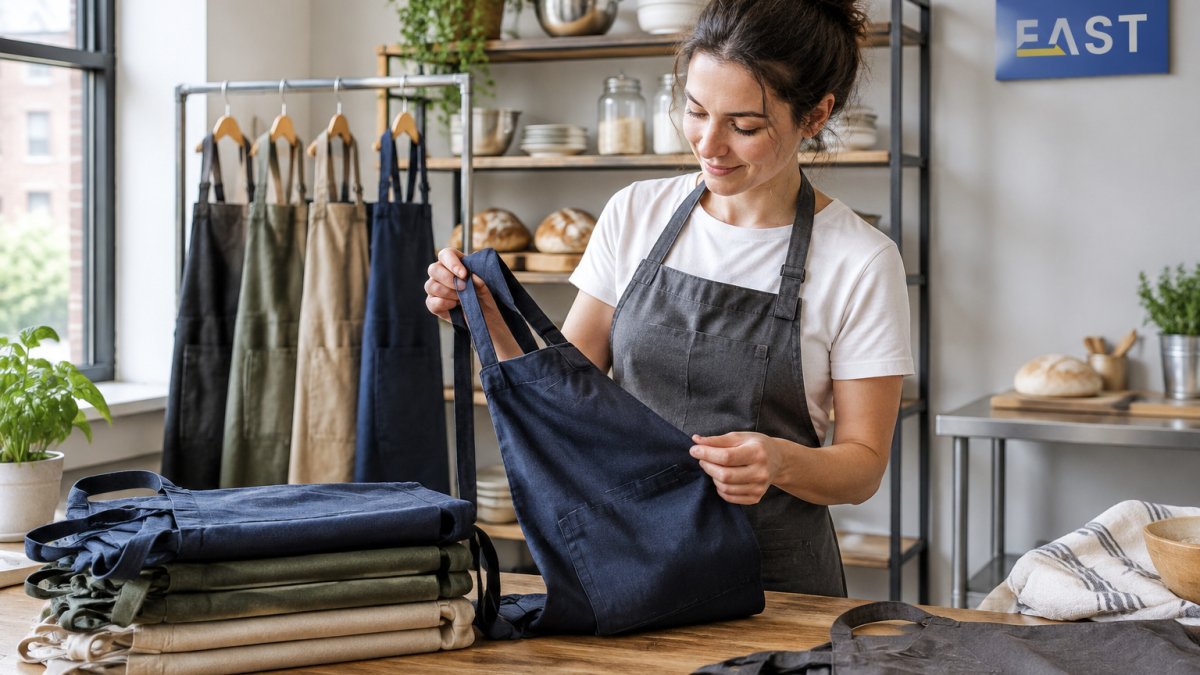
Printed aprons are cotton or polycotton aprons decorated with a logo, slogan, name or artwork, applied by a process such as DTF transfer, screen printing or embroidery. Workplaces across catering, retail, trades and events order them to put a brand in front of staff and customers every working day.
The typical buyers are operations managers outfitting kitchen or front-of-house teams, small business owners wanting a consistent look for their staff, and event coordinators who need branded aprons for stalls, fairs or corporate days. Each group tends to care about different things: durability and wash life for a kitchen team, quick turnaround for an event, and a clean, professional finish for customer-facing staff.
Ordering is usually straightforward, but a few decisions shape the final result: the number of aprons, the print or embroidery method, the fabric, and the artwork format. UK Government guidance on workwear and employer responsibilities sets out what employers should consider when providing clothing to staff, which is a useful starting point before you decide on a style.
Apron Printing Methods Compared
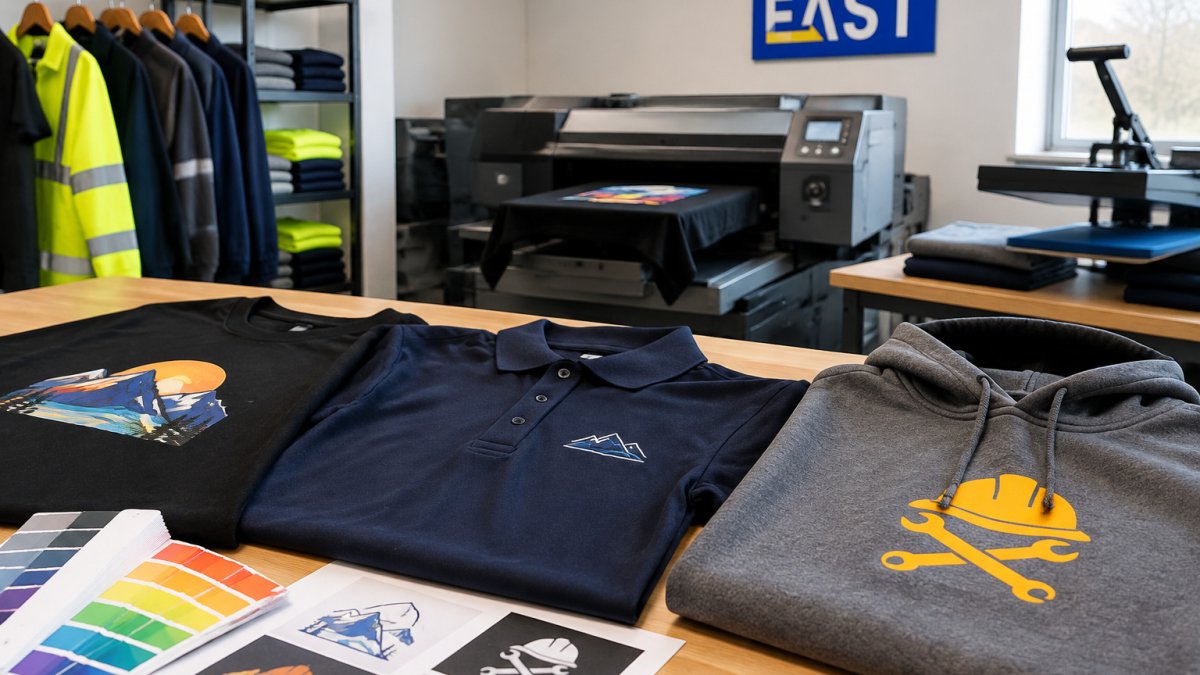
The method used to decorate an apron changes how it looks, how it feels and how long it lasts. Three methods dominate workplace aprons: screen printing, DTF (direct-to-film) transfer, and embroidery. Each has a different durability profile, wash-care requirement and suitability for particular artwork and use cases.
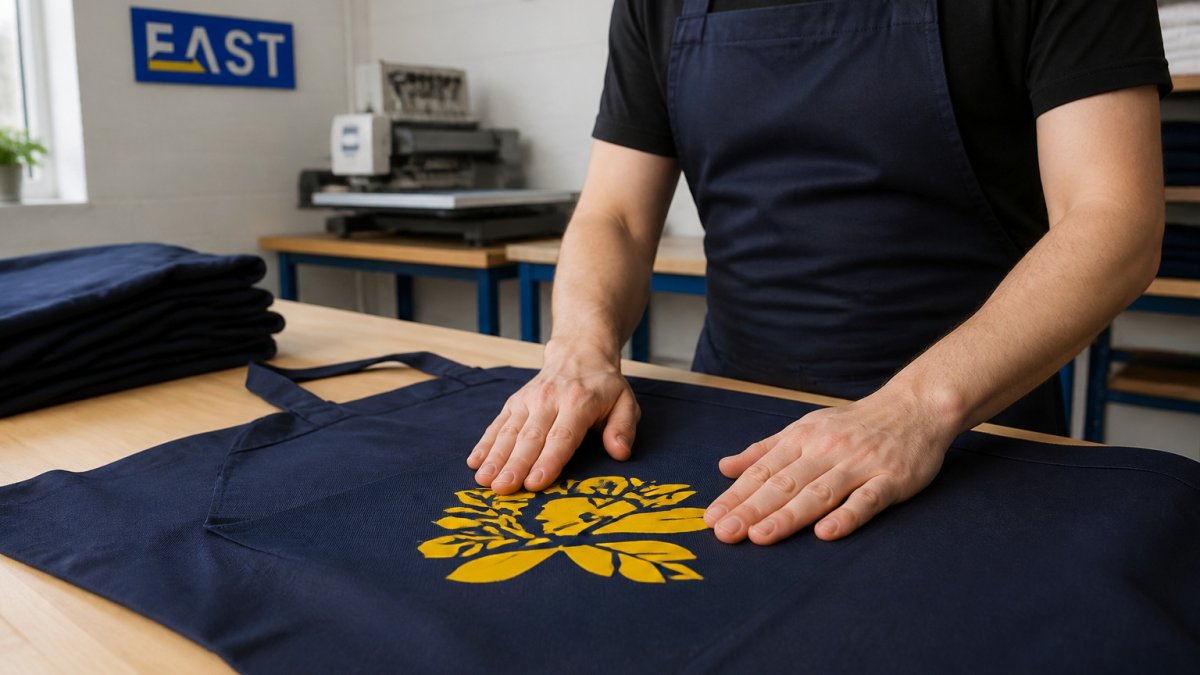
Screen printing applies ink through a mesh screen, one screen per colour. It suits simple, bold logos in one to three colours across larger quantities. Very fine detail and photographic gradients are difficult to reproduce, and each additional colour adds cost and set-up time.
DTF (direct-to-film) printing prints the design onto a film, then heat-presses it onto the apron. It is suited to full-colour artwork and detailed images on various materials.
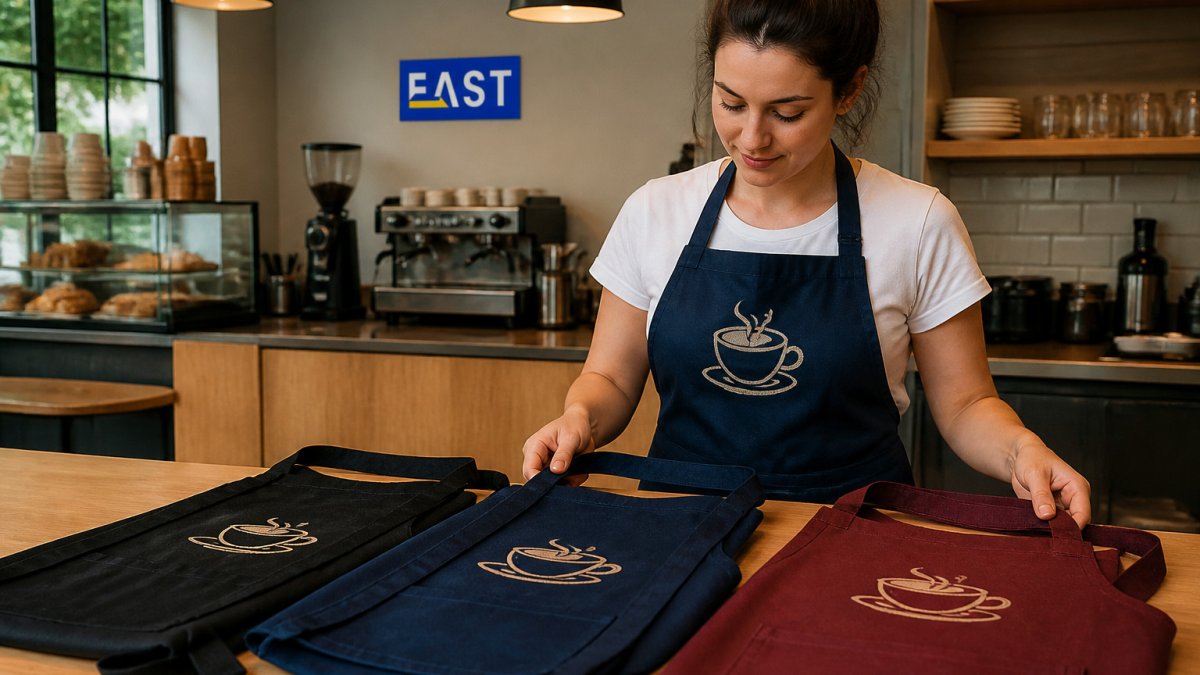
Embroidery stitches the design into the fabric using threads, and Workwear East offers advanced embroidery for intricate, multi-colour designs.
When choosing a method, match it to the artwork and how the apron will be used. Ask your supplier to confirm the expected wash life for your chosen method and fabric combination before committing.
Quote figures depend on quantity, artwork complexity and delivery date, so ask for a quote rather than relying on a generic price. For a personal recommendation based on your artwork and order size, email info@workweareast.co.uk for a quote.
The three main decoration methods differ in detail, colour handling and suitability for workplace aprons.
| Method | Best for | Key difference |
|---|---|---|
| Screen printing | Simple, bold logos in larger runs | One screen per colour; fine detail is hard |
| DTF transfer | Full-colour artwork and detailed images | Prints film then heat-presses onto apron |
| Embroidery | Intricate, multi-colour designs | Stitched into the fabric |
Printed Versus Embroidered Aprons: Which Suits Your Team
Printed aprons are generally the better choice when your artwork has many colours, gradients or fine detail, such as a photograph or an illustrated mascot. Embroidered aprons suit simpler logos and names, and they tend to look more strong on heavy-use bib aprons that are laundered often.
Consider how the apron will be worn. For a kitchen team that washes aprons daily, the decoration has to survive hot cycles and tumble drying. For event staff who wear aprons for a few hours, appearance matters more than wash life.
Embroidery can add weight and stiffness at the logo, which some staff dislike for all-day wear. Printed designs stay flatter against the fabric. Discuss the wear pattern with your supplier so the method matches the job rather than the other way round.
Choosing Fabric, Size and Fit for Daily Use
Fabric choice affects comfort, drape and wash performance. Polycotton blends and pure cotton are both common options for workplace aprons, and each suits different working needs.
Comparing dimensions and wash care across styles helps you judge whether a style will fit your staff and survive your laundry routine.
Fit matters most for bib aprons. Check the neck strap adjustment range against the people who will wear them, and measure length to cover the thigh without catching on work surfaces. Measure a sample apron you already own before ordering in bulk.
Preparing Artwork and Understanding Print Limitations
Good artwork gives the cleanest result and reduces the risk of costly reprints. Where possible, supply a vector file such as SVG, AI, EPS or PDF, or the highest-resolution raster image you have, and ask your supplier to confirm which file formats they accept.
If you have a brand colour, share a reference with your printer so they can match it as closely as the chosen method allows.
Ask your supplier to check a digital proof before production so you can see exactly how the design will sit on the apron, including any adjustments for seam positions or pockets.
Placement is also worth planning early. A chest logo and a back print can be combined, but each adds decoration and cost, and the position must avoid seams, pockets and ties. Decide on the position and size before the artwork is finalised so the design is prepared at the correct scale from the start. Supplying artwork that is already sized to the intended print area reduces back-and-forth and speeds up production.
Check the proof at actual print size where you can, so you can confirm legibility and placement before production begins.
How to Care for Printed Aprons So the Print Lasts
Wash aprons according to the temperature on the care label, and check the care label before washing. Avoid harsh detergents with bleach and do not iron directly over the print.
Using Branded Aprons for Your Business and Events
Branded aprons work well as a visible uniform for staff and as promotional merchandise for events. A consistent apron design across a team makes the business look organised to customers, and the same artwork can be reused at trade shows, markets or open days.
For events, order a little extra to allow for spares and for staff who join at short notice. Agree the artwork and quantity well before the event date so there is time for proofing and delivery.
For staff uniforms, consider a clear sizing plan, especially if your team covers several departments with different fits. Grouping sizes by role and confirming them before ordering reduces the chance of mismatched stock.
Ordering Your Printed Aprons from Workwear East
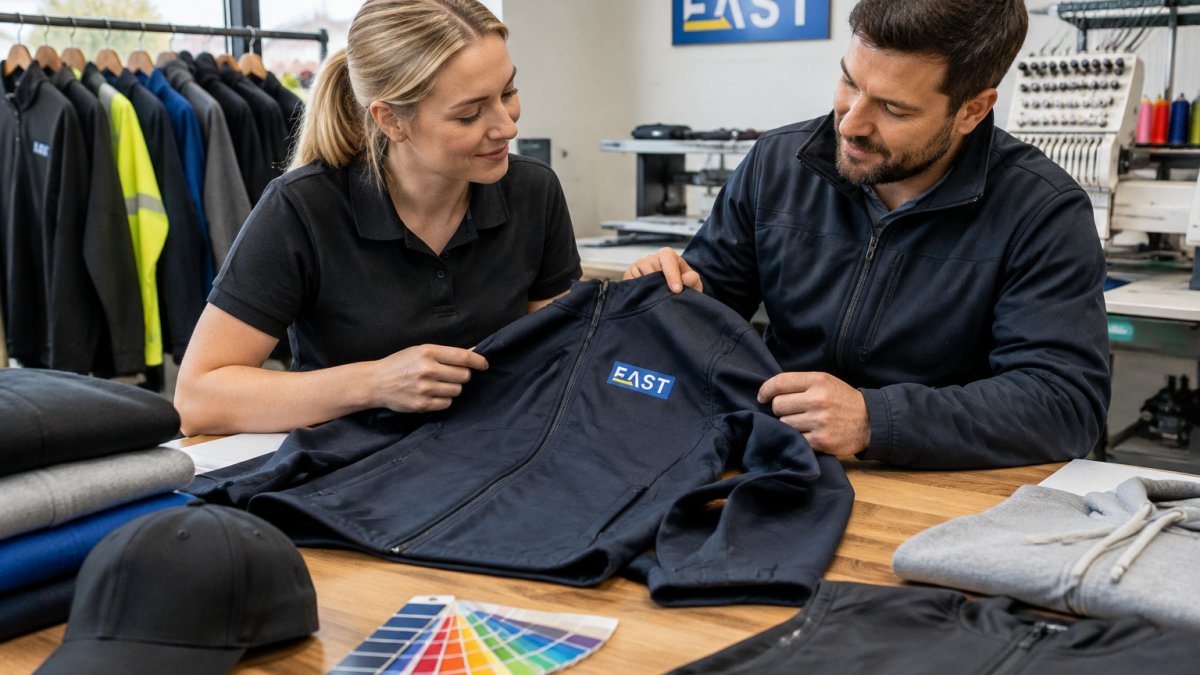
Workwear East provides embroidered and printed workwear for businesses, including DTF printing and screen printing. We can help you choose the method that suits your artwork and your team's needs.
To get started, send us your logo or artwork, the number of aprons, your preferred style and any sizing requirements. Our team will confirm the best method and advise on fabric and fit. Pricing depends on quantity, artwork and delivery timescale, so please email info@workweareast.co.uk for a quote tailored to your order.
For more information on our full range of workwear, visit workweareast.co.uk. You can also explore our workwear bundles and branded polo shirts if your team needs more than aprons.
Frequently Asked Questions
Where can I buy personalised aprons?
Personalised aprons are available from specialist workwear and printing suppliers, including Workwear East, which prints logos, names and artwork onto aprons for businesses and teams. Buying direct from a printer usually gives you more control over artwork, print method and fabric than a general retailer does. Pricing depends on quantity, print method, artwork complexity and delivery date, so the most reliable way to confirm cost is to request a quote. Email info@workweareast for a quote and send your artwork files along with your quantity and deadline.
What is the difference between printed and embroidered aprons?
Printed aprons carry the design as ink or film applied to the surface of the fabric, which suits full-colour artwork, photographs and fine detail. Embroidered aprons carry the design as stitched thread, which looks more substantial and suits logos with a limited number of colours. Printed designs can reproduce gradients and small text more easily, while embroidery gives a raised, tactile finish. The right choice depends on the artwork, the number of colours and how the apron will be used.
How do you care for printed aprons?
Check the care label before washing, and avoid ironing directly over the design.
Can you add a logo to an apron?
Yes. Logos can be added to aprons by printing or embroidery. Email info@workweareast.co.uk for a quote if you have a specific logo and quantity in mind.