 ultimate_guide
Best Fabric for Embroidered Staff Uniforms: UK Guide
Table of Contents
- What Makes Fabric Suitable for Embroidered Staff Uniforms
- Durable Workwear Fabrics UK: Cotton and Polycotton Options
- Polycotton Uniforms UK: Why the Blend Works for Embroidery
- Fabric Weight for Embroidery UK: GSM and Stitch Density
- Comfortable Uniform Materials UK: Breathability and Moisture-Wicking
- Fabric Comparison: Which Materials Work Best for Embroidered Uniforms
- How to Choose the Right Fabric for Your Team's Embroidered Uniforms
- Sustainability and Eco-Friendly Fabrics for Embroidered Workwear
Best Fabric for Embroidered Staff Uniforms: UK Guide
Last Updated: August 2, 2026
Choosing the best fabric for embroidered staff uniforms ensures your team's branded apparel stays sharp through hundreds of washes and maintains crisp logo detail. At Workwear East, we've helped dozens of Norfolk businesses select fabrics that balance durability, embroidery quality, and all-day wearability. The fabric you choose directly impacts how your embroidered design looks after six months, how comfortable your staff feel, and whether you'll replace uniforms every year or every three years.
What Makes Fabric Suitable for Embroidered Staff Uniforms
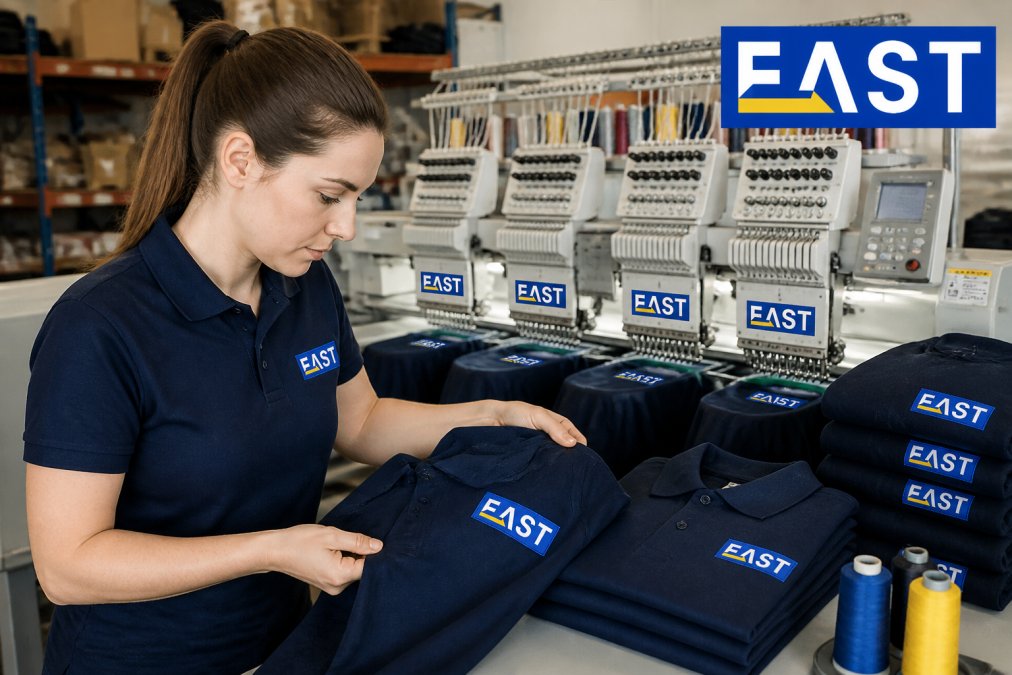
The best fabric for embroidered staff uniforms must support embroidery's mechanical stress. Unlike screen printing, embroidery penetrates the material, the needle punches through thousands of times, and thread tension pulls against the weave. Your fabric needs enough structural integrity to support that stress without distorting.
A tight weave is non-negotiable. Loose, open weaves allow the needle to create gaps and cause embroidery to shift or pucker. Cotton jersey performs poorly under embroidery because its loose knit structure moves too much. Conversely, tightly woven cotton twill or polycotton blends keep stitches locked in place and designs crisp across washings.
Fabric weight, measured in grams per square metre (GSM), determines how much the material resists needle penetration and stitch distortion. Research from [EXTERNAL_LINK: Textile Exchange sustainability standards | textileexchange.org] confirms that heavier fabrics (above 150 GSM) provide superior embroidery stability. For staff uniforms, aim for 170-200 GSM to ensure your logo stays sharp and the garment maintains its shape.
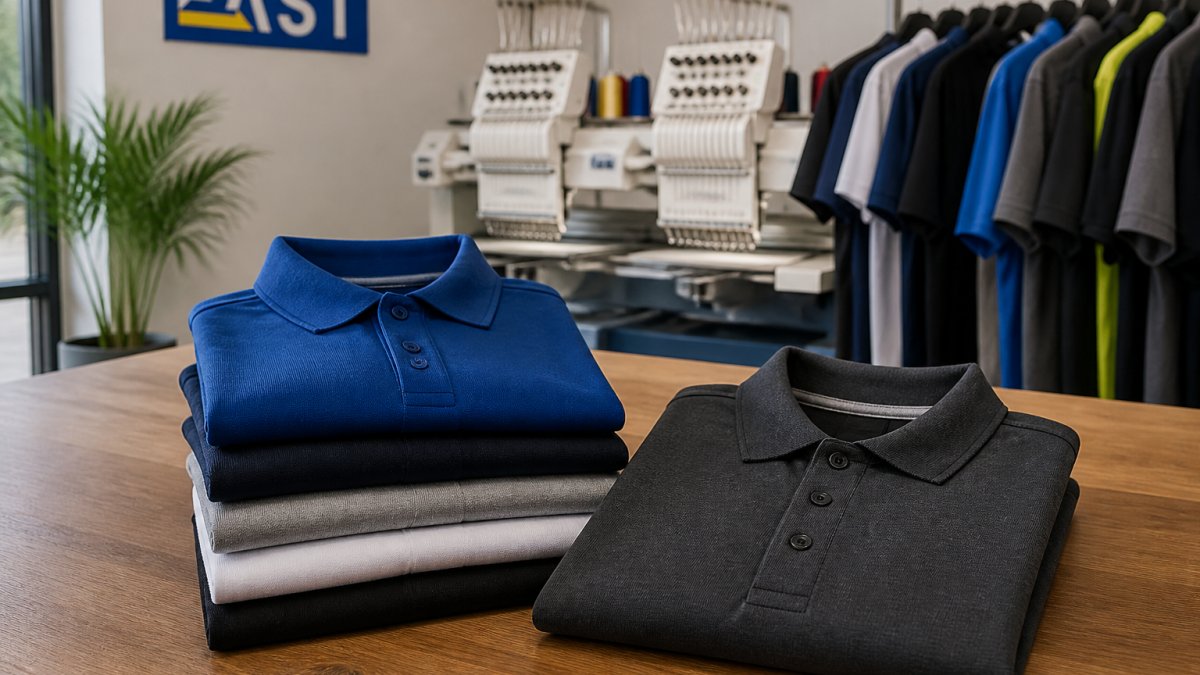
Fibre composition influences how well embroidery holds. A polycotton blend, typically 65% polyester and 35% cotton, combines cotton's breathability with polyester's durability and shrinkage resistance. This balance is why polycotton has become the industry standard for embroidered workwear across the UK.
Durable Workwear Fabrics UK: Cotton and Polycotton Options
When outfitting a team in branded uniforms, durability is essential. Staff wear these garments five days a week, often in demanding conditions. Industrial laundering, the hot-water, high-spin cycles used by most UK commercial laundries, is harsh on fabric. Cotton and polycotton perform very differently under this stress.
100% cotton uniforms offer traditional feel and excellent breathability. However, cotton shrinks. Even pre-shrunk cotton can lose 2-3% of its dimensions in the wash, and that shrinkage compounds over time. For embroidery, this is problematic: as the base fabric shrinks, the embroidered area can pucker and distort. Cotton also weakens when wet, stressing seams and embroidery stitches during the wash cycle.
Polycotton blends solve these problems. The polyester component resists shrinkage, so your uniform maintains its fit wash after wash. Polyester is also stronger when wet, protecting both seams and embroidery threads from stress damage. According to [EXTERNAL_LINK: British Standards Institution textile durability guidelines | bsigroup.com], polycotton blends show 40% better colour fastness and dimensional stability than 100% cotton after 50 industrial wash cycles.
Polycotton Uniforms UK: Why the Blend Works for Embroidery
Polycotton's dominance in the UK workwear market exists for good reason. The best fabric for embroidered staff uniforms balances three competing demands: it must hold embroidery without puckering, survive repeated industrial washing, and feel comfortable enough that staff want to wear it. Polycotton does all three better than any single-fibre alternative.
The polyester component provides the stability embroidery requires. Polyester fibres are smooth and uniform; they don't absorb moisture or swell when wet. This means fabric dimensions stay consistent from wash to wash, keeping stitches taut and designs crisp. The cotton component preserves breathability, preventing the synthetic, sweaty feeling that pure polyester uniforms can create.
Colour fastness, how well the fabric retains its dyed colour through washing, is where polycotton excels. Polyester holds dye better than cotton, so a polycotton blend resists fading far more effectively than pure cotton. Polycotton fabrics also resist pilling, those fuzzy balls that form on worn areas, because synthetic fibres are stronger and less prone to fibrillation. Your uniforms stay smooth and professional-looking far longer than pure cotton alternatives.
The moisture-wicking properties of polycotton are crucial for staff comfort. Cotton absorbs moisture and holds it, making the garment feel damp and heavy. Polyester wicks moisture away from the skin, allowing it to evaporate. A polycotton blend balances this: it absorbs some sweat while wicking enough moisture that staff stay reasonably dry throughout the day.
Fabric Weight for Embroidery UK: GSM and Stitch Density
Fabric weight, measured in GSM, directly affects embroidery quality. A lighter fabric (140-160 GSM) is more comfortable for indoor office roles but risks puckering under dense embroidery. If your logo is a small design with moderate stitch density, 160 GSM polycotton will hold it fine. If your design is large, multi-colour, or uses very dense stitching, you need at least 180 GSM to prevent needle distortion.
Medium-weight fabrics (170-200 GSM) are the sweet spot for most staff uniforms. This weight provides enough stability for embroidery without feeling heavy or stiff. A 180 GSM polycotton polo shirt has enough substance to feel professional and durable while remaining comfortable for eight-hour shifts.
Embroidery stitch density is measured in stitches per inch (SPI). A typical logo uses 8-10 SPI; dense, detailed designs might reach 12-15 SPI. At 15 SPI, you're pushing 200+ stitches into a single square inch of fabric. A 160 GSM fabric doesn't have enough density to support this without puckering. A 200 GSM fabric handles it easily.
A stabiliser is a temporary backing material placed behind the fabric during embroidery. It supports the weave, preventing needle distortion. Once embroidery is complete, the stabiliser is torn or washed away, leaving only the embroidery and original fabric. Using tear-away stabiliser allows you to embroider lighter fabrics (150 GSM) without puckering, though 170+ GSM is still preferable.
Comfortable Uniform Materials UK: Breathability and Moisture-Wicking
Staff comfort directly impacts productivity and retention. A uniform that feels hot, sticky, or restrictive will be resented, even if it looks professional. Breathability and moisture-wicking determine how comfortable a fabric feels during wear.
Breathability is the fabric's ability to allow air to pass through it. Natural fibres like cotton are inherently breathable. When woven into a polycotton blend, the cotton component creates air gaps and allows reasonable airflow. A 65/35 polycotton blend is significantly more breathable than pure polyester but less breathable than 100% cotton.
Moisture-wicking is the ability to pull sweat away from the skin and move it to the fabric surface where it can evaporate. Cotton absorbs moisture but doesn't wick it; sweat stays against the skin. Polyester wicks moisture but doesn't absorb it. A polycotton blend does both: it absorbs some sweat while wicking enough to keep staff reasonably dry.
For high-intensity movement roles, warehouse staff, construction workers, event coordinators, moisture-wicking becomes critical. A polycotton blend with higher polyester ratio (70/30 instead of 65/35) improves wicking without sacrificing cotton's natural feel. Thermal regulation varies by fibre type and fabric weight. Heavier fabrics (200+ GSM) provide insulation for outdoor winter roles. Lighter fabrics (160 GSM) work better for indoor environments or summer wear. A medium-weight polycotton (180 GSM) provides adequate thermal regulation across seasons.
Fabric Comparison: Which Materials Work Best for Embroidered Uniforms
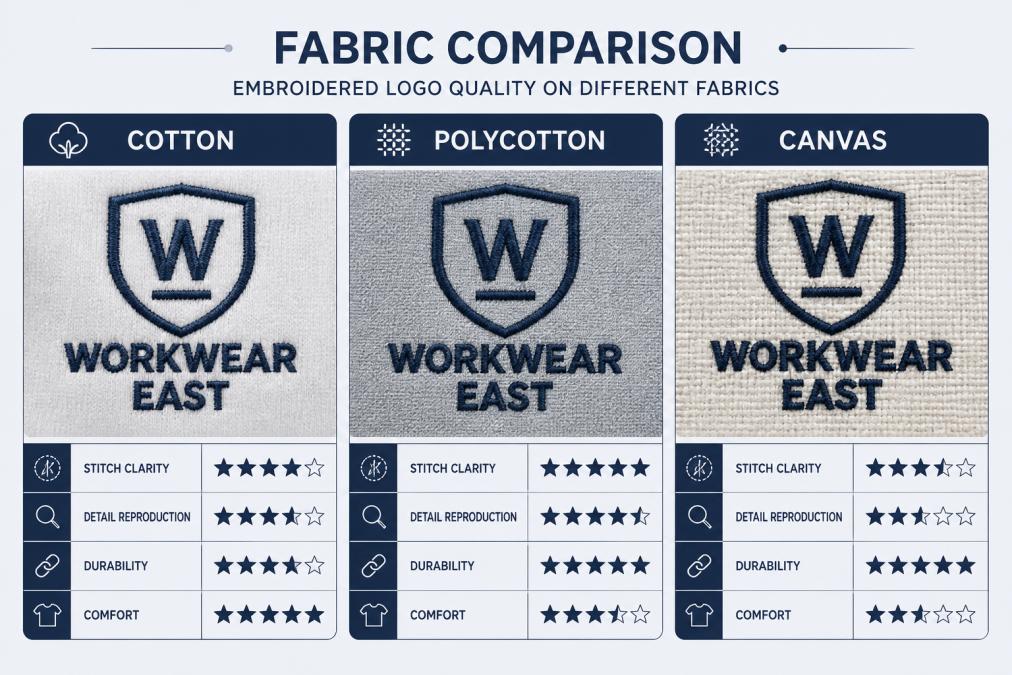
The table below summarises key properties of common workwear fabrics, evaluated for embroidery suitability, durability, and comfort.
| Fabric Type | GSM Range | Embroidery Stability | Colour Fastness | Breathability | Industrial Wash Durability | Best For |
|---|---|---|---|---|---|---|
| 100% Cotton | 140-180 | Moderate (prone to puckering) | Fair (fades after 50+ washes) | Excellent | Fair (shrinks, weakens when wet) | Indoor office roles, premium feel |
| 65/35 Polycotton | 160-200 | Excellent (stable through 100+ washes) | Excellent (vibrant after 100+ washes) | Good | Excellent (no shrinkage, resists wear) | General staff uniforms, most industries |
| 70/30 Polycotton | 170-210 | Excellent | Excellent | Good (slightly less than 65/35) | Excellent | High-movement roles, outdoor use |
| Cotton Twill | 200-240 | Excellent (tight weave) | Fair | Moderate | Good (durable but can shrink) | Work trousers, structured garments |
| Canvas | 280-350 | Excellent (very tight weave) | Good | Poor | Excellent | Heavy-duty workwear, protective clothing |
| Jersey Knit | 140-160 | Poor (loose knit, high puckering risk) | Fair | Excellent | Fair (stretches and loses shape) | Casual wear, not recommended for embroidery |
A 65/35 polycotton blend at 180 GSM represents the optimal balance for most UK staff uniforms. It handles embroidery beautifully, survives industrial laundering without fading or shrinking, and feels comfortable for eight-hour shifts.
Cotton twill is worth considering for structured garments like work trousers or overshirts. The tight weave provides excellent embroidery stability, and twill's diagonal weave creates a professional appearance. Account for greater shrinkage than polycotton when sizing.
Canvas is essential for outdoor or high-hazard roles but overkill for most staff uniforms. Its extreme durability and tight weave make it ideal for embroidery, but it's stiff and uncomfortable for prolonged wear.
Jersey knit should be avoided for embroidered uniforms. The loose knit structure causes severe puckering, and the stretch means embroidered designs distort as the garment moves.
How to Choose the Right Fabric for Your Team's Embroidered Uniforms
Start by assessing role demands. If your team works indoors in climate-controlled environments (offices, retail, hospitality), a standard 65/35 polycotton at 180 GSM will keep staff comfortable. If your team works outdoors or in high-movement roles (warehouse, construction, events), prioritise moisture-wicking and choose a 70/30 polycotton.
Next, evaluate your embroidery design. A small, simple logo (under 7.5 cm, 8-10 SPI) works fine on 160 GSM fabric. A large, complex design with multiple colours and dense stitching (12+ SPI) requires 190+ GSM or stabilisation backing. If uncertain about design complexity, Workwear East can assess your artwork and recommend the minimum fabric weight needed.
Consider your laundering process. If you use commercial laundry services, standard for most UK businesses with teams over 20 people, polycotton is essential. Industrial laundering is too harsh for cotton; shrinkage and colour fading will be visible within weeks.
Budget constraints matter. Pricing depends on quantity, dates, and delivery. For current prices or a quote, please contact Workwear East.
Test before bulk ordering. Request samples of your chosen fabric with small embroidery testing (your logo at actual size and stitch density). Wash the sample using your intended laundry method and inspect the embroidery for puckering, thread colour bleeding, or distortion. Email info@workweareast.co.uk for a quote on sample embroidery testing, and they can guide you through the assessment process.
Matching fabric to industry is important. Retail and hospitality staff need fabrics that feel soft and look polished; polycotton at 180 GSM works perfectly. Construction and trade workers prioritise durability; a heavier polycotton (200 GSM) or cotton twill handles abuse better. Healthcare and food service staff need antimicrobial or easy-care properties; polycotton with appropriate finishes is standard.
Sustainability and Eco-Friendly Fabrics for Embroidered Workwear
Sustainability is increasingly important to UK businesses and their staff. Organic cotton is grown without synthetic pesticides or fertilisers, reducing environmental impact. However, organic cotton offers no inherent advantage for embroidery stability or durability compared to conventional cotton. Organic polycotton (organic cotton blended with polyester) solves this, providing durability benefits while using sustainably grown cotton.
Tencel (lyocell) is a semi-synthetic fibre made from wood pulp using a closed-loop process that recycles solvents and reduces water waste. Tencel has a soft, luxurious feel and excellent moisture-wicking. However, pure Tencel is weaker than cotton and unsuitable for embroidery without blending. A Tencel-cotton blend works for embroidery and offers a premium feel, but the cost is significantly higher than standard polycotton.
Recycled polyester is made from post-consumer plastic bottles and textile offcuts. Blended with recycled cotton or conventional cotton, recycled polyester reduces landfill waste and virgin resource extraction. The performance is equivalent to conventional polyester, so a recycled polycotton blend performs identically to standard polycotton for embroidery.
For most UK businesses, the sustainability sweet spot is recycled polycotton at 180 GSM. It performs identically to conventional polycotton for embroidery and durability, and reduces environmental impact by using recycled materials.
Selecting the best fabric for embroidered staff uniforms requires balancing technical embroidery requirements, durability through industrial laundering, comfort for all-day wear, and budget constraints. A 65/35 polycotton blend at 180 GSM delivers on all fronts: it holds embroidery beautifully without puckering, survives 100+ commercial wash cycles without fading or shrinking, and feels comfortable for most roles. For specialist roles or sustainability priorities, heavier polycotton, cotton twill, or recycled blends offer tailored solutions. The key is testing your chosen fabric with actual embroidery before committing to bulk orders.
Workwear East offers Branded Polo shirts and Workwear Bundles in a range of fabrics and weights, all suitable for embroidery. Email info@workweareast.co.uk for a quote on sample embroidery testing and expert guidance on fabric selection for your team. Visit workweareast.co.uk to explore fabric options and discuss your uniform requirements with the Workwear East team.
Frequently Asked Questions
What is the most durable fabric for embroidered staff uniforms in the UK?
Polycotton blends (typically 65% polyester, 35% cotton) offer the best durability for embroidered uniforms. The polyester adds tensile strength and colour fastness, whilst cotton provides a stable surface for embroidery. 100% cotton at 170-185 GSM is also highly durable and excellent for embroidery if industrial laundering is available. Your choice depends on wash frequency and work environment.
What fabric weight is ideal for embroidered logos on staff uniforms?
Fabric weight between 170-210 GSM (grams per square meter) is ideal for embroidery. Lighter fabrics (under 150 GSM) risk puckering and poor stitch definition, whilst heavier fabrics (over 220 GSM) can be difficult to needle and may cause thread breakage. The right weight ensures embroidery stability, prevents backing material show-through, and maintains garment comfort for all-day wear.
Is cotton or polyester better for embroidered staff uniforms?
Neither alone is ideal, polycotton blends are superior. Pure cotton offers excellent embroidery quality and breathability but requires careful laundering to prevent shrinkage. Polyester adds durability and colour fastness but can feel less breathable. A polycotton blend balances embroidery stability, durability, moisture-wicking, and ease of care, making it the best choice for most UK workwear applications.
How do I prevent puckering when embroidering staff uniforms?
Puckering occurs when fabric lacks proper stabilisation or the weight is too light. Use appropriate backing material (tear-away or cut-away depending on fabric type), ensure stitch density matches your fabric weight, and avoid over-tightening tension. Polycotton fabrics at 180+ GSM resist puckering better than lighter materials. Testing a sample before bulk production is essential to confirm your settings.
What are the benefits of polycotton uniforms UK for embroidery?
Polycotton uniforms offer excellent embroidery stability, superior colour fastness after repeated washing, reduced shrinkage compared to 100% cotton, and easier care for busy teams. The synthetic content strengthens the fabric, allowing finer stitch detail and reducing thread breakage during embroidery. Polycotton also resists creasing and maintains professional appearance longer, making it ideal for corporate and industrial workwear.
Can sustainable fabrics work for embroidered staff uniforms?
Yes. Tencel-cotton blends and organic cotton are increasingly viable for embroidered uniforms. Tencel offers excellent breathability, moisture-wicking, and anti-bacterial properties, whilst maintaining embroidery stability. Organic cotton provides environmental benefits with comparable embroidery performance to conventional cotton. Both cost more than standard polycotton but suit businesses prioritising sustainability. Confirm GSM and backing compatibility with your embroidery provider.
How do needle and thread compatibility affect embroidery on uniform fabrics?
Fabric weight determines needle size: lighter fabrics (under 150 GSM) need 60/8 or 70/10 needles; medium fabrics (170-210 GSM) use 75/11 or 80/12; heavier fabrics (over 220 GSM) require 90/14 or larger. Polyester thread is standard for durability and colour fastness on workwear. Using the wrong needle causes skipped stitches, puckering, and thread breakage. Workwear East can advise on optimal settings for your chosen fabric.
This article was written using GrandRanker