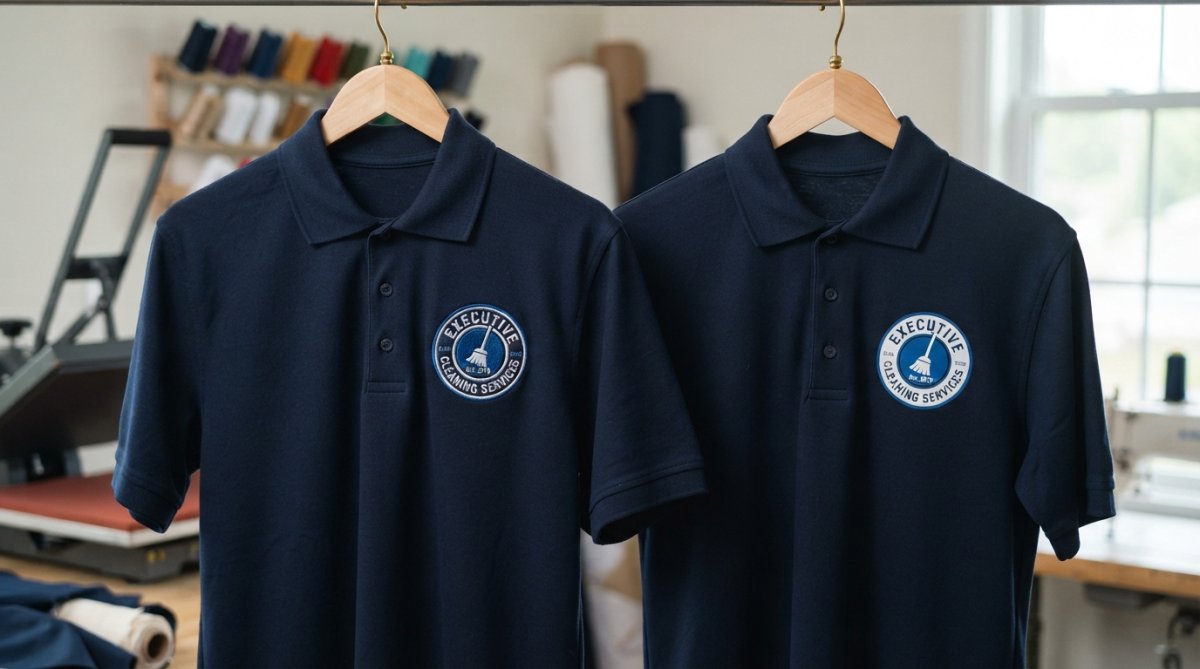
 comparison
Embroidered vs Printed Uniforms: Lifespan & Durability
Table of Contents
- Lifespan of Embroidered vs Printed Uniforms: Key Differences
- Embroidered Workwear Durability in the UK
- Printed Uniform Fading in the UK: Screen Printing, DTF & Heat Transfer
- Cost of Embroidered vs Printed Uniforms UK: Long-Term Value
- Workwear Washing Instructions UK: Maintaining Longevity
- Fabric Suitability and Environmental Impact
- Repairability and Removal: Extending Uniform Lifespan
- Comparison Table: Durability, Cost, and Professional Appearance
Last Updated: July 29, 2026
Lifespan of Embroidered vs Printed Uniforms: Key Differences
When businesses invest in branded workwear, the decoration method directly impacts total cost of ownership and professional appearance. Embroidered uniforms typically outlast printed counterparts by several years, but the cost-per-unit analysis reveals a more nuanced story than durability alone. This guide examines actual performance differences between embroidered and printed workwear, covering durability factors, maintenance requirements, environmental impact, and true cost of ownership.
Why Lifespan Matters for Corporate Identity
Your branded uniforms represent your business daily. A fading or peeling logo undermines corporate identity and brand consistency. Replacement frequency creates hidden costs, downtime for staff, disposal expenses, and administrative burden of reordering. Inconsistent branding, where some team members wear faded logos while others have crisp ones, damages professional appearance.
Embroidered Workwear Durability in the UK
Embroidered uniforms significantly outlast printed alternatives. Thread physically stitched into fabric creates a permanent bond that resists industrial laundry, repeated washing, and daily friction. Quality embroidered workwear remains professional-looking for 3-5 years with standard care, compared to 12-24 months for typical screen-printed alternatives.
Thread Count, Stitching Quality, and Garment Longevity
Higher stitch density creates tighter, more resilient embroidery that resists unravelling. Professional embroidery machines achieve 800+ stitches per inch, creating extremely durable designs. Polyester embroidery thread resists fading and moisture better than cotton, making it standard for workwear. Proper backstitching and reinforced corners prevent unravelling at design edges.
How Embroidery Resists Fading and Peeling
Embroidery cannot peel because thread is physically part of the garment, there's no adhesive layer to fail. Embroidered logos resist fading better than prints, particularly with polyester thread. Under intense UV exposure, embroidery fades gradually over 2-3 years but maintains design integrity.
Printed Uniform Fading in the UK: Screen Printing, DTF & Heat Transfer
Printed uniforms offer advantages in design complexity and initial cost, but durability varies by printing method. Screen printing applies ink directly through a mesh screen; DTF (Direct-to-Film) transfers a film layer onto fabric; heat transfer applies pre-printed designs via heat and pressure.
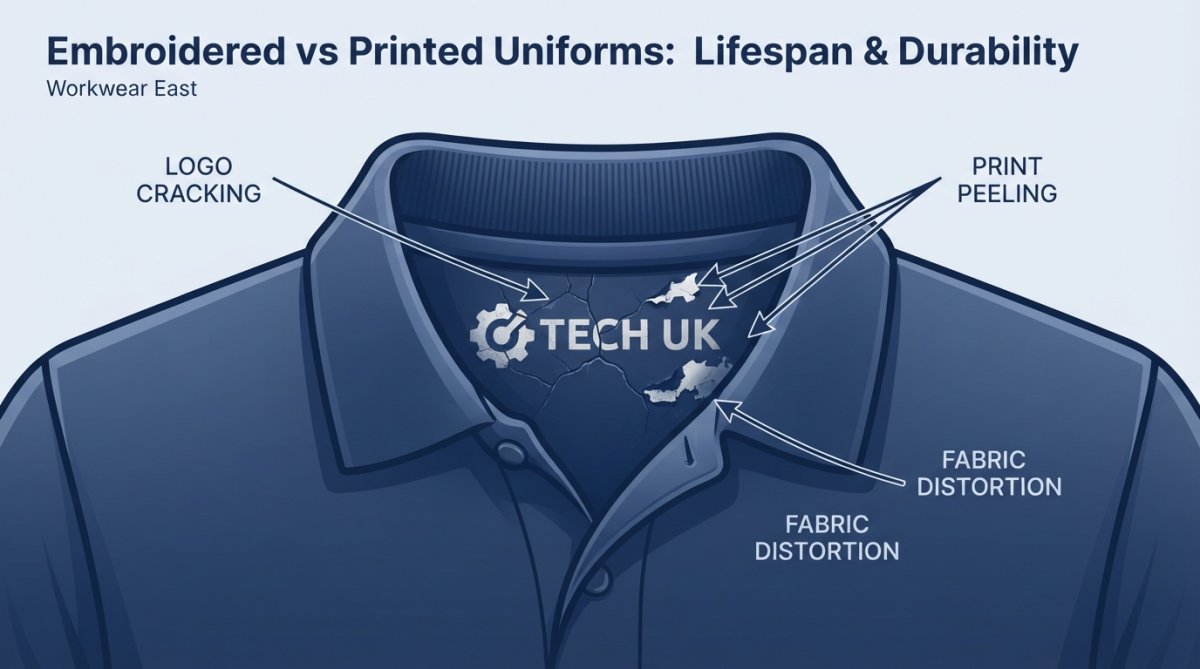
Why Prints Crack and Peel: Common Failure Points
Printed designs crack because ink layers don't flex with fabric. Repeated washing and drying cause fabric expansion and contraction, creating micro-cracks in rigid ink that expand until visible flaking occurs. Peeling happens when adhesive bonds fail through heat exposure, alkaline detergents, or age, typically beginning at edges where mechanical stress is highest.
Screen-printed uniforms may last 18-24 months with careful washing, but industrial laundry can reduce this to 12 months. Heavy-duty cycles using high temperatures and strong detergents accelerate degradation significantly.
Design Resolution and Color Vibrancy Over Time
Printed designs offer superior initial colour vibrancy but fade noticeably over time. UV exposure and repeated washing cause visible colour shift within 12-18 months. Embroidered designs maintain colour consistency longer, though polyester thread also fades under extreme UV exposure, it does so more slowly than printed ink. Fine lines in printed designs blur or break apart as ink cracks; embroidered designs maintain sharp edges much longer.
Cost of Embroidered vs Printed Uniforms UK: Long-Term Value
Initial cost-per-unit typically favours printing at £3-5 per unit versus £8-12 for embroidery. However, this upfront difference becomes irrelevant when calculating replacement frequency and total cost of ownership over three years.
Cost-Per-Unit Analysis for Bulk Ordering
Screen printing's cost advantage applies primarily to large orders (100+ units). At smaller volumes (15-50 units), embroidery cost-per-unit approaches printing because setup costs distribute across fewer items. Workwear East provides custom quotes based on your specific requirements.
The real cost calculation must account for replacement cycles. If embroidered uniforms last 3 years and printed uniforms last 18 months, you'll replace printed uniforms twice in the same period, purchasing twice as many garments and managing twice as many replacement cycles.
Replacement Frequency and Total Cost of Ownership
When calculating total cost of ownership, include downtime during replacement cycles, administrative overhead for reordering and distribution, disposal costs, and brand consistency impact. Businesses report that fewer replacement cycles, reduced administrative burden, and maintained brand consistency justify embroidery's premium despite higher upfront cost.
Workwear Washing Instructions UK: Maintaining Longevity
How you wash branded uniforms dramatically affects lifespan, regardless of decoration method. Industrial laundry standards in the UK differ from home washing.
Wash Cycles, Temperature, and Industrial Laundry Standards
Printed uniforms are sensitive to wash temperature. High-temperature washes (above 60°C) accelerate ink fading and adhesive failure. Most printed uniforms should be washed at 40°C maximum. Industrial laundry services often use 60-70°C washes as standard, which accelerates print degradation significantly.
Mechanical action during washing stresses both fabric and decoration. Gentle cycles extend lifespan; heavy-duty cycles may not remove heavy soiling from construction work. Alkaline detergents common in industrial laundry can degrade heat transfer adhesives. Bleach exposure damages both embroidery thread colour and printed ink vibrancy. Use mild, neutral detergents without bleach for maximum lifespan.
Fabric Weight, Polyester Blends, and Cotton Apparel Care
Heavier fabric weight (280gsm and above) supports both embroidery and printing better than lightweight materials. Polyester blends (65% polyester / 35% cotton) offer better durability than pure cotton, resisting shrinkage, fading, and moisture absorption. Embroidery thread on polyester blends holds colour longer and resists moisture-related degradation.
Pure cotton apparel requires more careful washing. Air drying or low-heat tumble drying extends lifespan considerably compared to high-heat dryers, which accelerate print degradation.
Fabric Suitability and Environmental Impact
Not all fabrics work equally well with embroidery or printing.
Which Fabrics Work Best for Each Decoration Method
Embroidery requires sufficient weight and weave density. Lightweight fabrics (under 150gsm) don't hold stitches securely. Tightly woven fabrics like twill and canvas hold embroidery best. Polyester blends are ideal because synthetic fibres resist moisture and don't shrink, preventing stitch distortion.
Screen printing requires smooth, flat fabric surfaces. Tightly woven knits work well; loose knits produce fuzzy print edges. DTF printing offers the broadest fabric compatibility, working on cotton, polyester, blends, and some synthetics. Heat transfer printing works best on smooth, flat fabrics.
Screen Printing: Smooth, tight-knit fabrics and lightweight cotton. Avoid heavily textured materials.
DTF Printing: Most fabrics, including cotton, polyester, and blends. Good for complex designs.
Sustainability and Environmental Considerations
Embroidered uniforms have lower environmental impact over their lifespan because they require fewer replacements. Manufacturing uniforms consumes water, energy, and raw materials. Reducing replacement frequency directly reduces environmental impact per year of use.
The most sustainable approach combines durable fabric (polyester blends), embroidery decoration, and proper care. This minimises replacement cycles while using readily recyclable materials. A uniform lasting three years has lower annual environmental cost than one lasting 18 months, even if the durable uniform required more resources initially.
Repairability and Removal: Extending Uniform Lifespan
Embroidered and printed uniforms differ substantially in repairability. Embroidered designs can be repaired if stitching becomes loose or unravels. Professional embroiderers can re-stitch damaged areas, restoring designs to original condition at £5-15 per garment. Embroidery removal is challenging, but designs can be covered by embroidering new designs over them.
Printed designs cannot be easily repaired. Once cracking or peeling begins, damage is permanent. Printed uniforms can be refreshed by printing new designs over faded ones, provided the original print isn't severely peeling.
For businesses planning long-term uniform use, embroidery's repairability extends practical lifespan. A uniform that might be discarded after 3 years can potentially serve 4-5 years if embroidery damage is professionally repaired.
Comparison Table: Durability, Cost, and Professional Appearance
Factor | Embroidered Uniforms | Printed Uniforms |
|---|---|---|
Typical Lifespan | 3-5 years | 18-24 months |
Initial Cost Per Unit | £8-12 | £3-5 |
Replacement Cycles (3 years) | 1-1.5 | 2-2.5 |
Total 3-Year Cost (20 staff) | £240-300 | £180-250 |
Colour Fading | Minimal (years) | Visible (12-18 months) |
Cracking/Peeling Risk | None | High after 18 months |
Repair Possible | Yes (£5-15 per item) | No (permanent damage) |
Design Complexity | Limited (solid colours best) | Excellent (photographic possible) |
Environmental Impact Per Year | Lower (fewer replacements) | Higher (frequent replacements) |
Best For | Durability, consistency, industrial use | Budget-conscious, complex designs |
Choosing between embroidered and printed uniforms requires balancing upfront cost against long-term durability, maintenance requirements, and brand consistency. For most UK businesses, embroidered uniforms deliver superior value over 3+ years despite higher initial cost. Printed uniforms suit budget-conscious operations with shorter planning horizons or teams requiring photographic-quality designs.
Workwear East specialises in both embroidery and DTF printing, with advanced embroidery machines for intricate multi-colour designs and versatile DTF printing for detailed, full-colour images. Our team helps you select the decoration method matching your durability requirements, budget, and design complexity needs. Get a Quote from Workwear East today to compare embroidered and printed options tailored to your team's specific requirements.
Frequently Asked Questions
Which lasts longer, embroidered or printed uniforms in the UK?
Embroidered uniforms typically outlast printed ones when properly maintained. Embroidery uses thread stitched directly into fabric, resisting fading and peeling through hundreds of wash cycles. Printed uniforms—whether screen printed, DTF, or heat transfer—begin showing signs of cracking and fading after 50–150 washes depending on print quality, wash temperature, and fabric type. For workwear subjected to frequent industrial laundry or harsh environments, embroidery offers superior garment longevity.
How do I prevent printed logos from cracking after washing?
Print durability depends on three factors: print method quality, fabric preparation, and washing practices. DTF printing and high-quality screen printing resist cracking better than basic heat transfers. Always follow workwear washing instructions: wash inside-out, use cool water (below 40°C), avoid fabric softener, and air-dry when possible. Avoid high-temperature industrial laundry cycles if your printed uniforms are new. Poor-quality prints crack quickly regardless of care, so choosing a supplier using advanced printing techniques like DTF ensures colour vibrancy and longevity.
What is the actual cost difference between embroidered and printed uniforms over time?
Initial cost-per-unit for screen printing is typically lower for large bulk orders (50+ items), making it attractive for tight budgets. However, embroidered uniforms cost more upfront but last 2–3 times longer, reducing replacement frequency. For a small construction firm with 15 staff replacing uniforms annually, embroidered workwear may cost less overall despite higher initial investment. For large organisations with 50+ staff, bulk ordering discounts on printed uniforms can offset shorter lifespan. Request quotes from your supplier to compare total cost of ownership, not just unit price.
Can embroidered logos be removed or repaired if they get damaged?
Embroidered logos are difficult to remove completely without damaging the garment, but minor repairs are possible. A professional embroiderer can patch small holes or re-stitch loose threads, extending garment life. Printed logos cannot be repaired—once cracked or peeling, replacement is the only option. This repairability advantage makes embroidered uniforms more sustainable and cost-effective long-term, particularly for branded corporate apparel where logo integrity matters for professional appearance.
This article was written using GrandRanker