 blog
blog
Why Embroidered Logos Last Longer: The Full Story
Table of Contents
- Embroidered vs Printed Logos Durability: What Actually Differs
- The Technical Reasons Why Embroidered Logos Last Longer
- How Long Do Embroidered Logos Last on Workwear?
- Benefits of Embroidered Workwear Logos for Businesses
- Resistance to Heat, UV Exposure, and Abrasion
- Best Use Cases for Embroidered Logos on Workwear
- Embroidered Logo Care Tips to Maximise Lifespan
- Sustainability and the Broader Garment Lifecycle Argument
Last Updated: August 1, 2026
The question of why embroidered logos last longer than printed alternatives is one that comes up constantly in the workwear industry, and the answer is more mechanical than most people realise. At Workwear East, we work with businesses across Norfolk and beyond who have been burned by printed logos that cracked, peeled, or faded after a handful of washes. Below, we'll show you exactly how embroidery's physical construction gives it a fundamental durability advantage, and why that matters for your bottom line.
The core insight is this: embroidery creates a mechanical bond between thread and fabric, whereas printing relies on adhesive or polymer layers sitting on top of the substrate. One is woven into the garment. The other is attached to it. That structural difference determines everything.
According to The Textile Institute's guidance on textile durability and care, the long-term performance of any garment decoration method depends primarily on how well it integrates with the base fabric's structure. Embroidery, by definition, becomes part of that structure.
Embroidered vs Printed Logos Durability: What Actually Differs
The difference between embroidered logos and printed alternatives is a structural one, not simply a quality comparison.
The Mechanical Bond: Thread vs Adhesive
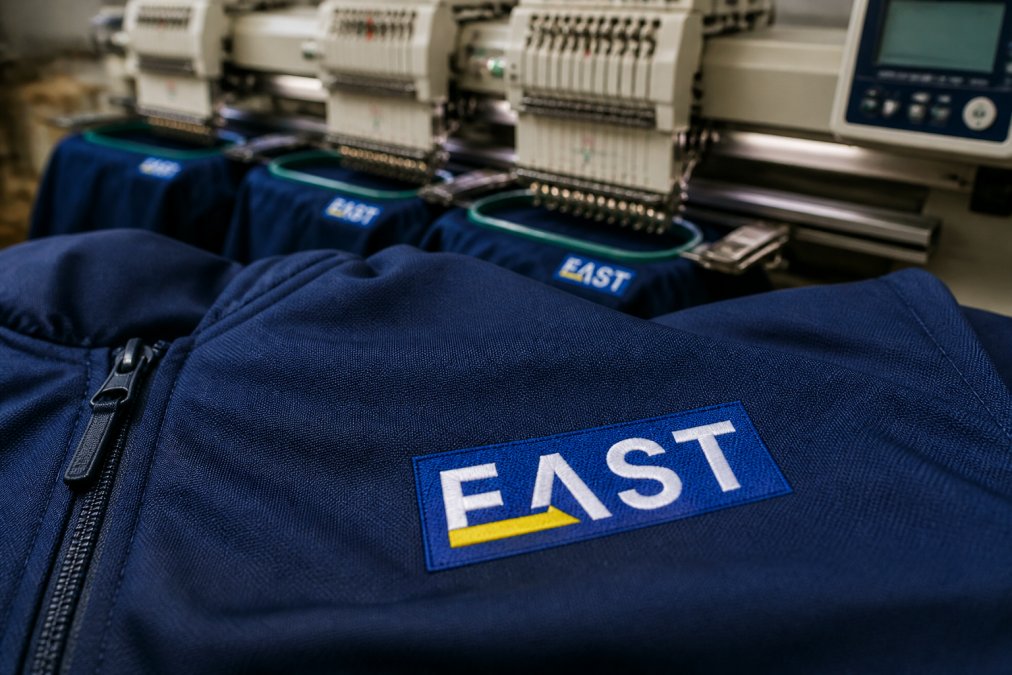
Embroidery works by driving thread through the fabric substrate using a needle, creating a stitch that physically interlocks with the garment's weave. The thread penetrates the textile, and the resulting stitch count creates a dense, dimensionally stable structure that cannot separate from the fabric without physically tearing it.
Printed methods, including screen printing, vinyl transfer, and heat seal transfer, apply a layer of pigment, polymer, or adhesive film onto the fabric surface. The bond is chemical or thermal, not mechanical. Over time, thermal stress from washing and drying, UV exposure from outdoor use, and abrasion from daily wear all work to break down that bond, resulting in cracking, peeling, and fading.
Visual Degradation Compared: Fading vs Peeling vs Cracking
- Screen printing fades gradually as the ink layer thins under wash cycles and UV exposure.
- Vinyl transfer and heat seal transfer peel at the edges first, then crack across the surface as the adhesive degrades.
- DTF printing offers better adhesion than older vinyl methods, but the polymer base remains subject to thermal stress and abrasion.
- Embroidery does not fade, peel, or crack. Thread is inherently colour-stable, and there is no adhesive layer to degrade.
| Branding Method | Primary Failure Mode | Typical Onset | Resistance to Industrial Laundering |
|---|---|---|---|
| Embroidery | Stitch softening over time | Very long-term | Excellent |
| Screen Printing | Fading, fine detail loss | Moderate wash cycles | Moderate |
| Heat Seal / Vinyl Transfer | Edge peeling, surface cracking | Early to moderate | Poor to moderate |
| DTF Printing | Surface cracking, adhesive breakdown | Moderate wash cycles | Moderate |
The Technical Reasons Why Embroidered Logos Last Longer
Embroidery's durability is the direct result of how the process interacts with the fabric at a structural level. Thread density, stitch count, and embroidery backing all determine how well a design holds up over its lifetime. A high stitch count creates a tighter, more dimensionally stable logo. The backing material, applied to the reverse of the garment during stitching, stabilises the fabric and prevents distortion under tension.
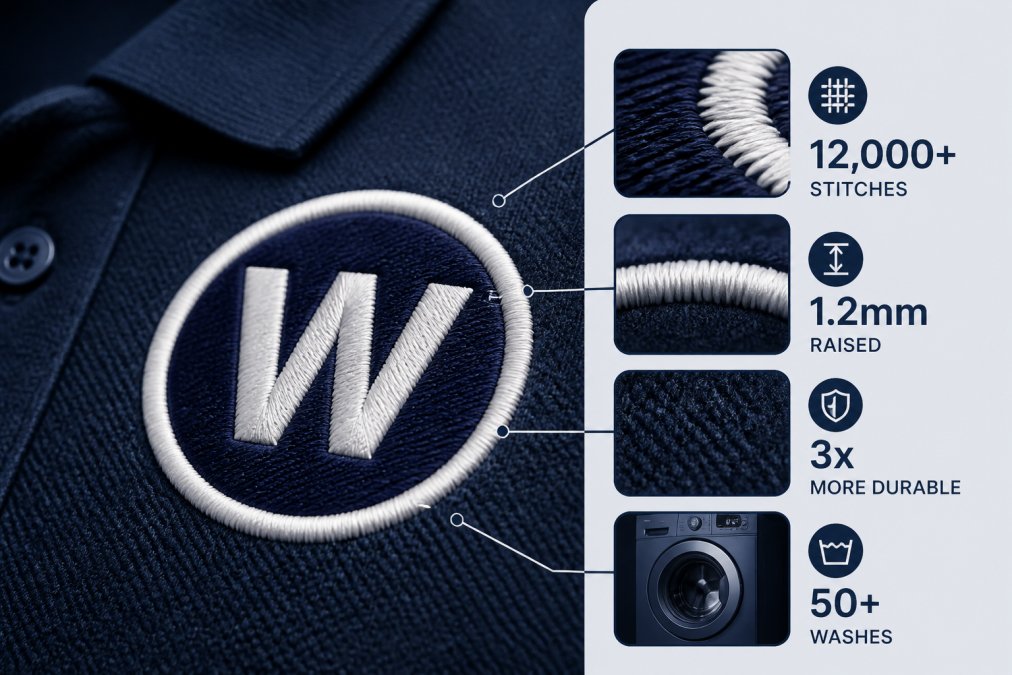
Thread tension is equally critical. Correct tension ensures that each stitch sits flat against the fabric without pulling or puckering. This detail separates professional embroidery from budget alternatives and is invisible until the garment has been through several dozen wash cycles.
Thread Tension, Stitch Count, and Embroidery Backing Explained
Thread tension is the balance between the upper thread and the bobbin thread as the needle passes through the fabric. When calibrated correctly, each stitch locks cleanly within the fabric layers, creating a secure mechanical bond.
Stitch count refers to the total number of stitches in a design. Higher stitch counts produce denser, more durable logos with better abrasion resistance. A complex multi-colour corporate logo might involve tens of thousands of individual stitches, each contributing to the overall tensile strength.
Embroidery backing is the stabilising material placed behind the fabric during stitching. It prevents the substrate from stretching under needle pressure and maintains dimensional stability throughout the design's lifespan.
Stitch Penetration and Fabric Integrity
Stitch penetration is the depth at which thread passes through the garment's weave. Proper penetration creates interlocking loops that cannot be separated without physically destroying the surrounding fabric. This is why embroidered logos last longer through industrial laundering and heavy daily use, the logo is part of the fabric, not sitting on it.
How Long Do Embroidered Logos Last on Workwear?
Embroidered logos, when correctly produced, are expected to outlast the garment itself under normal use conditions. The thread is woven into the fabric, and the fabric will wear out before the stitching fails.
Industrial Laundering vs Home Washing: The Real Test
Home washing operates at lower temperatures, typically 30-60°C, with gentler agitation cycles. Industrial laundering, used by hospitality, healthcare, and large trade operations, involves higher temperatures, stronger detergents, and significantly more aggressive mechanical agitation. Heat seal transfers and vinyl applications frequently fail under these conditions within relatively few cycles as adhesive degradation accelerates sharply at elevated temperatures.
Embroidery is largely unaffected by industrial laundering. Thread is inherently heat-resistant at laundry temperatures, and there is no adhesive layer to break down. For businesses that send workwear through commercial laundry services, this is the deciding factor.
According to The Textile Services Association's guidance on workwear laundering standards, garment decoration must be assessed for compatibility with industrial wash processes, particularly at temperatures above 60°C, before specifying branded workwear for commercial laundry operations.
Benefits of Embroidered Workwear Logos for Businesses
The practical case for embroidery extends beyond durability.
Professional Appearance, Texture, and Logo Crispness
Embroidered logos carry a tactile, dimensional quality that printed alternatives cannot replicate. The raised texture of the stitching creates visual depth that reads as premium to anyone who sees or touches the garment. For client-facing roles and site visits, this matters significantly.
Logo crispness is maintained throughout the garment's life because there is no surface layer to degrade. The design looks the same after a hundred wash cycles as it did on day one.
Cost-Effectiveness and Garment Lifecycle Over Time
The upfront cost of embroidery is typically higher than basic printing methods. However, the correct comparison is cost per wear cycle, not cost per garment. A printed logo that fails after a moderate number of washes requires the garment to be replaced or rebranded. An embroidered logo that outlasts the garment means you replace the clothing when it wears out, not when the branding fails. For businesses with 15 to 50 staff, that difference compounds significantly over two to three years.
For businesses looking to outfit teams efficiently, the [Workwear East workwear bundles](https://www.workweareast.co.uk/create/8805281?c=8805281) offer a practical way to manage embroidered garments at volume without sacrificing quality or consistency.
Resistance to Heat, UV Exposure, and Abrasion
Three environmental factors destroy printed branding faster than anything else: heat, UV exposure, and physical abrasion. Embroidery handles all three fundamentally better.
Heat from tumble drying and industrial laundering accelerates adhesive degradation in printed applications. Thread is thermally stable at laundry temperatures and is unaffected.
UV exposure bleaches surface pigments in screen printing and fades vinyl transfers over time. Embroidery thread, particularly polyester thread, is inherently fade-resistant because the colour is part of the thread's composition, not a surface coating. For outdoor workwear, hi-vis garments, and any apparel worn in direct sunlight, this is a significant practical advantage.
Abrasion resistance is where embroidery's mechanical bond is most clearly superior. Physical contact with surfaces, tools, and equipment gradually strips surface-applied branding. Thread, interlocked with the fabric's weave, resists abrasion in a way that no adhesive-bonded layer can match.
Best Use Cases for Embroidered Logos on Workwear
Embroidery is the right choice for most professional workwear applications, particularly:
- Trade and construction workwear: High abrasion environments where printed logos fail quickly
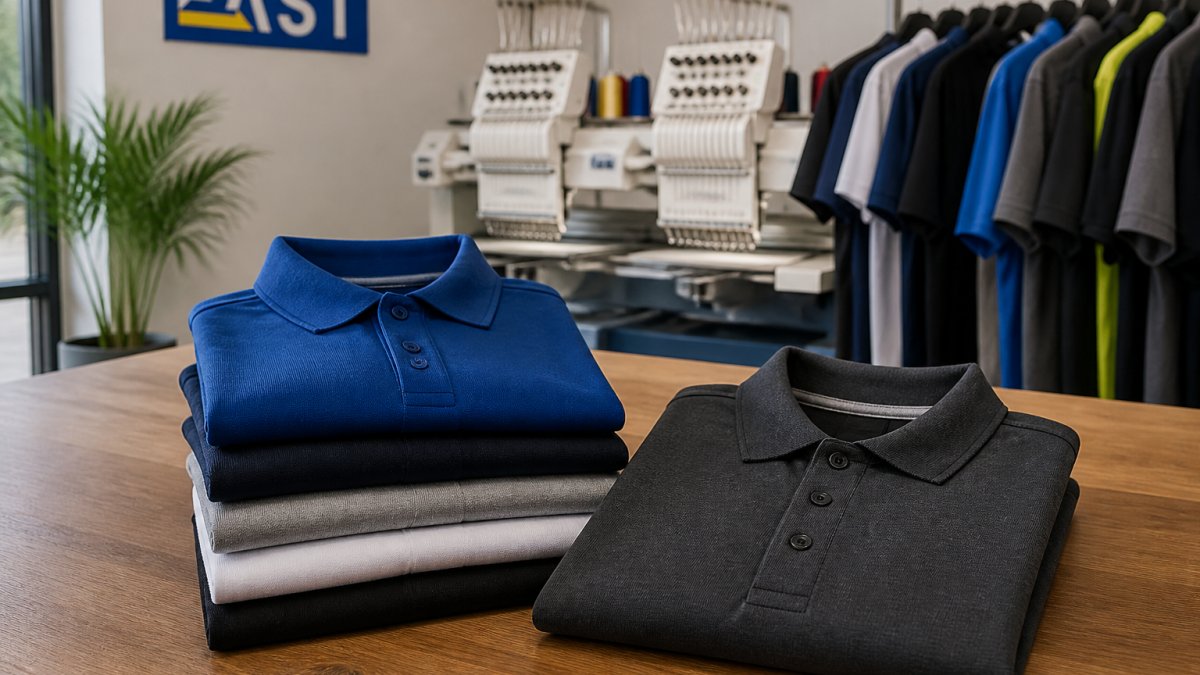
- Corporate uniforms and polo shirts: Where professional aesthetic and logo crispness matter for client-facing staff
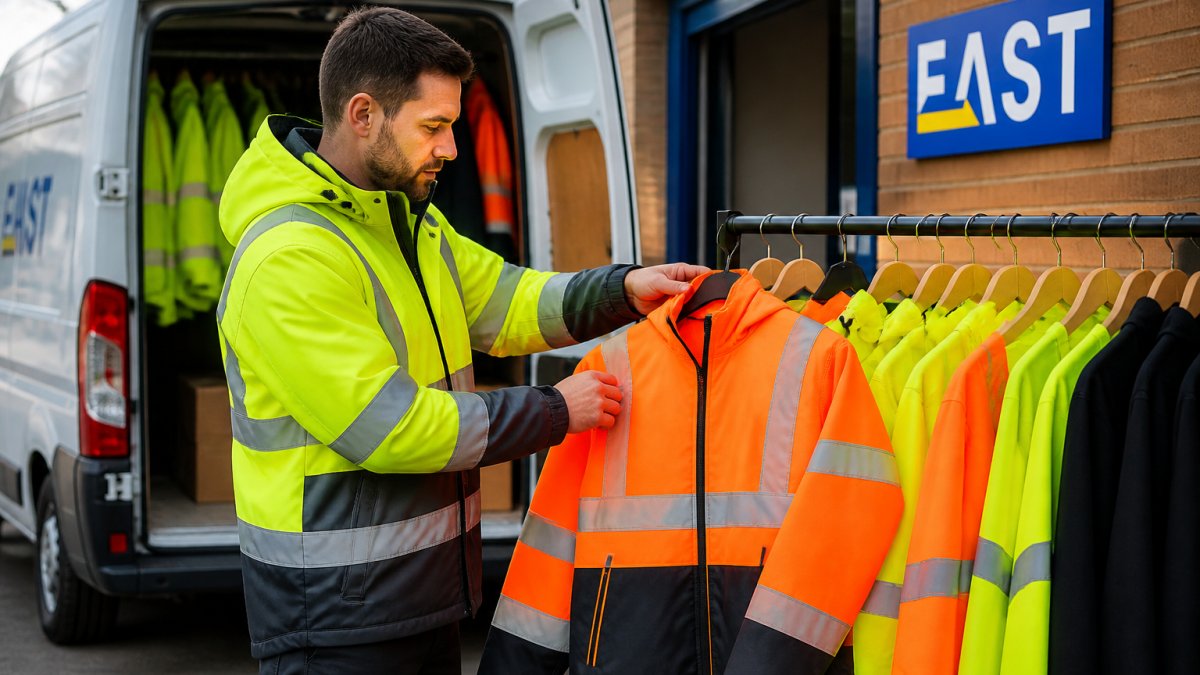
- Hi-vis and safety workwear: Where garments face industrial laundering and outdoor UV exposure
- Hospitality and healthcare: Where commercial laundry is standard practice
- Long-tenure staff uniforms: Where the garment is expected to last two or more years
For businesses in Norfolk needing branded polo shirts or hi-vis workwear that will hold up to daily site use, embroidery is consistently the specification that avoids repeat replacement costs.
Embroidered Logo Care Tips to Maximise Lifespan
Embroidered logos are durable by nature, but correct care extends garment life and keeps branding looking sharp throughout.
Washing, Drying, and Storage Best Practices
Washing:
- Turn garments inside out before washing to protect the embroidered surface from direct agitation
- Wash at 40°C or below for most embroidered workwear unless the garment specification states otherwise
- Avoid harsh biological detergents on delicate embroidery
- Do not use bleach on embroidered garments, as it can weaken thread fibres
Drying:
- Air drying is preferable and extends both garment and thread life
- If tumble drying, use a low heat setting
- Do not wring embroidered areas, as this distorts stitch tension
Storage:
- Store folded rather than hanging to avoid distortion of heavy embroidered sections
- Keep garments away from prolonged direct sunlight during storage
As documented in the British Standards Institution's guidance on textile care labelling, following garment care labels accurately is the single most effective way to extend workwear lifespan.
Sustainability and the Broader Garment Lifecycle Argument
The sustainability dimension of why embroidered logos last longer is increasingly relevant for businesses with environmental commitments.
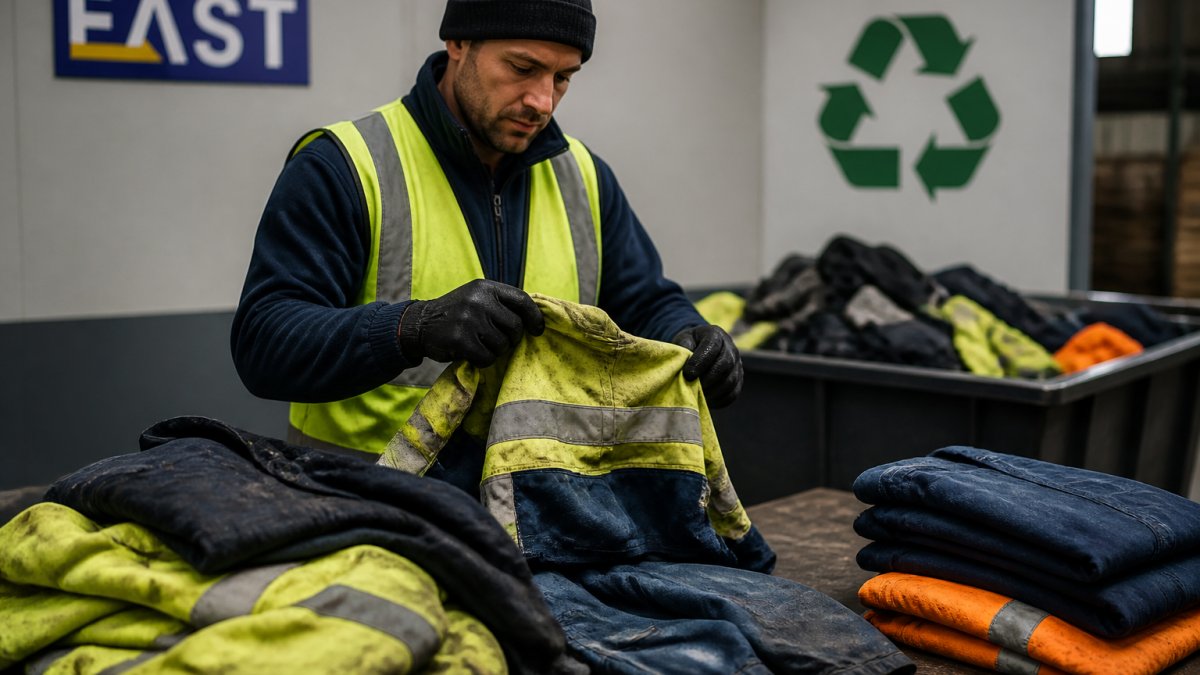
A garment that retains its branding integrity for its full useful life does not need to be replaced prematurely. Premature garment replacement, driven by branding failure rather than fabric failure, represents unnecessary textile waste. For a business with 50 staff replacing branded workwear every 18 months because of logo degradation, the cumulative waste and cost over five years is substantial.
Embroidery extends the effective lifecycle of branded workwear by ensuring that the branding does not become the limiting factor in the garment's useful life. Fewer replacement cycles mean less textile waste, lower procurement costs, and a more consistent brand presentation across the team.
The Waste and Resources Action Programme's guidance on textile sustainability highlights garment longevity as one of the most effective levers for reducing the environmental impact of workwear procurement, reinforcing the case for decoration methods that extend rather than shorten a garment's useful life.
Choosing the right branding method for your workwear is a decision that affects costs, brand presentation, and environmental impact for years after the initial order. Businesses that consistently underestimate the total cost of printed branding failure end up replacing garments long before the fabric demands it. Workwear East specialises in high-quality embroidery and advanced DTF printing, delivering consistent, durable results across corporate uniforms, trade workwear, and promotional apparel. Visit workweareast.co.uk to explore the full range, or email info@workweareast for a quote tailored to your team's requirements.
Frequently Asked Questions
How much longer do embroidered logos last compared to printed logos?
Embroidered logos generally outlast printed alternatives by a significant margin because thread is physically stitched into the fabric rather than bonded to its surface. Screen-printed and heat-transfer logos are susceptible to polymer breakdown, adhesive degradation, and peeling after repeated wash cycles, whereas embroidery maintains its dimensional stability and colour fastness throughout the garment's entire working life. For high-traffic workwear washed frequently, this difference becomes especially pronounced.
Can embroidered logos fade or crack over time?
Embroidered logos do not crack or peel because there is no adhesive or polymer layer to break down. Fading can occur gradually with prolonged UV exposure, but quality polyester or rayon threads are inherently fade-resistant and retain colour far longer than printed inks. Following basic embroidered logo care tips, such as washing garments inside out on a gentle cycle and avoiding high-heat tumble drying, will further protect thread colour and logo crispness over hundreds of wash cycles.
What types of workwear fabrics are best suited for embroidered logos?
Embroidery works well across a wide range of substrates, including cotton, polyester blends, fleece, and canvas. Tightly woven fabrics provide the most stable base for stitch penetration and help maintain dimensional stability. Polo shirts, sweatshirts, jackets, and hi-vis garments are among the most common workwear items embroidered. Very lightweight or loosely woven fabrics may require additional embroidery backing to preserve fabric integrity and prevent puckering during the stitching process.
Is embroidery more cost-effective than printing for branded workwear over time?
When you factor in the full garment lifecycle, embroidered logos typically offer better value than printed alternatives for workwear. Printed logos, particularly heat seal transfers, can begin peeling or cracking within months of regular industrial laundering, meaning garments need replacing sooner. Embroidered workwear, by contrast, maintains its professional aesthetic throughout the garment's usable life, reducing replacement frequency. For businesses in Norfolk managing teams of staff, that difference in replacement cost can be substantial. Email info@workweareast for a quote tailored to your order size.
How should I care for embroidered clothing to maximise its lifespan?
Key embroidered logo care tips include washing garments inside out at 40°C or below, using a gentle cycle to reduce abrasion, and avoiding bleach or harsh detergents that can weaken thread fibres. Air drying is preferable; if using a tumble dryer, select a low-heat setting to minimise thermal stress on both the threads and the embroidery backing. Store garments folded rather than compressed under heavy items to preserve the raised, dimensional quality of the stitching.
Do embroidered logos look more professional than printed ones?
For most corporate and trade workwear contexts, embroidered logos are widely regarded as the more professional option. The raised texture, thread density, and dimensional quality of embroidery convey a premium finish that flat printed logos cannot replicate. On high-traffic garments such as polo shirts, jackets, and uniforms, embroidery also signals durability and attention to detail, qualities that reflect well on the business wearing it. Visit workweareast.co.uk to explore branded polo shirts and workwear bundles with embroidered logos.
This article was written using GrandRanker