 blog
7 Lightweight Breathable Workwear Branding Options That Last
Last Updated: October 28, 2026
Quick Summary
Match the branding method to the fabric weight: DTF printing and sublimation suit lightweight polyester with minimal breathability impact, while embroidery works best on polos and mid-weight knits with backing. Avoid decorating mesh panels, since solid prints and dense stitching block the ventilation breathable workwear is bought for.
- Dense embroidery on thin shirts can add stiffness and cause the fabric to pucker around stitches.
- DTF printing adds a thin film that allows moisture transfer on lightweight polyester and polycotton.
- Large solid screen print areas block fabric pores and reduce breathability on cotton tees.
- Sublimation adds no layer because the dye bonds with lightweight polyester fabric.
- Avoid decoration on mesh panels and always confirm method suitability with your supplier.
Table of Contents
- Why Lightweight Breathable Workwear Needs a Different Branding Approach
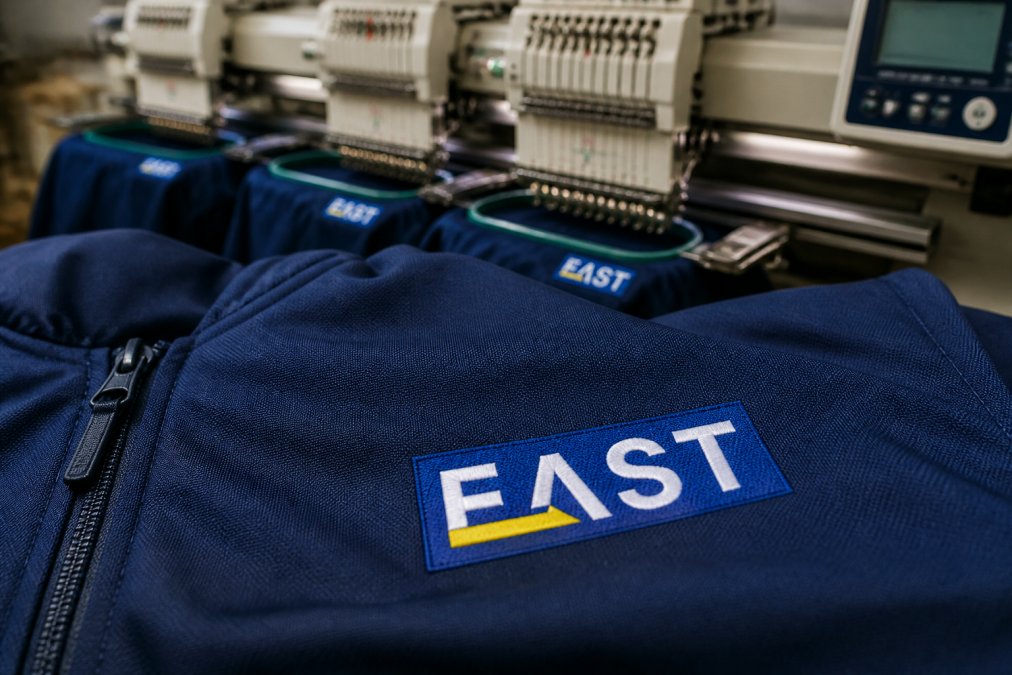
- Embroidered Workwear: The Durable Choice for Team Uniforms
- DTF Printed Workwear: Full-Colour Detail on Breathable Fabrics
- Screen Printed Workwear: Best Value for Large Team Orders
- Workwear Logo Placement: Where Your Brand Works Hardest
- Branding Methods Compared Side by Side
- Choosing Breathable Workwear by Role and Fabric
- Get a Quote for Your Branded Breathable Workwear
- Frequently Asked Questions
Why Lightweight Breathable Workwear Needs a Different Branding Approach
Branding lightweight breathable workwear is not the same job as branding a heavy fleece or a rigid jacket. Thin, open-weave fabrics move, stretch and breathe, and any decoration you add has to move with them. Logos can pucker, prints can crack, and embroidery can pull a lightweight shirt out of shape. Choosing the right branding option for lightweight breathable workwear is a fabric question first and a design question second.
The core tension is simple. Breathability comes from how air and moisture pass through a fabric, and every branding method interferes with that to some degree. A large, solid print across the back of a mesh-panelled polo blocks the very ventilation the garment was bought for. Heavy embroidery on a thin polyester tee adds weight and stiffness exactly where the fabric is least able to carry it.
That means the usual "pick a logo, pick a colour, pick a position" approach falls short. On lightweight garments you need to match three things: the decoration method to the fabric weight, the coverage to the ventilation zones, and the thread or ink to the wash cycle the garment will actually face.
Below, we compare branding routes for breathable workwear and explain which suits which role. The throughline is straightforward: the lighter the fabric, the more the method matters.
Embroidered Workwear: The Durable Choice for Team Uniforms
Embroidered workwear is an option for team uniforms where longevity matters more than photographic detail.
The catch is fabric weight. On a thin, lightweight shirt, a dense embroidery design can add stiffness and cause the fabric to pucker around the stitches.
For small businesses ordering staff uniforms, embroidery suits polos, work shirts and lightweight jackets alike. If you are deciding between embroidery and printing, our embroidered vs printed uniforms comparison covers lifespan, durability and cost.
Best for: team uniforms and trade firms.
DTF Printed Workwear: Full-Colour Detail on Breathable Fabrics
DTF printing is a versatile option for detailed, full-colour images on various materials.
If you are weighing this against other methods for breathable garments, our guide to DTF vs screen printing walks through the trade-offs directly.
Best for: small business owners who want detailed branding on team clothing.
Screen Printed Workwear: Best Value for Large Team Orders
Screen printing is a cost-effective option for large orders.
For event coordinators ordering promotional apparel in bulk, screen printing is an option.
Best for: large orders.
Workwear Logo Placement: Where Your Brand Works Hardest
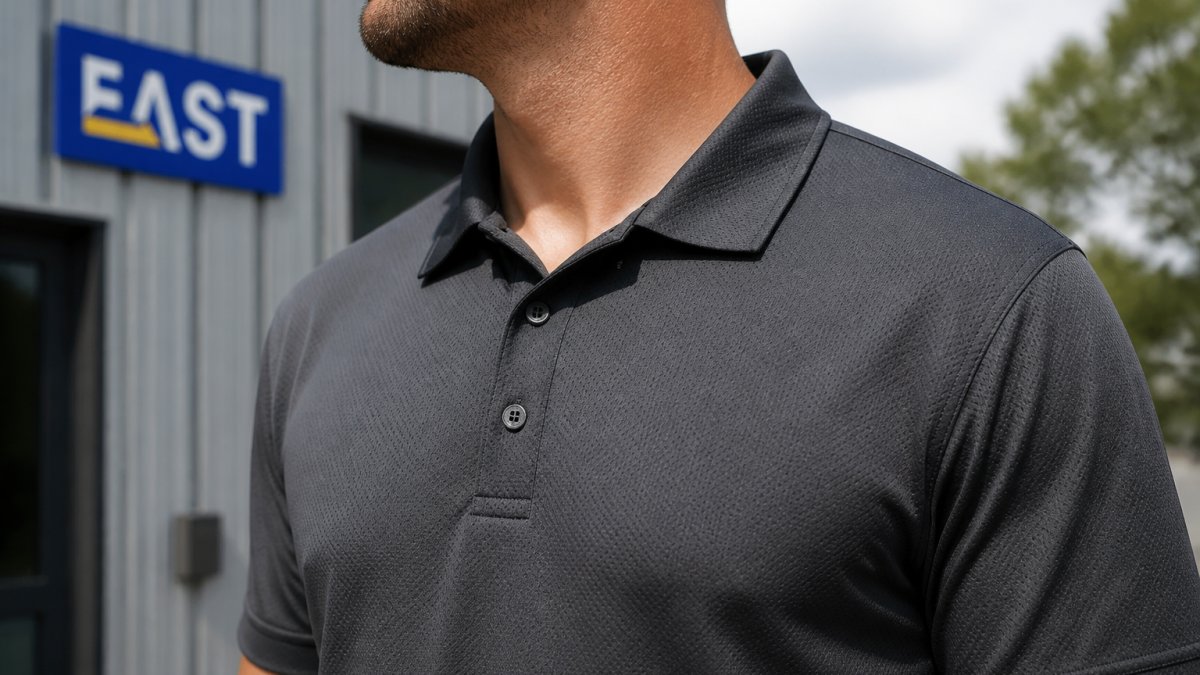
Workwear logo placement can affect how your branding looks.
Branding Methods Compared Side by Side
| Method | Breathability Impact | Weight Added | Best Fabric Match | Detail Level | Durability | Best Order Size |
|---|---|---|---|---|---|---|
| Embroidery | Moderate (stitch density reduces airflow slightly) | Low to moderate | Polos, work shirts, mid-weight knits | Medium (stitch-based) | High | Any size |
| DTF printing | Low (thin film allows moisture transfer) | Very low | Lightweight polyester, polycotton | High (full colour) | High | Small to medium |
| Screen printing | High if large solid areas (ink blocks pores) | Low | Cotton and polycotton tees | Low to medium (per colour) | High | Large |
| Heat transfer vinyl | Moderate (film can trap heat) | Low | Cotton, polycotton | Medium (limited colours) | Medium | Small to medium |
| Sublimation | Low (dye bonds with fabric, no added layer) | None | Lightweight polyester | High (full colour) | High (fades over time) | Medium to large |
When comparing quotes, ask suppliers about the branding method for your specific fabric. For wash-test evidence on which print lasts longer on lightweight fabrics, see our DTF vs screen printing durability comparison.
Choosing Breathable Workwear by Role and Fabric
| Fabric | Breathability | Moisture Management | Durability | Branding Compatibility | Care Notes |
|---|---|---|---|---|---|
| 100% lightweight polyester | High | Excellent (wicks and dries fast) | Moderate (can snag) | DTF, sublimation, embroidery (with backing) | Wash cool, avoid fabric softener |
| Polycotton blend (65/35) | High | Good | High | Embroidery, screen print, DTF | Tumble dry low, inside out |
| 100% cotton (lightweight) | High | Poor (holds moisture) | Moderate | Screen print, embroidery, heat transfer | Wash warm, may shrink |
| Mesh panels (polyester) | Very high | Excellent | Moderate | Avoid decoration on mesh | Gentle cycle, air dry |
Match the garment and branding method to the role:
- Trade and construction teams: Hi-vis options are available.
Always confirm with your supplier that the chosen branding method is suitable for the specific fabric. Our guide to the best fabric for embroidered staff uniforms compares polycotton, cotton and blends for durability.
Get a Quote for Your Branded Breathable Workwear
Workwear East provides embroidery, DTF printing and screen printing. We are committed to providing great value and professional service.
For a quote on branded breathable workwear, email info@workweareast for a quote or visit Workwear East.
Frequently Asked Questions
Is embroidery suitable for lightweight breathable workwear?
Yes, when it is done properly. Embroidery adds a small amount of weight and stiffness at the logo site, so keep the design compact and avoid dense stitch counts on very fine fabrics. A chest logo of roughly 8-10 cm works well on most lightweight polo shirts and T-shirts. Embroidery is the most wash-durable option for embroidered workwear, holding colour and shape far longer than prints on garments that face daily wear and frequent laundering.
Does DTF printing work on breathable fabrics?
Workwear East offers versatile DTF printing for detailed, full-colour images on various materials.
How should branded lightweight workwear be washed to protect the logo?
Turn garments inside out, wash at 30°C or lower on a gentle cycle, and avoid fabric softener, which breaks down adhesives in heat transfer and DTF prints. Do not tumble dry printed items; hang them to dry instead. Embroidery tolerates warmer washes but benefits from the same care. Following the care label and washing printed workwear separately from abrasive items will extend both the garment and the branding well beyond the first season.
Which branding method is best for a small team of around 15 staff?
Workwear East offers embroidery, DTF printing and screen printing. Email info@workweareast for a quote.
Your team spends its week in these garments, so the branding has to earn its place. Workwear East combines advanced embroidery machines, versatile DTF printing and cost-effective screen printing with local service from Thetford, delivering durable, consistent results built for daily wear. Get started with Workwear East and give your team workwear that looks professional and lasts.