 How-to
How to Choose Workwear for Your Team in Norfolk
Quick Summary
Workwear East supplies embroidered and printed workwear for businesses across Norfolk, combining durable fabrics with custom branding. Choosing the right garments starts with the role and working environment, then fabric, fit and branding method. Email info@workweareast.co.uk for a quote.
- Start by defining each role and the environment the clothing must withstand.
- Choose fabric for the conditions, such as heavier weights for cold outdoor work.
- Collect sizes from a range of staff, not just one reference person.
- Embroidery suits clear logos with few colours; DTF suits full-colour detailed artwork.
Table of Contents
- What Workwear East Offers Businesses Across Norfolk
- How to Choose Workwear: A Step-by-Step Approach
- Embroidered Workwear: When Stitched Branding Makes Sense
- Printed Workwear and DTF Printing Compared
- Custom Workwear for Different Roles and Trades
- Sizing, Fit and Making Ordering Simple for Larger Teams
- Booking Your Workwear Order: Request a Quote Today
- Frequently Asked Questions
What Workwear East Offers Businesses Across Norfolk
Last Updated: November 9, 2026
Choosing workwear for a team is a practical decision with real consequences. The right garments look professional, stand up to daily wear and keep staff comfortable through a full shift. Workwear East supplies embroidered and printed workwear for businesses across Norfolk, with a focus on durable, custom apparel that carries your brand. Our team works with trades, construction firms, operations managers and event coordinators who need consistent results, not one-off guesswork.
Our core services include advanced embroidery for intricate, multi-colour logos, DTF printing for detailed full-colour images, and screen printing for larger orders. Each method suits a different job, and we will help you match the method to the garment and the brief. You can explore our Workwear Bundles for complete team packages, or our Branded Polo Shirts for smart everyday wear.
Clothing that carries your logo should still feel right on the person wearing it. That means fabric weight, fit and durability all need attention alongside the print.
Being based locally in Thetford, we offer local service to businesses in the area, and we can talk through your requirements and keep you informed. Ready to discuss your team? Email info@workweareast.co.uk for a quote, or visit Workwear East to see what we offer.
How to Choose Workwear: A Step-by-Step Approach
Choosing workwear works best when you move through the decisions in order. Start with the job the clothing needs to do, then move to fabric, fit and finish. Skipping ahead to colours or logos often leads to garments that look right on screen but fail on site. This guide adds the compliance and performance detail that most supplier pages leave out.
Step 1: Define the role and environment. A site supervisor, a warehouse picker and a front-of-house team member face very different conditions. Note whether staff work outdoors, around machinery, or in a client-facing setting. This single decision narrows most of your options. For roles where hazards exist, you should also carry out a risk assessment as required by the Management of Health and Safety at Work Regulations 1999. The Health and Safety Executive (HSE) provides free guidance on selecting PPE, including the need to match garments to the specific risks identified.
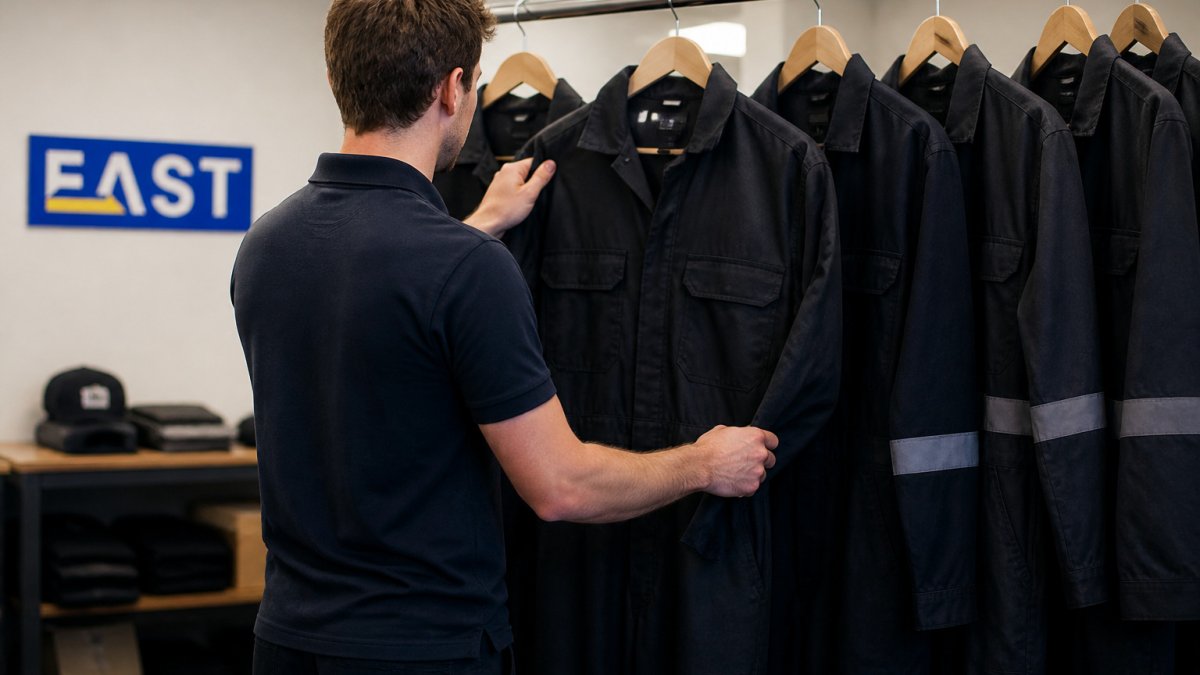
Step 2: Select the fabric. Polycotton blends are a common choice for everyday workwear because they balance durability with breathability. Heavier fabrics suit cold outdoor work, while lighter weaves help in warm indoor spaces. Ask for fabric specifications before you commit to a bulk order. For roles requiring flame retardancy, look for garments that meet BS EN ISO 11612 (protective clothing against heat and flame) or BS EN ISO 20471 for high-visibility clothing. These standards are not optional for many site environments, and a supplier should be able to confirm which garments carry the relevant certification.
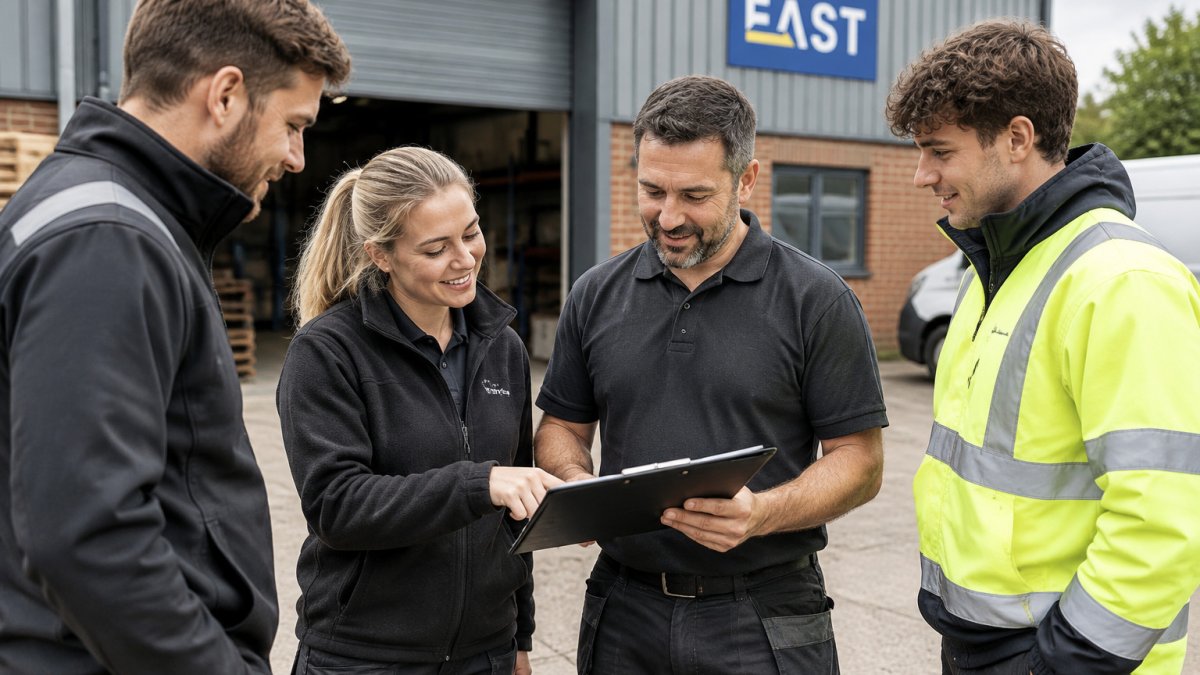
Step 3: Check fit across the team. A uniform that fits one person poorly will affect the whole team's appearance. Gather measurements or a sizing sample from a range of staff, not just one reference person. For PPE, fit is not just about appearance: ill-fitting protective clothing can compromise its effectiveness. The HSE advises that PPE should fit the wearer correctly, and that employees should be consulted on comfort and fit during selection.
Step 4: Decide on the branding method. Embroidery, DTF printing and screen printing each have strengths. We cover these in the sections below. Consider how the branding will interact with any protective properties: embroidery on high-visibility garments, for example, must not reduce the visible area below the requirements of BS EN ISO 20471.
Step 5: Plan for care and replacement. Garments that are washed at high temperatures or dried in hot cycles lose shape and colour faster. Agree on a care routine and a replacement schedule before you place the order. For PPE, follow the manufacturer's washing instructions to maintain protective properties, and replace garments when they show signs of wear that could affect performance.
A common mistake is ordering a single garment type for every role. A simple table can help you map needs to choices:
| Role | Typical Conditions | Suggested Focus |
|---|---|---|
| Site and trade staff | Outdoor, dust, physical work | Durable fabric, embroidered logo, consider BS EN ISO 20471 if visibility is needed |
| Warehouse and operations | Movement, mixed temperatures | Comfortable fit, easy-care fabric |
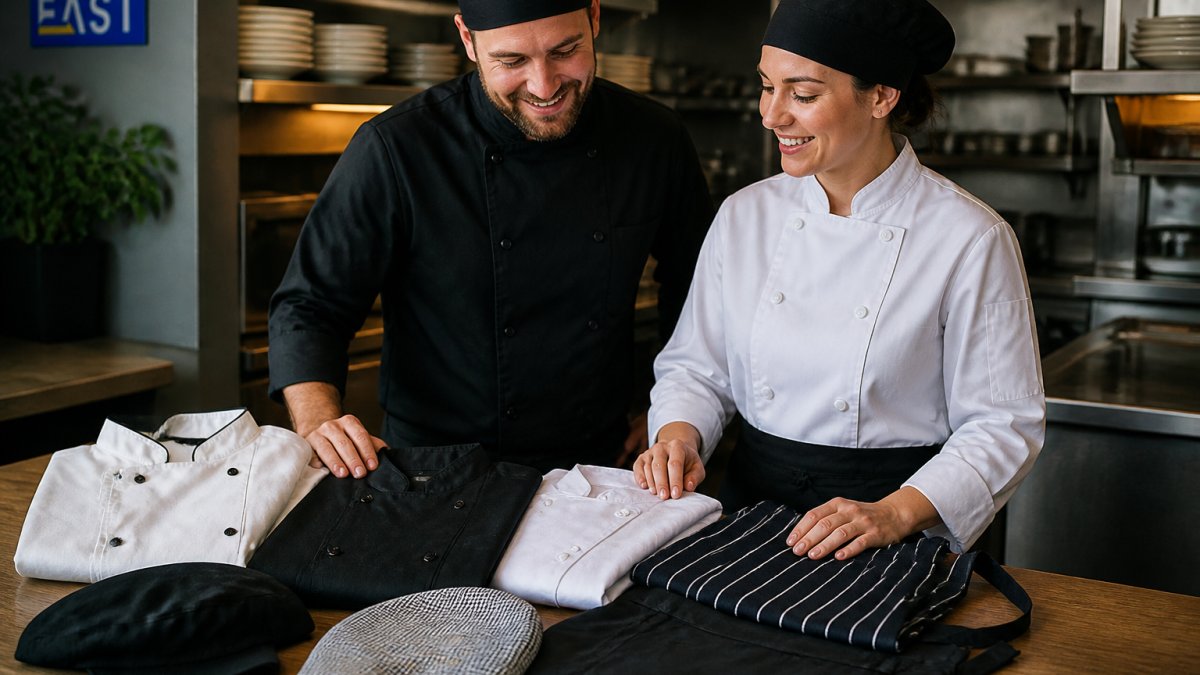
| Client-facing staff | Indoor, visible to customers | Polished finish, branded polos |
| Events and promotion | Short-term, high visibility | Printed designs, flexible sizing |
Watch out: assuming that any high-visibility vest meets site requirements without checking the class rating under BS EN ISO 20471. Different workplaces specify different classes, and a lower-class garment may not be accepted.
For help matching garments to your risk assessment, email info@workweareast.co.uk for a quote, or visit Workwear East to see our range.
Embroidered Workwear: When Stitched Branding Makes Sense
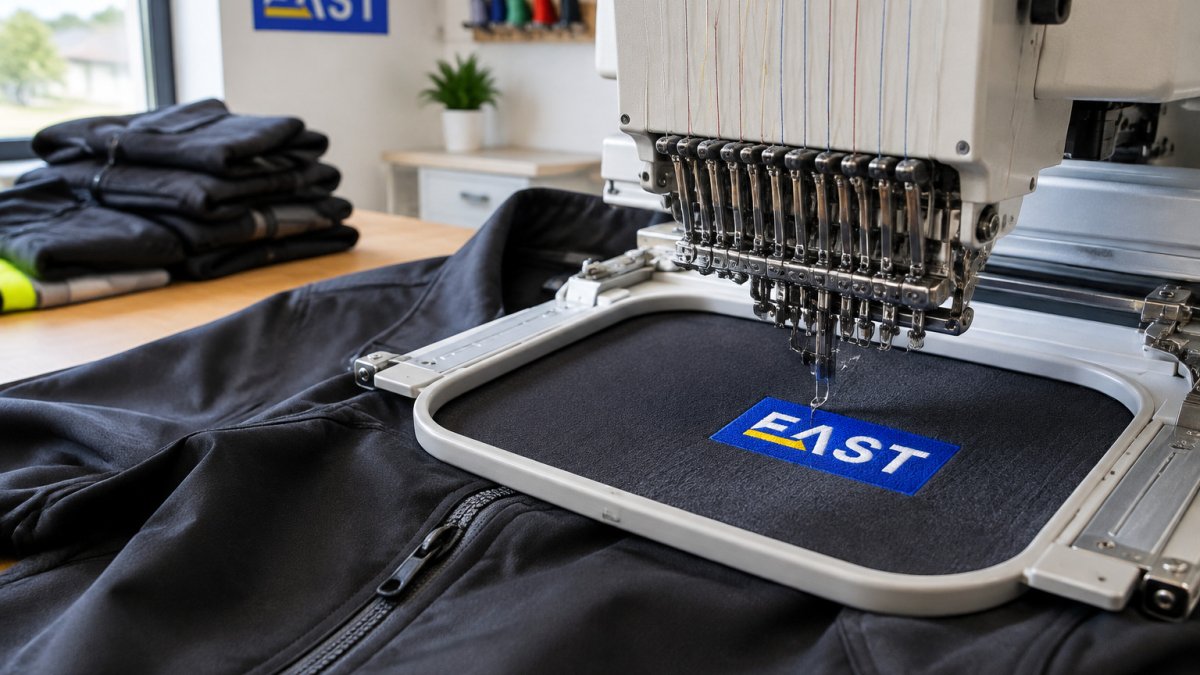
Embroidery stitches your logo directly into the garment, which gives a textured, durable finish. For businesses that want a professional, long-lasting finish, stitched branding is often the first option to consider.
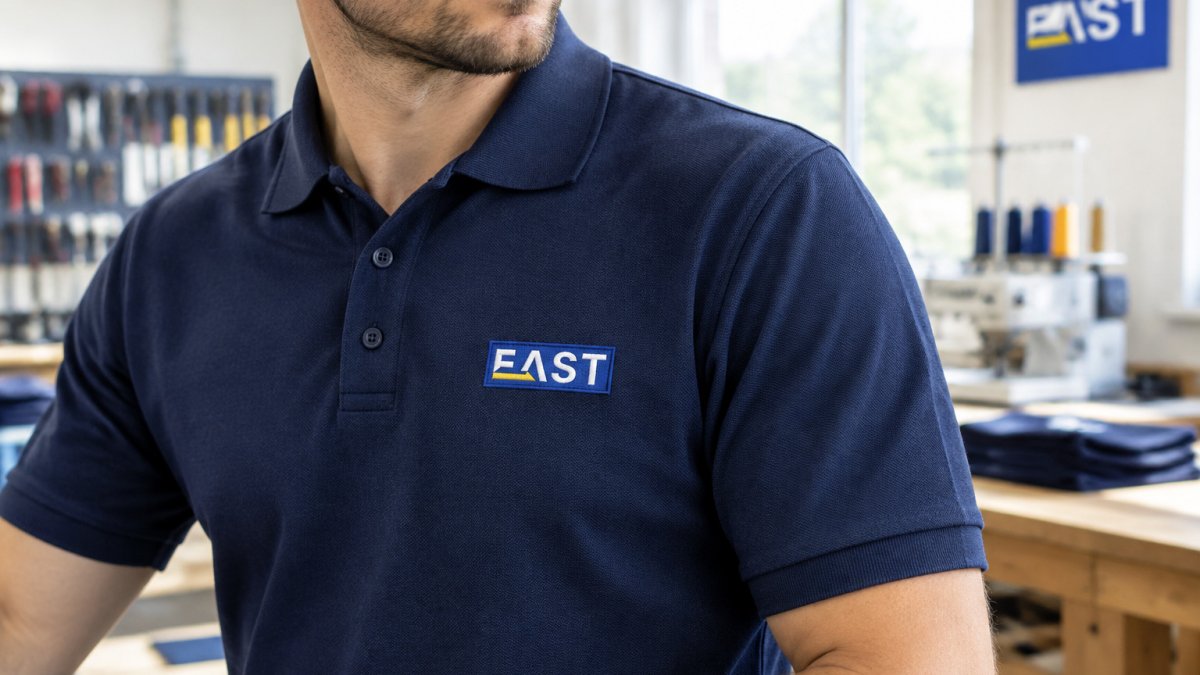
Embroidery suits logos with clear shapes and a limited number of colours. Very fine detail or photographic images are usually better handled by printing.
Choosing garments that suit embroidery
Not every fabric takes embroidery equally well. Medium-weight polycotton and cotton blends hold stitches cleanly and resist puckering. Very thin or stretchy fabrics can distort under the needle. When you choose a garment, ask whether the logo will sit on a flat, stable area of the fabric, such as the left chest, and whether the garment has enough room for the design to sit comfortably. Our Branded Polo Shirts are a practical choice for embroidered team branding.
Printed Workwear and DTF Printing Compared
Printing offers a different strength. It handles full-colour artwork, gradients and detailed images well, which makes it useful for event clothing, promotional runs and designs with many colours. The two main options we discuss with customers are DTF printing and screen printing.
DTF, or direct-to-film printing, transfers a full-colour design onto the garment using a film and heat press. It handles detailed artwork without the colour limits of screen printing, and it works well for smaller runs or designs that change between orders. Screen printing applies one layer of ink per colour, which makes it cost-effective for larger orders with fewer colours.
We recommend comparing both methods using a sample from your own artwork, and checking that the print sits comfortably against the fabric.
Custom Workwear for Different Roles and Trades
Different roles need different garments. Trade and construction teams usually need strong fabric and visible branding that survives site conditions. Operations managers often need workwear that is comfortable through long shifts. Event teams may prioritise bold printed designs that stand out in a crowd.
Bundles can simplify ordering across several roles. A coordinated set, such as polos for office staff and heavier workwear for site teams, keeps branding consistent while matching each role's needs. You can browse our Workwear Bundles to see how this works in practice, and our Hi-Vis range covers high-visibility requirements for site work.
When you outfit a mixed team, decide early which roles share a garment and which need their own. Fewer garment types make stock easier to manage and reorders simpler.
Sizing, Fit and Making Ordering Simple for Larger Teams
Sizing causes more problems than most buyers expect. Mixed sizing across a large team can lead to delays, returns and wasted budget. A clear sizing process saves time at every stage.
Start by collecting sizes from each person through a simple form or spreadsheet, rather than estimating from one or two staff. Include a range of sizes and note any fit preferences. If your team spans several departments with different needs, group staff by role so the order is easier to check. A common pattern is to ask each person for their chest measurement (for tops) and waist measurement (for trousers), rather than relying on self-reported dress sizes, which vary between brands.
Plan for a small buffer of sizes at the extremes, since these are the ones most often missed.
Watch out: assuming that a size medium from one supplier will match a size medium from another. Sizing charts differ, and a garment that fits one person in one brand may not fit in another. Always check the specific size chart for the garments you are ordering.
For teams with a mix of male and female staff, check whether garments are available in unisex or fitted cuts. Unisex garments may fit some staff poorly, and offering a choice of fit can improve comfort and uptake. If your team includes staff who need larger sizes, confirm availability before setting a deadline, as extended sizes may have different lead times.
Pricing depends on quantity, garment type, branding method and delivery timing. For a quote, email info@workweareast.co.uk with your garment choices, approximate quantities and artwork.
Booking Your Workwear Order: Request a Quote Today
Ordering workwear is straightforward when you prepare the key details first. Gather your logo files, a list of garment types, sizes for each team member and your target delivery date. Clear information lets us give you an accurate quote and a realistic timeline.
If you have a deadline, let us know at the start so we can discuss what is possible.
To take the next step, email info@workweareast.co.uk for a quote, or visit Workwear East to browse our full range. We look forward to helping your team look its best.
Frequently Asked Questions
What should businesses consider when choosing workwear?
Start with the job itself: the tasks, the environment and the level of wear the garments will face. Consider fabric weight and durability, fit across the range of sizes your team needs, and whether any roles require high-visibility or protective clothing. Think about how the garments will be cleaned, since frequent washing affects both fabric and decoration. Finally, ask a supplier for a sample or a quote before committing to a large order. Email info@workweareast.co.uk to discuss your requirements.
Is embroidery or printing better for workwear?
Embroidery suits logos that need a durable, textured finish on jackets, polo shirts and trousers, and it tends to hold up well to frequent washing. Printing, including DTF printing, suits detailed or full-colour artwork and can be a good option for promotional garments or designs with many colours. The better choice depends on the garment, the artwork and how the clothing will be used. Workwear East can advise on which method fits your order.
How do you prepare a logo for workwear printing?
If only a raster image is available, provide the largest version you have. Confirm the exact colours you need and the position on the garment. Simple logos with fewer colours are generally easier and more cost-effective to reproduce. Email info@workweareast.co.uk for guidance on your artwork.
How can businesses keep branded workwear looking professional?
Wash garments according to the care label, turning printed or embroidered items inside out where advised, and avoid high heat that can damage decoration. Replace items that show fading, fraying or peeling, and keep a small stock of spares so staff always have clean, presentable clothing. Regular checks help maintain a consistent brand image across the team.