 How-to
Can You Get Printed Coveralls With Your Logo?
Quick Summary
Yes, you can get printed coveralls with your logo. Printed coveralls are one-piece workwear garments that carry a company name or artwork applied by DTF printing, screen printing or embroidery. The right method depends on your artwork, team size and how often the garments will be washed.
- DTF printing handles detailed, full-colour artwork and works on polycotton and synthetic blends.
- Screen printing is cost-effective for large runs of a single design.
- Embroidery suits hard-wearing garments that are washed frequently.
- Chest and sleeve placements suit embroidery; large back prints suit DTF or screen printing.
- Email info@workweareast.co.uk for a quote tailored to your order.
Table of Contents
- What Printed Coveralls Are and Who They Suit
- Workwear Printing Methods: DTF, Screen Printing and Embroidery
- Coverall Logo Placement and Artwork Preparation
- Choosing Coveralls for Your Job and Working Conditions
- How to Order Printed Coveralls Step by Step
- Printed Coverall Care Instructions to Make Logos Last
- Requesting a Quote for Your Branded Coveralls
- Frequently Asked Questions
What Printed Coveralls Are and Who They Suit
Last Updated: November 2, 2026
Yes, you can get printed coveralls with your logo, and the process is simpler than many businesses expect. Printed coveralls are one-piece workwear garments that carry a company name, logo or artwork applied by a printing method such as DTF, screen printing or embroidery. At Workwear East, we print and embroider branded workwear for businesses across Thetford and Norfolk, so this is a question we answer often.
Coveralls suit any team where staff need one-piece protection and a consistent, professional appearance. Typical users include trades and construction crews, industrial maintenance teams, warehouse staff and event or hospitality teams who need branded clothing on site. A branded coverall also helps customers and visitors recognise who is who on the premises.
The right choice depends on how the garment will be used. Coveralls that take daily dirt, oil or repeated washing need a branding method that holds up, which is why the print method matters as much as the garment itself.
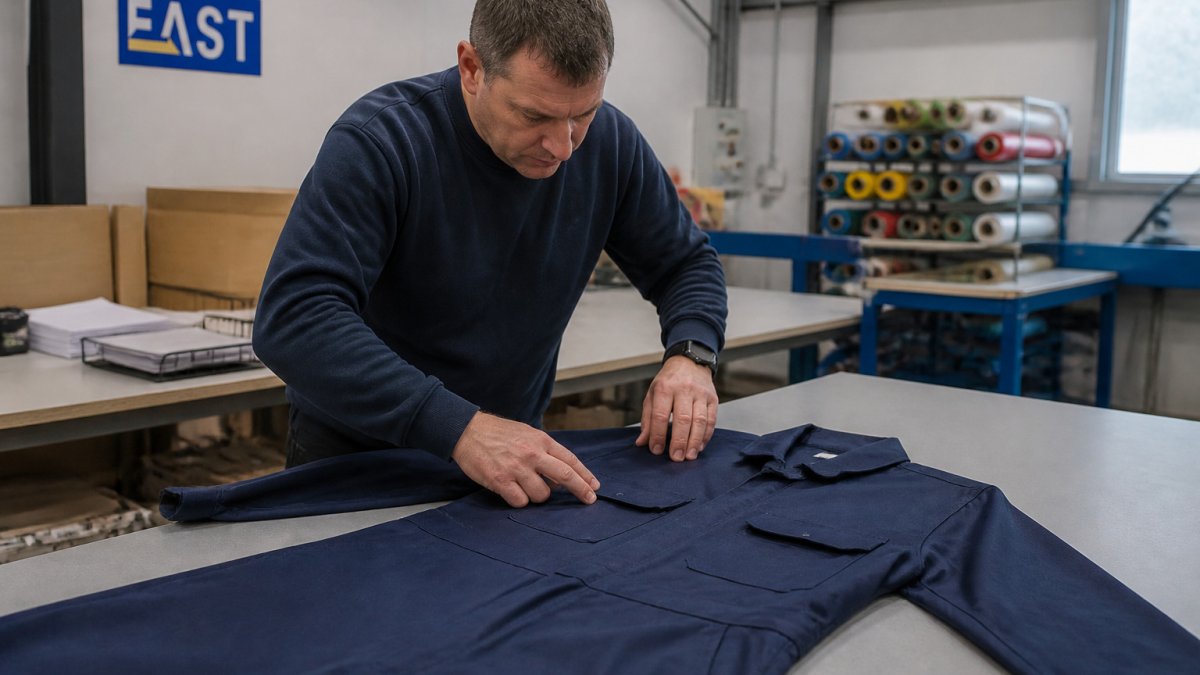
Workwear Printing Methods: DTF, Screen Printing and Embroidery
Three main methods are used to brand workwear: DTF printing, screen printing and embroidery. Each suits different artwork, quantities and fabrics, and the right choice depends on how the garment will be worn, washed and seen. Workwear East offers all three, so the decision usually comes down to your logo, your team size and the conditions the coveralls will face.
DTF (direct-to-film) printing prints the design onto a film, then heat-presses it onto the garment. It handles detailed, full-colour artwork well, including gradients, fine text and photographic elements, and it works on a wide range of fabrics including polycotton and synthetic blends.
Screen printing pushes ink through a mesh screen onto the fabric. It is cost-effective for large runs of a single design because the setup cost is spread across the order. It is less suited to very detailed artwork or designs with many colours, because each colour needs its own screen and adds to the setup. To see how each method holds up over repeated washing, read DTF vs Screen Printing Durability: Which Lasts Longer?.
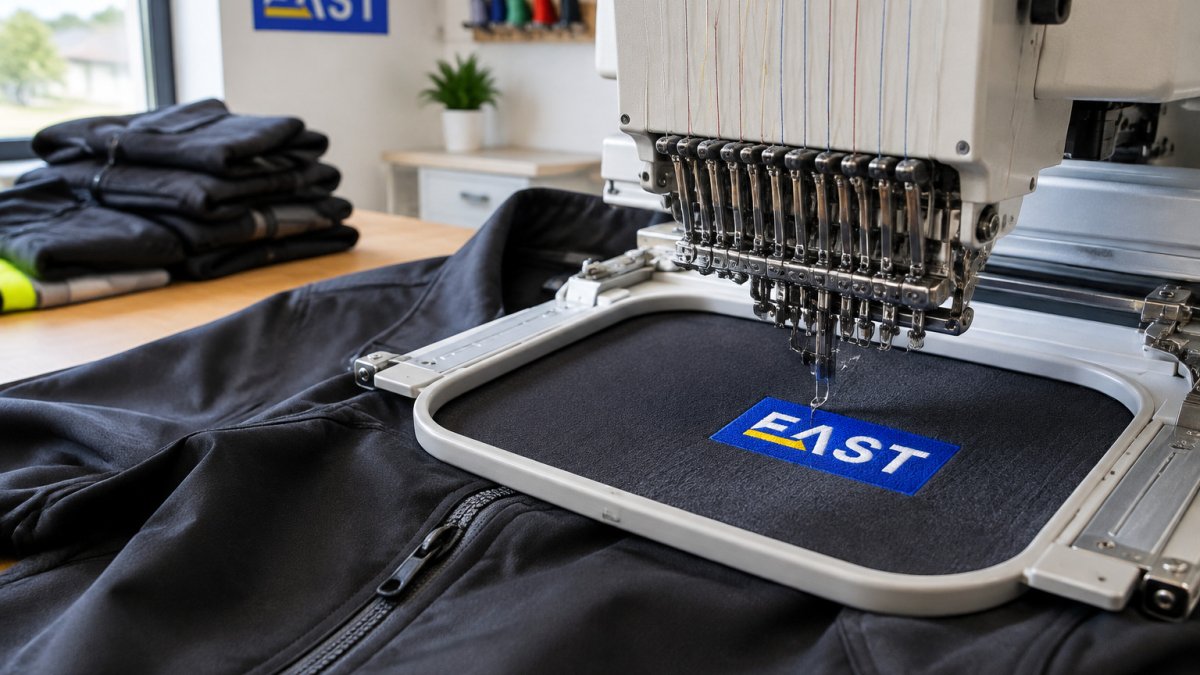
Embroidery stitches the logo into the fabric with thread.
Print Versus Embroidery: Which Suits Your Garments
Use these questions to narrow the choice:
- How often will the garment be washed and worn hard? Frequent industrial washing favours embroidery.
- Does your logo contain fine lines, small text or many colours? Detailed, multi-colour artwork favours DTF or screen printing.
- Are you ordering for a large team at a single time? Large single-design runs favour screen printing on cost.
- What fabric is the coverall? Smooth synthetics suit DTF; heavier wovens suit embroidery.
- Where will the logo sit? Chest and sleeve placements suit embroidery; large back prints suit screen printing or DTF.
For a broader comparison of the two print methods, read DTF vs Screen Printing: Choose the Right Method.
Coverall Logo Placement and Artwork Preparation
Logo placement affects both how the coverall looks and how well the print or embroidery lasts. Common placements include the left chest, the back yoke, the sleeve and the leg. Chest placement is the most visible and suits a compact logo; back placement gives a larger area for bigger artwork; sleeve and leg placements suit smaller secondary marks or sponsor-style logos. Placement should avoid seams, pocket flaps and zip lines, because stitching and print both behave poorly across raised or uneven areas.
Artwork preparation matters before any print starts. Vector files are generally preferred for printing, and raster files should be supplied at high resolution. Ask your supplier about file requirements, minimum line weights and how many colours the design uses before ordering.
Colour handling is the other common sticking point.
To prepare your files properly, follow our guide on How to Prepare Artwork for Screen Printing: 7 Steps.
Choosing Coveralls for Your Job and Working Conditions
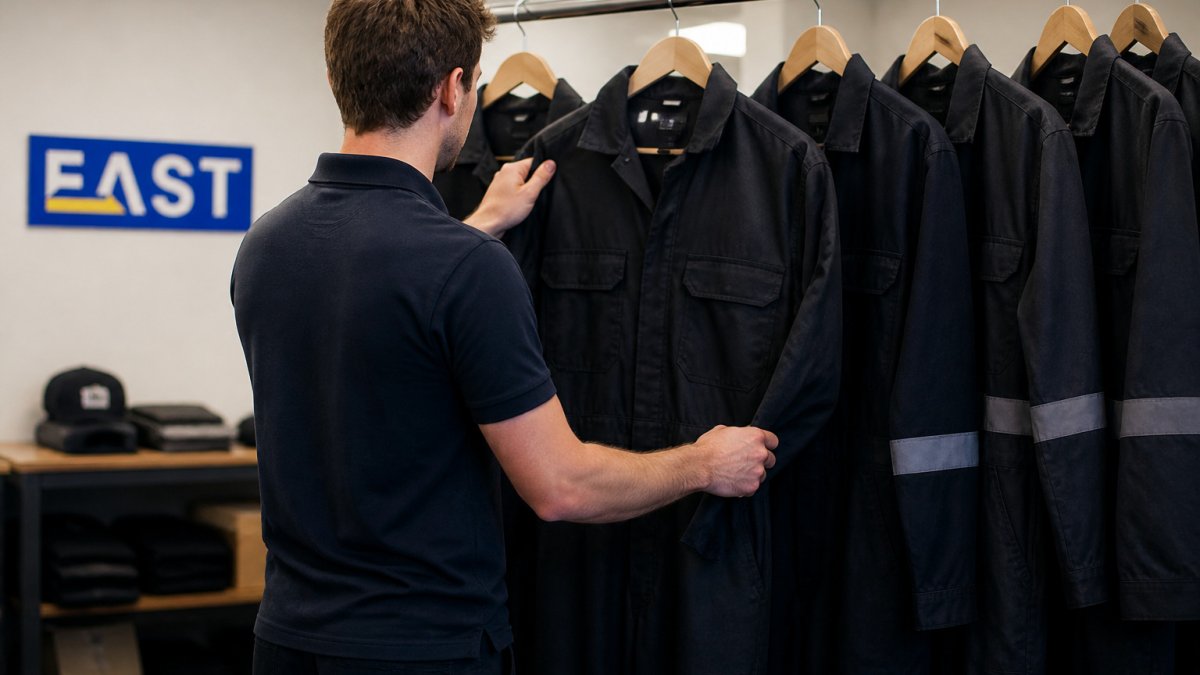
The right coverall depends on the job. Workers in dusty or oily environments need a fabric that resists dirt and washes well. Teams working near machinery may need specific protective features, and cold-weather staff benefit from heavier, lined garments. Think about the working conditions first, then choose the garment and branding method that match.
Garment features also count. Look for suitable pocket layouts, a fastening type that workers find comfortable, and a fit that allows free movement. Sizing across a team should be planned in advance, as staff of different builds will need different sizes.
The table below summarises how each branding method suits different needs, based on the points covered above.
| Method | Best for | Key difference |
|---|---|---|
| DTF printing | Detailed, full-colour artwork | Handles gradients, fine text and photographic elements |
| Screen printing | Large runs of a single design | Cost-effective, but each colour needs its own screen |
| Embroidery | Hard-wearing, frequently washed garments | Stitched into the fabric, suits chest and sleeve placements |
How to Order Printed Coveralls Step by Step
Ordering branded coveralls is straightforward when you plan ahead. Follow these steps:
- Confirm your quantity and sizes. Count your staff and note the size spread across the team.
- Choose your garment. Select the coverall style, fabric and colour that suit the job.
- Prepare your artwork. Send vector files where possible, and confirm the logo placement.
- Pick your branding method. Decide between DTF, screen printing and embroidery based on your artwork and durability needs.
- Request a quote. Send your details to info@workweareast.co.uk for a quote.
- Approve a sample. Check the sample before the full run begins.
- Place the order and confirm delivery. Allow time for production before the garments are needed.
Pricing depends on quantity, dates and delivery, so the quickest route to an accurate figure is a quote. You can find current options on our Workwear Bundles page or our Hi-Vis range.
For a detailed guide to choosing a supplier in your area, see Screen Printing Suffolk: The Complete 2026 Guide.
Printed Coverall Care Instructions to Make Logos Last
How you wash branded coveralls affects how long the logo lasts.
Care rules differ by branding method, so check the instructions supplied with your order. For practical guidance on looking after embroidered logos, read How to Wash Embroidered Company Logos.
Requesting a Quote for Your Branded Coveralls
The fastest way to get an accurate price is to send us your details. Tell us the garment style, quantity, sizes, artwork and branding method you have in mind, and we will come back with a quote tailored to your order. Email info@workweareast.co.uk with your requirements, or visit Workwear East to find out more.
Frequently Asked Questions
Can you print a logo on coveralls?
Yes. Most coveralls and boilersuits can carry a company logo, name or artwork using DTF printing, screen printing or embroidery. The right method depends on the fabric, the size and detail of the logo, and how many garments you need. Send your logo as a vector file or a high-resolution image so the print team can check it before production. For pricing that reflects your quantity, delivery date and print position, email info@workweareast for a quote and we will confirm what works best for your garments.
What printing methods work best for coveralls?
Each method has different strengths for colour range and order size, so ask your supplier to advise on the right option for your logo and quantity. Ask your supplier to show samples on the same fabric as your coveralls before committing to a full run.
Where should a logo be placed on printed coveralls?
Common positions are the left chest, the back yoke and the upper sleeve. The left chest suits a company logo that staff see during everyday contact with customers. The back yoke works well for a larger company name or slogan. Check the placement on a sample garment in the size range you will order before confirming the design.
How do you care for printed workwear?
If you have questions about caring for your printed garments, contact Workwear East and we will advise.
Workwear East supplies embroidered and printed workwear to businesses across Thetford and Norfolk. Email info@workweareast.co.uk for a quote on your branded coveralls.