 How-to
7 Embroidered Chefwear Essentials for a Sharper Kitchen Team
Last Updated: October 31, 2026
Quick Summary
Embroidered chefwear keeps its appearance far longer than printed workwear because the logo is stitched into the fabric rather than sitting on top of it. Thread is mechanically locked into the weave, so there is no film to lift, crack or peel through repeated industrial washing.
- Place the standard logo on the left chest, roughly level with the wearer's heart.
- Keep embroidery clear of apron tie points and pocket openings to avoid weakening stress points.
- Send vector files such as AI, EPS, SVG or a clean PDF so your logo digitises cleanly first time.
- Turn garments inside out, wash on a cool or moderate cycle and avoid harsh bleach.
- Air dry or use low heat, because high tumble drying causes thread to shrink and pucker.
Table of Contents
- Why Embroidered Chefwear Outlasts Printed Alternatives
- Embroidered Chef Jackets: Choosing Fabric, Fit and Fastenings
- Chef Jackets With Logo: Placement, Size and Stitch Count
- Embroidered Aprons and Service Wear That Handles a Full Shift
- Personalised Chef Uniforms: Trousers, Headwear and Team Consistency
- Preparing Your Logo File for Embroidery
- Caring for Embroidered Chefwear So It Lasts
- Ordering Your Embroidered Chefwear From Workwear East
- Frequently Asked Questions
Why Embroidered Chefwear Outlasts Printed Alternatives
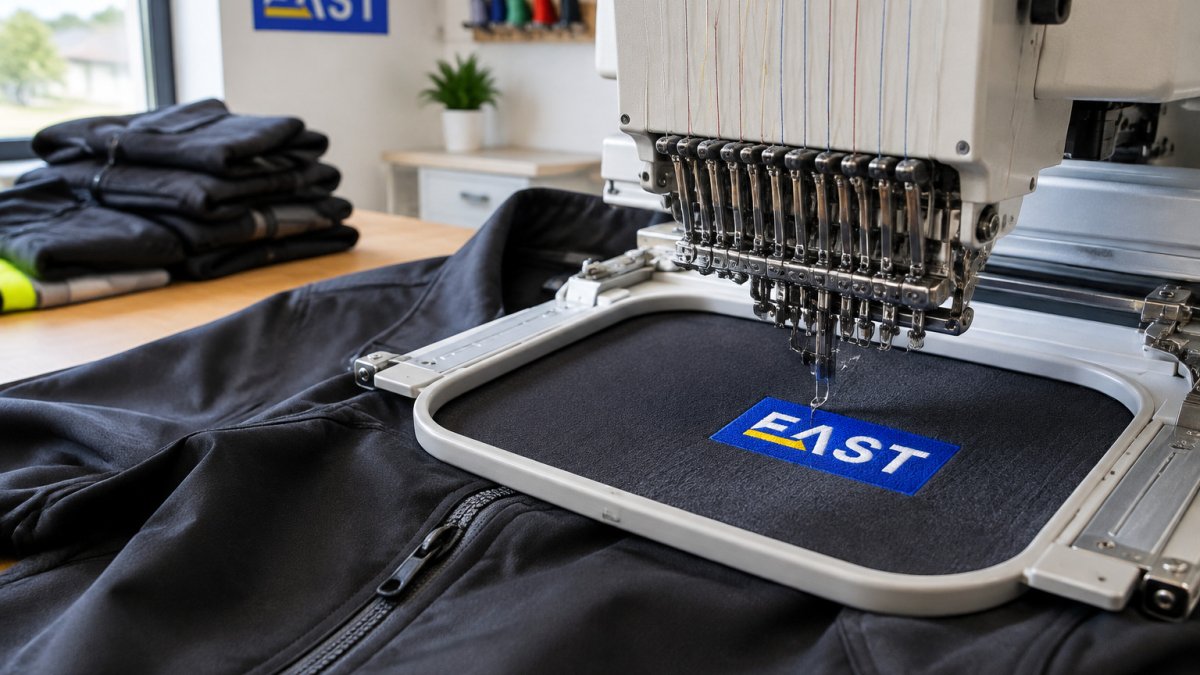
Embroidered chefwear holds its appearance far longer than printed workwear because the logo is stitched into the fabric rather than sitting on top of it. In kitchens, where heat, steam and repeated industrial washing punish every garment on the rail, that difference is most visible.
The practical gap comes down to how each decoration method fails. A print sits as a layer on the surface of the cloth. Every wash cycle bends that layer, and eventually the bond gives way at the edges. Embroidery places thread through the weave itself, so there is no film to lift or crack.
That matters for a team uniform that has to look presentable in front of customers night after night. A chef jacket with a logo that has faded or peeled undermines the whole front-of-house impression, and replacing jackets mid-year quietly eats into the budget.
How Embroidery and Printing Differ on Kitchen Garments
Embroidery is a stitching process that builds a design from coloured thread, while printing applies ink or film to the garment surface. The two methods age in completely different ways.
Kitchen conditions expose the weakness in printed workwear fast. Grease, high-temperature washes and tumble drying all stress the adhesive holding a transfer in place. Embroidery has no adhesive to stress. The thread is mechanically locked into the fabric, so the decoration moves with the cloth instead of fighting it.
Embroidered Chef Jackets: Choosing Fabric, Fit and Fastenings
Fabric choice decides how well an embroidered chef jacket performs before the first stitch goes in.
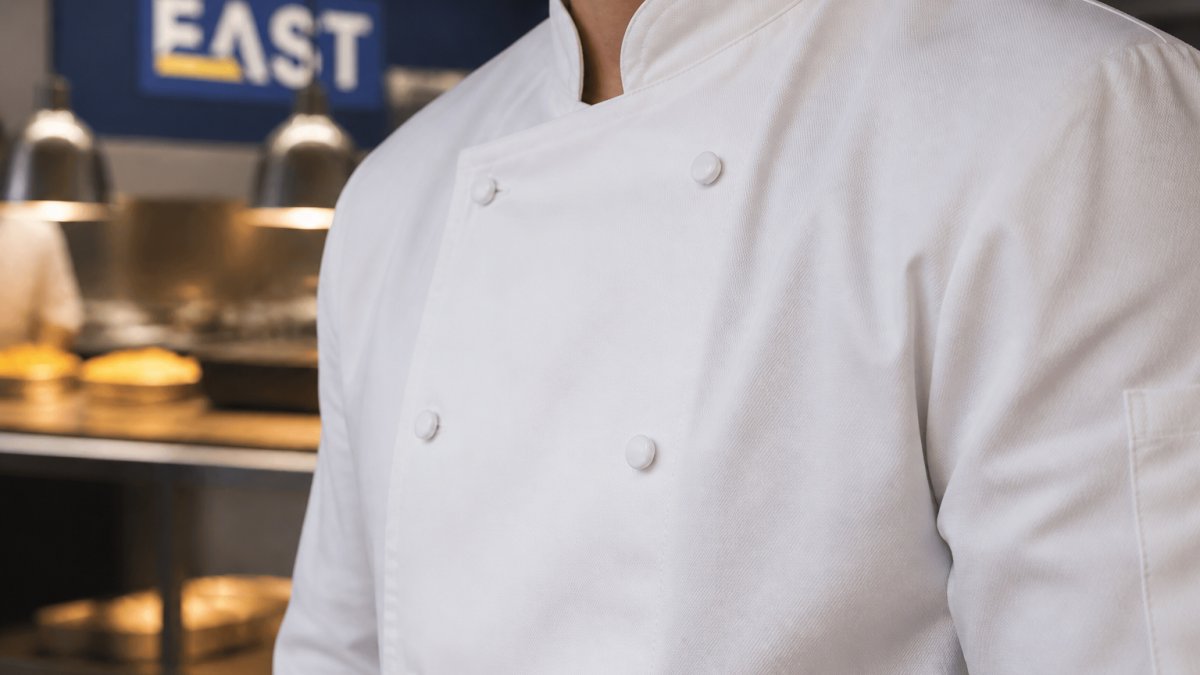
Fit matters as much as fabric. A jacket that pulls across the shoulders restricts movement during service, and an overly loose one catches on equipment. Short sleeve and long sleeve options both have a place, depending on how hot the pass runs.
If you are weighing up which cloth takes embroidery cleanly and holds up to heat, our guide to the best fabric for embroidered staff uniforms breaks down polycotton, cotton and blends side by side.
Chef Jackets With Logo: Placement, Size and Stitch Count
Logo placement on a chef jacket should be decided before you approve artwork, not after. The standard position is the left chest, roughly level with the wearer's heart, because it reads clearly without interfering with the jacket's front panel or pocket.
Size needs restraint. An oversized logo on a chef jacket looks amateurish and adds unnecessary stitch density to a curved area of the garment. A compact chest logo, plus an optional sleeve or back placement, usually looks sharper and wears better.
Stitch count is the detail most buyers overlook. More stitches mean a denser, more detailed logo, but also a heavier, stiffer patch of embroidery. Very fine text and tight gradients are where embroidery struggles, so a simplified version of your logo often reproduces better in thread than a straight copy of a detailed brand mark.
Embroidered Aprons and Service Wear That Handles a Full Shift
An embroidered apron takes more punishment than almost any other garment in the building. It absorbs spills, gets tied and untied dozens of times a shift, and goes through the wash far more often than a jacket. That makes the embroidery placement and the apron's construction equally important.
Chest and waist placements both work, but keep embroidery clear of the apron's tie points and pocket openings. Stitching across a stress point weakens the fabric exactly where it needs to hold.
Service wear follows the same logic. You can browse the full range of embroidered aprons and service wear to match the rest of your team's kit.
Personalised Chef Uniforms: Trousers, Headwear and Team Consistency
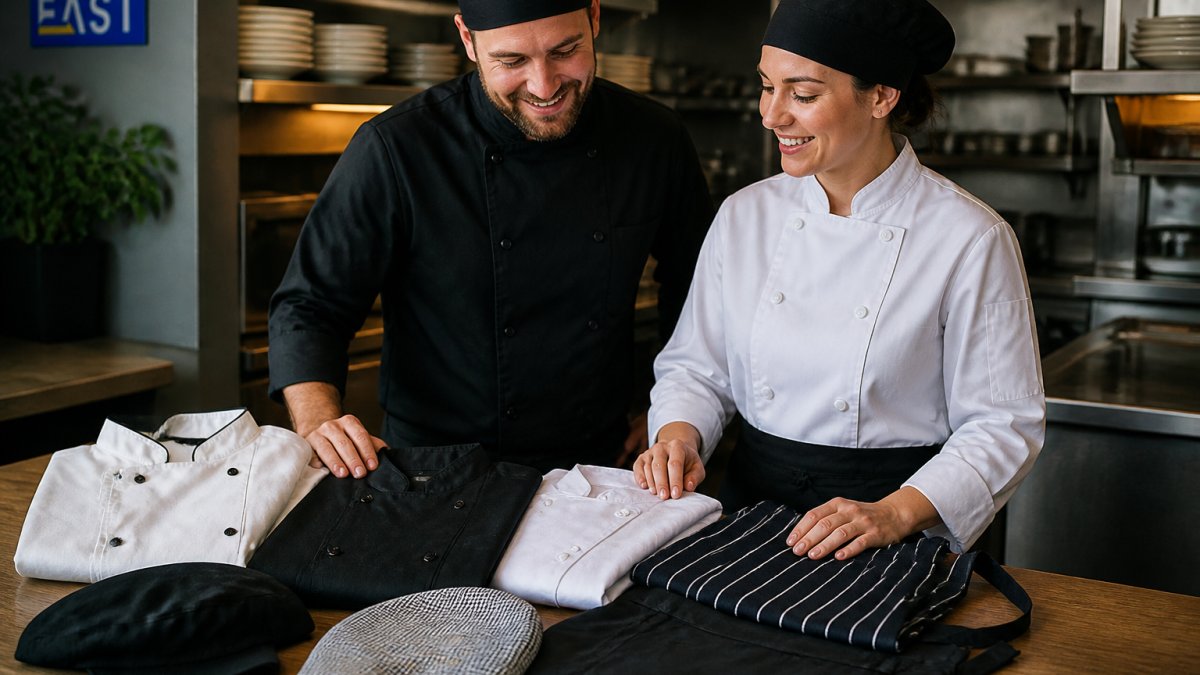
Personalised chef uniforms work best when every element is chosen together rather than piece by piece. Chef trousers, headwear and jackets that share a fabric weight and colour palette look intentional; a mismatched set looks like a compromise.
Headwear completes the picture. Chef hats and caps in the same cloth as the jacket tie the whole uniform together and give every team member a consistent silhouette. For kitchens kitting out a full brigade, a coordinated Workwear Bundles package removes the guesswork from ordering.
Preparing Your Logo File for Embroidery
A clean, correctly prepared logo file is the difference between a sharp embroidered chest badge and a costly re-run. Embroidery machines need a stitch file that tells them exactly where each needle pass goes. Understanding that conversion process helps you supply artwork that digitises cleanly first time.
What to send
-
Vector files (AI, EPS, SVG or a clean PDF) are ideal because they scale without loss and give the digitiser precise paths to follow.
-
Screenshots, website images and business cards are the most common cause of delay, they usually need full redrawing before digitising can begin.
Specifications that affect the stitch-out
A common mistake is sending a full-colour logo with gradients and expecting an exact match in thread. Embroidery works in solid blocks of colour, so a simplified version almost always looks better on a garment than a faithful copy of a detailed digital file. If you are unsure whether your file is ready, email info@workweareast for a quote and we will review it before anything is digitised. You can also see how this fits into the wider chef uniform buying guide.
Caring for Embroidered Chefwear So It Lasts
Washing embroidered chefwear correctly is what protects the stitching over years of use. Turn garments inside out before washing, use a cool or moderate cycle, and avoid harsh bleach that weakens thread over time.
Tumble drying on high heat is the biggest threat to embroidery. The thread shrinks at a different rate to the fabric, which causes puckering around the design. Air drying or a low-heat setting keeps the stitching flat and the garment's shape intact.
Our step-by-step guide on how to wash embroidered company logos covers temperature, detergent choice and drying in more detail. Follow it and the embroidery will stay crisp for the working life of the garment. Watch out: washing embroidered items with heavy zips or velcro left unfastened can snag and pull the threads, so fasten everything before the cycle starts.
Ordering Your Embroidered Chefwear From Workwear East
Ordering embroidered chefwear should follow a clear sequence, and skipping steps is where most delays creep in. The process below outlines the typical steps.
| Step | What Happens | What You Need to Provide |
|---|---|---|
| 1. Choose garments | Select jackets, aprons, trousers and headwear | Team size and roles |
| 2. Send artwork | We review your logo and confirm whether it needs digitising | Vector or high-res logo file |
| 3. Approve proof | You sign off placement, size and thread colours | Sign-off on the digital proof |
| 4. Confirm sizes | Sizing agreed across the whole team | Size list per staff member |
| 5. Production and delivery | Embroidery completed and dispatched | Delivery address and date |
Sample approval and colour matching
Thread charts look different on a screen, and a navy that matches on a monitor can read as black against a white jacket. Approving a physical sample removes that risk before the full run begins.
Bulk orders and lead times
Pricing depends on garment choice, stitch count and quantity, so please request a quote for your order. Confirm your required delivery date at the quoting stage, and email info@workweareast.co.uk for a quote.
Quality control before dispatch
For teams that reorder regularly, our workwear portal may help keep your details on file for repeat orders.
Workwear East offers advanced embroidery for intricate, multi-colour designs. Pricing depends on garment choice, embroidery detail and order quantity, so please email info@workweareast.co.uk for a quote. For a full breakdown of fabrics, safety and care, explore the complete chef uniform buying guide.
Frequently Asked Questions
What can be embroidered on chefwear?
Most chefwear fabrics can take embroidery, including jackets, aprons, trousers, polo shirts and headwear. Logos, business names and individual staff names are the most common requests. Placement matters: the left chest is standard for jackets and polos, while aprons often suit a centred or pocket-level logo. Heavier fabrics such as polycotton twill hold dense stitching well, while lightweight aprons may need a simpler design to avoid puckering. Workwear East can advise on what suits each garment before you commit to an order.
Where should a logo go on a chef jacket?
The left chest is the usual position for a chef jackets with logo embroidery, sitting roughly level with the wearer's heart and clear of the placket. Some kitchens prefer a sleeve placement or a small logo on the collar stand. Keep the design within the chest panel so stitching does not cross seams or pockets, which distorts both the logo and the garment. For a consistent team look, agree one placement across all jackets and stick to it, then confirm the position with a sample before a bulk run.
How should embroidered chefwear be washed?
Turn garments inside out before washing so the stitching is protected from friction, and use a cool or low-temperature cycle rather than a hot wash. Avoid biological detergents and fabric softener, which can break down threads and backing over time. Skip the tumble dryer where possible and hang to dry, then press around the embroidery rather than directly over it. Check the care label on each garment, as polycotton and heavier twill jackets can differ. Following these steps keeps embroidered chefwear looking sharp through repeated industrial laundering.
What should a business consider before ordering embroidered chefwear?
Start with an accurate size list for every team member, since embroidery is applied to a specific garment and cannot be resized later. Decide on one logo placement and size across the range, and supply a clean vector file so the digitising step is straightforward. Think about fabric weight and colour fastness if the kit faces daily washing. Finally, confirm lead times against your start date. Workwear East can talk through quantities, decoration options and delivery, and you can email info@workweareast for a quote.
Kitting out a kitchen team is a decision you live with every service, so getting the garments, artwork and sizing right the first time matters. Workwear East offers durable embroidered chefwear with advanced multi-colour embroidery, consistent results across every garment, and a proof-first process that protects your branding. Email info@workweareast for a quote, or get started with Workwear East to kit your team out in branded chefwear built to last.