 ultimate-guide
Chef Uniforms: The Complete 2026 Buying Guide
Table of Contents
- What Every Professional Chef Uniform Needs to Include
- Fabric, Safety Standards and Hygiene Rules for Kitchen Apparel
- Custom Embroidered Chef Jackets: What to Look For
- Durable Kitchen Workwear: Stitching, Fabric Weight and Lifespan
- Workwear Customisation Techniques Compared: Embroidery, DTF and Screen Printing
- Front of House and Back of House: Building One Uniform Programme
- Caring for Chef Uniforms: Washing, Stains and Industrial Laundry
- Frequently Asked Questions
Last Updated: September 19, 2026
What Every Professional Chef Uniform Needs to Include
A complete chef uniform is a layered system rather than a single garment: a double-breasted jacket, comfortable trousers, a protective apron, appropriate headwear, and slip-resistant footwear. Each piece exists for a practical reason, and skipping one usually shows up as a burn, a slip, or a hygiene problem later. This guide from Workwear East breaks down what to buy, what to avoid, and how to build a uniform programme that lasts.
Most chefs start with the jacket and stop there. That is a mistake. The jacket protects your torso; it does nothing for your feet on a wet tiled floor or your legs when a pan of stock comes off the hob. Treat chef uniforms as one system and the buying decisions get much simpler.
Chef Jackets and Coats: Double-Breasted Protection
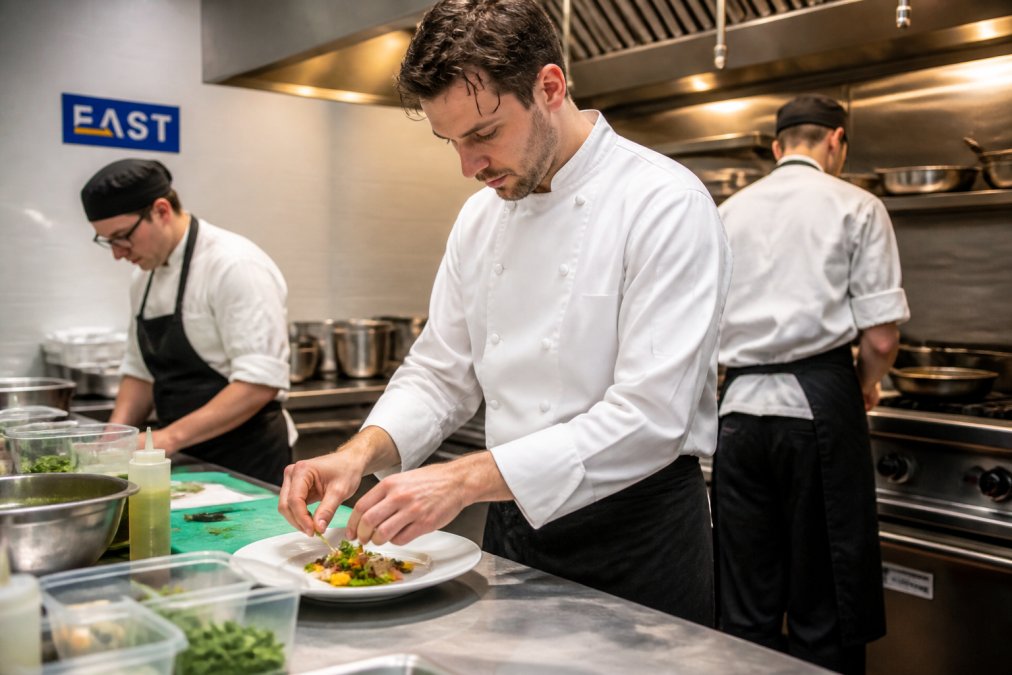
The double-breasted jacket is the centrepiece of chef whites, and the design is not decorative. The overlapping front panel can be reversed to hide stains mid-service, and the double layer of fabric across the chest adds a barrier against spills and splashes. Look for a thick cotton or cotton-polyester blend, a mandarin or stand collar that keeps the neck covered without a loose flap, and heat-resistant buttons that survive industrial laundering.
What most guides miss is the sleeve length. A jacket sleeve that hangs past the wrist catches on pan handles and drags through food. Check that the cuff sits at or just above the wrist bone before you commit to a size run.
Trousers, Aprons, Headwear and Slip-Resistant Footwear
Chef trousers need an elasticated or drawstring waist, a loose cut through the thigh for movement, and a fabric that resists oil and water. Baggy chefs' trousers are not a style choice; they let you squat, climb, and pivot without splitting a seam.
Aprons come in three broad styles: bib aprons for full torso coverage, waist aprons for front-of-house service, and full-length butchers' aprons for heavy prep work. Headwear ranges from traditional tall toques to skull caps and neckerchiefs, and the practical choice for most kitchens is a skull cap that contains hair without adding heat.
Footwear is where kitchens cut corners and regret it. Slip-resistant footwear with a sealed, non-slip sole and a closed toe is the baseline. Ergonomic benefits matter here too: a cushioned midsole and arch support reduce the fatigue that builds over a twelve-hour shift on hard floors.
| Item | Key Feature to Check | Why It Matters |
|---|---|---|
| Jacket | Double-breasted front, heat-resistant buttons | Reversible stain cover, burn protection |
| Trousers | Elasticated waist, loose thigh cut | Movement without seam failure |
| Apron | Bib or full-length, adjustable neck strap | Torso coverage during prep |
| Headwear | Skull cap or toque, breathable fabric | Hair containment without heat build-up |
| Footwear | Slip-resistant sole, closed toe, arch support | Fall prevention, shift-long comfort |
Fabric, Safety Standards and Hygiene Rules for Kitchen Apparel
Kitchen apparel sits inside a legal framework, not just a comfort one. Under food hygiene regulations, food handlers must wear suitable clean clothing and take steps to prevent contamination of food. That means clothing that covers the body, can be laundered at high temperature, and does not shed fibres or harbour bacteria. The Food Standards Agency guidance on food hygiene is the reference point for what clean, suitable clothing means in practice. For the wider regulatory picture on workplace clothing and protective equipment, the Health and Safety Executive guidance on PPE at work sets out employer duties.
Where the rules get specific is in the detail most buyers skip. A chef jacket should cover the torso and upper arms, fasten securely, and have no loose cuffs or ties that can trail into food. Aprons should be changed when they become soiled rather than wiped down and reused, because a visibly dirty apron is a contamination risk regardless of what the fabric claims. Headwear should fully contain hair, and where a kitchen handles open food, a beard snood is often required alongside a cap. These are not optional extras; they are the practical expression of the hygiene duty.
Fabric choice is where safety and comfort meet. Breathable, moisture-wicking fabric is the practical answer to a hot kitchen. Cotton breathes well but holds sweat; polyester blends wick moisture away and dry faster, which matters if you change jackets mid-shift. Stain-resistant finishes help, but they wear off, so treat them as a bonus rather than a guarantee.
Custom Embroidered Chef Jackets: What to Look For
Custom embroidered chef jackets turn a generic uniform into identifiable team kit, and embroidery is the most durable customisation method for logos on jackets and polos. The stitching sits inside the fabric rather than on top of it, so it survives repeated industrial washing without cracking or peeling.
Durable Kitchen Workwear: Stitching, Fabric Weight and Lifespan
Durable kitchen workwear comes down to three measurable things: fabric weight, stitch quality, and the reinforcement at stress points. Fabric weight is measured in grams per square metre, and heavier is not automatically better, but very light fabric wears through quickly at the elbows, cuffs, and seat.
Workwear Customisation Techniques Compared: Embroidery, DTF and Screen Printing
Choosing between embroidery, DTF printing, and screen printing is a decision about the design, the fabric, and the order size, not about which method is "best". Each has a clear use case.
- Embroidery suits logos, text, and multi-colour crests on jackets, polos, and fleeces. It is the most durable option and the standard for professional catering uniforms.
- DTF printing handles detailed, full-colour images on many materials, including fabrics that embroidery cannot cover well. It is the right choice for photographic logos or complex artwork.
- Screen printing is the most cost-effective method for large orders of simple designs with a limited number of colours, typically on t-shirts and light garments.
| Technique | Best For | Detail Level | Durability |
|---|---|---|---|
| Embroidery | Logos, crests, jackets, polos | Medium, multi-colour | Highest |
| DTF printing | Full-colour images, varied fabrics | Very high | High |
| Screen printing | Large runs, simple designs | Limited colours | High |
Front of House and Back of House: Building One Uniform Programme
A single uniform programme across front of house and back of house keeps your brand consistent and your ordering simple. Front of house staff need a different garment set from kitchen staff, but they can share a colour palette, logo placement, and fabric family so the team looks like one operation.
Caring for Chef Uniforms: Washing, Stains and Industrial Laundry
Chef uniforms need a care routine that matches how hard they work. Wash at the highest temperature the fabric label allows, separate whites from colours, and treat oil and grease stains before the wash rather than after, because heat sets oil stains permanently.
Frequently Asked Questions
What are the essential components of a professional chef uniform?
A complete set covers five areas: a double-breasted jacket or tunic, chef trousers with an elasticated or drawstring waist, an apron, headwear such as a skull cap or neckerchief, and slip-resistant footwear. Each piece does a job. The jacket protects against splashes and heat, the trousers allow movement through long shifts, and the footwear prevents slips on wet or greasy floors. Many kitchens also add a second lighter jacket for summer service, so staff stay comfortable without breaking hygiene rules.
How often should chef uniforms be replaced to maintain hygiene standards?
Most kitchens replace jackets and trousers every 12 to 18 months with regular washing, though industrial laundry cycles shorten that. Replace items sooner when you see frayed cuffs, thinning fabric, stubborn staining around the collar or apron ties, or stitching that has started to pull. Hygiene rules under UK food safety law require clean clothing on every shift, not new clothing, so the practical trigger is condition rather than a fixed calendar date. Keep two or three sets per person so a clean uniform is always available.
What is the difference between DTF printing and embroidery for workwear?
Embroidery stitches your logo directly into the fabric using thread, which suits chef jackets, polos and aprons because it survives industrial washing and repeated wear. DTF printing bonds a full-colour transfer onto the garment, which handles detailed artwork, gradients and small text that embroidery struggles with. For a kitchen environment, embroidery on jackets and trousers and DTF on lighter promotional items is a common split.
What are the safety benefits of wearing proper chef jackets and trousers?
Chef jackets are usually made from thick cotton or cotton-rich blends that resist heat and reduce scalds from splashes. The double-breasted front gives two layers over the chest and can be reversed to hide stains, while long sleeves protect forearms. Trousers are cut loose to allow movement and reduce the risk of fabric catching, and many have a higher waistband for coverage when bending. Slip-resistant footwear matters just as much, since wet kitchen floors are a leading cause of workplace injury in hospitality.