 ultimate-guide
Builder Workwear: The 2026 UK Guide to Choosing Gear
Table of Contents
- What Makes Builder Workwear Fit for the Job
- The Materials That Decide How Long Gear Lasts
- The Builder Workwear Checklist: Trousers, Boots and Layers
- Custom Embroidered Workwear for Trade Teams
- Hi-Vis Safety Clothing Standards Explained
- Workwear Maintenance Tips That Extend Gear Life
- Workwear for Diverse Body Types and Ergonomic Fit
- Conclusion
- Frequently Asked Questions
Last Updated: September 15, 2026
What Makes Builder Workwear Fit for the Job
Builder workwear is the layer of clothing and protective equipment a tradesperson wears to stay safe, mobile and productive on site, and it earns its place by surviving abrasion, weather and daily wear rather than by looking the part. This guide from Workwear East breaks down what actually matters when you're equipping a team: the fabrics that hold up, the standards that apply, and the fit and maintenance details most buyers only think about after the first order goes wrong.
The biggest mistake buyers make is treating builder workwear as a uniform decision rather than a safety and durability decision. A polo that fades is annoying. Trousers that tear at the knee on week three, or boots that lose their grip in the wet, cost you downtime and, in the worst case, an injury.
Below, we'll show you exactly how to specify gear trade by trade, what the UK safety standards require, and how to keep it all in service far longer.
The Materials That Decide How Long Gear Lasts
Fabric choice separates gear that lasts a season from gear that lasts years. Look for ripstop fabric and tight cotton-polyester blends for trousers, since both resist tearing once a snag starts, and check for abrasion-resistant panels at the knees and seat.
Reinforcement tells you where a garment is expected to fail. Reinforced knees with a pocket for foam inserts, triple-stitched seams and stretch panels at the waist and gusset all point to a garment built for movement rather than display. A breathable, moisture-wicking base layer underneath keeps a wearer comfortable when the work is heavy and the weather is close.
The Builder Workwear Checklist: Trousers, Boots and Layers
A complete kit covers four areas: trousers, footwear, a waterproof outer layer and a thermal base layer. Get the order of priority right and you protect the parts of the body most exposed to injury first.
Work Trousers, Cargo Pockets and Holster Pockets
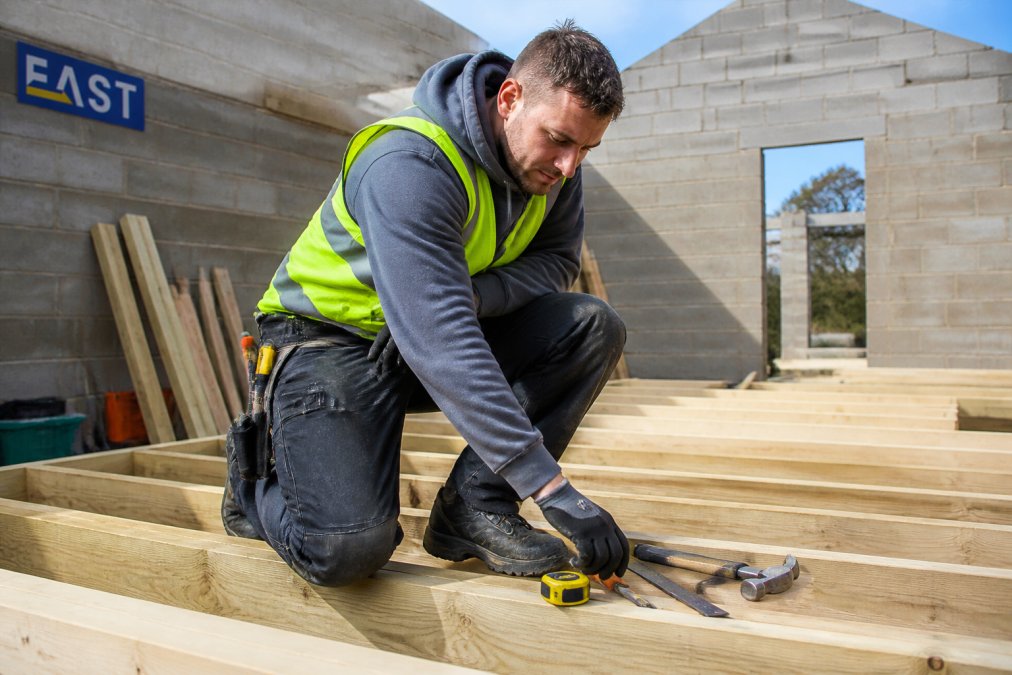
Trousers take the most punishment of anything a builder wears. Prioritise heavy-duty fabric with reinforced knees, then decide on pocket layout: cargo pockets for general storage, holster pockets for tools you reach for constantly. A stretch panel at the waist makes a real difference to comfort across a full shift.
Safety Footwear, Base Layers and Waterproof Jackets
Safety footwear is the one item you should never compromise on. Look for steel toe cap or composite toe protection, a slip-resistant sole and, where the site requires it, anti-static construction. Above the boot, a waterproof and windproof jacket handles the weather, while a layering system of thermal base layer and mid-layer lets your team adjust through the day.
| Item | What to Check | Why It Matters |
|---|---|---|
| Trousers | Reinforced knees, holster pockets, stretch panels | Survives kneeling and constant tool access |
| Footwear | Toe cap, slip-resistant sole, anti-static option | Prevents the most common site injuries |
| Outer layer | Waterproof, windproof, reflective tape | Keeps the wearer dry, visible and working |
| Base layer | Moisture-wicking, thermal regulation | Comfort across temperature swings |
Custom Embroidered Workwear for Trade Teams
Custom embroidered workwear turns a functional kit into a team identity, and embroidery outlasts printed logos because the thread is stitched into the fabric rather than sitting on its surface. For trade teams, that durability matters: a logo that survives the wash cycle and the site is a logo that keeps representing the business.
Workwear East builds Workwear East workwear bundles around your team's roles and sizes, with branded polo shirts and embroidery produced on advanced multi-colour machines for intricate designs. For larger operations, a workforce portal lets staff order and manage their own kit, which removes the sizing nightmare of coordinating fifty people across departments.
Hi-Vis Safety Clothing Standards Explained
Hi-vis safety clothing is rated by its reflective performance, and the ratings follow recognised European standards that UK sites commonly reference. The core one is EN ISO 20471, which grades garments into three classes based on the minimum area of visible material and retroreflective tape they carry. The higher the class, the more tape and fluorescent fabric the garment must have, and the more visible the wearer stays against a busy or low-light background.
| Class | Minimum visible material | Minimum retroreflective tape | Typical use |
|---|---|---|---|
| Class 1 | Lowest area | Lowest area | Low-risk, off-highway tasks |
| Class 2 | Mid area | Mid area | General site work, plant movement nearby |
| Class 3 | Highest area | Highest area | High-speed traffic, poor light, rail and highway work |
A separate standard, EN ISO 20471 aside, is EN 17353, which covers enhanced visibility clothing for non-professional use, the kind of vest a cyclist or a visitor might wear. It is not a substitute for EN ISO 20471 on a construction site, and mixing the two up is a common ordering error. For foul-weather gear, the relevant clothing standard is EN 343, which rates waterproofness and breathability, and for cold conditions EN 342 covers thermal insulation. A jacket can carry both a hi-vis class and an EN 343 rating, and the label should show each.
PPE selection is a risk-assessment decision first and a purchasing decision second. Check what your site actually requires for reflective tape coverage and class before ordering, and confirm the garments carry the correct marking. Workwear East supplies hi-vis clothing to match those requirements.
Workwear Maintenance Tips That Extend Gear Life
Workwear maintenance tips matter more than most buyers expect, because how a garment is washed often decides whether it reaches year two. Most guides stop at 'follow the label'. The mechanisms matter more than the rule, so here is what is actually happening to the fabric and what to do about it.
Reflective tape is bonded to the garment with an adhesive and a retroreflective bead layer. Fabric softener leaves a residue that coats those beads and dulls the reflection, and high heat can lift the adhesive at the edges. Wash hi-vis at the temperature on the label, skip softener entirely, and turn the garment inside out to protect the tape from abrasion against the drum.
Waterproof membranes in jackets work in two ways: the membrane blocks liquid water while letting vapour escape, and a durable water repellent (DWR) finish on the outer face makes rain bead and roll off. Detergent residue and dirt clog the DWR, which is why a jacket that used to bead starts to 'wet out' and feel clammy. Wash the jacket with a technical cleaner rather than household detergent, then tumble dry on low or warm to reactivate the DWR, the heat is part of the process, not a risk to it. When beading stops returning after a wash, reproof with a spray-on or wash-in DWR rather than replacing the jacket.
Moisture-wicking base layers rely on a capillary action that pulls sweat away from the skin.
Workwear for Diverse Body Types and Ergonomic Fit
Conclusion
Frequently Asked Questions
What are the essential features of high-quality builder workwear?
Look for abrasion-resistant fabrics such as ripstop or heavy cotton blends, reinforced knees and triple-stitched seams, and stretch panels at the waist and gusset for movement. Cargo pockets and holster pockets keep tools close without slowing you down. Safety footwear should carry a steel toe cap or composite toe, slip-resistant soles and, where required, anti-static properties. Breathable, moisture-wicking base layers and a waterproof, windproof outer layer complete a layering system that works across seasons.
What do the hi-vis safety clothing standards actually require?
Hi-vis garments are classified under EN ISO 20471, which grades visibility by the area of fluorescent background material and reflective tape. Class 1 suits low-risk, off-road tasks; Class 2 covers most site work; Class 3 is for high-speed traffic and poor light. The garment must also be fastened correctly, since an open jacket reduces the visible area and can drop it below its rated class. Check the label and replace hi-vis once the reflective tape is worn or faded.
Why is custom embroidered workwear worth it for a trade team?
Embroidered logos are stitched into the fabric rather than printed on top, so they hold up to repeated industrial washing far better than transfers that crack and peel. On a building site, that means your company name stays legible for the life of the garment, which helps with client recognition and site identification. Custom embroidered workwear also lets you standardise polo shirts, jackets and hi-vis across departments, so every crew looks consistent. Workwear East can quote for embroidery, DTF printing or screen printing depending on your order size.
How should you maintain workwear to ensure longevity?
Wash at the temperature on the care label, usually 40°C or lower for technical fabrics, and avoid fabric softener because it coats moisture-wicking fibres and reduces breathability. Turn garments inside out and close zips before washing to protect embroidery and reflective tape. Air-dry where possible rather than tumble drying, which shrinks cotton and degrades reflective tape. Inspect knees, seams and hi-vis tape monthly, and retire any garment with worn reflective tape, as it no longer meets its EN ISO 20471 class.