 comparison
Cost Benefit Analysis of Embroidered Workwear
Table of Contents
- Why Embroidered vs Printed Workwear Cost Comparison Matters
- Initial Investment: Setup Costs and Minimum Orders
- Durability of Embroidered Workwear vs Printed Alternatives
- Custom Workwear ROI for Small Businesses
- Cost Per Wear: Calculating Long-Term Value
- Brand Visibility and Professional Image Return
- Bulk vs Small Order Cost Analysis
- Sustainability Impact and Replacement Frequency
- Frequently Asked Questions
Last Updated: October 2, 2026
Why Embroidered vs Printed Workwear Cost Comparison Matters
When deciding between embroidered and printed workwear, the upfront price tells only half the story.
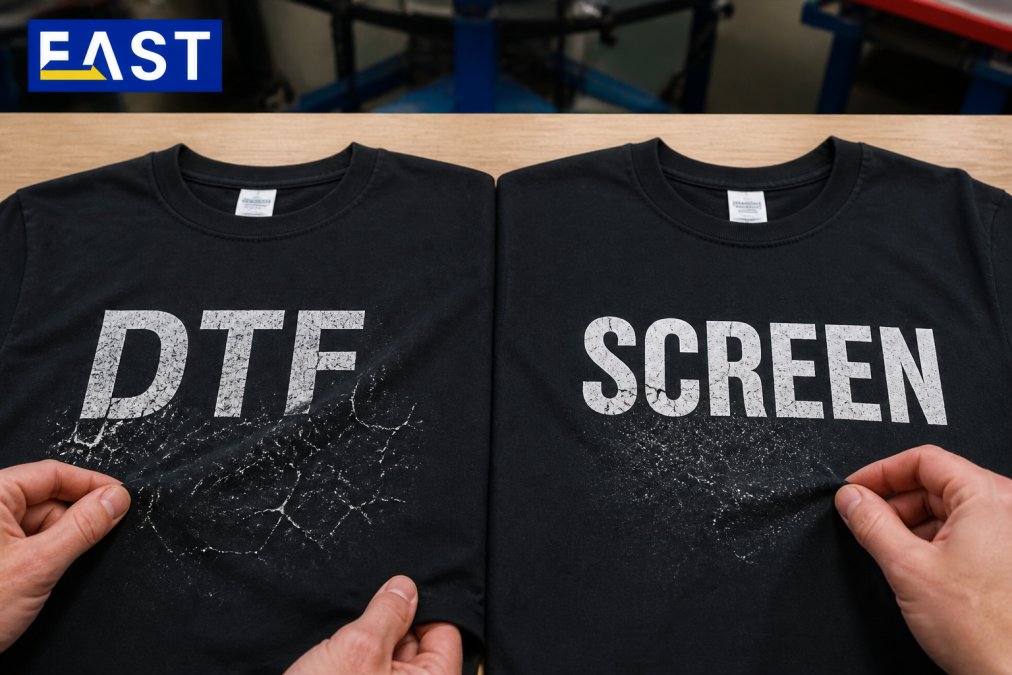
Printed logos crack and fade after repeated washing; embroidered logos hold integrity through dozens of cycles.
Workwear East has worked with construction firms and trade companies across Norfolk who chose printed apparel for price, only to discover they replaced stock far more frequently than budgeted.
Initial Investment: Setup Costs and Minimum Orders
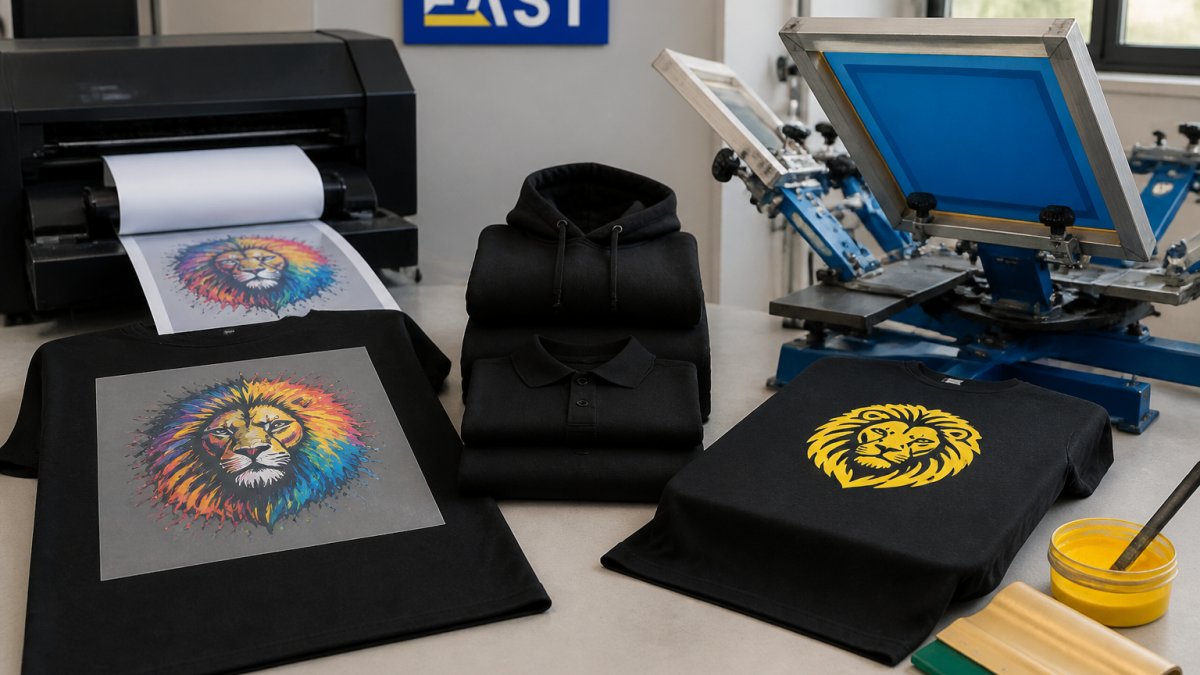
Embroidery requires higher upfront investment than screen printing, but understanding the cost structure reveals exactly when that investment becomes worthwhile, and when it doesn't.
Embroidery requires digitisation (converting your logo to a machine-readable file), with a one-time setup fee per design. Screen printing also has setup costs but distributes them differently across order quantities.
Understanding the Setup Fee Threshold
Embroidery setup typically costs £30-£80 per design; screen printing £40-£120 per colour. These fees amortise across every garment ordered.
The per-unit cost for both embroidery and screen printing varies with order size. Screen printing's per-unit advantage often grows with order size, but this ignores durability and replacement frequency.
Minimum Order Quantities and Flexibility
Screen printing often requires 50-100 garment minimums per colour, forcing overproduction. Embroidery accommodates 10-20 garment orders without prohibitive costs, benefiting new businesses, growing teams, and those testing designs. This flexibility reduces financial risk by letting you buy what you need now.
The True Decision Framework
Choose embroidery for orders under 30 garments, multi-colour logos, daily wear, or frequent reorders. Choose screen printing for orders over 50 garments, simple logos, or one-time purchases. For 30-50 garments, calculate cost-per-wear over the garment's lifespan; screen printing's per-unit advantage often evaporates when replacement cycles are factored in.
Workwear East helps businesses make this decision with clarity. Email info@workweareast for a quote that breaks down setup costs, per-unit pricing, and total investment for your order size.
Durability of Embroidered Workwear vs Printed Alternatives
This is where the cost benefit analysis of embroidered workwear justifies its higher initial investment. Embroidered logos survive industrial laundering and daily wear that destroys printed alternatives.
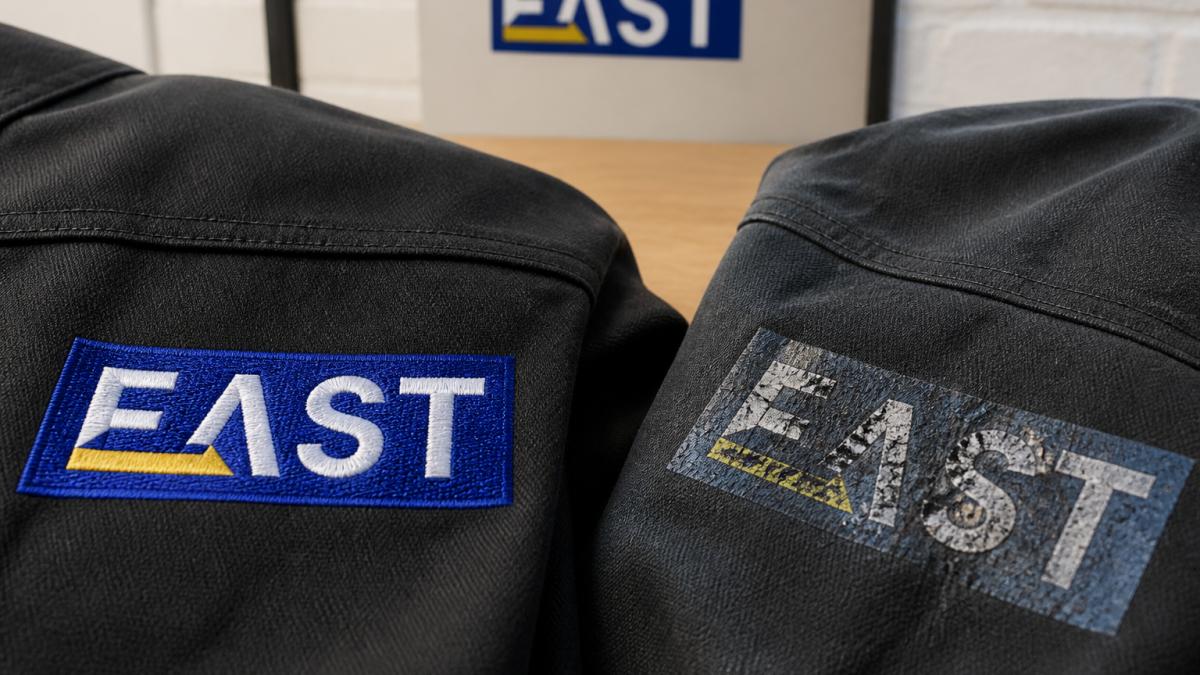
Printed workwear shows visible degradation sooner than embroidered workwear; embroidered workwear remains professional for longer. For daily-wear teams, this means replacing stock less frequently with embroidered options.
Thread Count and Longevity
Polyester thread resists fading better than cotton, maintaining colour and appearance through countless wash cycles.
Maintenance and Care Costs Over Time
Printed logos require careful washing and special handling; embroidered workwear tolerates standard industrial washing. This reduces laundry labour costs and handling complexity. Over five years, embroidered garments lasting 3-5 years require far fewer replacements than printed alternatives lasting 12-18 months, reducing inventory management and disruption.
Custom Workwear ROI for Small Businesses
For a 15-person business, printed workwear costs less upfront but requires annual replacement, with degrading appearance affecting customer perception. Embroidered workwear costs more initially but lasts 3-5 years, maintaining consistent professional appearance. For small businesses, consistency builds customer trust and projects professionalism. The cost benefit analysis of embroidered workwear shows ROI is both financial and reputational.
Cost Per Wear: Calculating Long-Term Value
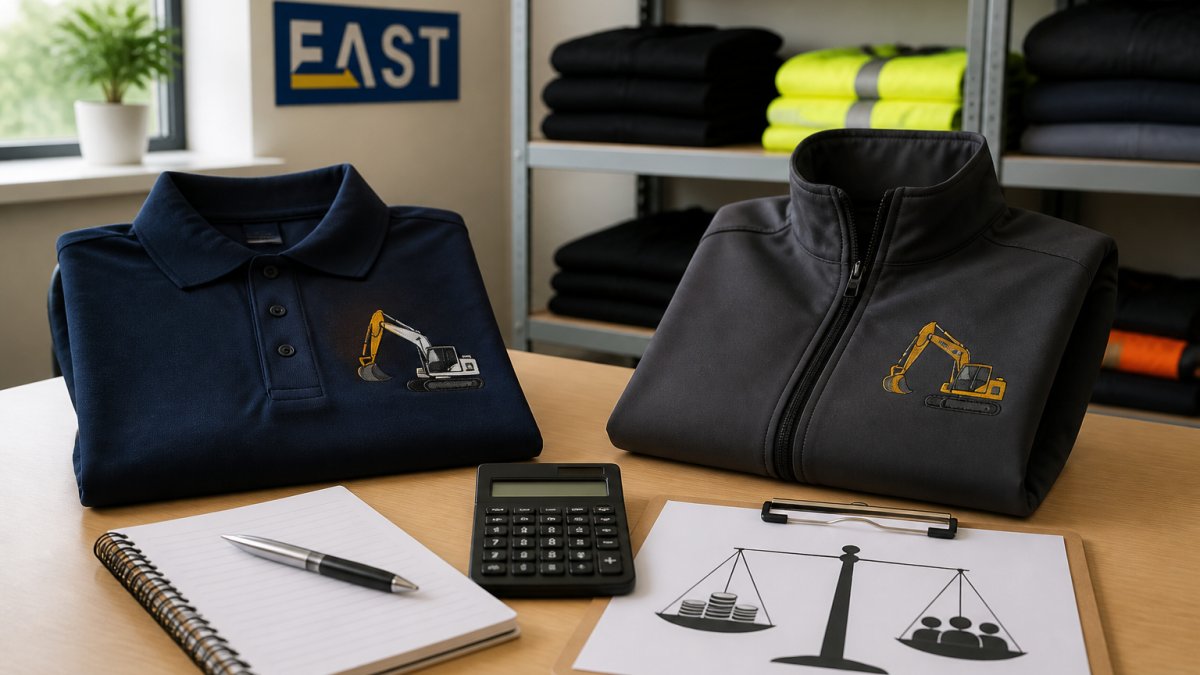
Cost per wear divides total investment by wear count before replacement. Over five years, a 15-person team buying embroidered workwear purchases fewer garments versus printed, potentially reducing total spend. For daily-wear teams, embroidered options can deliver lower cost per wear over time.
When you're ready to order, Branded Polo shirts and other embroidered options through Workwear East ensure your investment in quality workwear is protected by durability that lasts.
Brand Visibility and Professional Image Return
The cost benefit analysis of embroidered workwear extends beyond durability metrics into measurable brand impact. This is where the financial case becomes undeniable.
How Professional Appearance Affects Customer Perception
Embroidered logos remain crisp and professional; printed logos fade, crack, and peel, suggesting cost-cutting over quality. Research shows uniform quality directly influences customer trust and repeat business. A construction crew in well-maintained embroidered workwear conveys reliability and professionalism; faded printed logos raise questions about work quality.
Quantifying the Brand ROI
While brand impact is often treated as intangible, it has measurable business consequences:
Repeat business and referrals: Customers who perceive your team as professional are more likely to hire you again and recommend you to others. For service-based businesses, repeat customers and referrals are the lowest-cost customer acquisition channel. An increase in repeat business from improved brand perception can help offset the cost difference between embroidered and printed workwear.
Pricing power: Businesses perceived as professional and detail-oriented can command premium pricing.
Employee pride and retention: Employees wearing professional, well-maintained branded workwear report higher job satisfaction and brand pride. This translates to lower turnover, reduced recruitment costs, and better customer service.
Customer acquisition cost: New customers acquired through referrals from existing customers can be more cost-effective than those acquired through advertising. Professional brand presentation increases referral likelihood.
Consistency as a Brand Asset
Embroidered workwear enables consistent brand presentation across your entire team, across years. This consistency builds brand recognition and trust.
Consider a team of 15 people wearing branded workwear. If printed logos degrade at different rates, some fading after 6 months, others after 12, your team presents an inconsistent brand image. Some garments look professional; others look neglected. This inconsistency undermines brand recognition and customer confidence.
Embroidered workwear maintains consistent appearance across all garments for 3-5 years. Every team member represents your brand identically, every day. This consistency is particularly valuable for:
- On-site visibility: Construction, trades, and service teams working at customer locations represent your brand continuously
- Fleet visibility: Teams travelling between job sites in branded vehicles and workwear create repeated brand impressions
- Customer interaction: Any team member interacting with customers carries your brand identity; consistency matters
Design Quality and Logo Fidelity
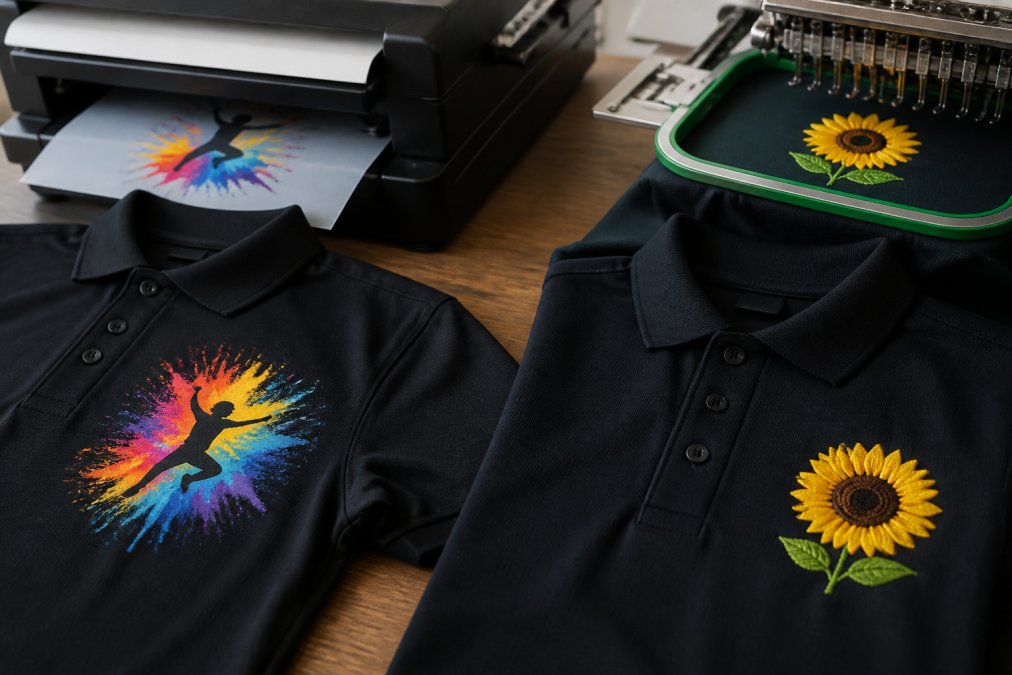
Embroidered workwear also enables better customisation and logo fidelity than printed alternatives. Advanced embroidery machines for intricate, multi-color designs ensure your logo appears exactly as designed, every time, across every garment.
This matters for brand recognition. A logo that's consistently rendered in full colour and detail across all team members creates stronger brand recall than a simplified or degraded version.
The Hidden Cost of Brand Degradation
When printed logos degrade, you face a choice: replace the garment (cost and disruption) or continue wearing degraded branding (ongoing brand damage).
Over 12 months, a team of 15 people wearing printed workwear with degrading logos creates hundreds of customer interactions with suboptimal brand presentation. Each interaction slightly reduces customer confidence.
Workwear East's embroidered workwear eliminates this trade-off. Your team maintains professional, consistent brand presentation for years, not months.
Bulk vs Small Order Cost Analysis
The cost benefit analysis of embroidered workwear shifts depending on order size and frequency.
Small orders (10-30 garments): Embroidery wins. You avoid minimum order penalties, pay one setup fee, and receive garments tailored to your current team size.
Medium orders (30-100 garments): Both options become viable. Screen printing's per-unit cost advantage appears here.
Large orders (100+ garments): Screen printing delivers the lowest per-garment cost.
The key insight: comparing only the per-unit purchase price ignores replacement frequency.
For businesses placing multiple small orders throughout the year (as teams grow or replace worn stock), embroidery's flexibility and lower minimums reduce procurement hassle and total spend. Workwear East's Workwear Bundles and flexible ordering options support both scenarios, whether you're ordering 15 garments for a new team or 100 for a major rollout.
Sustainability Impact and Replacement Frequency
The environmental cost benefit analysis of embroidered workwear often goes unmentioned but matters increasingly to businesses and employees.
Replacing garments less frequently reduces waste.
Manufacturing apparel carries environmental cost, water use, chemical processing, transportation, and energy.
Durability also supports circular economy principles. Garments lasting longer can be donated, repurposed, or recycled more effectively.
Many employees, particularly younger team members, value working for businesses that prioritise sustainability.
Ready to explore embroidered workwear for your team?
Frequently Asked Questions
Is embroidered workwear more cost-effective than screen printing?
It depends on your team size and replacement cycle. Embroidered workwear costs more upfront but lasts significantly longer, often 3-5 years of daily wear before replacement. Screen printing is cheaper initially but logos crack and fade within 12-24 months of regular washing and wear. For small teams (under 20 staff), embroidery typically becomes the better investment within 18 months. For large bulk orders, screen printing can remain competitive if you factor in higher replacement frequency.
What is the expected lifespan of embroidered workwear compared to printed alternatives?
Embroidered workwear maintains its appearance and durability for 3-5 years under normal industrial use, with logos remaining intact through hundreds of wash cycles. Screen-printed logos typically show visible cracking, fading, or peeling sooner than embroidered workwear with regular laundering and daily wear. DTF printing also has a shorter lifespan than embroidery. The thread used in embroidery doesn't degrade like ink does, which is why durability of embroidered workwear significantly outperforms printed methods.
How do I calculate the return on investment for branded uniforms?
Start with total cost per garment (including embroidery setup, digitisation, and per-unit customisation). Divide by the expected lifespan in years to get annual cost per garment. Then factor in brand visibility, how many customer interactions occur while staff wear the uniform. If your team meets 10 customers per week and branded uniforms improve perceived professionalism, assign a conservative value to that touchpoint. For custom workwear ROI for small businesses, most see payback within 12-24 months through improved brand recognition and reduced replacement costs.
Does custom workwear improve employee morale and team cohesion?
Yes. Employees wearing professional, well-fitted branded apparel report higher job satisfaction and stronger team identity. This translates to lower turnover and improved customer interactions, staff feel part of a unified organisation rather than wearing mismatched personal clothing. For small businesses, this cultural benefit is often as valuable as the branding benefit. Professional appearance also reduces friction when teams visit client sites or handle public-facing work.
What maintenance costs should I factor into the total cost of embroidered workwear?
Embroidered workwear requires standard industrial or commercial laundering, no special treatment needed. Unlike screen-printed items, you don't need to turn garments inside-out or use cold water to preserve logos. This simplicity reduces laundry labour and extends garment life. If you use an external laundry service, embroidered items cost the same to process as plain workwear. The main maintenance advantage is that logos don't degrade, so you avoid the hidden cost of replacing garments purely because the branding has failed.