 ultimate-guide
Custom Branded Uniforms for Small Teams: 2026 Guide
Table of Contents
- Why Custom Branded Uniforms Matter for Small Teams
- Low Minimum Order Custom Workwear: Getting Started Without Large Commitments
- Embroidery vs DTF Printing for Workwear: Which Method Lasts Longer
- Choosing the Right Fabric for Workwear Durability
- How to Design Professional Work Uniforms: Step-by-Step Process
- Budget Optimisation for Small Team Uniforms
- Sizing, Fit, and Uniform Management at Scale
- Turnaround Times and Rush Order Considerations
Last Updated: August 17, 2026
Why Custom Branded Uniforms Matter for Small Teams
Custom branded uniforms create instant brand identity and professionalism without large-scale investment. Your team becomes a walking advertisement, and staff wearing branded gear feel more connected to company mission. The challenge most small teams face is ordering without massive minimum quantities or prohibitive costs. Workwear East helps businesses across Norfolk solve this by offering customisation options that don't demand 500-unit minimums.
This guide covers practical decisions when ordering custom branded uniforms: which customisation techniques last through repeated washing, how to design something your team will actually wear, and how to manage the process efficiently.
Low Minimum Order Custom Workwear: Getting Started Without Large Commitments
The biggest barrier for small teams has been minimum order quantities. Most suppliers won't touch orders under 50 units. Low minimums exist because setup costs are fixed, whether embroidering 10 shirts or 100, the machine still requires threading and positioning.
Some suppliers now offer minimums as low as 10-15 units per design, letting you order exactly what you need without excess stock. You can test different designs, colours, or styles without betting the business on a single choice.
When evaluating suppliers, ask directly about minimum order quantities and whether they change based on customisation method. Some suppliers offer bundle options where you can mix styles or colours within a single order, providing flexibility without arbitrary thresholds.
Workwear East understands that one size doesn't fit all. If you're unsure whether your team qualifies for particular pricing, email info@workweareast for a quote tailored to your specific needs.
Embroidery vs DTF Printing for Workwear: Which Method Lasts Longer
The choice between embroidery and DTF (direct-to-film) printing depends on durability, aesthetics, and how your team will use uniforms. Both produce professional results but perform differently over time.
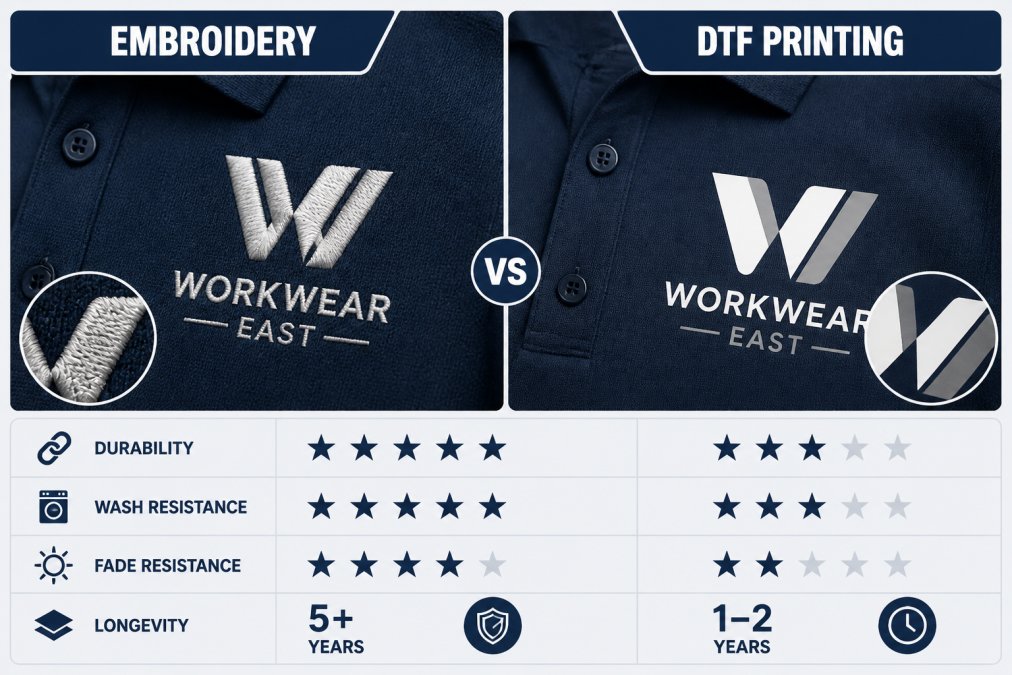
Embroidery: Durability and Professional Finish
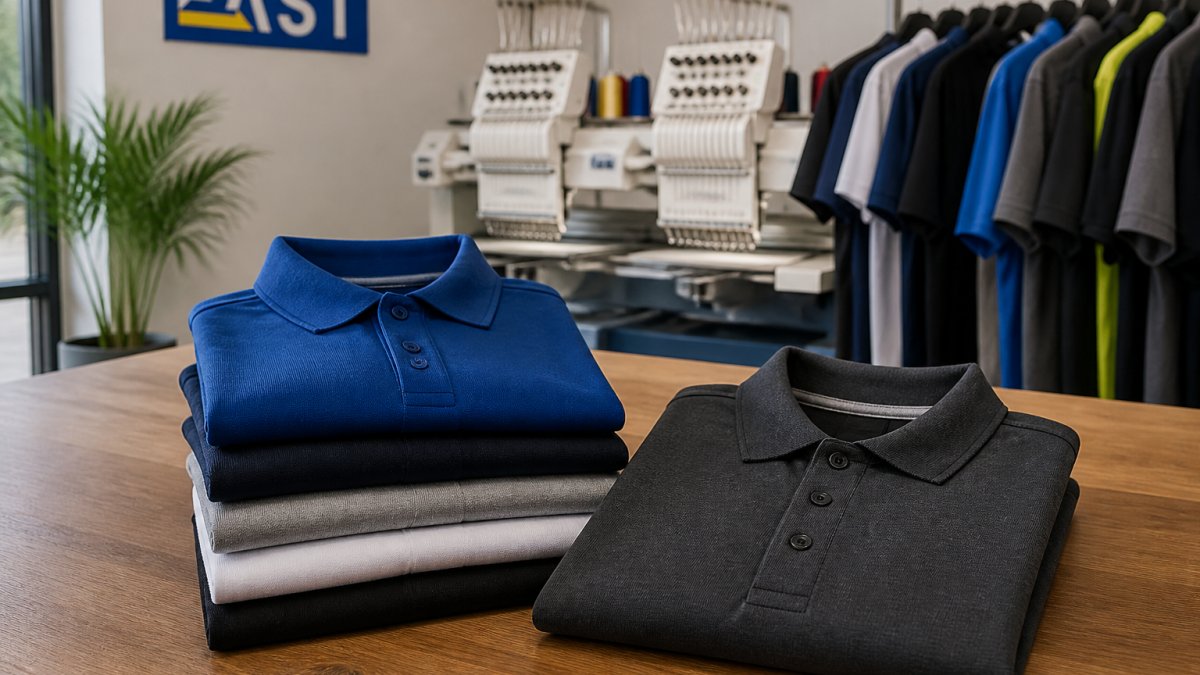
Embroidery uses thread stitched directly into fabric, creating a tactile, dimensional finish that looks premium. Thread doesn't fade from washing or UV exposure the way printed designs can. Industrial laundry, high heat, harsh detergents, and repeated cycles don't degrade embroidery. Construction crews and outdoor-heavy roles benefit enormously from this durability, an embroidered logo outlasts the shirt itself.
The trade-off is detail and colour range. Embroidery works best with bold, simple designs. Fine lines look fuzzy, and photorealistic images become complicated and expensive.
Setup costs for embroidery are higher than screen printing, which is why suppliers often set higher minimums. However, per-unit cost remains relatively stable once you've cleared the minimum.
DTF Printing: Colour Vibrancy and Detail
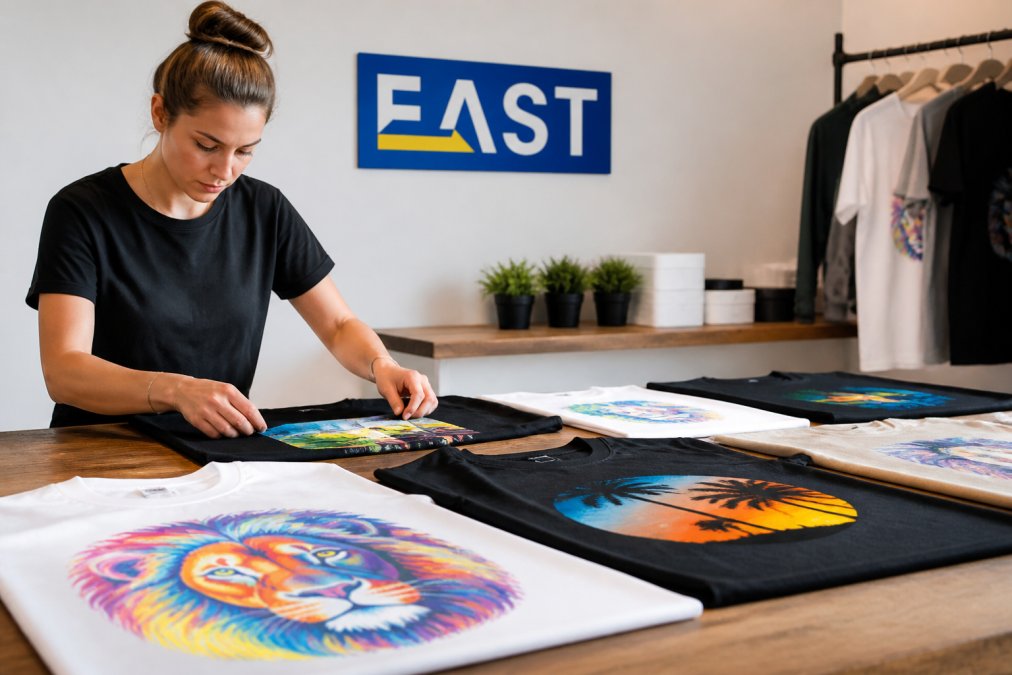
DTF printing transfers full-colour designs onto fabric using heat and pressure, producing vibrant, detailed, photorealistic results. You can print photographs, complex gradients, and multi-colour designs impractical to embroider.
DTF prints sit on the fabric surface, creating a smooth, crisp finish. Colour accuracy is excellent for matching brand colours precisely.
Durability depends on execution. A well-applied DTF print lasts 50+ washes without significant fading. A poorly executed print fails after 10-15 washes. The difference comes down to supplier quality and technique. When evaluating DTF suppliers, ask about ink quality, curing temperature, and durability testing.
DTF printing is faster than embroidery and handles lower minimums well, making it ideal for small teams wanting detailed, colourful designs.
Choosing the Right Fabric for Workwear Durability
The fabric you choose determines how long uniforms last and how comfortable your team feels wearing them.
Cotton is breathable and comfortable but wrinkles easily and shrinks if not washed carefully. Polyester-cotton blends (typically 65% polyester, 35% cotton) offer the best balance for workwear. Polyester adds durability, resists shrinking, and dries quickly while cotton provides breathability. These blends withstand repeated industrial washing without significant degradation.
Polyester-only fabrics are extremely durable and moisture-resistant, ideal for high-sweat or outdoor roles. They're easier to care for, less wrinkled, quick-drying, and tolerant of hot washing. The trade-off is reduced breathability in warm conditions.
For hi-vis or safety-critical roles, choose fabrics meeting specific safety standards. Workwear East stocks hi-vis options complying with relevant requirements while maintaining comfort and durability.
Weight matters too. Heavier fabrics (around 400 grams per square metre and up) last longer but feel stiffer initially. Lighter fabrics (around 250-300 grams per square metre) feel more comfortable but wear out faster. For uniforms washed frequently in demanding conditions, heavier fabric is worthwhile.
Request samples in the exact fabric you're considering, then wash and wear them yourself to reveal actual performance rather than relying on supplier claims.
How to Design Professional Work Uniforms: Step-by-Step Process
Designing uniforms your team will actually wear requires balancing brand requirements with practical comfort. A design that looks great in mockups but feels uncomfortable will create resentment, not pride.
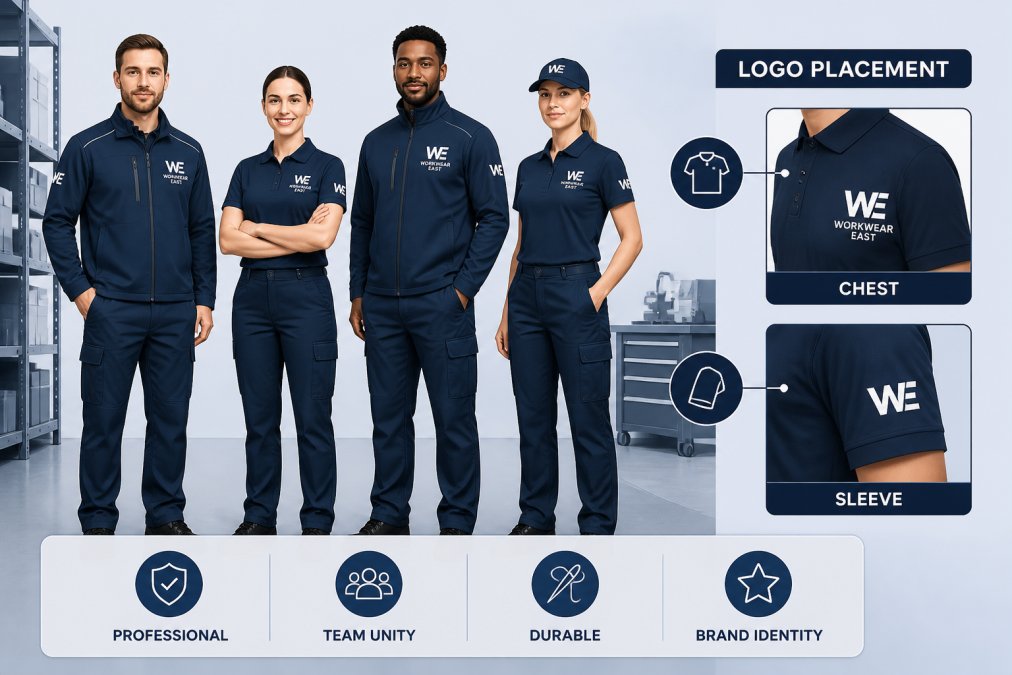
Step 1: Establish Your Brand Identity and Logo
Start with your logo. It should be clear, recognisable, and work at small scale since it will be embroidered or printed on clothing.
If your current logo is intricate with fine lines or many colours, consider a simplified workwear-specific version that maintains brand recognition while being practical to reproduce on fabric. Discuss colour choices with your team. A logo in very light colours might disappear on light shirts. Dark logos work better on light fabrics; light logos on dark fabrics. If your brand colours don't translate well to embroidery thread or DTF ink, your supplier can suggest alternatives remaining close to your brand.
Step 2: Select Logo Placement and Sizing
Logo placement affects both aesthetics and cost. Chest placements (left or right) are standard and expected. Sleeve placements add visual interest but increase complexity and cost. Back placements work for team identity but are less visible during customer interactions.
A logo that's too small becomes unreadable when embroidered or printed. A logo that's too large dominates the garment and looks unprofessional. Most suppliers recommend chest logos between 7.5-10 cm wide for embroidery, slightly larger for DTF printing.
Ask your supplier for placement guidelines based on the specific garment style, as a polo shirt has different optimal placement than a t-shirt or work jacket.
Step 3: Review Digital Mockups Before Production
Before production starts, your supplier should provide digital mockups showing exactly how your design will appear on the chosen garment colour and style. These mockups let you verify placement, sizing, and colour accuracy before committing to production.
Review mockups carefully and provide specific feedback. Instead of "it looks a bit off," specify exactly what you want adjusted: "move the logo 2.5 cm to the right" or "increase the size by 1.5 cm." Once you approve mockups, production can begin.
Budget Optimisation for Small Team Uniforms
Budget constraints are real for small teams. The key is understanding where costs come from and where you can optimise without sacrificing durability.
Customisation method affects total cost significantly. Embroidery has higher setup costs but lower per-unit costs at volume. DTF printing has lower setup costs, making it better for small orders. Screen printing is cost-effective at high volumes but not practical for small teams.
Garment selection influences budget too. Premium blanks cost more upfront but last longer, reducing replacement frequency. Cheaper garments save money initially but require sooner replacement, increasing long-term costs. Calculate cost-per-wear over expected lifespan rather than just purchase price.
Colour choices affect cost. Single-colour designs cost less than multi-colour designs. Solid-colour garments cost less than patterned options. If budget is tight, choosing a single garment colour and single-colour logo reduces costs substantially.
Order strategically. Ordering 20 units at once costs less per unit than ordering 5 units, then 5 more later. However, ordering too much inventory ties up cash and risks having uniforms that no longer fit or reflect your brand. Many suppliers offer bundle options letting you mix styles or colours within a single order whilst hitting lower minimums.
Email info@workweareast for a quote on your specific requirements. Be clear about team size, garment preferences, customisation method, and timeline. A supplier working with your actual constraints can often find cost optimisations you wouldn't discover alone.
Sizing, Fit, and Uniform Management at Scale
Managing uniforms across a growing team creates logistical challenges. Different body types require different sizes. Turnover means replacing uniforms for departing staff and ordering for new hires.
Get accurate sizing information from your team. Don't guess. Provide a sizing chart and ask each person to measure themselves or try on sample garments. Your supplier should provide detailed sizing charts specific to each garment style, as sizing varies between manufacturers.
Consider fit options. Standard fit works for most roles. Slim fit appeals to some teams but might feel restrictive for physical work. Oversized or relaxed fit offers comfort but can look less professional. Your team's comfort with the uniform directly affects whether they'll wear it proudly.
Establish a uniform replacement and ordering schedule. Rather than ordering randomly, set a schedule (annual replacement, for example) and order all replacements at once. This reduces administrative overhead and lets you hit better pricing tiers.
Document sizing information for each team member. When someone leaves and a new hire joins, you'll know exactly what size to order.
Turnaround Times and Rush Order Considerations
Standard turnaround for custom branded uniforms typically ranges from 2-4 weeks, depending on customisation method and order complexity. Embroidery tends to take longer than DTF printing. Screen printing falls somewhere in between.
Rush production is possible but costs more and carries risk. Expedited orders jump the production queue, and quality can suffer if production is rushed. Some suppliers handle rush orders better than others.
If you need a rush order, be explicit about your deadline and willing to pay the premium. Ask your supplier what's realistically achievable within your timeframe. For planned orders, build in buffer time. If you need uniforms by a specific date, order with at least 1-2 weeks of buffer before that deadline to account for unexpected delays.
Organisations that build buffer time into procurement timelines experience significantly fewer deadline failures than those ordering at the last minute. This applies directly to custom apparel, planning ahead reduces stress and improves outcomes.
Workwear East can advise on realistic turnaround for your specific order. Email info@workweareast for a quote and timeline estimate based on your requirements, customisation method, and current production capacity.
Custom branded uniforms for small teams aren't a luxury, they're a practical investment in how your business is perceived. The challenge isn't choosing between quality and affordability; it's finding a supplier who understands small team constraints and delivers accordingly. Workwear East specialises in helping small businesses and trade firms get professional, durable uniforms without requiring massive minimum orders or sacrificing quality. Our advanced embroidery machines, DTF printing capabilities, and local service mean you get consistent results designed to withstand daily wear. Visit https://www.workweareast.co.uk/ to explore options, or email info@workweareast for a quote tailored to your team size and requirements.
Frequently Asked Questions
What is the best printing method for small team uniforms?
The best method depends on your needs. Embroidery offers superior durability and a professional finish that withstands frequent washing, making it ideal for workwear that sees daily use. DTF printing delivers vibrant, full-colour designs with fine detail and works well for complex logos or photographs. For small teams, embroidery typically outlasts DTF on high-wear areas, but DTF provides better value when detailed colour reproduction matters most. Email info@workweareast for guidance on your specific design.
Can I order custom uniforms in small quantities?
Yes. Many suppliers, including Workwear East, offer low minimum order custom workwear options designed for small teams. Minimum quantities vary by garment type and printing method, but small teams can often place orders for 10-20 items without penalty. Bulk discounts apply as order size increases, but you won't be forced into large commitments. Contact info@workweareast for a quote on your exact team size.
How do I choose the right fabric for custom workwear?
Consider your work environment and wash frequency. Polyester blends offer durability and colour retention for industrial or outdoor roles. Cotton provides comfort for indoor office or customer-facing roles. For high-visibility requirements, look for fabrics that meet safety standards and retain reflective properties through repeated washing. Heavier-weight fabrics (around 200-250 gsm) resist pilling and fading better than lighter options. Workwear East can advise on fabric selection based on your industry and durability expectations.
What's the actual lifespan of embroidered workwear with regular washing?
Quality embroidered garments typically last 50-100+ washes when cared for properly, depending on fabric weight and stitch density. High-quality embroidery using polyester thread resists fading and cracking far better than lower-grade alternatives. DTF printing may show wear after 30-50 washes if not applied correctly, which is why application quality matters significantly. Proper care (turning inside out, cold water, gentle cycle) extends lifespan considerably. Workwear East uses durable embroidery techniques designed for workplace longevity.
How do branded uniforms improve team professionalism?
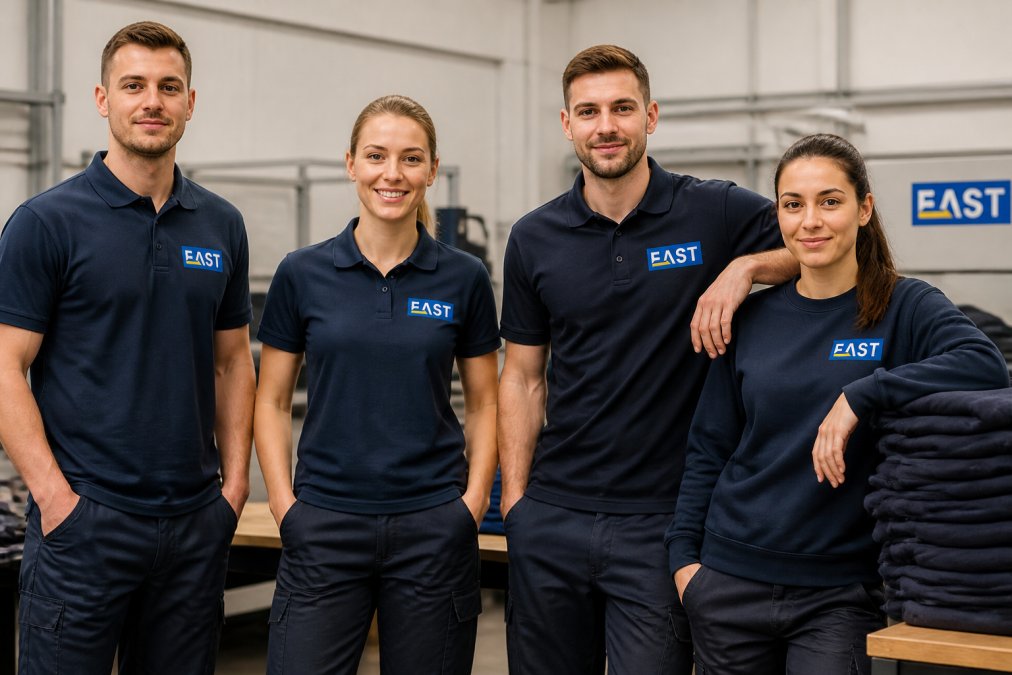
Matching branded uniforms create instant visual cohesion, making teams appear organised and professional to clients and the public. Consistent branding reinforces company identity and builds brand recognition. Uniforms eliminate sizing disparities that undermine appearance, and professional workwear signals competence and reliability. For customer-facing roles, branded apparel builds trust. Teams wearing quality, well-maintained uniforms report improved morale and sense of belonging.
How long does it take to receive custom branded uniforms?
Standard turnaround is typically 2-4 weeks from order confirmation, depending on quantity and customisation complexity. Rush orders for 2-3 weeks are often possible but may incur additional fees. Digital mockup approval usually takes 3-5 working days. Workwear East can discuss rush options for events or urgent needs. Email info@workweareast to confirm turnaround for your specific order timeline and requirements.
What makes embroidery more durable than screen printing for workwear?
Embroidery uses thread stitched directly into fabric, creating mechanical bonds that withstand repeated washing, friction, and flexing. Screen printing applies ink to the surface, which can crack, peel, or fade under stress and washing. Embroidery resists cracking and peeling even after 50+ washes, while standard screen printing may show wear after 20-30 washes. For workwear subjected to heavy use, embroidery provides significantly longer-lasting results and maintains appearance through the garment's working life.
This article was written using GrandRanker