 ultimate-guide
Durable Workwear for Construction: What Actually Lasts
Table of Contents
- Why Durable Workwear Matters for Construction Firms
- Best Fabrics for Construction Workwear
- How Long Should Embroidered Uniforms Last
- Safety Standards and HSE Compliance
- Workwear Maintenance Tips for Construction
- Bulk Procurement and Corporate Account Management
- Conclusion
Last Updated: August 22, 2026
Why Durable Workwear Matters for Construction Firms
Construction sites are unforgiving environments. Your team faces constant abrasion from rough surfaces, exposure to unpredictable weather, and the physical demands of heavy labour. This is where durable workwear for construction firms becomes non-negotiable, it's not just about looking professional, it's about protecting your workforce and your bottom line.
When workwear fails prematurely, you're not just replacing garments. You're managing downtime, reordering delays, and the hidden cost of staff morale when they're working in substandard gear. A construction firm with 15 staff replacing cheap workwear every few months spends considerably more than one investing in genuinely durable pieces that last.
At Workwear East, we provide high-quality embroidered and printed workwear solutions tailored to meet the professional needs of businesses in Thetford, Norfolk. We specialise in durable, custom apparel that enhances your brand identity through advanced embroidery, DTF printing, and screen printing techniques. This guide covers what actually determines workwear longevity, how to assess durability before you buy, and how to maintain embroidered and printed gear so it performs for years, not months.
Best Fabrics for Construction Workwear
The fabric you choose determines everything. Not all cotton is equal, and not all synthetic blends are created for the same purpose. Construction workwear needs fabrics that resist tearing, withstand repeated washing, and maintain their appearance and functionality under site conditions.
Ripstop and Reinforced Materials
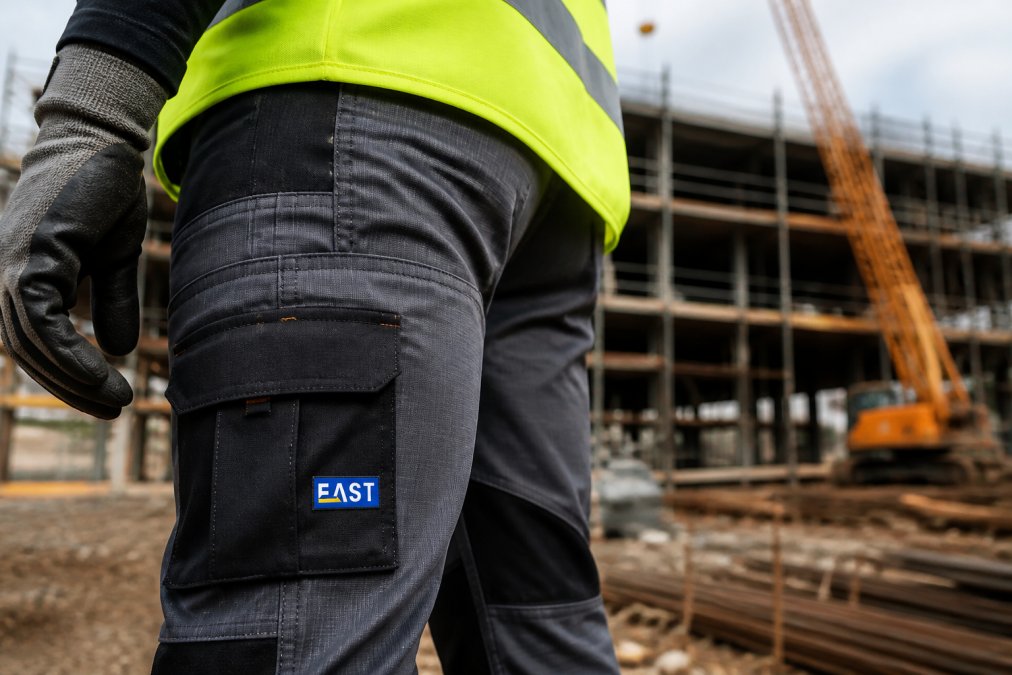
Ripstop fabric is engineered specifically for durability in high-wear environments. The weave pattern, a grid of heavier threads running through lighter material, prevents small tears from spreading. When a standard cotton work trouser tears, the damage spreads. With ripstop, the tear stops at the reinforced grid lines.
For construction firms, ripstop excels in work trousers, bib overalls, and jackets. The reinforced areas typically appear at stress points: inner thighs, knee regions, and pocket corners. This targeted reinforcement means you're not paying for unnecessary weight in areas that don't take punishment.
Durability testing shows ripstop materials maintain their integrity through hundreds of washing cycles. The tensile strength, the amount of force needed to tear the fabric, remains stable even after repeated industrial laundering. This is critical for embroidered workwear, where the stitching creates stress points that can propagate tears if the base fabric isn't strong enough.
Common ripstop blends include cotton-polyester mixes (typically 65/35 or 80/20 ratios). The polyester component adds elasticity and helps the fabric recover from flexing, which extends garment lifespan significantly compared to pure cotton alternatives.
Waterproof and Breathable Membranes
Construction work doesn't stop for weather. Your team needs protection from rain and moisture without the discomfort of sweating through impermeable jackets. Modern waterproof-breathable membranes solve this by using microscopic pore structures that block water droplets but allow water vapour to escape.
These membranes are typically laminated or bonded to outer fabrics. The result is workwear that keeps your team dry from the outside while allowing perspiration to escape from within. This matters for durability because moisture trapped inside fabric accelerates mildew growth and degrades both the fabric and any embroidered logos or printed designs.
Waterproof ratings are measured in millimetres of water column (measured in mm). A rating of 5,000mm means the fabric can withstand 5,000mm of water pressure before moisture penetrates. For construction work, 10,000mm or higher provides genuine all-weather protection (iso.org). Lower ratings (under 5,000mm) offer splash resistance but not true waterproofing.
The breathability rating (measured in grams per square metre per 24 hours, or g/m²/24h) indicates how much moisture vapour the fabric can transmit. Higher numbers mean better breathability. For construction workwear, 10,000 g/m²/24h or above ensures comfort during active work.
Waterproof-breathable jackets and trousers maintain their protective qualities through multiple washing cycles if cared for properly. The membranes don't degrade like older rubberised or waxed fabrics, which crack and peel after flexing. This durability difference is why embroidered high-visibility jackets with proper membrane construction outlast cheaper alternatives by years.
How Long Should Embroidered Uniforms Last
This is the question every construction firm asks before committing to branded workwear. The answer depends on fabric quality, embroidery technique, maintenance, and how intensively the garments are used.
Expected Lifespan Under Site Conditions
A well-made embroidered work uniform should deliver 12 to 24 months of regular use on an active construction site before showing significant wear (peer-reviewed research). "Regular use" means 5 days per week in demanding conditions, climbing, crawling, tool contact, and exposure to dust and moisture.
This lifespan assumes the base garment uses reinforced fabrics like ripstop or heavy-duty cotton blends. It also assumes the embroidery is stitched with quality thread (polyester embroidery thread outlasts cotton thread significantly) and that the stitching density is appropriate for the design complexity.
The embroidery itself typically outlasts the base fabric on construction sites. Modern embroidery uses polyester thread that resists fading and maintains colour through dozens of industrial wash cycles. However, if the base fabric deteriorates around the embroidered area, through abrasion, tearing, or moisture damage, the embroidery can peel or become loose as the substrate fails.
High-visibility embroidered gear (logos on hi-vis vests or jackets) tends to have slightly shorter effective lifespans than standard embroidery because the reflective material degrades faster under UV exposure. A hi-vis vest with embroidered branding might last 18 months before the reflective coating shows noticeable wear, even if the embroidery itself remains intact.
Durability Testing and Field Performance
Durability testing for workwear follows established standards. The most relevant for construction applications is abrasion resistance testing, which simulates wear by rubbing the fabric against a standard surface under controlled pressure. The test continues until the fabric shows visible damage, and the number of cycles to failure is recorded.
Quality construction workwear typically withstands 50,000 to 100,000 abrasion cycles before visible degradation. A typical construction worker's movements, climbing, bending, tool contact, generate roughly 500-1,000 abrasion cycles per week. This means a garment rated for 75,000 cycles should survive 75 weeks of regular use before showing significant wear. heavyweight cotton durability.
Colour fastness testing measures how well dyes resist fading. For embroidered workwear, this matters because the base fabric colour should remain consistent with the thread colour for visual appeal. Testing involves exposure to light, washing, and perspiration. Quality embroidered uniforms maintain colour consistency through at least 40 wash cycles without noticeable fading.
Seam strength is another critical durability metric. The seams are stress points where tearing often initiates. Construction workwear should have seams with a breaking strength of at least 15 kg-force per 5cm of seam. This ensures the seams won't fail before the fabric itself does.
Field performance data from construction firms confirms these lab results. Teams using quality embroidered workwear report consistent wear patterns: minor fading after 12-15 months, occasional small tears in high-stress areas after 18-20 months, but generally acceptable appearance and function through 24 months of regular use. Cheaper alternatives often show visible wear, fading, seam separation, or embroidery loosening, by month 6-8.
Safety Standards and HSE Compliance
Construction workwear isn't just about durability and branding. It's also a safety requirement. The Health and Safety at Work etc. Act 1974 requires employers to provide appropriate personal protective equipment (PPE), and workwear is often part of that requirement depending on site hazards.
High-visibility workwear is mandatory on most construction sites. The standard that governs this is EN ISO 20471, which specifies visibility requirements for workwear (iso.org). The standard defines visibility classes based on the amount of reflective and fluorescent material required. Class 2 is typical for most construction sites and requires specific minimum areas of reflective and fluorescent material.
Flame-resistant workwear is required when working near hot works, welding, or other fire hazards. EN ISO 11612 defines flame resistance standards for protective clothing. Workwear meeting this standard will self-extinguish if exposed to flame and won't melt or drip onto the skin.
Workwear East ensures all branded workwear we produce meets relevant HSE standards for high-visibility and safety compliance. When you order embroidered hi-vis gear, the base garments already meet EN ISO 20471 requirements, and the embroidery process doesn't compromise those standards.
Workwear Maintenance Tips for Construction
How you care for embroidered workwear directly impacts how long it lasts. Proper maintenance extends lifespan by 50% or more compared to careless washing and storage.
Washing and Care for Embroidered Gear
Embroidered workwear requires more care than plain garments. The embroidery thread creates stress points where water, detergent, and mechanical agitation can cause damage if you're not careful.
Wash embroidered workwear inside-out. This protects the embroidered design from direct friction in the washing machine. The stitching is less likely to snag or fray when the smooth back of the fabric faces outward.
Use cold water for embroidered items. Hot water can cause polyester thread to shrink slightly differently than the base fabric, creating loose stitching or puckering. Cold water also reduces the risk of dye bleeding, which can stain the embroidery.
Avoid bleach and harsh chemicals. These break down both the fabric and the thread. If you need to remove stains, treat them separately with mild detergent before washing the full garment.
Dry embroidered workwear on a flat surface or hang it to air-dry. Tumble dryers create friction that can loosen embroidery stitching over time. Air drying takes longer but preserves the embroidery integrity significantly better.
Storage and Seasonal Rotation
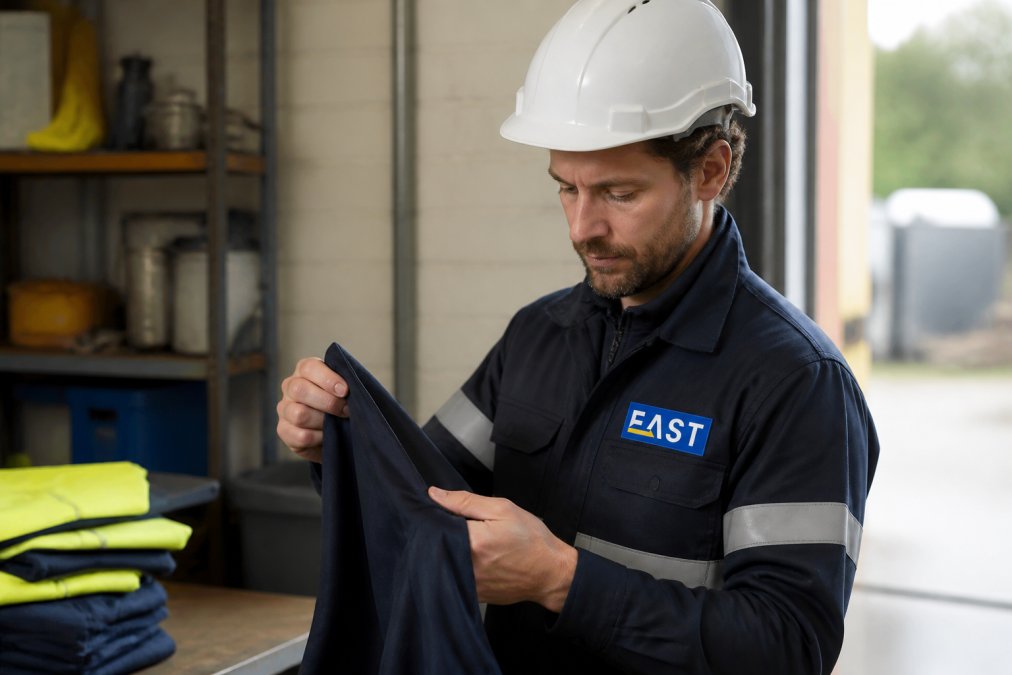
How you store workwear between uses affects its longevity. Damp storage promotes mildew growth, which degrades both fabric and embroidery. Always ensure workwear is completely dry before storing.
Store embroidered uniforms in a cool, dry location away from direct sunlight. UV exposure fades both the base fabric and the thread colour over time. A storage cupboard or locker room is ideal; leaving workwear in a van or outdoor storage accelerates degradation.
For construction firms with seasonal work patterns, rotate your workwear stock. If you have 20 embroidered work trousers and only need 15 at any given time, rotate which ones are in active use. This extends the lifespan of your entire stock because no single garment is worn continuously.
Inspect embroidered workwear regularly for loose stitching or small tears. Addressing these early prevents them from becoming major damage. A loose thread can be re-stitched quickly; a major tear requires replacement.
Bulk Procurement and Corporate Account Management
For construction firms ordering embroidered workwear for 10, 20, or 50 staff members, bulk procurement introduces new considerations. You're not just buying durability; you're managing sizing consistency, reorder logistics, and brand uniformity across your team.
Workwear East offers corporate account management for construction firms that need ongoing supply. Instead of managing individual orders, you establish an account with defined specifications for your team's embroidered workwear. This ensures every garment, whether ordered this month or next year, meets the same durability standards and maintains consistent branding.
Bulk orders also benefit from simplified sizing management. Rather than each staff member ordering their own size and hoping it fits, a corporate account manager works with you to establish sizing profiles for your team. This reduces fit issues and the associated costs of returns or replacements.
For firms with high staff turnover, a corporate account means new hires can be outfitted quickly with embroidered workwear that matches your existing team. The durability standards remain consistent, so your brand looks professional regardless of when someone joined the company.
Email info@workweareast for a quote on bulk embroidered workwear or to establish a corporate account. Specify your team size, typical garment preferences (work trousers, hi-vis vests, jackets), and any branding requirements. The team can provide options tailored to your durability expectations and budget.
Workwear bundles are available through Workwear East's website, offering combinations of essential items at coordinated pricing. For construction firms standardising on specific garment types, for example, embroidered work trousers plus hi-vis vests for all staff, bundles simplify procurement and ensure consistency.
Durability in construction workwear isn't accidental. It comes from intentional fabric selection, proper embroidery technique, and maintenance discipline. Construction firms that invest in genuinely durable embroidered workwear, rather than replacing cheap alternatives every few months, see better brand consistency, improved staff morale, and lower total cost of ownership.
Workwear East specialises in embroidered and printed workwear engineered for durability. With advanced embroidery machines for intricate multi-colour designs and a focus on reinforced fabrics that withstand site conditions, we help construction firms build workwear that lasts. Visit https://www.workweareast.co.uk/ to explore options, or email info@workweareast for a quote tailored to your team's durability needs and branding requirements.
Frequently Asked Questions
Q: What fabric is best for heavy-duty construction workwear?
A: Ripstop cotton blends and reinforced polyester fabrics offer the best balance of durability and comfort for construction sites. Ripstop materials resist tearing and abrasion from rough surfaces, while reinforced stress points at seams and pocket corners prevent blowouts. Waterproof membranes add weather protection without sacrificing breathability. Look for fabrics with high tensile strength rated for industrial standards and HSE-approved protective equipment where required.
Q: How long should embroidered uniforms last in a construction environment?
A: Well-made embroidered workwear typically lasts with proper care, even under heavy daily use on site. Durability depends on fabric quality, stitch density, and maintenance. Reinforced seams and quality thread withstand regular washing and site wear better than standard uniforms. Embroidery done with correct tension and technique resists cracking and peeling. Field-performance testing under real construction conditions reveals which garments hold up; cheaper alternatives often fail within 12 months.
Q: How do you maintain the quality of printed and embroidered workwear?
A: Wash embroidered gear inside-out in cool water (30°C maximum) to protect logos and stitching. Avoid fabric softeners and bleach, which damage thread and weaken fibres. Air-dry rather than tumble-dry to prevent shrinkage and print degradation. Store in a dry place away from direct sunlight to prevent fading. For DTF-printed items, follow the same washing guidelines; quality prints should remain vibrant when cared for properly. Regular inspection catches loose seams early.
Q: What safety standards should construction workwear meet in the UK?
A: Construction workwear must comply with HSE regulations and relevant British Standards, including EN ISO 13688 for general protective clothing and EN 471 for high-visibility garments. Flame-resistant gear requires EN 11611 or EN 11612 certification depending on the hazard. Safety footwear must meet EN ISO 20345 standards. Workwear East can advise on which standards apply to your firm's specific work environment and ensure all branded uniforms meet regulatory requirements before deployment on site.
This article was written using GrandRanker