 ultimate-guide
Electrician Workwear: Safety and Comfort Guide 2026
Table of Contents
- What to Look for in Electrician Workwear
- Branded Workwear for Electricians: Why It Matters
- Custom Embroidered Workwear for Professional Teams
- Durable Electrician Trousers: Features That Last
- Breathable Polo Shirts and Base Layers
- Comparing Essential Electrician Workwear
- Frequently Asked Questions
Last Updated: September 16, 2026
What to Look for in Electrician Workwear
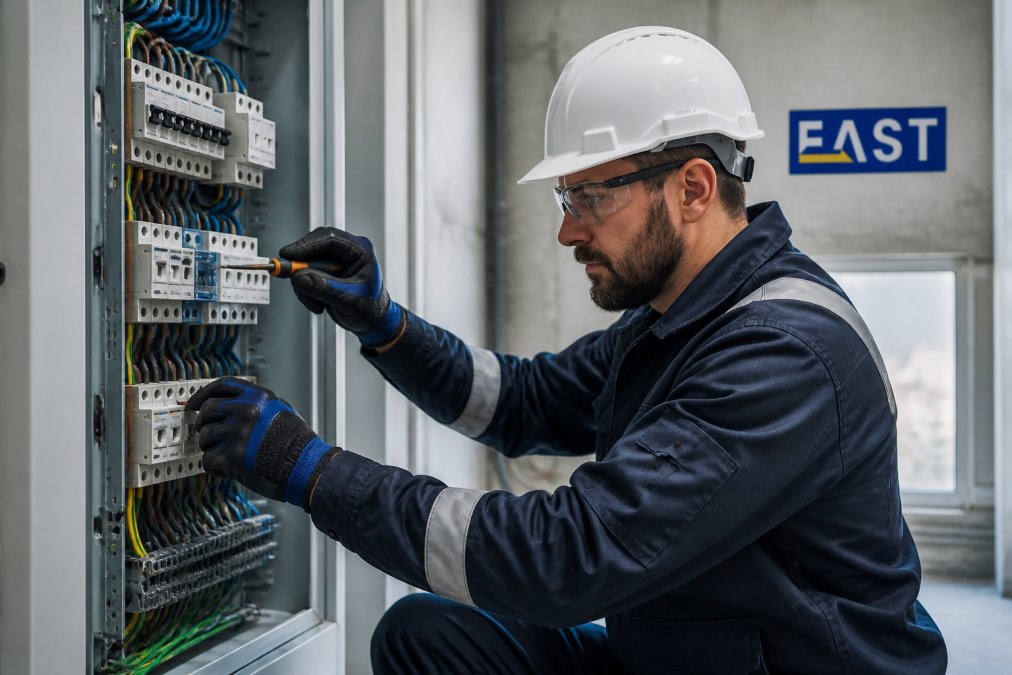
Electrician workwear is protective clothing engineered to reduce electrical, thermal and physical risk on site while staying comfortable through a full shift. This guide from Workwear East covers the standards, fabrics and features that matter when you kit out a team.
Get the specification wrong and you are not just uncomfortable, you are exposed. The wrong fabric against a live conductor or the wrong glove on a high-voltage task turns a routine job into an incident.
Below, we break down the safety standards, layering systems and garment features that separate workwear built for electricians from generic site clothing. If you need branded kit for a team, email info@workweareast for a quote.
Key Safety Standards and Certifications
EN standards are the benchmark for electrician workwear, and each one covers a specific hazard. The most relevant are:
- EN ISO 20471 for high-visibility clothing, split into three classes based on the reflective area and how much of the body it covers
- EN 61482 for protection against the thermal effects of an arc flash
- EN 1149 for anti-static properties, which matters when static discharge could ignite a flammable atmosphere
- EN ISO 11612 for garments protecting against heat and flame
- EN 388 for mechanical risks such as abrasion, cut and puncture on gloves
Check the label on any garment before you buy it. A hi-vis vest that claims to be "safety" without an EN ISO 20471 class rating is decorative, not protective. The Health and Safety Executive guidance on PPE at work sets out the employer's duty to provide suitable protective equipment and to make sure it fits and is maintained.
Layering Systems for Varying Climates
A three-layer approach handles almost every condition electricians meet: a moisture-wicking base layer, an insulating mid-layer for cold days, and a protective outer layer carrying the hi-vis and flame-resistant properties. The outer layer does the safety work, the inner layers the comfort work, so one certified shell works year-round.
- Base layer: moisture-wicking polo or thermal top, close-fitting but not restrictive
- Mid-layer: fleece or softshell that traps warmth without bulk
- Outer layer: hi-vis, flame-resistant or anti-static jacket depending on the task
Most off-the-shelf kits fall short: one heavy jacket that is unbearable in summer and useless in a cold snap. A proper layering system costs more upfront and lasts longer because each piece earns its place.
Branded Workwear for Electricians: Why It Matters
Branded workwear for electricians does two jobs: it identifies your team on a busy site and presents your business as organised and professional. For a trade where trust is the whole sale, that second point matters more than most owners realise.
Building Team Identity and Trust
When a customer opens the door to a uniformed electrician with a clean logo on the chest, the job already feels more legitimate than with someone in a plain hoodie, that first impression does sales work before a word is spoken. Teams in consistent branded kit also look after it better and match the standard the business sets.
Businesses that invest in proper branded uniforms often find their staff look like a coordinated team rather than individuals who happened to turn up at the same job.
Custom Embroidered Workwear for Professional Teams
Custom embroidered workwear is the right choice when you need a logo that survives industrial washing and daily wear. Embroidery stitches the design into the fabric rather than printing on top, so there is no layer to crack, peel or fade.
That durability is the point for a trade: an electrician's kit gets washed hard, snagged on cable trays and rubbed against walls. A printed logo might look sharp for a season; an embroidered one is still legible years later.
For larger runs, screen printing suits flat, single-colour designs, while DTF printing handles detailed, full-colour logos on a range of fabrics. The right method depends on the design, garment and quantity, so talk it through before you commit. Workwear East offers advanced embroidery, DTF printing, and screen printing techniques.
Durable Electrician Trousers: Features That Last
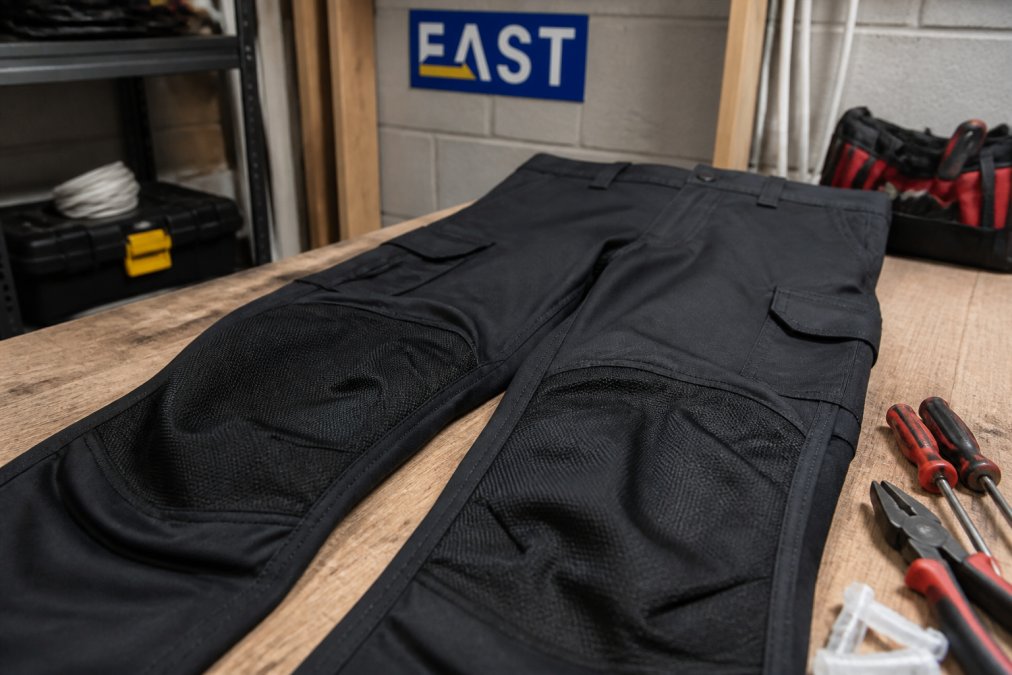
Durable electrician trousers earn their keep through reinforced panels, knee-pad pockets and abrasion-resistant fabric at the points that wear first. Whether a pair lasts six months or three years comes down to fabric weight, stitch type and where the manufacturer doubles up the material.
Fabric Weight and Weave
Work trousers are measured in grams per square metre (GSM): lightweight around 200-240 GSM, mid-weight around 260-300 GSM, heavy-duty from 320 GSM upward. For electrical work, 260-300 GSM is the sweet spot, heavy enough to resist abrasion from cable trays and concrete, light enough to move in.
The weave matters as much as the weight. A tight twill resists snagging better than loose canvas, and a ripstop grid stops a small tear becoming a large one. If the label does not state GSM or weave, the manufacturer is likely competing on price rather than longevity.
Knee-Pad Pockets and Reinforced Panels
Knee-pad pockets let you slot in padding for kneeling work without separate straps that snag and shift, a genuine comfort and safety gain under floors or at low-level containment. Top-loading pockets with a closure keep the pad in place when you stand up; side-loading pockets are easier to swap but shift more. Reinforced panels at the knee and hem take the abrasion that would otherwise wear through the base fabric: a good pair shows double stitching and a heavier weave in these zones, and some manufacturers use Cordura or similar abrasion-resistant fabric here, extending trouser life significantly.
Stitching and Seam Construction
The stitch type is a reliable quality indicator. A single lockstitch is the minimum; a double lockstitch, two parallel rows, is what you want at stress points: crotch, seat, knee and pocket edges. A chain stitch is stronger in a straight line but unravels if broken, so it is less common on work trousers.
Pocket Layout for Electrical Work
Electricians carry specific tools: voltage testers, screwdrivers, pliers, cable strippers and a phone.
Care and Longevity
Even the best trousers fail early if washed incorrectly.
Breathable Polo Shirts and Base Layers
Breathable polo shirts and base layers manage moisture so the wearer stays dry and regulated through physical work.
Comparing Essential Electrician Workwear
Most workwear guides list the same garments and stop there, rarely explaining that the specification changes by sub-sector.
| Garment | Primary Purpose | Key Feature | Hazard Addressed |
|---|---|---|---|
| Hi-vis outer layer | Visibility on site | EN ISO 20471 class rating | Struck-by and site awareness |
| Arc-rated jacket | Thermal protection | EN 61482 certification | Arc flash |
| Anti-static base layer | Static control | EN 1149 fabric | Ignition in flammable atmospheres |
| Knee-pad trousers | Physical protection | Reinforced knee pockets | Abrasion and kneeling strain |
| Safety footwear | Foot protection | EN ISO 20345 rating | Impact and puncture |
| Insulated gloves | Hand protection | EN 60903 class | Electric shock |
What the EN Standards Actually Require
EN 61482 is the one most electricians have heard of but few can explain.
Domestic vs. Industrial: Two Different Kits
A domestic installer working in occupied homes needs kit that is presentable, comfortable in tight spaces and light enough to move through a house without damaging finishes.
Frequently Asked Questions
What is the best workwear for electricians?
The best electrician workwear combines flame resistant clothing, anti-static properties, and high visibility. Look for garments certified to EN ISO 20471 for hi-vis and EN ISO 11612 for flame resistance. Durable electrician trousers with knee-pad pockets and breathable polo shirts for layering are also essential. Custom embroidered workwear from Workwear East can add branding while meeting safety standards.
What are the essential safety features in electrician clothing?
Essential safety features include arc flash protection, anti-static properties to prevent sparks, and flame retardant materials. Hi-vis elements ensure visibility on site, while durable electrician trousers with abrasion resistance protect against wear. Electrical insulation gloves and safety footwear are also critical. Always check for EN standards compliance, such as EN 61482 for arc flash protection.
Why should electricians invest in branded workwear?
Branded workwear for electricians builds trust with clients and creates a professional image. Custom embroidered workwear with your logo makes your team easily identifiable and reinforces your brand on every job. It also promotes team unity and ensures consistent safety standards across your workforce. For a quote on branded uniforms, email info@workweareast for a quote.
How does custom embroidery improve professional image?
Custom embroidered workwear delivers a polished, durable finish that withstands frequent washing and heavy use. Unlike printed logos that can crack, embroidery maintains its appearance for the life of the garment. This attention to detail signals reliability and quality to clients. Workwear East offers advanced embroidery for intricate designs, helping electricians present a professional image on every site.
Kitting out a team with compliant, comfortable, properly branded electrician workwear is a specification job, not a shopping trip. Workwear East supplies durable embroidered and printed garments from Thetford, built to withstand daily wear and backed by advanced embroidery and DTF printing that keeps your logo sharp wash after wash. Visit workweareast.co.uk to see the range, or email info@workweareast for a quote and get your team looking the part on every job.