 how-to
How to Choose Safety Workwear for Electricians
Table of Contents
- Understanding Electrical Hazards and Workwear Needs
- PPE at Work Regulations 1992 Summary and Compliance
- EN ISO 11612 Standards for Electricians: What You Need to Know
- Flame-Resistant and Arc Flash Protection Materials
- Best Safety Boots for Electricians UK
- High-Visibility, Anti-Static and Additional Protective Features
- Step-by-Step Guide to Selecting the Right Safety Workwear
- Conclusion
- Frequently Asked Questions
Last Updated: August 5, 2026
Understanding Electrical Hazards and Workwear Needs
Electrical work presents unique hazards that demand specialist protective clothing. Arc flash incidents, thermal burns, electrocution risks, and sustained exposure to conductive environments require more than standard workwear. The difference between adequate and inadequate protection comes down to material composition, certification standards, and how well the garment matches your specific role.
Arc flash can reach temperatures of 20,000°C in milliseconds. Anti-static protection prevents electrical charge buildup that could trigger incidents. Flame-resistant fabrics slow burn progression. These are functional requirements that determine whether your team goes home safely.
At Workwear East, we understand that safety workwear for electricians requires precision matching between hazard assessment and protective specification. This guide walks you through the standards, materials, and selection criteria that separate effective protection from expensive mistakes.
PPE at Work Regulations 1992 Summary and Compliance
The PPE at Work Regulations 1992 establish the legal framework governing personal protective equipment in the UK workplace. Your employer has a statutory duty to provide appropriate PPE free of charge, and you have a responsibility to use it correctly.
The regulations require a formal hazard assessment before any PPE is selected. You cannot simply buy flame-resistant trousers and assume compliance; you must first identify the specific electrical hazards present in your work environment. Are you working with live circuits above 50V? Is there potential for arc flash? Could you contact conductive surfaces? The answers determine your PPE specification.
Employers must ensure that PPE is properly maintained, stored, and replaced when damaged. Maintenance records should document when items were issued, inspected, and replaced. Poor maintenance records create compliance gaps even if the initial PPE selection was correct. Your team also needs training on why they're wearing specific items, how to inspect them for damage, and when to report defects.
EN ISO 11612 Standards for Electricians: What You Need to Know
EN ISO 11612 is the European standard governing protective clothing against heat and flame. In the UK, this standard forms the baseline specification for electrical safety workwear. Understanding what the standard tests prevents you from overspending on unnecessary features or selecting inadequate protection.
The standard tests four specific hazards: flame spread, convective heat, radiant heat, and contact heat. A garment certified to EN ISO 11612 has been tested against all four. However, the standard comes in different performance levels. A Class A1 rating means the fabric passes all four tests at the highest level. A Class A2 rating means it passes three of the four at the highest level, with one at a lower level.
The standard also specifies that tested garments must maintain their protective properties after washing. Quality suppliers test their garments across multiple wash cycles to confirm durability. When you're investing in safety workwear for electricians, you need confidence that protection persists throughout the garment's working life.
EN ISO 11612 certification is the regulatory baseline for electrical work. However, this standard addresses heat and flame hazards specifically. It does not address arc flash protection or electrical conductivity. Those hazards require additional specifications.
Flame-Resistant and Arc Flash Protection Materials
Flame-resistant materials work through different mechanisms depending on their composition. Inherently flame-resistant fibres like Nomex and Kevlar maintain their protective properties indefinitely. Chemically treated cotton gradually loses its flame-resistant properties through washing and wear. For electrical work where durability is critical, inherently flame-resistant materials offer better long-term value despite higher initial cost.
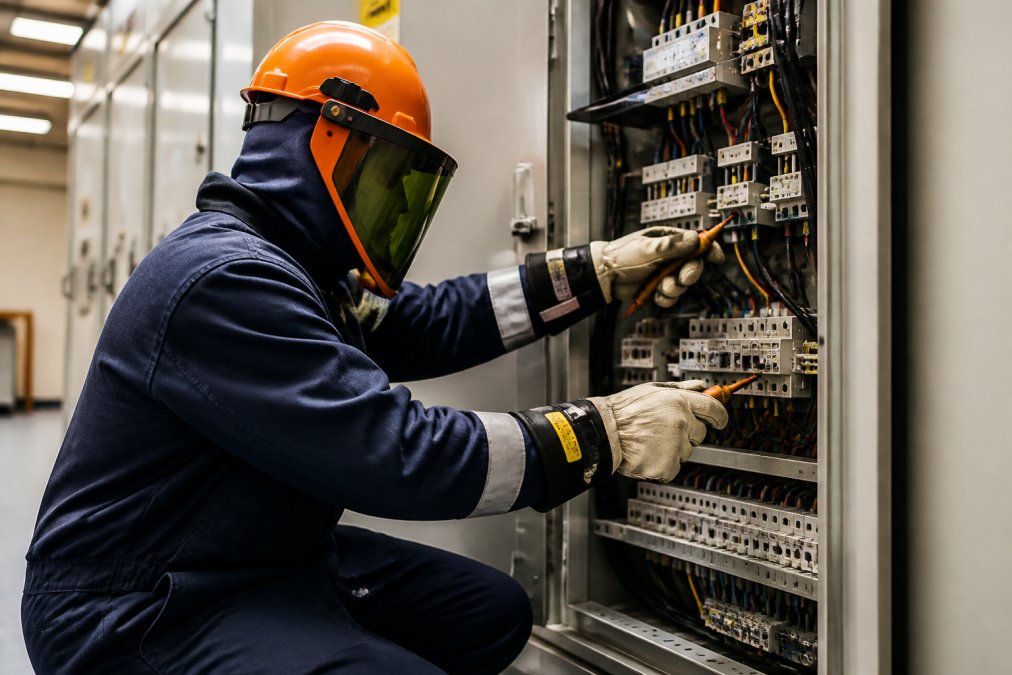
Arc flash protection requires a different specification. Arc flash rating (ATPV, Arc Thermal Performance Value) measures how much thermal energy a fabric can withstand before causing second-degree burns, measured in calories per square centimetre. A garment rated at 8 ATPV can withstand 8 cal/cm² of energy. Higher ATPV ratings provide protection against larger arc flash incidents, but typically require heavier, thicker fabrics that may reduce wearability.
Anti-static properties are equally critical. Static electricity can accumulate on synthetic fabrics, creating a discharge risk when you touch grounded equipment. Anti-static workwear uses conductive fibres woven throughout the fabric or applies a conductive treatment to the surface. For electrical work, anti-static properties should be considered non-negotiable.
Best Safety Boots for Electricians UK
Safety footwear for electricians must address three distinct hazards: electrical conductivity, impact protection, and thermal hazards. Electrical safety boots achieve protection through non-conductive soles and insulation between the wearer and conductive ground. The standard requires a minimum breakdown voltage of 18,000V.
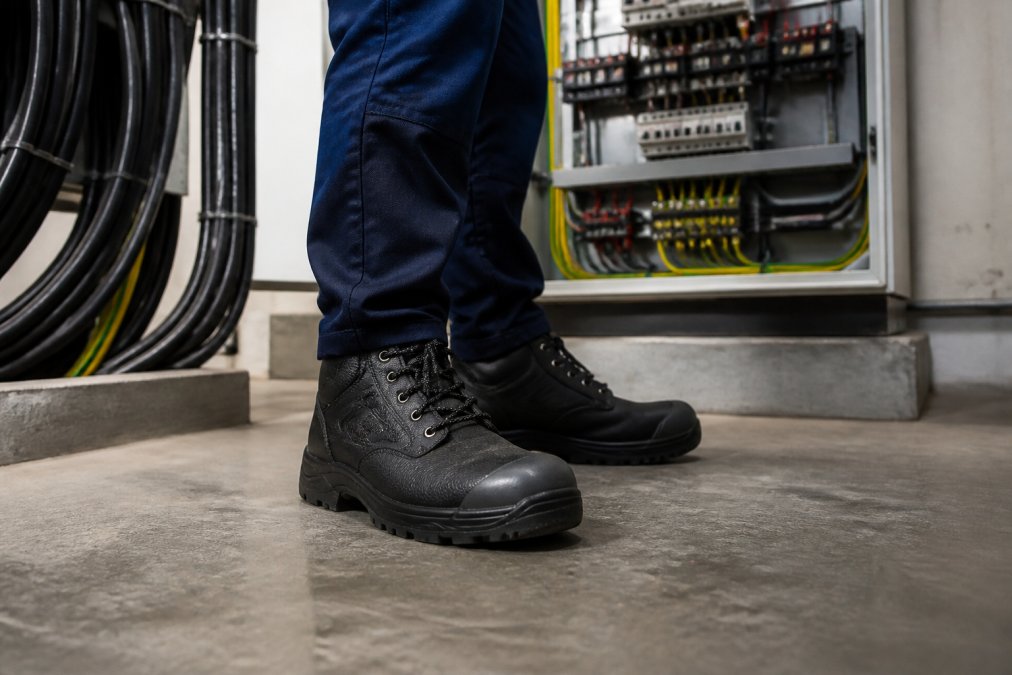
Impact protection comes from a reinforced toe cap, typically steel or composite. Steel offers superior impact resistance but conducts electricity, which is why the insulation layer between foot and ground is essential. Composite toe caps offer lighter weight with adequate impact protection for most electrical work.
Sole design matters significantly. A sole that's too flexible increases foot fatigue during long working days. A sole that's too rigid restricts ankle mobility and increases injury risk. The best safety boots balance these factors, firm enough to support extended standing and walking, flexible enough to allow natural movement on uneven surfaces.
Breathability and moisture management reduce blister risk and fungal infection. Look for boots with moisture-wicking linings and breathable uppers.
High-Visibility, Anti-Static and Additional Protective Features
High-visibility clothing prevents incidents rather than mitigating them. A worker who's clearly visible to machinery operators, vehicle drivers, and other site personnel is less likely to be struck or caught in equipment. For electrical work on active construction sites or in industrial environments, high-visibility is a regulatory requirement. Hi-Vis workwear is essential for ensuring your team remains visible in all lighting conditions.
High-visibility standards in the UK are set by EN ISO 20471. Class 3 (highest visibility) requires 0.8 m² of fluorescent material and 0.3 m² of reflective material. Class 2 requires 0.5 m² and 0.13 m² respectively. For electrical work, Class 2 is typically adequate unless you're working in particularly hazardous environments.
Quality suppliers test their high-visibility garments against UV exposure and mechanical abrasion to confirm durability. When you're selecting safety workwear for electricians, verify that high-visibility properties will persist across the garment's expected lifespan.
Anti-static properties work in conjunction with high-visibility and flame-resistant protection. The best electrical safety workwear combines all three properties: visibility, flame resistance, and anti-static protection.
Additional features to consider include reinforced areas at high-wear points (knees, elbows, seat), tool pockets positioned for easy access without creating snag hazards, and collar design that prevents debris from falling down the shirt.
Step-by-Step Guide to Selecting the Right Safety Workwear
Step 1: Conduct a Hazard Assessment
Begin by identifying the specific electrical hazards present in your work environment. Are you working with live circuits? What voltage levels? Is there potential for arc flash? Could you contact conductive surfaces? Document the answers. This assessment determines everything that follows.
Voltage levels directly influence protection requirements. Work below 50V requires minimal electrical protection. Work between 50V and 1000V requires anti-static properties and electrical safety boots. Work above 1000V may require arc flash rated clothing with specific ATPV ratings.
Step 2: Determine Required Standards and Ratings
Based on your hazard assessment, identify which standards apply. All electrical work requires EN ISO 11612 compliance as a baseline. If arc flash risk exists, determine the required ATPV rating. If you're working in high-visibility environments, determine the required EN ISO 20471 class. Document these requirements clearly.
Step 3: Select Appropriate Materials
Choose between inherently flame-resistant materials (Nomex, Kevlar, wool blends) and chemically treated options based on durability requirements and budget. For most electrical work, inherently flame-resistant materials offer better long-term value.
Consider the working environment. Hot environments demand breathable fabrics that won't cause heat stress. Cold environments may require thermal insulation. Wet environments require moisture management.
Step 4: Verify Garment Fit and Comfort
Safety workwear only protects when it's actually worn. Poorly fitting garments create compliance problems; workers remove or modify them to improve comfort, eliminating protection. Verify that sizing options accommodate your team's range of body types.
Test fit on a representative sample before committing to bulk orders. Our Workwear Bundles are designed to simplify procurement by combining essential protective items in coordinated packages that ensure consistency across your team.
Step 5: Establish Maintenance and Replacement Protocols
Create clear procedures for inspecting workwear before each use. Establish washing protocols that maintain protective properties. Document when items are issued, inspected, and replaced. This documentation demonstrates regulatory compliance and identifies when protection is compromised.
Most flame-resistant workwear maintains protection through multiple wash cycles, but chemical treatments degrade over time. Establish a replacement schedule based on manufacturer recommendations and actual wear patterns.
Step 6: Train Your Team
Ensure every team member understands why they're wearing specific items, how to inspect them for damage, and when to report defects. Include this training in induction and annual refresher sessions.
| Selection Step | Key Action | Timeline |
|---|---|---|
| Hazard Assessment | Document voltage levels, arc flash risk, work environment | Before purchase |
| Standards Review | Identify EN ISO 11612, ATPV, EN ISO 20471 requirements | Before purchase |
| Material Selection | Choose inherently flame-resistant or treated fabrics | Before purchase |
| Fit Verification | Test sizing on representative sample | Before bulk order |
| Maintenance Planning | Create inspection and washing protocols | Before issue to team |
| Team Training | Ensure understanding of protection and inspection | Before issue to team |
Conclusion
Selecting safety workwear for electricians requires matching specific hazards to protective specifications. The PPE at Work Regulations 1992 establish your legal obligations. EN ISO 11612 standards define baseline flame-resistant protection. Arc flash ratings, anti-static properties, and high-visibility compliance add layers of protection tailored to your specific work environment.
The process demands careful hazard assessment, material selection, and ongoing maintenance. When you get this right, your team works safely with confidence.
Workwear East specialises in supplying durable, compliant safety workwear with advanced embroidery and printing capabilities that maintain protection throughout the garment's working life. We understand the specific requirements of electrical safety workwear and can help ensure your team has appropriate protection that meets all regulatory standards. Email info@workweareast.co.uk for a quote on branded safety workwear that meets EN ISO 11612, arc flash, and anti-static specifications. Visit https://www.workweareast.co.uk/ to explore our full range of safety workwear solutions tailored to your team's needs.
Frequently Asked Questions
What standards should electrician workwear meet in the UK?
Electrician workwear must comply with the PPE at Work Regulations 1992 and meet EN ISO 11612 standards for flame-resistant clothing. These standards ensure protection against thermal hazards, arc flash, and electrical risks. Your employer must conduct a hazard assessment to determine which protective equipment is required based on your specific work environment and voltage levels.
Is flame-resistant clothing mandatory for UK electricians?
Flame-resistant clothing is mandatory for electricians working with high-voltage equipment or in environments where arc flash risk exists. The requirement depends on your hazard assessment and the voltage you're exposed to. Even for low-voltage work, flame-resistant materials are strongly recommended as standard practice. Check your workplace risk assessment to confirm your specific requirements.
What makes safety boots essential for electricians?
Safety boots protect against multiple electrical hazards including non-conductive soles (preventing electric shock), impact protection for crushed toes, puncture resistance, and slip resistance on wet or oily surfaces. Look for boots with steel toe caps, electrical hazard ratings, and proper ankle support. UK safety boots should meet relevant standards and be certified for electrical work environments.
How do I ensure my workwear is compliant with UK Health and Safety regulations?
Start with a formal hazard assessment of your workplace to identify electrical risks. Select workwear that meets EN ISO 11612 standards and displays appropriate certifications. Check that items are labelled with relevant standards marks. Ensure your team receives training on proper use and care of protective equipment. Contact Workwear East at info@workweareast.co.uk for guidance on compliant, branded safety apparel tailored to your specific electrical work environment.
This article was written using GrandRanker