 how-to
How to Manage Staff Uniform Orders: Step-by-Step
Table of Contents
- Understanding Uniform Management Systems
- Creating a Staff Uniform Policy Template
- Setting Up a Uniform Inventory Management System
- Centralizing Procurement and Bulk Ordering
- How to Track Employee Uniform Costs
- Managing Uniform Returns and Recycling
- Automation and Integration Best Practices
- Conclusion
Last Updated: August 18, 2026
Understanding Uniform Management Systems
A uniform management system is a structured approach to sourcing, distributing, tracking, and maintaining staff workwear across an organisation. Rather than handling each employee's uniform requests individually, a centralised system simplifies procurement, inventory control, and cost management.
Most organisations treat uniform ordering as a one-time event rather than an ongoing operational process. Employees need replacements at different times, sizes vary across teams, and budgets disappear quickly without visibility into spending. A proper uniform management system addresses all three problems simultaneously.
The difference between chaotic and smooth uniform ordering typically comes down to three things: clear policies, centralised procurement, and proper tracking. Without these elements, you're managing uniforms reactively rather than proactively.
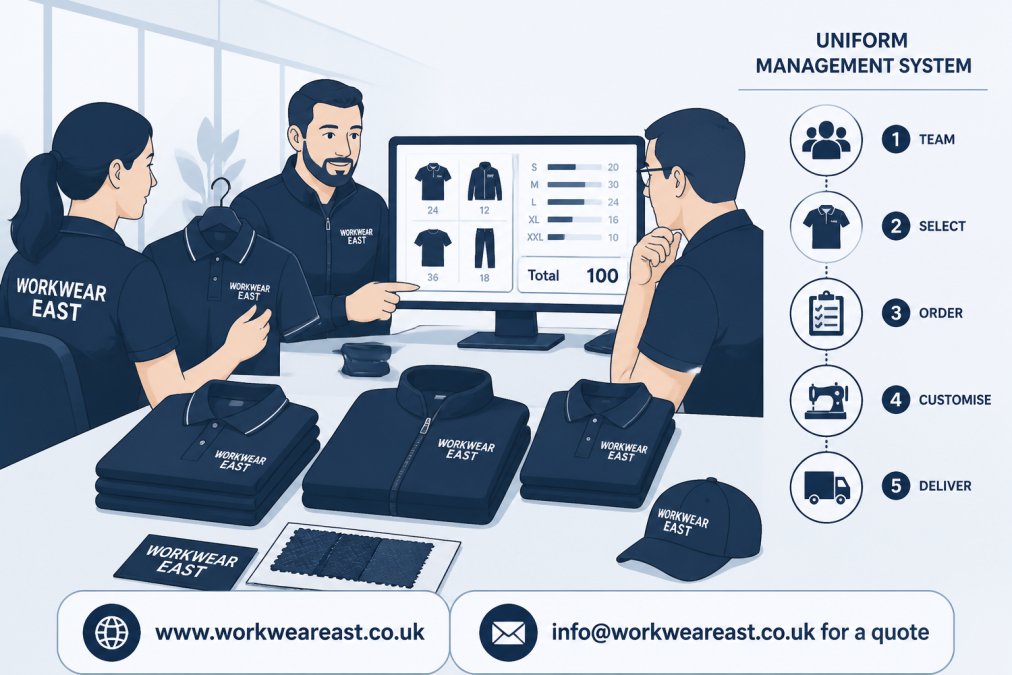
Organisations report fewer sizing errors, faster replacement cycles, better budget control, and improved employee satisfaction when they implement a proper system. The investment pays for itself within the first year through waste reduction and simplified administration alone.
Creating a Staff Uniform Policy Template
Your uniform policy template is the foundation of everything that follows. Without it, you'll face constant questions, inconsistent decisions, and disputes about what employees are entitled to.
Start with eligibility and scope. Define which roles receive uniforms and which don't. Be explicit to prevent misunderstandings and keep costs predictable.
Next, establish replacement cycles. Most workwear lasts 12 to 18 months depending on usage intensity. Specify how often each role receives new uniforms and include a process for damaged items: do employees get one replacement per year, or is damage their responsibility after the first replacement?
Your template should cover sizing and fit. Include a process for taking measurements or using size charts before placing bulk orders. Specify who approves size changes and how often employees can request different sizes.
Address storage and returns. If uniforms remain company property, clarify what happens when someone leaves. Do they return items? Is there a deposit or deduction? This prevents disputes and helps with recycling and reuse.
Include a request and approval workflow. Define who employees contact when they need a replacement, who approves requests, and how long the process takes. Specify any documentation required (e.g., photos of damage). This keeps requests legitimate and prevents abuse.
Finally, document communication channels and timelines. Employees should know where to request uniforms, how quickly they'll receive them, and who to contact if something goes wrong. A one-page summary in employee handbooks prevents repeated questions.
Setting Up a Uniform Inventory Management System
An inventory management system tracks what uniforms you have, where they are, and when they need replacing. Without visibility into stock levels, you'll either run out of items or accumulate expensive surplus.
Begin by defining your SKUs (stock-keeping units). Each unique combination of item, size, colour, and logo variation gets its own SKU. This granularity lets you track exactly what's in stock and what's running low.
Set minimum and maximum stock levels for each SKU based on usage patterns. If you have 50 employees and each needs two polo shirts, your minimum might be 100 units. When stock hits the minimum, trigger a reorder. This prevents both stockouts and overstocking.
For small organisations (under 50 employees), a spreadsheet with columns for SKU, quantity on hand, reorder point, and last updated date works fine. Larger organisations benefit from dedicated inventory software that tracks stock movements automatically.
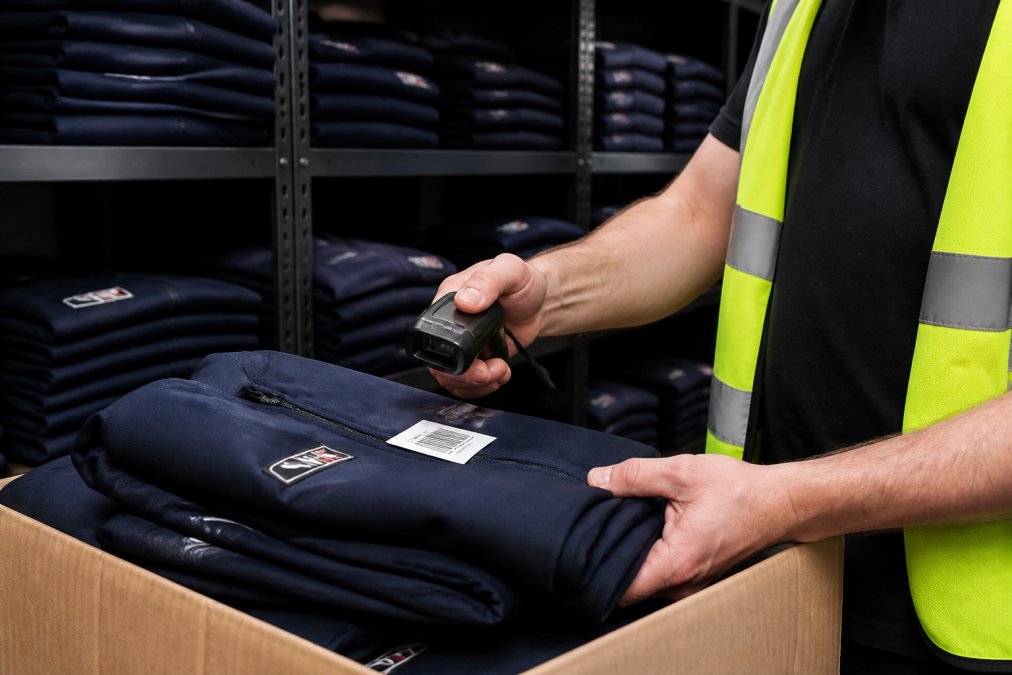
Establish a physical audit schedule. Count your actual stock quarterly or semi-annually to catch discrepancies. Track damaged or unusable items separately so they don't inflate your available inventory.
Assign responsibility for inventory management. Someone needs to update records when items are issued, damaged, or replaced. This person also monitors stock levels and triggers reorders.
Integrate your inventory system with your policy. When an employee requests a replacement, the person processing the request should check inventory, confirm stock is available, and update records when the item is issued. This creates an audit trail and keeps data accurate.
Centralizing Procurement and Bulk Ordering
Centralised procurement means all uniform orders flow through one person or department rather than individual managers placing separate orders. This approach delivers better pricing, consistency, and control. Vendors offer volume discounts that disappear when you're placing small, fragmented orders.
Start by consolidating your supplier list. Rather than having multiple departments order from different vendors, negotiate with one or two primary suppliers who can handle your full volume. Workwear East offers workwear bundles and branded solutions that let you consolidate everything from embroidered polo shirts to hi-vis gear through a single partner, simplifying both ordering and invoicing.
Establish a centralised ordering schedule. Instead of employees requesting uniforms ad-hoc, set quarterly or semi-annual order windows. This lets you batch requests, maximise volume discounts, and manage cash flow more predictably.
Create a standardised request form. Employees submit requests through this form, specifying item type, size, quantity, and any customisation needs. The form feeds into your inventory system and triggers approval workflows.
Negotiate volume pricing with your supplier. Share your annual volume projections with suppliers so they can offer tiered pricing. Many suppliers, including Workwear East, offer custom pricing structures for organisations placing regular, substantial orders.
Set up a centralised payment process. Rather than multiple departments paying separate invoices, consolidate billing through one account. This simplifies reconciliation and often qualifies you for additional discounts.
Define spending limits and who can approve orders at each level. Clear authority limits prevent delays and ensure budget accountability.
How to Track Employee Uniform Costs
Tracking costs ensures you stay within budget and identify where money is actually going. Most organisations are surprised to discover how much they spend on uniforms once they start measuring properly.
Start by capturing cost per employee per year. Calculate your total annual uniform spending divided by the number of employees receiving uniforms. This baseline helps you benchmark against industry norms and identify if your costs are creeping upward.
Break costs down by category: initial issuance, replacements, customisation, and logistics. Initial issuance costs more because employees get a full set. Ongoing replacement costs depend on your replacement cycle and damage rates. Separating these helps you identify which areas are driving costs.
Implement departmental or cost-centre tracking. Assign uniform costs to the departments that use them. This creates accountability and helps managers understand the true cost of their operations.
Track damage and waste rates. If certain items are damaged frequently, the material or design might not suit your use case. Data reveals patterns that let you optimise.
Use your inventory system to track cost per replacement. When an employee requests a replacement, log the reason (wear, damage, sizing issue, etc.). Over time, this data shows which items last longest and where to invest in higher-quality alternatives.
Monitor supplier pricing and negotiate annually. Even if you're happy with your supplier, get quotes from alternatives every 12 to 18 months. Use this competitive data to negotiate better terms.
Set budget forecasts based on historical data. Once you've tracked costs for a full year, you have a baseline for forecasting. Factor in planned headcount growth, replacement cycle length, and any planned changes to uniform specifications.
Managing Uniform Returns and Recycling
Uniforms need to be managed when employees leave, items are damaged beyond repair, or replacements are issued. A structured returns and recycling process protects your investment and demonstrates environmental responsibility.
Establish a return process for departing employees. Include this in your exit procedures. When someone leaves, they should return all uniforms before their final paycheck. Document what was returned and its condition.
Create a condition assessment protocol. When uniforms are returned or removed from service, assess whether they can be reused, repurposed, or recycled. Items in good condition can be cleaned and reissued. Items with minor damage might suit internal use. Items beyond repair should be recycled responsibly.
Partner with a textile recycling service. Many areas have textile recyclers who accept worn workwear. This keeps items out of landfills and demonstrates environmental commitment to employees and customers.
Implement a damage claim process if uniforms remain company property. If an employee damages a uniform through misuse (not normal wear), clarify whether they're responsible for replacement cost. Be consistent in applying this policy.
Track returns and recycling in your inventory system. When uniforms are returned, damaged, or recycled, update your records. This keeps your inventory accurate and provides data for forecasting future needs.
Document your waste management approach. Keep records of how many uniforms were recycled, donated, or disposed of each year. This data supports sustainability reporting and helps you understand the true lifecycle cost of your uniform programme.
Automation and Integration Best Practices
As your organisation grows, manual processes become bottlenecks. Automation reduces administrative overhead, improves accuracy, and gives employees self-service access to request uniforms.
Consider a web-based ordering portal. Employees log in, see available uniform options, select items and sizes, and submit requests. The system automatically checks inventory, routes approvals, and notifies relevant staff when items need to be issued or ordered. Workwear East offers a workforce portal that simplifies this exact process, giving employees access to their uniform allowance and order history while centralising approvals.
Integrate with your HR or HRIS system. When a new employee is hired, their profile automatically triggers a uniform issuance workflow. When someone leaves, their record flags for return processing.
Set up automated reorder triggers. When inventory hits the minimum threshold, the system automatically generates a purchase order or notifies the procurement team.
Implement approval workflows that route requests based on rules you define. A request under a certain value might auto-approve; larger requests route to a manager; very large requests route to finance.
Use reporting and analytics to monitor performance. Track metrics like average time from request to receipt, cost per employee per year, inventory turnover, and damage rates.
Ensure your system integrates with payroll if you're deducting costs from employee pay or managing allowances. When a uniform is issued, the system should record it in payroll so deductions or allowances are accurate.
Maintain data security and access controls. Limit access to inventory and cost data to authorised staff. Regular backups prevent data loss.
Conclusion
Managing staff uniform orders effectively requires three elements working together: a clear policy that defines what employees receive and when, a centralised system that tracks inventory and procurement, and processes that keep costs visible and controlled.
The good news is that you don't need complex software or extensive resources to get started. A spreadsheet-based inventory system and a formalised ordering process can deliver significant improvements immediately. As your organisation grows, you can layer on automation and integration.
For organisations that want to outsource the complexity entirely, Workwear East provides end-to-end uniform solutions with customisation options including advanced embroidery, DTF printing, and screen printing. To discuss your requirements and get a tailored quote for your organisation's uniform needs, email info@workweareast for a quote or visit https://www.workweareast.co.uk/ to explore their branded workwear bundles and polo shirt options.
| Element | Purpose | Frequency |
|---|---|---|
| Policy Template | Define eligibility, replacement cycles, and processes | Review annually |
| Inventory System | Track stock levels and trigger reorders | Update continuously |
| Centralised Ordering | Consolidate procurement and negotiate volume pricing | Quarterly or semi-annual |
| Cost Tracking | Monitor spending and identify optimisation opportunities | Monthly reporting |
| Returns Process | Manage departing employees and recycling | As items are returned |
| Automation | Reduce manual work and improve accuracy | Implement incrementally |
Frequently Asked Questions
How do I keep track of employee uniform allocations?
Use a centralised inventory management system that records each employee's uniform issue date, size, style, and replacement cycle. A web-based portal allows staff to request replacements and managers to approve them automatically. Track allocations by department and employee ID to prevent over-ordering and ensure compliance with your uniform policy. Regular audits, monthly or quarterly, catch discrepancies early.
What's the best way to handle uniform returns and recycling?
Establish a clear offboarding process requiring employees to return all uniforms before final payment. Inspect returned items for damage and sort by condition: reusable stock, textile recycling, or disposal. Partner with a recycling provider to handle worn-out workwear responsibly. Document returns in your inventory system to maintain accurate stock levels and support sustainability compliance. This reduces waste and protects your replacement budget.
How do I calculate the right uniform sizes for new starters?
Collect size data during onboarding using a simple form or sizing chart. Store measurements in your inventory system linked to each employee record. For multi-site teams, maintain a sizing guide specific to each location or department. Order slightly larger batches of common sizes (M, L) and smaller quantities of extremes. This minimises delays and reduces the cost of individual rush orders for size corrections.
How can I reduce waste when ordering staff uniforms?
Forecast demand by analysing your replacement cycle data and headcount changes. Centralise ordering to avoid duplicate purchases across departments. Use automated replenishment triggers based on stock thresholds rather than ad-hoc orders. Implement a uniform returns and recycling programme to extend lifecycle and reduce landfill. Track cost-per-employee annually to identify overspending patterns and adjust future orders accordingly.
This article was written using GrandRanker