 how-to
How to Prevent Logo Cracking on Workwear
Table of Contents
- Why Logos Crack on Workwear
- How to Wash Printed Workwear Without Damaging Logos
- Drying Techniques That Protect Print Durability
- Ironing and Direct Heat Precautions
- How to Remove Ink Stains From Work Shirts
- Workwear Care Instructions and Storage
- Choosing Quality Workwear to Prevent Logo Cracking
- Conclusion
Last Updated: August 24, 2026
Why Logos Crack on Workwear
Logo cracking on workwear is a predictable failure mode caused by heat, friction, or moisture trapped against the fabric. Screen-printed and heat transfer logos are thin polymer films bonded to fabric that need to flex slightly during washing and wearing. When they can't flex, from tumble-dry heat, detergent residue buildup, or mechanical agitation, the ink fractures. Preventing logo cracking comes down to understanding how each washing and drying method affects the print layer.
How to Wash Printed Workwear Without Damaging Logos
Washing is where most logo damage begins. The combination of water temperature, detergent chemistry, and mechanical agitation determines whether prints survive or fail.
Washing temperature guidelines
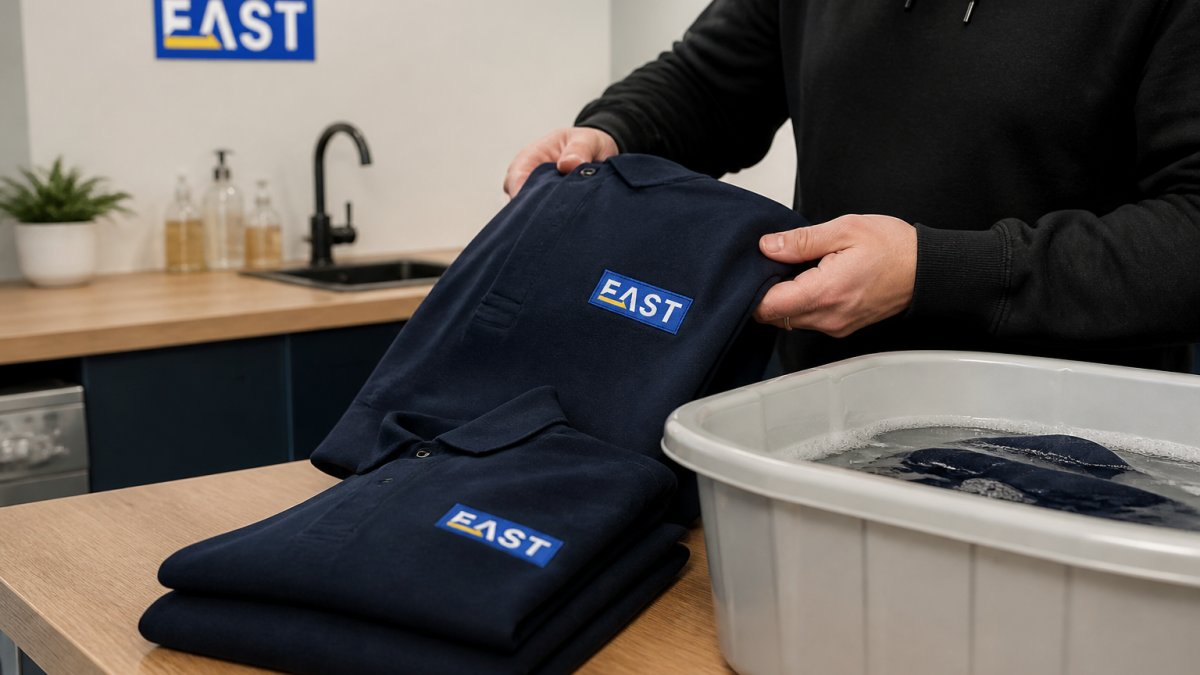
Cold water washing below 30°C is non-negotiable for printed workwear. Cold water prevents the print adhesive from loosening, which happens progressively as temperature rises. Hot water accelerates degradation; warm water gives you the worst of both worlds.
Set your machine to a gentle cycle labelled for synthetic fabrics or mixed loads, typically running at 600-800 RPM spin speed rather than 1200+ RPM ([EXTERNAL_LINK: peer-reviewed research on fabric care | ncbi.nlm.nih.gov]). Reduced agitation means less friction against the print layer.
Turning garments inside out
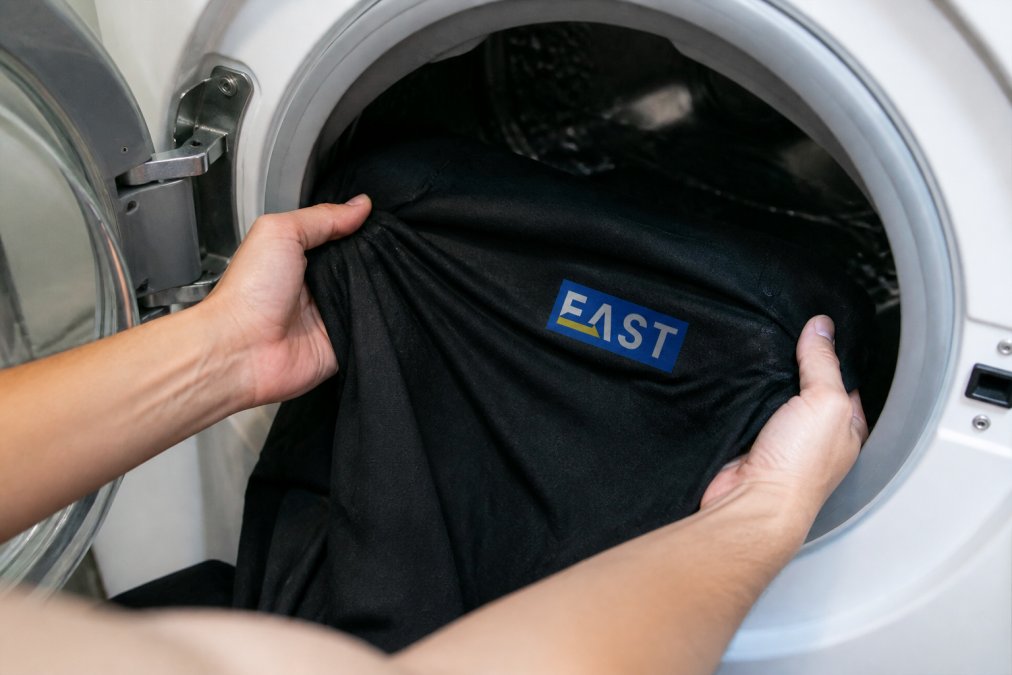
Turning printed garments inside out before washing cuts logo damage significantly. The print faces inward, away from drum friction and direct contact with other garments. This also protects the print from detergent residue that can accumulate on the surface and create a brittle layer when dried.
Make this a non-negotiable rule for anyone handling branded uniforms. Include this instruction in your garment care label or onboarding documentation.
Detergent selection and avoiding harsh chemicals
Biological detergents contain enzymes that break down organic matter but are aggressive toward print adhesives. Use a non-biological, mild detergent instead. Avoid anything labelled "heavy-duty" or "stain-fighting," and skip fabric softener entirely, its waxy residue causes inks to peel and crack as fabric flexes.
Use half the recommended detergent amount. Excess detergent doesn't rinse completely, leaving residue that hardens on the print and makes it brittle.
Drying Techniques That Protect Print Durability
How you dry printed workwear determines whether logos stay vibrant or begin to fail.
Air drying versus tumble dry
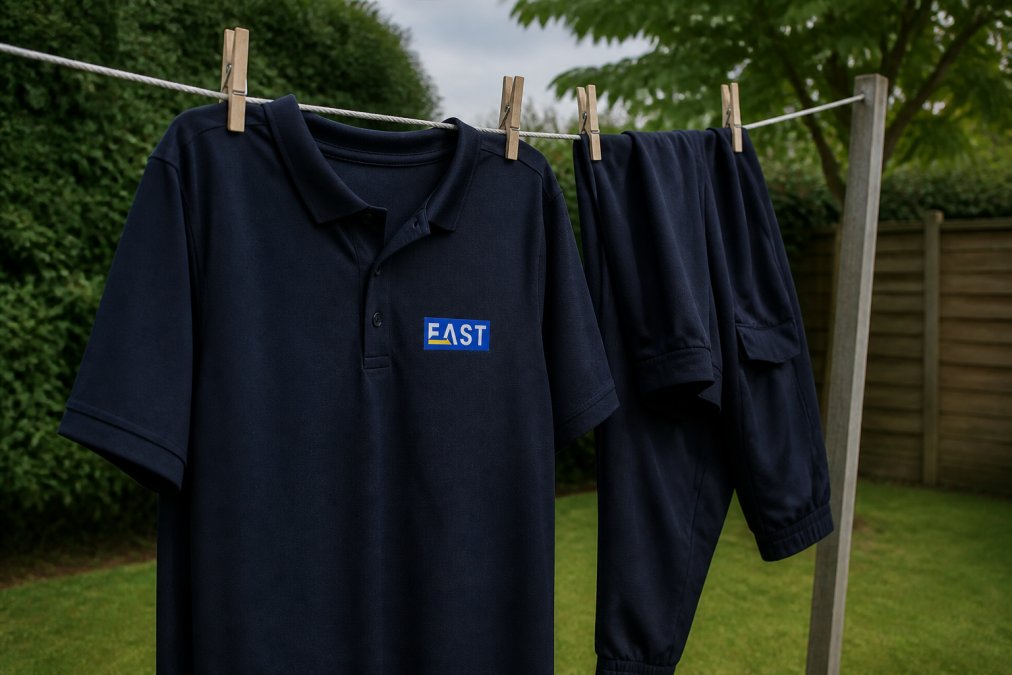
Air drying is the gold standard for printed workwear. Hanging garments in a well-ventilated space allows moisture to evaporate gradually without exposing the print to direct heat. The fabric contracts slowly and evenly, and the print never experiences thermal stress.
If you must use a tumble dryer, use the lowest heat setting available, typically 40-50°C or labelled "air dry" or "synthetic." Never use standard heat. Direct heat causes the print adhesive to soften, and as the fabric tumbles, the print flexes and cracks.
Heat transfer and low heat settings
Heat transfer logos are particularly sensitive to direct heat after application. If using a dryer, low heat isn't optional, it's essential. Many facilities set dryers to medium heat thinking it speeds drying without damage; this is where print longevity fails.
For DTF printing, advanced techniques create durable, flexible prints, but they still require proper care. Air drying for at least the first few washes gives the adhesive time to stabilise.
Ironing and Direct Heat Precautions
Never iron directly over a printed area. Turn the garment inside out and iron the back side only. Use a low heat setting and keep the iron moving. Static heat on a print melts the adhesive and causes permanent damage.
If garments are air dried properly, ironing often isn't necessary. A light steam press from a distance is safer than direct iron contact.
How to Remove Ink Stains From Work Shirts
For fresh ink stains, blot immediately with a clean cloth, don't rub. Rinse under cold running water from the back of the stain, pushing the ink out rather than through the fabric. If the stain persists, soak in cold water for 15-30 minutes, then gently work the stain with your fingers.
For set-in stains, avoid harsh solvents or bleach. A mild detergent mixed with cold water applied directly to the stain, left for a few minutes, and then rinsed works for most ink marks. Test on an inconspicuous area first if the garment has a print nearby.
Never put a stained garment in the dryer before the stain is fully removed. Heat sets ink permanently into fabric.
Workwear Care Instructions and Storage
Storage and folding techniques
Store printed workwear in a cool, dry space away from direct sunlight. UV exposure fades inks and weakens the adhesive bond over time.
When folding, avoid creasing directly across a printed logo. Fold the garment so the print area remains flat or slightly curved rather than sharply creased. Stack folded garments loosely rather than compressing them tightly.
Preventing moisture and damp storage damage
Damp storage weakens adhesive and causes prints to peel or crack. Never store garments that are even slightly damp. If workwear gets wet during a shift, dry it completely before putting it away. Moisture combined with warmth accelerates adhesive degradation.
For businesses that launder uniforms on-site, ensure the drying phase is complete before garments are folded and stored. The garment should be completely dry to the touch, including seams and collar areas.
Fabric softener impact on print longevity
Fabric softener leaves a waxy coating that makes prints brittle and prone to cracking. Skip fabric softener entirely for any garment with a print. If using a commercial laundry service, specify that softener should not be used on branded uniforms.
Choosing Quality Workwear to Prevent Logo Cracking
Not all workwear is created equal. Cheap, thin fabrics are more prone to print cracking because they flex more dramatically during washing and wearing. Look for workwear made from durable blended fabrics, typically cotton-polyester blends with a tighter weave. A 65/35 or 50/50 cotton-polyester blend offers better print durability than 100% cotton.
The printing method matters equally. DTF printing, when done properly by experienced providers, creates a flexible print that moves with the fabric while maintaining adhesion. Ask your supplier about the specific printing technique they use and how it's optimised for garment care. Workwear Bundles from quality suppliers often include guidance on fabric composition and print durability tailored to your industry.
| Care Method | Temperature | Cycle | Print Impact | Frequency |
|---|---|---|---|---|
| Washing | Below 30°C | Gentle synthetic | Minimal stress | Every wear |
| Turning inside-out | N/A | All cycles | Reduces friction | Every wash |
| Detergent | N/A | Mild, non-biological | Protects adhesive | Every wash |
| Air drying | Ambient | N/A | Best for longevity | Preferred |
| Tumble dry | Low heat only | Synthetic setting | Acceptable if necessary | Occasional |
| Ironing | Low heat | Reverse side only | Prevents damage | As needed |
Conclusion
Logo cracking on workwear is preventable. The difference between uniforms that last one season and those that last three comes down to treating printed garments differently from regular workwear.
Quality workwear designed to withstand daily wear, including durable DTF printing and embroidery techniques that produce prints maintaining flexibility and adhesion when cared for properly, makes a significant difference. Whether outfitting a small team or managing uniforms across multiple departments, choosing quality workwear and following proper care instructions protects your investment and keeps your team looking professional.
For guidance on selecting the right workwear for your business or to discuss custom printing options that prioritise durability, visit Workwear East or email info@workweareast for a quote. Our team can help you choose fabrics, printing methods, and care protocols tailored to your specific operational needs.
Frequently Asked Questions
Q: How can I prevent designs from cracking on my work shirts?
A: Prevent logo cracking by washing in cold water on a gentle cycle, turning garments inside out, and avoiding fabric softener. Air dry instead of tumble drying, and never iron directly over the print. Store in a cool, dry place away from moisture. These practices protect heat transfer, screen printing, and vinyl transfer designs from friction, mechanical agitation, and heat damage that cause peeling and cracking over time.
Q: What is the best way to wash printed workwear to prevent cracking?
A: Wash printed workwear inside out on a cold water wash using a gentle cycle. Use mild detergent and avoid bleach or harsh chemicals that weaken the print bond. Separate heavily soiled items to reduce friction against logos. This minimises mechanical agitation and detergent residue that can cause print durability issues and fading in both embroidered and printed garments.
Q: Can you tumble dry printed work uniforms?
A: Tumble drying damages printed workwear logos through direct heat and mechanical friction. Instead, air dry garments flat or hanging. If you must use a tumble dryer, use the lowest heat setting or air-dry function. High temperatures cause heat transfer and screen printing to crack and peel. Air drying extends garment longevity significantly and is the safest method for branded uniforms.
Q: Why do logos on workwear crack over time?
A: Logos crack due to repeated washing friction, high water temperatures, harsh detergents, tumble drying heat, and direct ironing. Screen printing, heat transfer, and vinyl transfer designs are vulnerable to mechanical agitation and heat exposure. Poor storage in damp conditions also causes deterioration. Using cold water, gentle cycles, air drying, and proper storage prevents these factors and maintains print durability for longer garment lifespan.
This article was written using GrandRanker