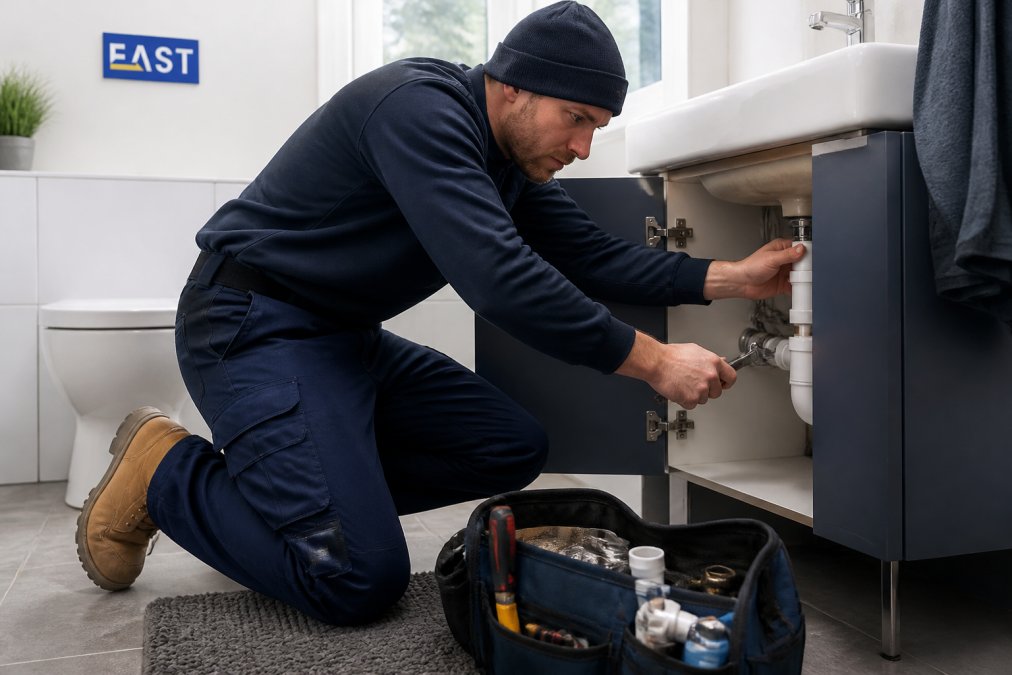
 ultimate-guide
Plumber Workwear: The 2026 UK Buyer's Guide
Table of Contents
- What Plumber Workwear Has to Handle
- Durable Plumbing Trousers: Knee Pad Inserts and Reinforced Knees
- Tops That Breathe: Base Layers, Polos and Mid-Layers
- Branded Workwear for Tradespeople: Why Uniform Matters on Site
- Custom Embroidered Polo Shirts: What Survives the Wash
- Jackets, Hi-Vis and Safety Footwear for Plumbing Work
- Looking After Plumber Workwear So It Lasts
- Conclusion
- Frequently Asked Questions
Last Updated: September 16, 2026
What Plumber Workwear Has to Handle
Plumber workwear is protective, practical clothing built for plumbing's demands: kneeling on hard floors, working wet and dirty, reaching into tight spaces, and moving between cold outdoor jobs and heated interiors. This guide from Workwear East covers what survives that workload, from knee pad inserts to embroidered polo shirts that hold their shape after repeated washing.
Health and Safety Executive guidance on PPE at work
Durable Plumbing Trousers: Knee Pad Inserts and Reinforced Knees
Durable plumbing trousers need dedicated knee pad pockets, reinforced knee panels, and articulated knees so the fabric moves with you when you kneel. Look for doubled fabric over the knee, bar-tacked stress points, and a gusseted crotch first.
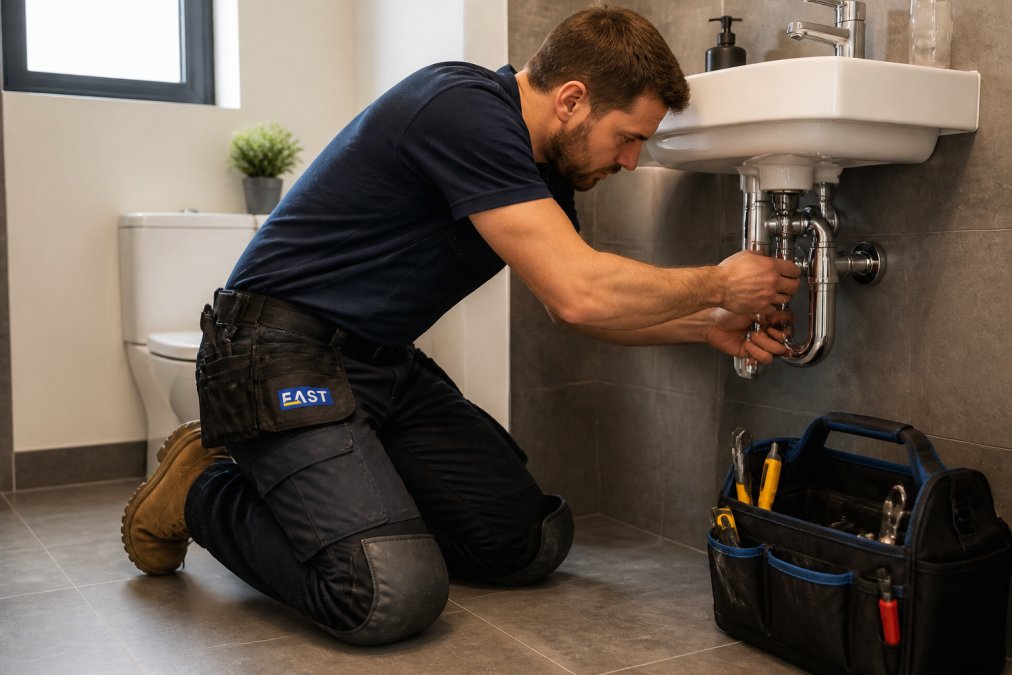
What to check before buying:
- Knee pad pockets that sit at the correct height when you kneel, not when you stand
- Reinforced stitching at the crotch, belt loops and pocket corners
- Articulated knees so the fabric doesn't fight the movement
- Cargo pockets and tool loops positioned where they don't dig in when crouching
- Abrasion resistance at the hem, where trousers drag on floors and steps
Why Knee Pad Inserts Matter More Than Trouser Brand
Knee pad inserts matter more than the trouser brand because they decide whether your knees survive a career, not just a season. Cheap trousers with good inserts outperform expensive trousers with none. Inserts compress over time, so replace them annually, or sooner if you're on your knees daily.
Tops That Breathe: Base Layers, Polos and Mid-Layers
Breathable, moisture-wicking tops keep a plumber comfortable across a day that swings between a cold van, a hot loft and a damp cellar. Cotton holds sweat and stays wet; technical fabrics move moisture away and dry fast. A plumbing layering system must be adjustable in seconds, packable, and able to cope with a boiler cupboard at 35°C and a frozen outdoor stopcock in the same afternoon.
A Seasonal Layering System for Plumbing Work
Most guides treat layering as a winter topic, but plumbers need a year-round system because the job moves between microclimates faster than the weather changes.
Winter (outdoor mains, frozen pipes, unheated voids):
- Base layer: long-sleeve moisture-wicking fabric, close to the skin. Merino blends resist odour better across a long day; synthetics dry faster.
- Mid-layer: a lightweight fleece or grid-fleece that traps warmth without bulk under a jacket.
- Outer layer: a waterproof, windproof softshell or shell jacket with taped seams and a hood that fits under a hard hat.
- Spare mid-layer in the van: so you can strip down before entering a heated property without losing the layer for the next outdoor job.
Summer (lofts, plant rooms, under-sink work):
- Base layer: short-sleeve technical polo or T-shirt in a stretch fabric. Look for breathability over thickness.
- Mid-layer: usually none. A light gilet is enough for early starts and shaded outdoor work.
- Outer layer: a packable showerproof shell that folds into a trouser pocket for sudden rain.
Transitional months (the hardest to dress for):
Fabric Choices That Actually Matter
- Moisture-wicking synthetics (polyester, polyamide blends): dry fastest, hold shape well, but can hold odour if not washed promptly.
- Merino wool blends: temperature-regulating and odour-resistant, but slower to dry and pricier.
- Cotton: comfortable but stays wet, clings, and loses shape, fine for a branded polo indoors, poor as a base layer under a boiler.
- Stretch fabrics with elastane: allow the reach and twist plumbing demands without the shirt pulling out of the waistband.
The Branding Trade-Off
For teams needing a consistent layering system across engineers, email info@workweareast for a quote and we can build a kit list around your working environments.
Branded Workwear for Tradespeople: Why Uniform Matters on Site
Branded workwear for tradespeople does three jobs at once: it identifies your team, presents a professional appearance at the customer's door, and protects your staff. A plumber in a clean, branded polo reads as a business; the same plumber in a faded football shirt reads as a favour. Customers decide whether to trust you in the first few seconds, and corporate branding signals a real operation with accountable staff.
Custom Embroidered Polo Shirts: What Survives the Wash
Custom embroidered polo shirts survive the wash far better than printed alternatives because embroidery is stitched into the fabric rather than sitting on top of it. With no ink layer to crack, peel or fade, embroidery remains the standard for trade uniforms.
- Fabric weight: heavier cotton or poly-cotton blends hold shape through repeated industrial washing
- Stitch density: too few stitches per centimetre and the logo distorts
- Backing: a proper cut-away backing stops the design pulling at the fabric
- Colourfastness: dark polos fade fastest if dye quality is poor
Jackets, Hi-Vis and Safety Footwear for Plumbing Work
Jackets, hi-vis clothing and safety footwear complete the kit: a weather-resistant softshell handles light rain and wind, hi-vis is essential near vehicles or on site, and safety boots protect against dropped tools and wet floors.
Footwear and High-Visibility Essentials
Safety footwear for plumbing needs a slip-resistant sole above all else. Wet tiled floors, spilled water and cellar steps are everyday hazards, and grip keeps your team upright.
What to look for in boots:
- Slip-resistant sole rated for wet and oily surfaces
- Steel toe cap or composite toe for dropped tools and pipe sections
- Waterproof membrane for damp cellars and outdoor work
- Ankle support for ladder work and uneven ground
| Garment | Primary job | Key feature to check |
|---|---|---|
| Trade trousers | Kneeling and tool carry | Knee pad pockets, reinforced knees |
| Polo or base layer | Breathability and branding | Moisture-wicking fabric, stitch quality |
| Softshell or jacket | Weather protection | Waterproof membrane, packability |
| Safety boots | Foot protection and grip | Slip-resistant sole, toe cap |
| Hi-vis vest or jacket | Visibility on site | Correct class for the site rules |
Looking After Plumber Workwear So It Lasts
Looking after plumber workwear comes down to washing it correctly, drying it properly, and replacing the parts that wear first. Most workwear fails early because of how it's washed, not poor quality. But plumbing workwear also carries hazards most trade clothing never sees, sewage, flux, solvent-based sealants, oils and chemical drain cleaners, and handling contaminated garments matters for fabric life and personal hygiene.
Routine Care Rules
- Wash at the temperature on the label, not hotter
- Turn garments inside out before washing to protect embroidery and prints
- Avoid fabric softener, which clogs moisture-wicking fabrics
- Skip the tumble dryer for anything with a waterproof membrane
- Remove knee pad inserts before washing
- Check stitching at stress points every few months and repair early
- Replace knee pad inserts annually
A common mistake is washing workwear with heavily soiled rags or oily cloths, the residue transfers, dulls the fabric and shortens garment life. Keep plumbing workwear in its own wash load.
Decontaminating Workwear After Sewage or Chemical Exposure
A garment in contact with sewage, drain water or chemical drain cleaner isn't just dirty, it's a hygiene risk to the wearer and anyone else in the wash load.
After sewage or foul-water contact:
- Do not take the garment home in the cab with clean clothing. Bag it on site in a sealed plastic bag.
- Pre-rinse outdoors or in a utility sink before it goes anywhere near a washing machine. Cold water first, never hot, hot water can set biological contamination into the fibres.
- Wash separately at the highest temperature the care label allows, with a detergent that contains a disinfectant action. Do not mix with family laundry.
- Run an empty hot cycle on the machine afterwards to clear residue.
- Dry thoroughly, bacteria survive in damp fabric. Tumble dry on a low setting if the label permits, or line dry in direct sun.
After solvent, flux or oil-based product contact:
- Blot, don't rub. Rubbing pushes solvent deeper into the weave.
- Check the care label before washing. Some waterproof membranes and flame-retardant finishes are degraded by certain detergents or high temperatures.
- Wash separately from other garments to avoid cross-contamination.
- Never tumble dry anything with a waterproof or flame-retardant finish unless the label explicitly allows it.
- Re-proof waterproof garments after washing with a suitable spray-on or wash-in treatment to restore the durable water repellent (DWR) finish.
When to Repair and When to Replace
- Knee panels worn thin: replace the trousers. A patch over a worn knee will fail within weeks under kneeling pressure.
- Split crotch seam: repairable if caught early. Once the surrounding fabric is thin, replacement is cheaper than repeated repairs.
- Faded embroidery: not repairable. Replace the garment or accept a faded logo, customers notice.
- Compressed knee pad inserts: replace annually, or sooner if you kneel daily.
- Waterproof membrane failure (water soaking through, not just beading off): the garment is finished as a waterproof layer. It can still serve as a mid-layer.
A Simple System for Teams
For teams, the simplest system is two sets per person: one wears, one washes. That alone removes most of the wear caused by over-washing a single set. Add a third set for anyone regularly working in sewage or chemical environments, so contaminated garments are handled separately.
Conclusion
Keeping a plumbing team in workwear that survives the trade, looks professional and holds its branding through repeated washing is harder than it sounds. Most suppliers can print a logo; fewer can supply trousers with properly positioned knee pad pockets, polos that stay crisp after a year of industrial washing, and hi-vis that meets site requirements.
Frequently Asked Questions
What are the best work clothes for plumbers?
Prioritise durable plumbing trousers with knee pad inserts and articulated knees, a moisture-wicking base layer, and a softshell or waterproof jacket for outdoor callouts. Look for reinforced stitching at stress points and abrasion resistance at the knees and hems. Breathable fabrics matter because plumbing work swings between hot plant rooms and cold lofts. A branded workwear for tradespeople setup also helps customers identify you on site. For a quote on a full kit, email info@workweareast for advice.
How do I choose durable fabrics for daily plumbing tasks?
Check the fabric weight and weave rather than the marketing name. Heavy-duty polycotton blends with reinforced stitching hold up better against abrasion from pipes, tools and floor edges. Stretch fabric panels at the knees and crotch reduce tearing when you crouch and twist. For wet work, a waterproof membrane in outer layers keeps you dry without trapping sweat. Ask what the garment is rated for before buying, and check whether knee pad inserts fit properly.
Why is branded workwear important for plumbing businesses?
Branded workwear for tradespeople does two jobs: it makes your team instantly identifiable at a customer's property, and it signals professionalism before you say a word. Embroidered logos on polo shirts and jackets survive repeated washing far better than printed transfers, so the branding still looks sharp after a year of daily wear. It also helps with referrals, since neighbours remember the name on the van and the shirt. Email info@workweareast for a quote on branded bundles.
What features should I look for in plumbing trousers to ensure comfort?
Look for an ergonomic fit with articulated knees, a gusseted crotch, and a waistband that adjusts rather than digs in. Knee pad inserts should sit at the right height when you kneel, not float above the kneecap. Tool loops and cargo pockets keep spanners and fittings within reach without weighing the trousers down. Breathability matters too, so pick fabrics that release heat during long days in plant rooms. Try a single pair before ordering for the whole team.