 Ultimate guide
Printed Fleeces for Staff: Choosing the Right Method
Quick Summary
Printed fleeces can be decorated with DTF printing, screen printing or embroidery, and the right method depends on the artwork, quantity and durability needed. DTF suits detailed full-colour designs and small to medium runs, screen printing suits large runs of simple designs, and embroidery is the most durable choice for a logo.
- DTF printing handles full-colour artwork and fine detail without heavy setup costs.
- Screen printing is cost-effective for large runs of a simple design with limited colours.
- Embroidery is stitched into the fabric, making it the most durable option for workwear.
- Ask for a sample before a large order to check the finish on your chosen fleece.
- Measure each wearer rather than ordering one size to avoid returns and reorders.
Table of Contents
- Printed Fleeces for Staff: Choosing the Right Method
- What Printed Fleeces Are and Where They Fit in Workwear
- Printing Methods Compared: DTF, Screen Printing and Embroidery
- Fleece Fabric Technical Comparison: Weight, Pile and Breathability
- Choosing Branded Fleece Jackets for Staff Across Different Roles
- Care and Maintenance So Logos Last Through Repeated Washing
- Sizing, Lead Times and Ordering for Larger Teams
- Ordering Your Printed Fleeces: Request a Quote From Workwear East
- Frequently Asked Questions
Printed Fleeces for Staff: Choosing the Right Method
Last Updated: November 4, 2026
Printed fleeces are one of the most practical ways to outfit a team, but the decoration method you pick decides how the garment looks, how long it lasts and what it costs per unit. At Workwear East, we help businesses choose between DTF printing, screen printing and embroidery, and the right answer depends on the job the fleece has to do.
Printed fleeces are fleece garments, usually jackets, half-zips or gilets, decorated with a company logo, name or design. The decoration is applied after the garment is made, so the same base fleece can be finished in several ways. Our advice is to start with how the fleece will be worn and washed, then work back to the method.
What Printed Fleeces Are and Where They Fit in Workwear
Printed fleeces sit between everyday workwear and promotional clothing. They keep staff warm outdoors, they carry the brand on site and they can be reordered in matching batches as a team grows. Many businesses use them as a second layer under hi-vis or over a polo, so the decoration has to sit well against other garments and survive repeated washing.
Fleece is a forgiving base for decoration, but it is not uniform. A soft microfleece takes a print differently from a dense anti-pill fleece, and a quilted lining changes where a logo can sit. Before choosing a method, check the base fabric and where the logo will go.
Printing Methods Compared: DTF, Screen Printing and Embroidery
Three methods cover most staff fleece orders. Each one suits a different mix of detail, durability and quantity.
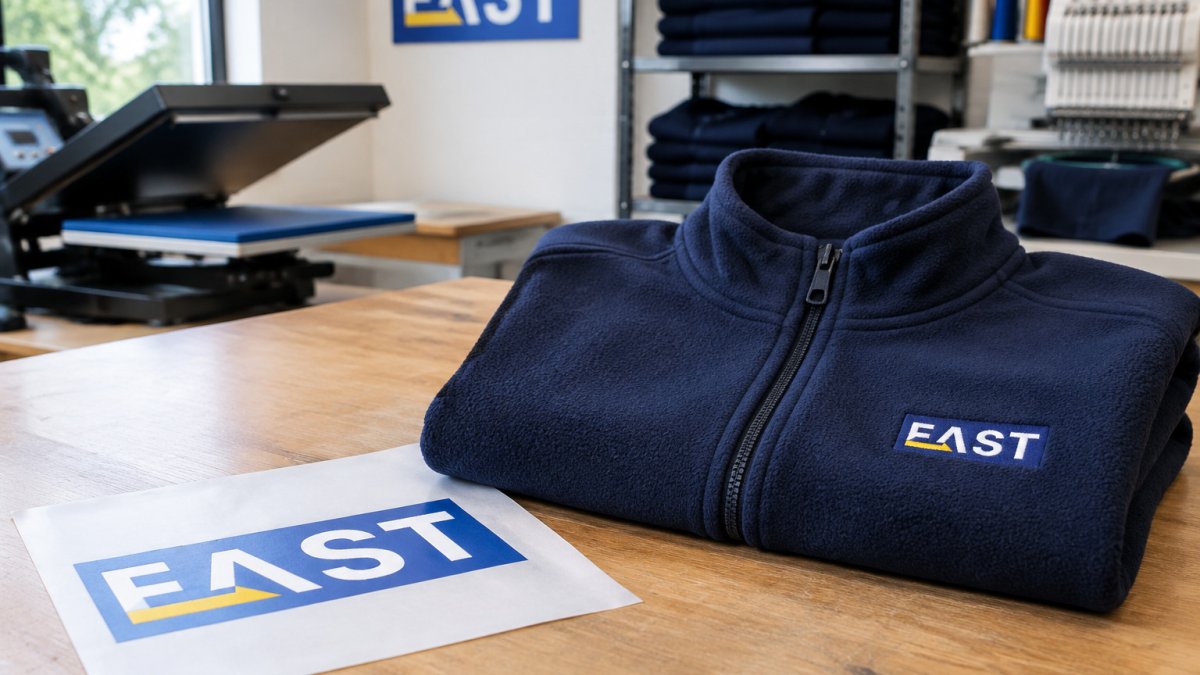
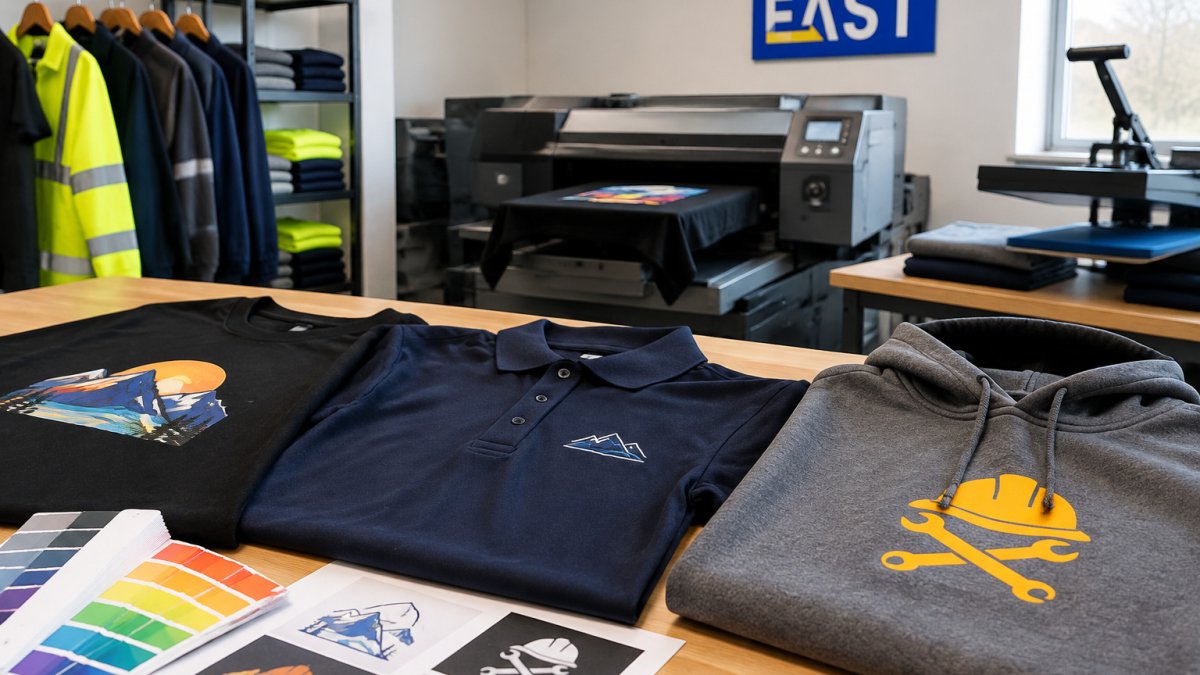
- DTF (direct-to-film) printing transfers a full-colour design onto the garment. It suits detailed, full-colour artwork.
- Screen printing is cost-effective for large runs of a simple design.
- Embroidery stitches the logo into the fabric and is a durable option for a logo on a fleece.
Pick DTF when the artwork is complex or the order is small to medium. Pick screen printing when the design is simple, the colours are limited and the quantity is high. Pick embroidery when the garment needs to look smart and last years of use.
When DTF Printing for Workwear Makes Sense
DTF printing is a good fit when a business needs a photographic or multi-colour logo on a fleece without the setup cost of screen printing. It suits teams that change their artwork often, or orders where each department wants a slightly different design. Because the print is full colour, it also handles small text and fine detail that would blur in a screen print.
Ask for a sample before ordering a large run so you can check the finish on the actual fleece you plan to use.
Why Embroidery Still Wins for Durability
Embroidery is stitched into the fabric, which makes it a durable choice for workwear that gets rough handling on site.
Simple logos with a few solid colours are often the strongest candidates for embroidery.
The three methods cover most staff fleece orders, and each suits a different mix of detail, durability and quantity.
| Method | Best for | Key difference |
|---|---|---|
| DTF (direct-to-film) printing | Detailed, full-colour artwork | Full-colour transfer onto the garment |
| Screen printing | Large runs of a simple design | Cost-effective for high quantities |
| Embroidery | Smart, long-lasting logos | Stitched into the fabric, most durable |
Fleece Fabric Technical Comparison: Weight, Pile and Breathability
Most buying guides stop at 'fleece is warm'. The fabric spec is what actually decides whether a printed logo stays crisp, whether the garment pills after ten washes and whether staff overheat indoors. The four fleece types below behave very differently under decoration, so match the fabric to the job before choosing a print method.
To discuss your garment options, email info@workweareast for a quote. Our full range is available at https://www.workweareast.co.uk/.
Choosing Branded Fleece Jackets for Staff Across Different Roles
Not every role needs the same garment, so it helps to match the garment and logo placement to each team's work.
Match the garment to the work, so the whole group still looks coordinated.
Care and Maintenance So Logos Last Through Repeated Washing
Caring for printed fleeces helps protect the logo. Follow the temperature and drying guidance on the garment label, and avoid high-heat drying and abrasive washing.
Sizing, Lead Times and Ordering for Larger Teams
Bulk fleece orders fail on three things: size spread, decoration setup and delivery phasing. Getting each right is mostly a matter of sequencing rather than guesswork.
Sizing. Collect each wearer's chest measurement and height rather than asking for 'medium', then map those to the supplier's size chart. Consider ordering spares for new starters so reorders match.
Decoration setup. Setup requirements differ by method and by the number of logo positions and colours, so ask for a quote based on your specification.
Lead times. Lead times depend on the garment and the decoration method, so plan ahead for fixed dates such as a site start or an event.
Batching. For larger teams, you may find it easier to split the order by department or site, keeping one master artwork file so every batch matches.
Watch out: ordering all garments in one size 'to be safe' is the most common bulk mistake; it guarantees returns and reorders. Measure first, then order.
To plan a bulk run, email info@workweareast for a quote with your size list, quantities and required date. Visit https://www.workweareast.co.uk/ for more information.
Ordering Your Printed Fleeces: Request a Quote From Workwear East
Pricing for printed fleeces depends on the garment, the decoration method, the number of logo positions and the order size, so we do not quote a fixed figure here. The most accurate price comes from a quote based on your actual specification. Get a quote for printed fleeces from Workwear East or email info@workweareast for a quote, and include your logo, quantities and the roles or departments that need garments.
For teams that want a ready-made starting point, our workwear bundles and branded polo shirts can help create a consistent look across the workforce. Our hi-vis range is also available.
Frequently Asked Questions
What is the difference between embroidered and printed fleeces?
Embroidered fleeces have the logo stitched into the fabric with thread, which gives a raised, hard-wearing finish that holds up well to frequent laundering and abrasion. Printed fleeces carry the design on the surface, usually through DTF printing or screen printing, which suits detailed, full-colour artwork and multi-colour designs. Your choice depends on the design, the wear the garment will face and the quantity you need. Workwear East can advise on the best method for your brief, and you can email info@workweareast for a quote.
Are printed fleeces suitable for outdoor work environments?
Yes, provided the print method and fleece weight suit the conditions. Outdoor staff, such as those on construction sites or in grounds maintenance, need fleeces that resist wind, retain warmth and cope with frequent washing. Embroidery is a durable option for logos that will face rough handling. Choosing a mid-weight fleece with good breathability helps staff stay comfortable as activity levels change through the day. Contact info@workweareast to discuss your site conditions.
How do I choose the right fleece weight for my staff?
Fleece weight is usually described in grams per square metre (gsm), and heavier fabrics give more warmth but less breathability. Lighter fleeces suit active roles where staff move constantly and need to shed heat, while heavier fleeces suit those who stand still outdoors for long periods. Consider the climate your team works in, whether they layer underneath, and whether the garment will be worn indoors as well as outside. A mixed workforce often benefits from offering two weights so each person can choose the right level of warmth. Email info@workweareast for a quote and guidance on fabric options.
Can I add my company logo to high-visibility fleeces?
Yes, logos can be added to high-visibility fleeces, but the method needs care. Reflective and fluorescent fabrics can react differently to heat and some inks, so the print or embroidery process should be checked against the specific fabric before production. Workwear East can advise on the method for your hi-vis fleeces, and details of our hi-vis range are available on our website. Email info@workweareast for a quote tailored to your garments.
What is the best way to care for printed workwear to ensure longevity?
Wash printed workwear inside out at a moderate temperature, use a mild detergent, and avoid fabric conditioners, which can coat the surface and affect how prints bond. Tumble drying on high heat can weaken DTF and screen prints over time, so air drying or a low setting is better. Avoid ironing directly over a print, and turn the garment inside out if you need to press it. Washing in batches with similar items reduces friction and helps protect the logo. For guidance on a specific garment or order, email info@workweareast.