 Ultimate guide
Work Polo Shirts: Fabric, Fit and Branding Guide
Quick Summary
Work polo shirts are polo-style garments built for daily work, combining a durable knitted collar, reinforced seams and fastenings with a fabric suited to the job. Cotton-polyester blends are a safe starting point for most teams, balancing comfort with durability and shape retention.
- Choose a knitted collar with a reinforced or taped neck seam so it holds its shape.
- Cotton-polyester blends balance comfort with durability and shape retention.
- Polyester suits active, sweaty or high-wear roles because it dries quickly.
- Use embroidery for durable logos on heavily worn polos and printing for detailed artwork.
- Wash on the care label temperature and avoid hot cycles to prevent shrinkage.
Table of Contents
- What Makes a Polo Shirt Suitable for Work
- Choosing the Right Fabric for Work Polo Shirts
- Fit, Sizing and Styles for Mixed Teams
- Matching Polo Shirts to Jobs and Work Environments
- Embroidered Versus Printed Work Polo Shirts
- Branding Your Work Polo Shirts: Artwork and Placement
- Caring for Work Polo Shirts to Extend Their Lifespan
- Ordering Work Polo Shirts for Your Team With Workwear East
- Frequently Asked Questions
What Makes a Polo Shirt Suitable for Work
Last Updated: November 5, 2026
Work polo shirts sit between a plain t-shirt and a formal shirt, and that middle ground is exactly why they suit so many trades and front-of-house roles. Work polo shirts are chosen for everything from site teams and warehouse staff to hospitality and retail floors. The right one depends less on looks and more on how it is built.
A polo shirt earns its place at work when it keeps its shape after repeated washing, resists snagging, and stays comfortable through a long shift. Those qualities come from the collar, the sleeves and the fastenings, so they are the place to start.
Collar, sleeves and fastenings
The collar is the feature people notice first. A knitted collar holds its shape better than a flat, loosely woven one, and it stays neat when it is turned up or worn under a jacket. Look for a collar with a reinforced or taped neck seam, because that is where stretching and fraying usually begin.
Sleeves matter for the same reason. Hemmed sleeves hold their finish through washing, while cheaper cuffs tend to curl and lose their line. Short sleeves are the standard choice, but check the sleeve opening if staff need room to move their arms freely while working.
Fastenings are a practical detail that often gets overlooked. A placket with two or three buttons is the classic choice, and reinforced buttonholes help the shirt survive frequent buttoning and unbuttoning. Avoid placket designs that gape or pull when someone bends forward, because that is a common complaint from people who wear them all day.
Choosing the Right Fabric for Work Polo Shirts
Fabric decides how a work polo feels after four hours on site, and it also decides how the shirt looks after its fiftieth wash. Most work polos are made from cotton, polyester, or a blend of the two, and each brings different strengths. Understanding those differences makes it far easier to match a garment to the job in front of you.
Cotton, polyester and blends compared
Cotton feels soft against the skin and absorbs moisture, which many people prefer for comfort. Its weakness is that it can lose shape, shrink, and take longer to dry, so it suits lighter-duty roles or environments where staff are not sweating heavily.
Polyester is hard-wearing, resists shrinkage and holds colour well. It also dries quickly and is good at moving moisture away from the body.
Cotton-polyester blends aim to combine the two. A typical blend gives the comfort of cotton with the durability and shape retention of polyester, which is why it is one of the most common choices for mixed teams.
Fabric weight also matters. A heavier piqué feels more substantial, drapes better and hides wear, while a lighter fabric is cooler but can show thinning and pilling sooner. For daily-wear work polos, a mid-to-heavyweight piqué is usually the safer long-term choice.
For a quick comparison:
| Fabric | Strengths | Trade-offs | Best For |
|---|---|---|---|
| Cotton | Soft, breathable, comfortable | Shrinks, loses shape, slower to dry | Lighter duties, comfort-led roles |
| Polyester | Durable, quick-drying, holds colour | Can feel warmer or less natural | Active, sweaty, high-wear jobs |
| Cotton-polyester blend | Balanced comfort and durability | Varies by blend ratio | Mixed teams and everyday workwear |
If you are unsure, a blend is usually the safest starting point. Check the fabric weight too: a heavier piqué feels more substantial and lasts longer, while a lighter fabric is cooler but can show wear sooner.
Fit, Sizing and Styles for Mixed Teams
Once fabric is settled, fit becomes the main factor in whether staff actually wear their polos. A shirt that restricts movement or hangs awkwardly will be left in the locker, however good the material. Most work polo ranges come in a wide size span, often from XS up to 6XL, and offer both standard and women's fits.
Sizing charts are the first thing to check, and we recommend measuring a current polo the wearer already likes rather than relying on the number on the label alone. Brands cut differently, so a Large in one range may fit like a Medium in another.
Styles vary too. A classic relaxed fit suits most roles, while a slimmer cut looks sharper for client-facing staff. Workwear-specific polos add features such as side vents for movement, which is useful for anyone bending, lifting or climbing.
Colour and style choices also matter for a team. Keeping a single colour across a department creates a unified look, while allowing a small set of approved colours gives people some choice without losing consistency.
Matching Polo Shirts to Jobs and Work Environments
The right polo depends on where it will be worn. A polo that works well in a café may fail quickly on a building site, and a garment built for heavy use can look too rugged for a reception desk. Thinking about the environment first saves money and complaints later.
Matching features to common work settings
Outdoor and site work: prioritise durability and visibility. Look for a hard-wearing polyester or polyester-rich blend with a knitted collar that holds its shape, reinforced placket and side vents for movement.
Hot conditions and physically demanding roles: breathability and moisture management matter most. Polyester piqué with wicking properties moves sweat away from the skin and dries quickly, which is more comfortable than cotton in sustained heat.
Customer-facing and hospitality roles: appearance and comfort carry more weight. A cotton-rich or soft-touch blend presents better, holds a crisp collar and takes embroidery cleanly.
Industrial and mixed teams: balance durability with ease of care. A mid-weight cotton-polyester blend with a reinforced neck seam and hemmed sleeves survives frequent laundering and daily abrasion, and it suits teams where some staff are indoors and others move between areas.
Watch out: a standard polo is not a substitute for specialist protective clothing.
For help matching polos to your roles, email info@workweareast.co.uk for a quote, and browse the full range at https://www.workweareast.co.uk/.
Embroidered Versus Printed Work Polo Shirts
Branding is often the reason a business orders work polos in the first place. Embroidery and printing both put a logo on a garment, but they behave differently in use, and the choice affects appearance, durability and cost.
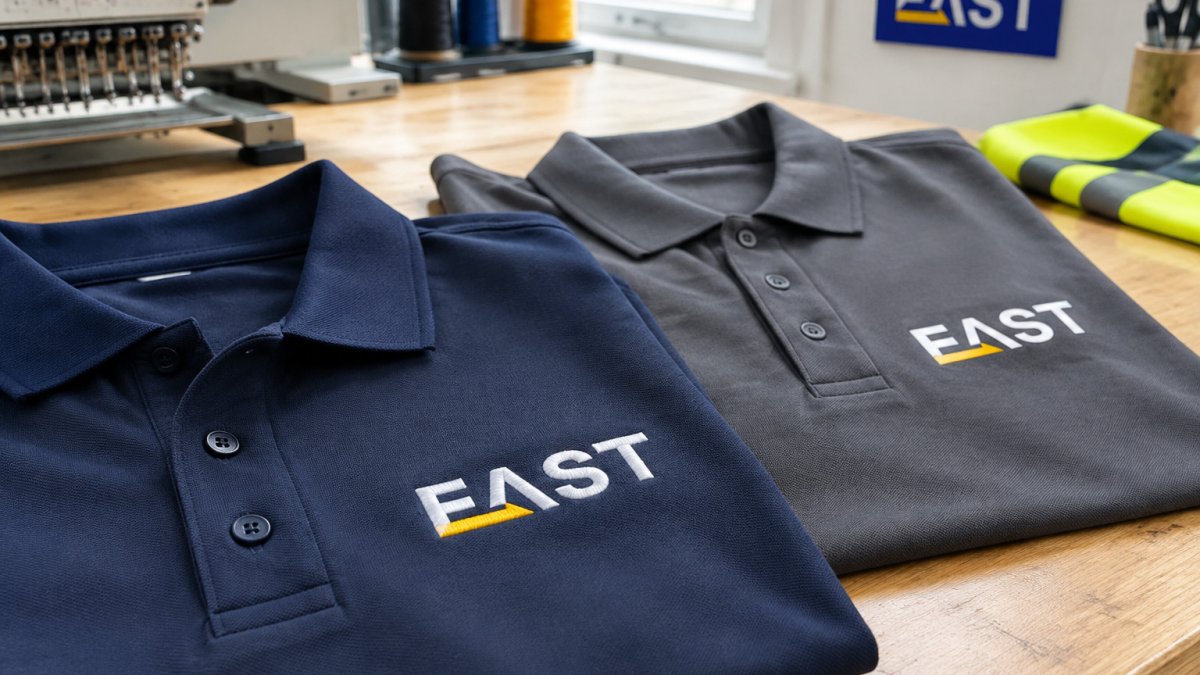
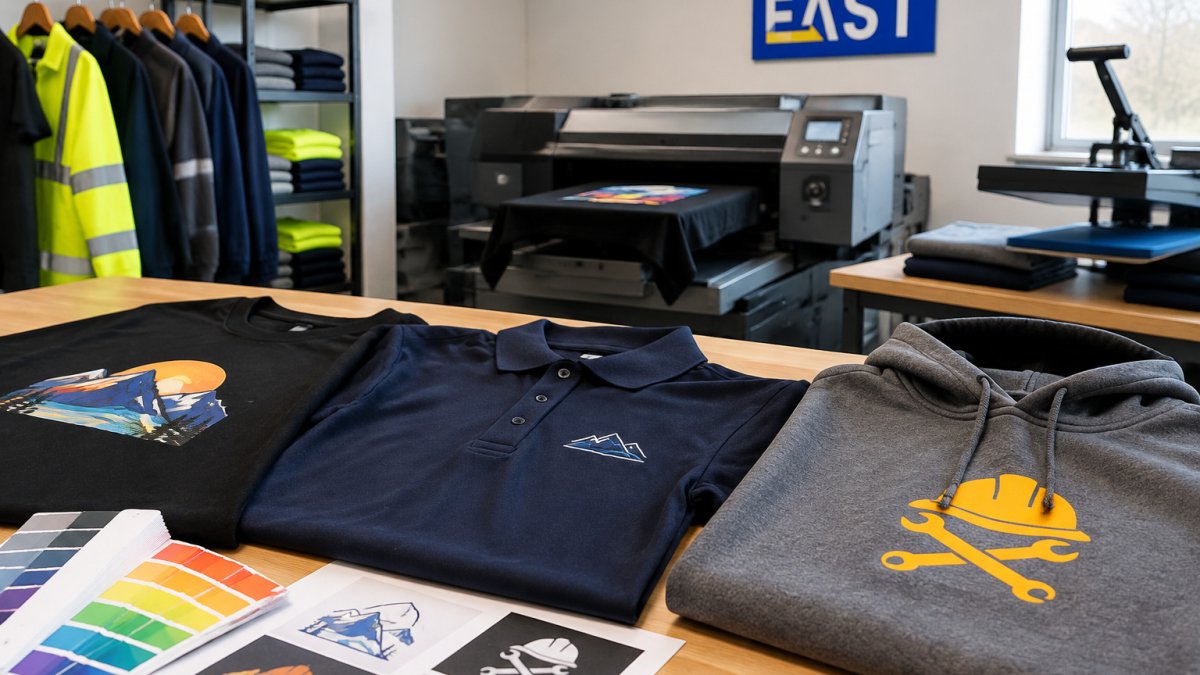
Embroidery stitches the design into the fabric and is one of the decoration methods offered. Embroidery suits logos with solid shapes and relatively few colours, and it is a strong choice for polos that will be worn daily.
Printing lays ink or a transfer on the surface. It suits detailed, full-colour artwork, photographs and fine gradients that would be difficult to stitch. DTF printing and screen printing are both offered for branded garments. Print durability depends heavily on the method and on following the care instructions.
As a rule, use embroidery for a clean, long-lasting logo on a polo that will see heavy wear, and use printing when the artwork is detailed or colourful. If you are unsure, ask for a sample on the actual garment before committing to a bulk order.
Branding Your Work Polo Shirts: Artwork and Placement
Good branding starts with artwork that is ready for production. Most decorators need a vector file, such as an EPS, AI or high-resolution PDF, because it scales without losing sharpness. A low-resolution image pulled from a website will look blurred once it is stitched or printed.
Placement matters as much as the design. A chest logo on the left is the most common position and reads clearly at a distance. A smaller sleeve mark or a back print can add a second layer of branding without crowding the front.
Size the design for the garment. A logo that looks balanced on a sample can overwhelm a small size, so ask for a proof on a range of sizes where possible. Before approving, check colours against your brand guidelines and confirm the spelling of every word, because errors are expensive to correct once the order is made.
Finally, set out your brand standards in one short document. Specify the logo version, the placement, and the approved colours, so that repeat orders stay consistent across the team.
Caring for Work Polo Shirts to Extend Their Lifespan
Garment life is largely in the hands of the wearer and whoever runs the laundry. Following simple care rules can noticeably extend how long a polo keeps its shape, colour and decoration.
Wash on the temperature shown on the care label, and avoid hot cycles unless the label allows them, since heat is the main cause of shrinkage and print damage. Turn printed polos inside out before washing to protect the surface, and avoid fabric softener on performance fabrics, because it can reduce their ability to wick moisture.
Drying also matters. Tumble drying on a low setting is generally gentler than high heat, and hanging polos to dry helps preserve the collar and sleeve shape. Iron on a low setting and avoid ironing directly over logos, especially printed ones.
A rotation system helps too. Giving staff two or three polos rather than one means each garment rests between wears and lasts longer overall.
Ordering Work Polo Shirts for Your Team With Workwear East
Ordering for a team is easier when the decisions are made in the right order. Start with the job and environment, choose the fabric and fit, then settle the branding method and artwork. Only after those steps should you confirm quantities and sizing.
A simple process works well. Collect sizes from each team member, decide how many of each size you need, and send your artwork for a proof. Agreeing the proof and sample before a full production run prevents most of the common problems, such as misplaced logos or sizing errors.
Workwear East provides embroidered and printed workwear for businesses in Norfolk. You can explore our branded polo shirts, workwear bundles and hi-vis options, and our team can talk you through fabric, fit and decoration. For pricing and a tailored quote, please email info@workweareast.co.uk, as costs depend on quantity, decoration method, dates and delivery.
Browse our full range at https://www.workweareast.co.uk/ to find the right polo shirts for your team.
Frequently Asked Questions
What makes a polo shirt suitable for work?
A work polo shirt needs a sturdy knitted collar that keeps its shape, a taped or reinforced neck, hemmed sleeves that resist fraying, and fabric that handles frequent washing. Breathability matters on busy shifts, and a fit that allows movement without looking loose helps staff look professional. Check the fabric weight and stitching before committing to a bulk order, as these show how the shirt will hold up to daily wear across a team.
Which fabric is best for work polo shirts?
Cotton feels soft and breathable but can shrink and hold moisture, while polyester resists shrinking and dries quickly. Many teams choose a cotton-polyester blend because it balances comfort, durability and easier care. The best choice depends on the environment: physical trades may favour tougher blends, while front-of-house roles may prioritise a smarter cotton feel. Ask for fabric samples before ordering a large batch.
Can work polo shirts be embroidered with a company logo?
Yes. Embroidery is a common choice for work polo shirts because the stitched logo is hard-wearing and looks professional on a knitted fabric. Embroidery suits smaller logos and simple designs, while detailed multi-colour artwork may be better suited to printing. Workwear East offers embroidery and printing options. Email info@workweareast.co.uk for a quote, as pricing depends on quantity and delivery dates.
How do you care for embroidered work polo shirts?
Wash shirts inside out at a moderate temperature, following the care label, and avoid high-heat tumble drying, which can distort the knitted collar and fade the thread. Do not iron directly over the embroidery; turn the shirt inside out and iron gently if needed. Regular washing with mild detergent keeps colours bright and extends garment life across a working team.
Ready to outfit your team? Contact Workwear East at info@workweareast.co.uk for a quote on branded work polo shirts, and visit https://www.workweareast.co.uk/ to see the full range.