 How-to
Can Hi-Vis Workwear Be Embroidered? A Buyer's Guide
Last Updated: October 24, 2026
Quick Summary
Embroidered hi vis workwear is safe to wear as long as the embroidery stays outside the reflective tape and the garment still meets the standard it was certified against. Place logos on flat panels like the left chest or upper back, never stitch through reflective bands, and the garment keeps its certification.
- Mesh vests take only small chest logos above the tape; brand the layers underneath instead.
- Hi-vis jackets and softshells offer the best placement: left chest and upper back.
- Never stitch through reflective tape, as puncturing it reduces retroreflective performance.
- Skip fabric softener and high-heat tumble drying to protect the reflective tape.
- Choose printing for detailed artwork or large back prints; embroidery lasts longer through washing.
Table of Contents
- Can Hi-Vis Workwear Be Embroidered Without Losing Its Safety Rating?
- Personalised Hi-Vis Workwear: What You Can Brand and Where
- Embroidered Hi-Vis Jackets: Construction, Fabrics and Placement
- Embroidered Hi-Vis Vests: Getting the Logo Right on Mesh and Solid Panels
- Printed Hi-Vis Workwear: When DTF and Screen Printing Beat Embroidery
- Artwork, Thread and Design Preparation Before You Order
- Care and Lifespan: Keeping Embroidered Hi-Vis Workwear Compliant
- Get a Quote for Embroidered Hi-Vis Workwear
- Frequently Asked Questions
Can Hi-Vis Workwear Be Embroidered Without Losing Its Safety Rating?
Yes. Embroidered hi vis workwear is safe to wear, provided the embroidery stays outside the reflective tape and the garment still meets the standard it was certified against. At Workwear East, we embroider safety garments for trade and industrial teams regularly, and the rule we work to is simple: the logo goes where the tape isn't.
The confusion comes from how these garments are certified. Hi-vis clothing is tested as a complete item, not as a fabric sample, and the reflective tape and fluorescent background are what the standard measures. Embroider a name across the chest and nothing changes. Stitch a logo straight through a reflective band and you have punctured the retroreflective surface, which is exactly the part doing the safety work.
Hi-vis embroidery is the process of stitching a logo or name onto a high-visibility garment in areas that leave the reflective tape and fluorescent panels intact. The garment keeps its certification because the elements that were tested are untouched.
That single distinction answers most of the questions buyers bring to us. Below, we'll show you exactly which garments take embroidery well, where the logo should sit, and when printing is the better call.
Personalised Hi-Vis Workwear: What You Can Brand and Where
Personalised hi vis workwear covers more than vests. The range that takes embroidery cleanly includes jackets, softshells, hoodies, sweatshirts, polo shirts and bodywarmers, and each one gives you a different usable area for a logo.
Vests and waistcoats are the exception. Most are made from open mesh with taped bands running across the front, which leaves very little flat fabric to stitch into. On those, a small chest logo above the tape often works, but a large back logo usually doesn't.
Here is how the main garment types compare for branding:
| Garment | Embroidery Suitability | Best Logo Position | Watch Out For |
|---|---|---|---|
| Jackets and softshells | High | Left chest, upper back | Avoid stitching over taped seams |
| Hoodies and sweatshirts | High | Left chest, full back | Thick fleece needs backing |
| Polo shirts | High | Left chest, sleeve | Keep clear of contrast panels |
| Bodywarmers | Medium | Left chest | Quilted panels distort stitches |
| Mesh vests | Low | Small chest logo only | Tape leaves little flat space |
The practical takeaway: if your team wears vests over other clothing, brand the layers underneath and keep the vest itself plain or lightly marked.
Embroidered Hi-Vis Jackets: Construction, Fabrics and Placement
Embroidered hi vis jackets are the most requested item we handle, and the reason is placement. A jacket gives you a large, flat upper-back panel and a clean left chest, both well away from the reflective bands that run around the torso and sleeves.
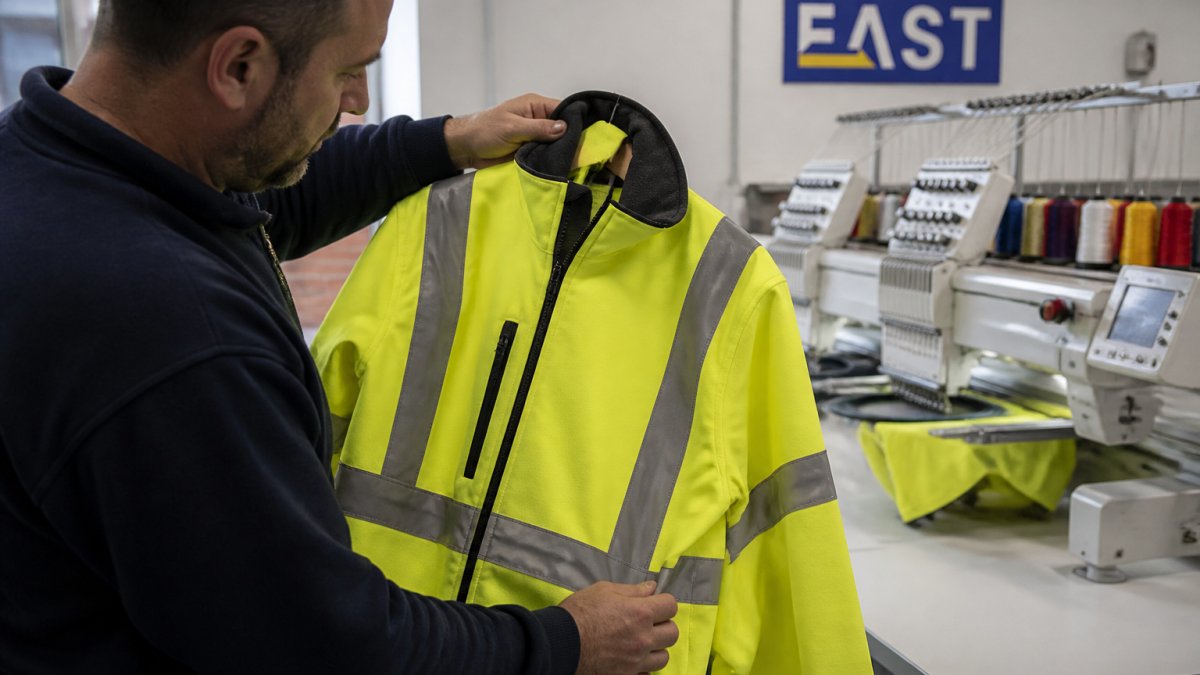
Fabric choice matters as much as position. Most hi-vis jackets use a polyester or polycotton shell, and both handle embroidery well because the weave is tight enough to hold stitches without puckering. Very lightweight shells need a stabilising backing behind the logo so the fabric doesn't pull.
A common mistake is specifying a large, dense logo for a lightweight jacket. The stitch count climbs, the fabric stiffens, and the garment feels heavy on one side. We would rather reduce the design to a cleaner shape than over-stitch a thin shell.
Embroidered Hi-Vis Vests: Getting the Logo Right on Mesh and Solid Panels
Embroidered hi vis vests are the hardest garment in the range to brand well, and most disappointing orders trace back to this item. Mesh has large open gaps between threads, so stitches can sink or distort, and the taped bands leave narrow strips of solid fabric to work with.
The construction of a typical vest explains the problem. A mesh vest is usually a single layer of open polyester mesh with reflective tape heat-applied or stitched across the chest, waist and shoulders. The tape itself is a solid, non-woven band that will not accept embroidery cleanly, and the mesh around it offers little flat surface for a stable stitch. A logo placed on the mesh alone can pull the fabric out of shape, especially on a garment that is pulled on and off repeatedly.
Our approach is to keep vest logos small and place them on the solid panel above the chest tape. A compact company name or symbol works. A wide, multi-line logo does not, because the embroidery has nowhere flat to sit. Where a vest has a solid left-chest panel, that is the best position: it is flat, away from the tape, and visible without distorting the mesh.
If a client wants a prominent back logo, we usually suggest moving it to the jacket or polo worn underneath. The vest stays compliant and the branding still reads clearly from behind. For teams that insist on a back mark on the vest itself, a small single-colour logo centred between the shoulder blades, above the horizontal tape and below the collar, is the only reliable option, and even then we would test-stitch first.
If you are unsure which vest in your range will take a logo, email info@workweareast for a quote and we will advise on placement before you order. You can also see our full range at Workwear East.
Printed Hi-Vis Workwear: When DTF and Screen Printing Beat Embroidery
Printed hi vis workwear wins in three situations: very detailed artwork, large back prints, and low-detail logos that would look clumsy in thread. Direct-to-film printing handles full-colour, fine-detail designs on polyester shells particularly well, and screen printing remains cost-effective on larger runs of a single design.
The trade-off is texture and lifespan. Embroidery sits in the fabric and shrugs off repeated washing. Prints sit on top of it and, on garments that get heavy industrial wear, can crack over time if the application isn't right. For a team that washes workwear constantly, embroidery usually lasts longer. Our DTF printing vs embroidery comparison sets out durability, cost and fabric suitability side by side.
Artwork, Thread and Design Preparation Before You Order
Good embroidery starts with good artwork, and this is where most delays creep in. A logo supplied as a low-resolution image has to be redrawn before it can be stitched, which adds time. Vector files or clean high-resolution artwork avoid that step entirely.
Three things decide how a logo will stitch out:
- Detail level: fine lines and small text blur together in thread, so we simplify where needed
- Thread colours: each colour adds a stitch pass, so a five-colour logo takes longer than a two-colour one
- Size and placement: a logo sized for a chest looks lost on a back panel, so we scale per position
Pricing depends on stitch count, quantity and delivery dates rather than a flat rate.
Care and Lifespan: Keeping Embroidered Hi-Vis Workwear Compliant
Embroidered hi vis workwear lasts as long as the garment underneath, and that comes down to washing and inspection. The embroidery itself is durable, thread and backing will outlast most garment fabrics, but the reflective tape and fluorescent background are the parts that determine whether the garment remains compliant. Our embroidered workwear quality and durability guide covers fabric care and customisation in more depth.
A practical care routine looks like this:
- Turn garments inside out before washing to protect both the embroidery and the tape.
- Wash at the temperature on the care label, usually 40°C or lower for hi-vis garments.
- Skip fabric softener, which coats the reflective tape and dulls its retroreflective performance over time.
- Avoid tumble drying on high heat, which can degrade the tape adhesive and shrink the mesh.
- Inspect the tape after every few washes for cracking, peeling, dulling or contamination.
Check the tape as well as the logo. Reflective bands degrade with abrasion and repeated hot washes, and a garment with dulled or peeling tape is no longer doing its job even if the embroidery is perfect. A simple torch test in a dim room, shine a light at the tape and see whether it reflects brightly back, gives a quick indication of whether the tape is still performing. Replace rather than repair once the tape has gone.
The embroidery itself needs little attention beyond checking for loose threads or backing showing through. If a stitch comes loose, trim it rather than pulling it, and have the garment repaired professionally if the logo is part of a uniform standard.
For advice on care specific to your garments, email info@workweareast for a quote and we will point you to the right aftercare approach. You can also browse our range at Workwear East.
Get a Quote for Embroidered Hi-Vis Workwear
The challenge with branded safety clothing isn't choosing a logo. It's getting every garment in the range branded consistently, in the right place, without touching the tape.
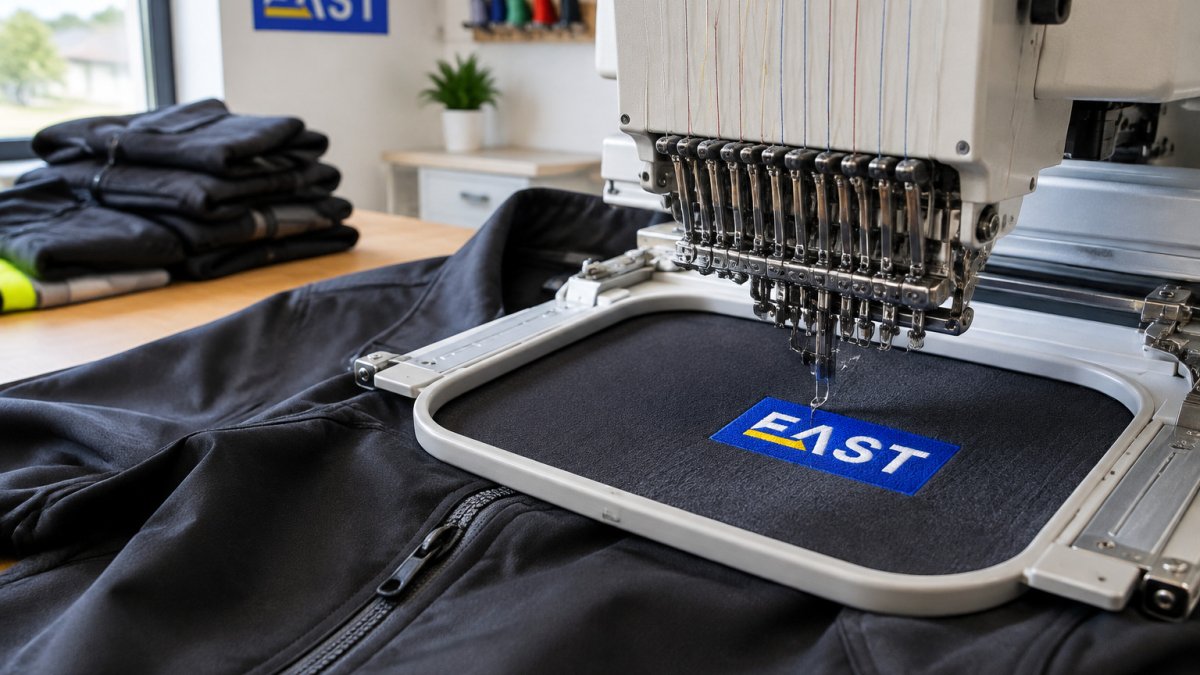
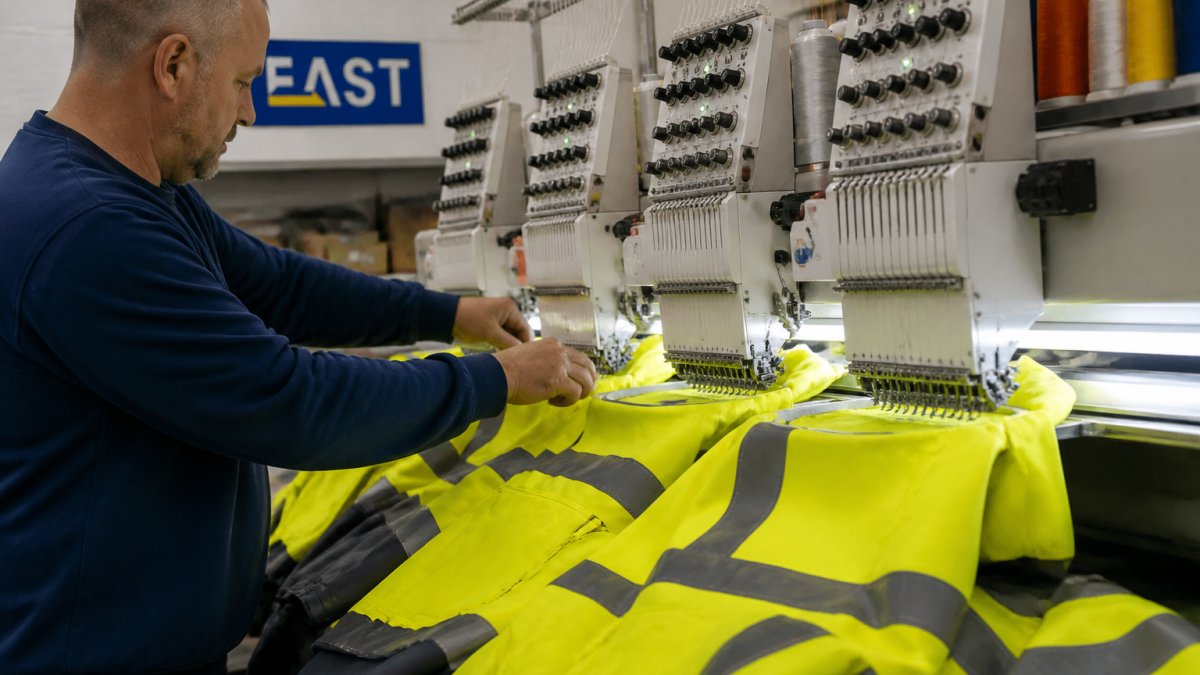
That is what we do at Workwear East. Our advanced embroidery machines handle intricate, multi-colour designs, and our DTF and screen printing options cover the jobs where thread isn't the right fit. We work with businesses across Norfolk on everything from small team orders to full uniform rollouts, and our workwear portal makes reordering for new starters straightforward.
To get started, email info@workweareast for a quote with your garment list, logo and quantities, and we'll come back with options.
Frequently Asked Questions
Can hi-vis workwear be embroidered?
Yes. Embroidered hi vis garments are common, and embroidery is applied to the chest, back or sleeve rather than over the reflective tape. The key is placement: stitching through reflective tape or fluorescent fabric in the wrong spot can affect how the garment performs, so keep logos clear of the tape and check with your supplier before ordering. Most polo shirts, sweatshirts, jackets and vests in a hi-vis range can take a logo.
Is embroidered or printed branding better for hi-vis workwear?
It depends on the garment and the design. Embroidery gives a durable, textured finish that suits chest logos on jackets, polos and sweatshirts, and it holds up well to repeated washing. Printed hi vis workwear, including DTF and screen printing, handles detailed multi-colour artwork and works better on mesh vests where dense stitching would be awkward. For large back prints or fine detail, printing usually wins; for a small, hard-wearing chest logo, embroidery does.
How do you wash embroidered hi-vis clothing?
Wash at the temperature on the garment's care label, turn the item inside out and avoid fabric conditioner, which can coat the reflective tape. Skip bleach and do not tumble dry on high heat, because heat degrades both the embroidery thread and the tape. Check the tape and stitching after each wash and retire the garment if the tape is damaged, as the visibility is what matters most.
What should you check before ordering embroidered hi-vis workwear?
Confirm the garment's certification and that your logo placement avoids the reflective tape, then approve a digital proof or a physical sample before the full run. Check sizing against a size guide rather than guessing, and ask about lead times so a rush order does not catch you out. For a quote on branded hi-vis for your team, email info@workweareast for a quote or browse the range at https://www.workweareast.co.uk/.