 Ultimate guide
Hi Vis Workwear: A Complete 2026 Buying Guide
Last Updated: October 23, 2026
Quick Summary
Hi vis workwear is fluorescent clothing with reflective tape that makes the wearer visible to machine operators and drivers in poor light, bad weather or busy yards. In the UK it is certified to EN ISO 20471, which sets three classes of coverage, and the correct class should follow a risk assessment of traffic speed, visibility and how much of the body needs to be seen.
- Class 1 is lowest coverage, Class 2 middle and Class 3 highest; higher classes are bulkier and warmer, not automatically better.
- A sleeveless vest typically reaches Class 2, while a long-sleeved jacket or hi vis trousers can reach Class 3.
- Fluorescent material works in daylight, reflective tape works at night, so a garment needs both in certified quantities.
- Never print or embroider over reflective tape or fluorescent panels in a way that reduces certified visible area.
- Fabric softener and biological detergent leave residue that blocks reflection, so wash hi vis separately with mild detergent.
Table of Contents
- What Hi Vis Workwear Actually Does on Site
- Hi Vis Clothing Standards: Reading EN ISO 20471 Correctly
- The Garment Range: Vests, Jackets, Trousers and More
- Hi Vis Workwear With Logo: Branding That Survives the Wash
- How to Wash Hi Vis Clothing Without Killing the Tape
- Matching Garments to Trade, Task and Season
- Fit, Sizing and Ordering for a Whole Team
- Conclusion
- Frequently Asked Questions
What Hi Vis Workwear Actually Does on Site
Hi vis workwear is clothing made from fluorescent material with reflective tape positioned so that a machine operator, crane driver or delivery van sees the wearer before the wearer sees them.
That job is harder than it sounds: cheap yellow vests fade to dull cream within months, and reflective strips lose their punch once scuffed or washed with the wrong detergent, failures invisible in daylight and obvious at dusk.
Below, we break down the standards, garment types, logo options, washing rules and sizing decisions that keep your team's hi vis workwear effective.
Hi Vis Clothing Standards: Reading EN ISO 20471 Correctly
Hi vis clothing standards in the UK centre on EN ISO 20471, the standard that sets how much fluorescent background material and how much retroreflective tape a garment must carry. If clothing is sold as high-visibility PPE, it should be certified to that standard and labelled accordingly. The Health and Safety Executive sets out employer duties around PPE selection, so it is worth reading its HSE guidance on PPE at work before you specify anything.
The Three Classes and What Separates Them
The class number sets the minimum visible area of fluorescent material and reflective tape: Class 1 is lowest coverage, Class 2 middle, Class 3 highest. Higher classes are not automatically "better", they are simply more visible, and more visible usually means bulkier and warmer.
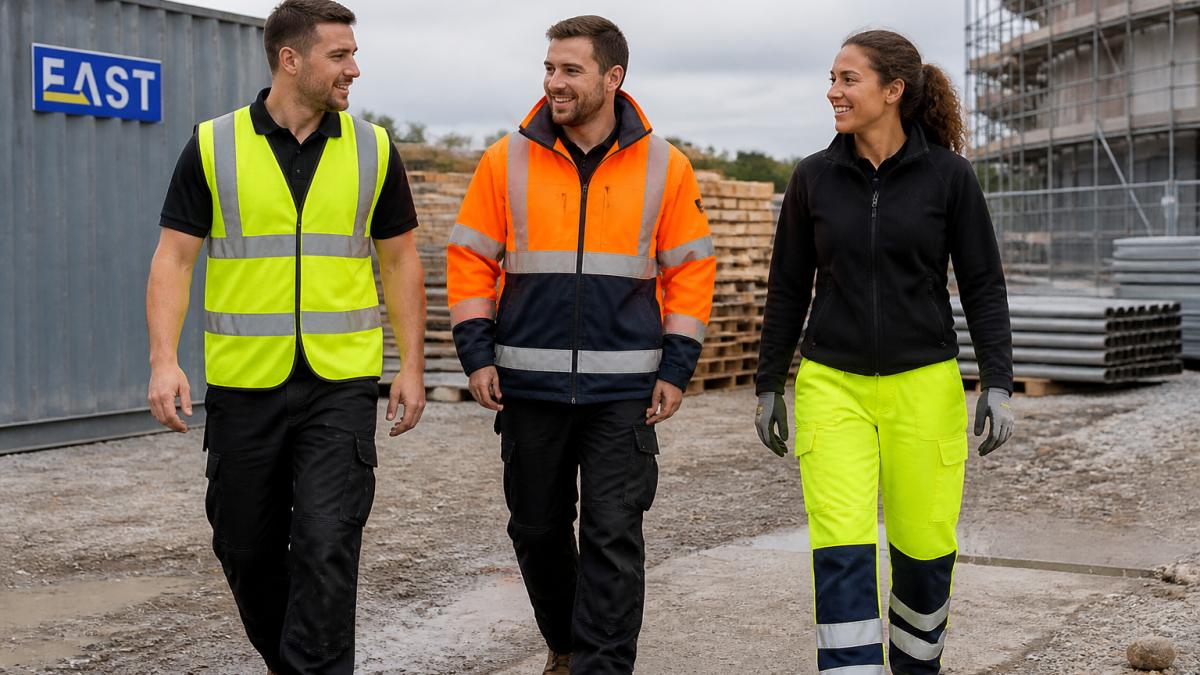
A sleeveless vest typically achieves Class 2 because it covers the torso but leaves the arms uncertified. A long-sleeved jacket or fluorescent trousers can reach Class 3 by adding visible area on the limbs, and a full suit, jacket plus trousers, is the classic Class 3 combination. Class reflects how much of the body is covered in certified material, not a quality rating.
How to Choose the Correct Class Through Risk Assessment
Most buyers treat class as a catalogue filter. Start with a risk assessment instead and let the class follow. It should answer three questions: how fast is the traffic or plant near the wearer, how poor is the visibility, and how much of the body needs to be seen.
A common pattern in site management is:
- Class 1 for low-risk areas where vehicles are slow or absent and the wearer is mostly on foot, for example, a quiet compound or a pedestrian route separated from plant.
- Class 2 for general site work near moving plant at low to moderate speed, and for warehouse operatives working alongside forklifts. A vest or a polo with tape is often enough here.
- Class 3 for live road works, high-speed traffic, night work, and any task where the lower body is exposed to reversing or passing vehicles. This is where full-sleeve jackets and hi vis trousers earn their place.
Two practical rules follow. First, if the outer layer is removed, the base layer must still be certified to the class the task requires. Second, mixing certified and uncertified garments does not upgrade the uncertified one; a Class 3 jacket over a plain T-shirt does not make the T-shirt compliant.
Fluorescent Colour Versus Reflective Tape
These two components do different jobs. Fluorescent material works in daylight by converting UV light into a visible glow, which is why a clean yellow or orange garment stands out against grey plant and tarmac. It does nothing in the dark.
Reflective tape is the opposite: quiet in daylight, it throws light back at a driver's headlights or a work lamp at night.
Certification Labels and What to Check
A certified garment carries a label showing the standard, the class, and often care instructions. Before buying in bulk, check three things: the label names EN ISO 20471, the class matches the risk assessment, and the care instructions suit your laundry setup, a garment needing gentle low-temperature washing will not survive an industrial laundry. If you are unsure which class your task needs, email info@workweareast.co.uk for a quote and we will help you match garments to the assessment.
The Garment Range: Vests, Jackets, Trousers and More
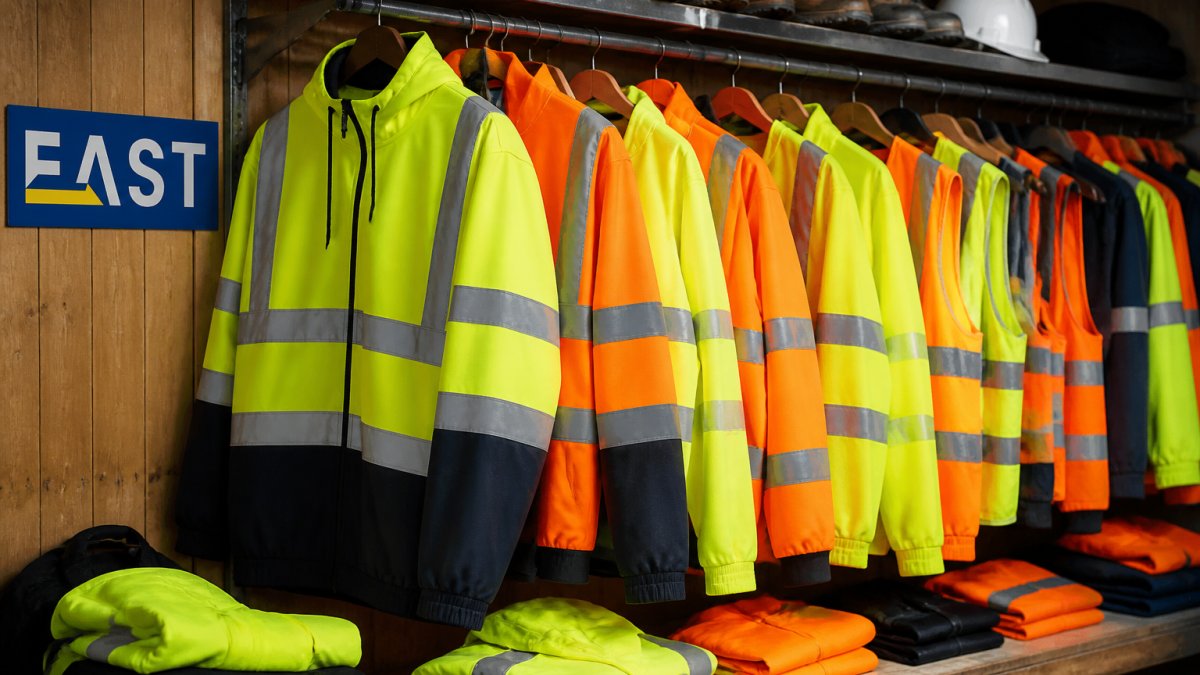
The garment range splits into three groups: sleeveless layers for warm work, outer layers for cold and wet, and base layers plus legwear for full coverage. The right mix matters more than the highest class available.
Vests, Waistcoats and Bodywarmers
Vests and waistcoats are the cheapest way to lift a team into visible clothing, and they are what most visitors and short-term contractors wear.
Bodywarmers add a padded layer for cooler days without the bulk of a full jacket. For a team that works indoors and outdoors on the same shift, a bodywarmer over a polo is often the most practical combination.
Jackets, Coats, Fleeces and Hoodies
Jackets and coats carry the largest share of fluorescent and reflective material, which is why they are usually the highest-class garments on site.
Fleeces and hoodies sit underneath as warm mid-layers. Choose ones that are themselves certified if the outer jacket is likely to come off, and avoid dark hoodies under open jackets where the hood can obscure the reflective tape on the shoulders.
Trousers, Shorts, Polos and T-Shirts
Legwear and base layers complete the set. Hi vis trousers and shorts carry fluorescent panels and tape around the lower leg, the part of a worker most likely to be missed by a reversing vehicle. Fluorescent polos and T-shirts keep the torso visible when a jacket is removed.
You can browse the full hi vis clothing range for Thetford teams to compare garment types side by side before you decide on quantities.
Hi Vis Workwear With Logo: Branding That Survives the Wash
Logo placement on hi vis workwear has one hard rule: never print or embroider over reflective tape or fluorescent panels in a way that reduces the certified visible area.
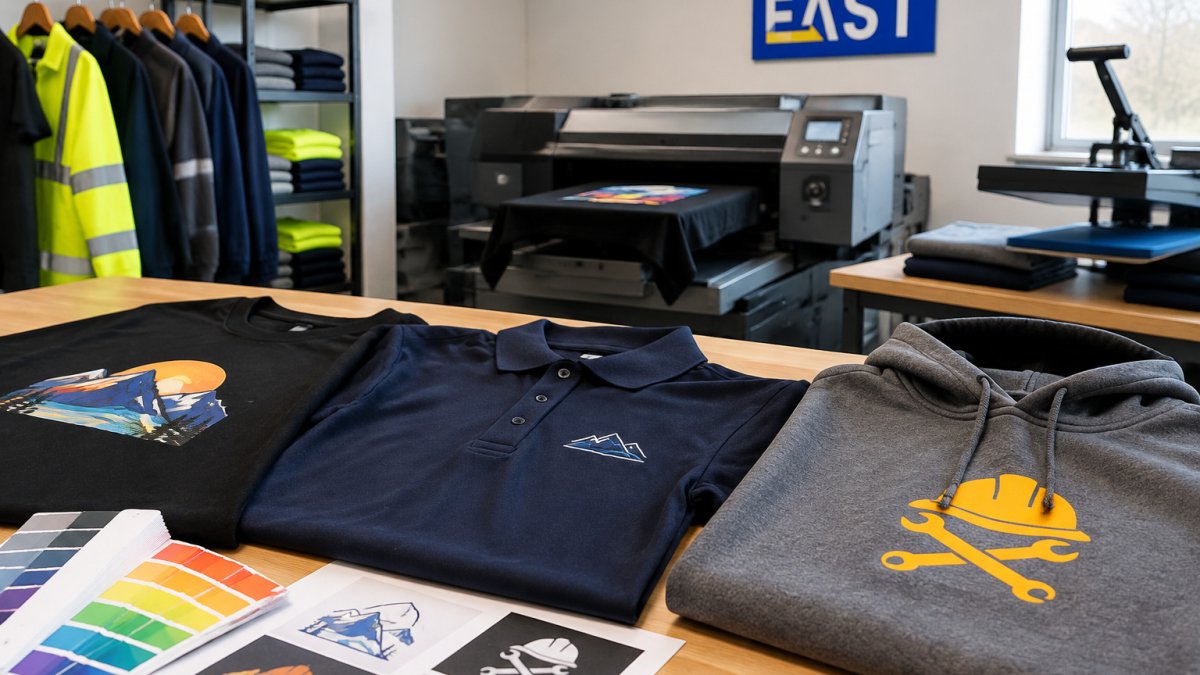
Embroidery is the durable option for company names and simple marks, surviving repeated industrial washing without cracking because the thread sits in the fabric. For guidance on printing methods that stay compliant and durable, see our high visibility workwear printing guide.
We also run branded polo shirts for teams who want a visible base layer that carries the company mark.
How to Wash Hi Vis Clothing Without Killing the Tape
The reflective tape fails first, usually because of detergent rather than wear. Fabric conditioners and biological detergents leave a residue that blocks reflection, so the garment looks fine and stops working.
Wash hi vis separately from oily workwear, use a mild detergent without softener, and follow the care label temperature.
Inspect garments regularly. Tape that is cracked, peeling, scorched or heavily soiled should be replaced rather than washed again.
| Problem | Cause | Fix |
|---|---|---|
| Tape no longer reflects | Fabric softener residue | Rewash without softener; replace if it persists |
| Fluorescent colour faded | UV exposure and harsh washing | Retire the garment |
| Tape peeling at edges | High-heat tumble drying | Air dry; replace damaged garments |
| Print cracking | Logo placed on high-flex area | Reposition branding on next order |
Matching Garments to Trade, Task and Season
Selection should follow the task, not the catalogue. The yellow vest that suits a warehouse operative is wrong for a groundworks team on a live road, the difference is class, coverage and layering. Below is how the main trades differ, and how to layer so protection stays compliant as the weather changes.
Industry- and Task-Specific Selection
Construction and groundworks. Plant moves in multiple directions and reversing is frequent.
Warehousing and logistics. Forklifts are the main hazard at lower speeds than on a road.
Utilities and field work. Work is often on footpaths, verges and residential streets where traffic is slow but unpredictable.
Events and temporary work. Set-up and breakdown crews work outdoors in summer and often indoors in winter.
Layering and Seasonal Workwear Systems
The mistake most teams make is buying one garment for all seasons. A layering system keeps visibility compliant as layers are added and removed, provided each layer that might be worn alone is certified.
A practical three-layer system looks like this:
- Base layer: a certified fluorescent polo or T-shirt with reflective trim, so the torso stays visible when outer layers come off indoors.
- Mid-layer: a certified fleece or hoodie for warmth. Choose one that is itself certified if the outer jacket is likely to be removed on a warm afternoon.
- Outer layer: a waterproof, certified jacket or coat for wind and rain. Check that the reflective tape is stitched rather than heat-sealed if it will be washed often.
In summer the base layer may be all that is worn, so it must meet the required class on its own. In winter the outer layer carries most of the visible area, but the base layer still needs certification in case the jacket comes off.
For teams that need a managed approach across departments, a workwear portal lets you issue garments to staff without running the ordering yourself. Our workwear bundles are another route for kitting out a whole team in one order. If you are unsure which combination suits your trade, email info@workweareast.co.uk for a quote and we will confirm garment options and quantities.
Fit, Sizing and Ordering for a Whole Team
Sizing is where most bulk orders go wrong. Our guide to ordering uniforms without errors walks through the steps to avoid sizing mistakes, design errors and delays.
Collect chest, waist and leg length for every person, then map those to the supplier's size chart rather than assuming a "large" is consistent across brands.
If you need a rush order for an event, tell us the date first; lead times depend on garment availability and branding method, and we will confirm what is realistic before you commit.
Conclusion
Getting hi vis workwear right comes down to three decisions: the correct class for the task, branding that does not compromise the tape, and a washing routine that keeps the reflective strips working. Most teams get the first right and the other two wrong.
Workwear East supplies embroidered and printed hi vis workwear for trade and industrial teams, with advanced embroidery for durable logos, DTF printing for full-colour detail, and screen printing for larger runs. Email info@workweareast.co.uk for a quote, or visit workweareast.co.uk to see the full range.
Frequently Asked Questions
What is the difference between hi vis and reflective clothing?
Hi vis clothing combines two things: fluorescent material that shows up strongly in daylight, and reflective tape that bounces light back at night or in poor conditions. Reflective clothing on its own may carry only the tape, so it works after dark but does little in bright sun. For most site work you want both, which is what EN ISO 20471 certified garments provide. Check the label for the standard and class rather than assuming any bright garment qualifies, and ask your supplier to confirm what the tape and fabric each do.
Can hi vis workwear with logo be embroidered or printed?
Yes, but placement matters. Logos should sit on the chest, back or sleeve away from the reflective tape and the fluorescent panels, because stitching through tape or covering it can reduce how well the garment performs. Embroidery works well on polos, fleeces and jackets; printed transfers suit lighter fabrics and detailed multi-colour designs. Ask for a sample before a full run, and wash the sample a few times to check the logo holds. Workwear East handles both embroidery and DTF printing, so email info@workweareast for a quote on your design.
How should hi vis workwear be washed and maintained?
Wash hi vis clothing separately from dark workwear, turn it inside out, and use a mild detergent at a low temperature. Never use fabric softener or bleach, as both degrade the reflective tape. Avoid tumble drying on high heat and skip ironing directly over the strips. Check the care label on each garment, since jackets and fleeces often differ from vests. After washing, inspect the tape for cracking, peeling or dullness, and retire the garment if the reflective surface has gone cloudy.
When should hi vis workwear be replaced?
Replace a garment when the fluorescent colour has faded noticeably, the reflective tape is cracked, peeling or no longer bounces light, or the fabric has tears and holes in visible areas. Washing gradually wears tape down even when it looks fine at a glance, so inspect garments monthly and hold them up to a light source to test the tape. Keep a small stock of spares so a failed garment does not leave someone off site. Bulk orders through Workwear East make it easier to hold replacements without overbuying.