 how-to
Screen Printing Norfolk: Custom Workwear & Garment Printing
Table of Contents
- Screen Printing Norfolk: What Businesses Need to Know
- Screen Printing vs DTF Printing: Which Method Suits Your Order?
- Screen Printing Artwork Preparation: Getting Your Logo Print-Ready
- Screen Printed Workwear: Choosing Garments That Last
- Screen Printing Garment Care: Making Prints Last Longer
- How to Choose a Screen Printing Provider in Norfolk
- Frequently Asked Questions
Last Updated: October 15, 2026
Screen Printing Norfolk: What Businesses Need to Know
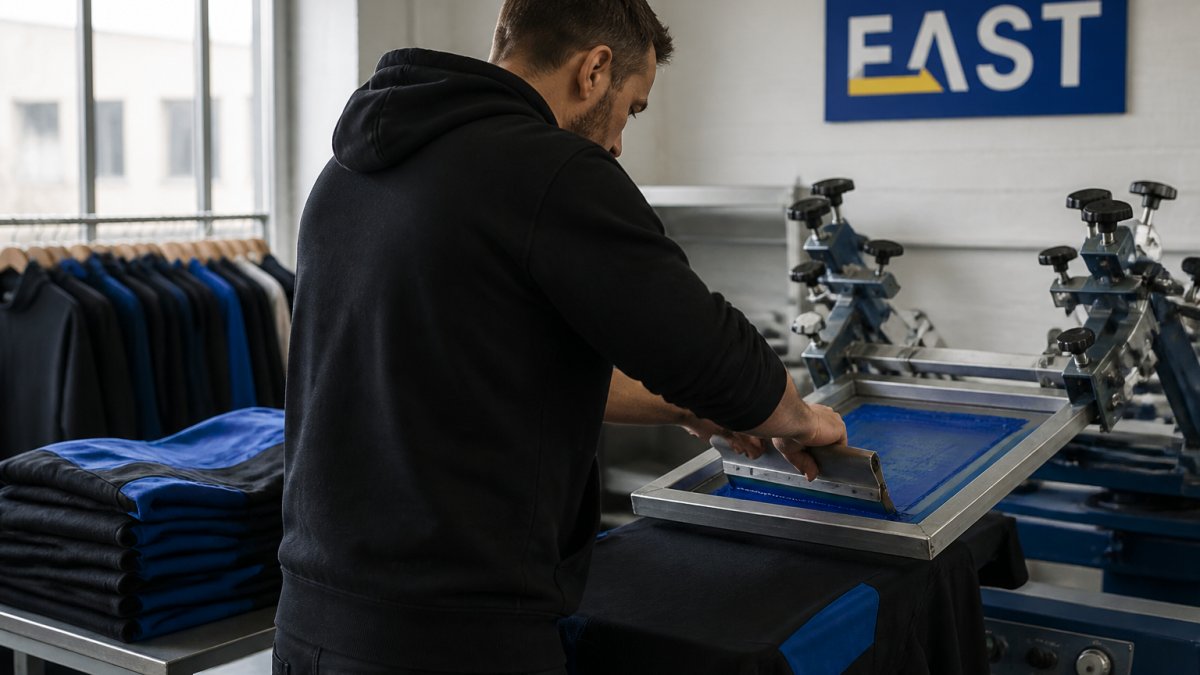
Screen printing Norfolk is the process of pressing ink through a fine mesh screen onto fabric, one colour at a time, to produce durable branded garments for teams across the county. At Workwear East, we run screen printing, DTF printing and embroidery from our base in Thetford, and we see the same question from almost every business that contacts us: which method actually suits my order?
Here is the short answer. Screen printing wins on cost per item for larger runs of simple designs. DTF printing wins on detailed, full-colour artwork and small batches. Embroidery wins on workwear that has to survive industrial washing.
Below, we break down how each method works, how to prepare your artwork, which garments hold up, and how to choose a provider. Most of the mistakes we see are made before a single shirt is printed. Get the preparation right and the rest follows.
Screen Printing vs DTF Printing: Which Method Suits Your Order?
The right method depends on three things: your quantity, your design complexity, and how the garment will be used. Screen printing suits larger runs of bold designs. DTF and transfer printing suit detailed artwork and small orders. Embroidery suits workwear that faces heavy wear.
Screen printing is a textile printing method where ink is pushed through a mesh screen onto the fabric. Each colour needs its own screen, so setup matters more than print time.
DTF printing is a digital method where a design is printed onto a film, coated with adhesive powder, then heat-pressed onto the garment. There is no screen setup, which makes it practical for short runs and photographic detail.
| Method | Best For | Setup | Detail Level |
|---|---|---|---|
| Screen printing | Larger runs, bold designs | Screens per colour | Solid shapes, spot colours |
| DTF printing | Small orders, full-colour artwork | None | Fine detail, gradients |
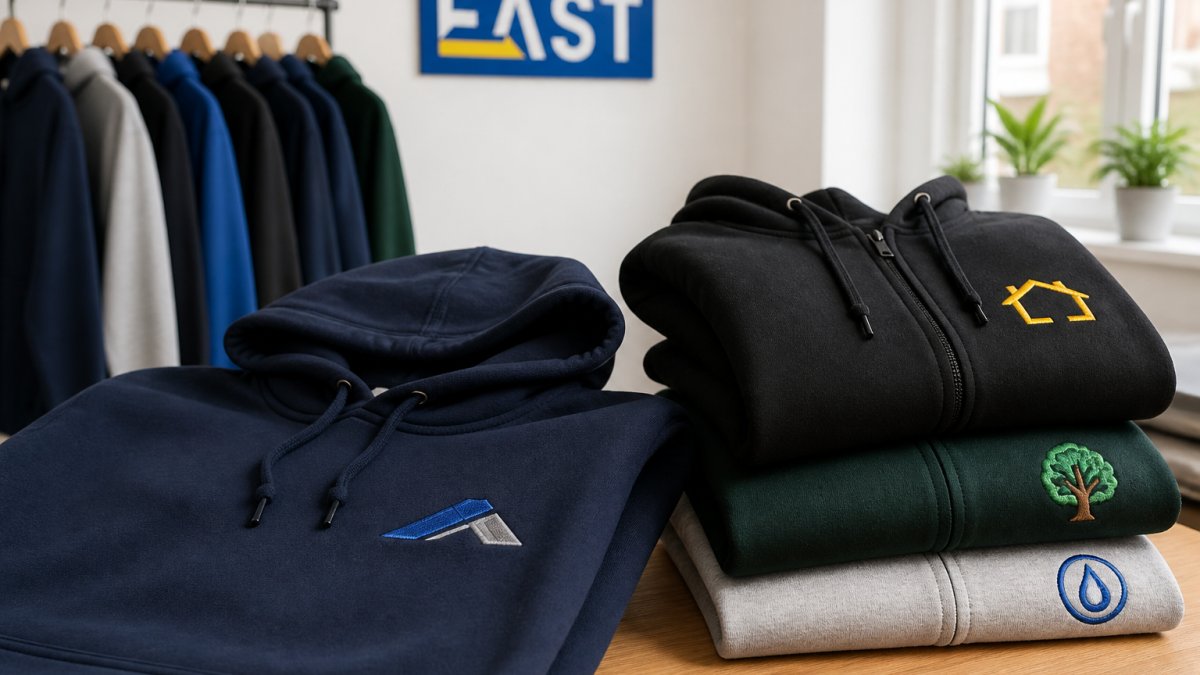
| Embroidery | Workwear, uniforms | Digitising file | Text, logos, multi-colour |
For a 15-person trade firm, embroidered logos on polos and hi-vis usually outlast anything printed. For a 200-shirt event run with a two-colour logo, screen printing is the sensible choice.
Screen Printing Artwork Preparation: Getting Your Logo Print-Ready
Artwork preparation is where most orders slow down. Send vector files and you will get a faster, sharper result. Send a low-resolution JPEG pulled from a website and someone has to redraw it, which adds time and cost.
Vector files (AI, EPS, PDF, SVG) scale without losing quality and are what screen printing needs. Raster files (JPEG, PNG) are built from pixels and blur when enlarged. If vector artwork does not exist, a designer can recreate it, but that is a separate job.
What to send us:
- Vector logo files wherever possible
- Pantone or CMYK colour references if you have brand colours
- Exact logo dimensions and placement instructions
- A note on which garments each design goes on
Logo placement is usually left chest, full front, or back. Left chest sits roughly over the wearer's heart. Full front and back prints allow larger designs but cost more ink and screen time.
Screen Printed Workwear: Choosing Garments That Last
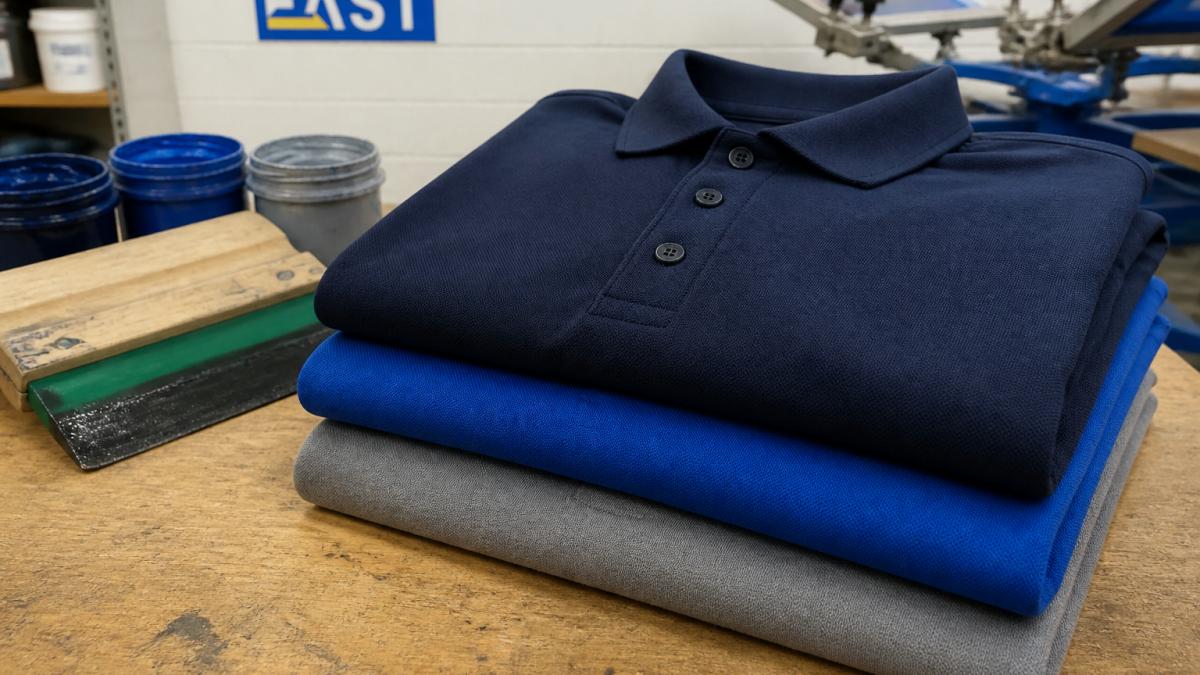
Garment choice decides how long your branding survives. A heavyweight cotton polo with a tight weave holds a print far better than a thin, loose-knit shirt, and workwear faces washing, abrasion and sometimes industrial laundry.
For trade and industrial teams, look for:
- Heavier fabric weights that resist stretching at the print area
- Reinforced seams and hard-wearing collars
- Colour-fast dyes that will not bleed into the print
- Compliance with the safety standards relevant to your site
Hi-vis garments are a separate consideration. If your team works on or near roads, the garment needs to meet the relevant British standard for high-visibility clothing, so check the specification before ordering rather than after. Our Hi-Vis range is built for that kind of daily use.
Screen Printing Garment Care: Making Prints Last Longer
Print longevity is mostly about washing. Turn garments inside out, wash at 30°C, and avoid tumble drying. But the full picture is more useful than a short list, because understanding why prints fail helps you prevent it.
The full care routine
- Wash inside out to protect the print surface from abrasion against other garments.
- Use 30°C or cooler, never a hot wash.
- Skip fabric conditioner, which leaves a residue that breaks down the bond between ink and fabric.
- Do not iron directly over the print. If you must iron, turn the garment inside out and use a low setting.
- Tumble dry low or air dry. High heat is the single biggest cause of cracking.
- Wash printed garments separately from items with zips, hooks or velcro, which can snag the print.
Why prints fail: the three common causes
Cracking and peeling usually trace back to one of three things:
- Heat. Hot washes and tumble drying cause the ink film to expand and contract faster than the fabric, which leads to cracking. If a logo has failed early, the first question to ask is how the garment was washed.
- Ink type mismatch. Different inks suit different fabrics. Plastisol ink sits on top of the fabric and suits cotton well. Water-based ink soaks into the fabric for a softer finish but needs the right fabric to bond properly.
- Curing errors. Ink must reach the correct temperature to cure fully. Under-cured ink looks fine on delivery but washes out or peels within a few cycles. This is a production issue, not a care issue, which is why a physical sample and a provider who controls curing matter.
Durability by method
If longevity is your priority, the method matters as much as the care:
- Embroidery is the most durable option for workwear that faces industrial washing, because the thread is stitched into the garment rather than bonded to it.
- Screen printing with properly cured plastisol ink is highly durable on cotton and cotton-blend garments, typically lasting the life of the shirt with correct care.
- DTF and transfer printing can be durable but are more sensitive to heat, so they benefit most from the cool-wash routine.
For a trade firm whose polos go through a hot industrial wash every week, embroidery is usually the sensible choice. For a promotional run of cotton tees, screen printing will hold up well.
Ink choices and environmental considerations
Ink choice affects both durability and environmental impact:
- Plastisol ink is the industry standard for screen printing. It is durable and forgiving, but it is a plastic-based product and does not biodegrade.
- Water-based ink soaks into the fabric for a softer, more breathable finish and avoids the plastic feel of plastisol. It is often chosen for its lower environmental impact, though it can be less forgiving on dark fabrics.
- Organic and recycled garments are increasingly available, and pairing them with water-based ink gives a more sustainable result overall.
How to Choose a Screen Printing Provider in Norfolk
Most local results for screen printing in the county are service pages and directory listings. They tell you a provider exists, but they rarely tell you how to separate a good one from a cheap one. That is the gap this section fills.
Compare providers on five practical criteria
- Print method range. Look for a shop that runs screen printing, DTF, and embroidery in-house, so the method is chosen to suit your job rather than their equipment.
- Sample policy.
- Turnaround realism. Ask for a realistic lead time for your specific quantity, not a generic "5-7 working days". Setup, drying and curing time all scale with the number of colours and garments.
- Sizing and ordering process. For teams with mixed fits, a portal system lets each member of staff select their own size and fit, which removes the guessing and the reordering. Our workforce portal handles exactly that for teams spread across sites.
- Fault handling. Ask what happens if a garment arrives faulty or a print fails early. A clear returns and reprint policy is a sign of a shop that stands behind its work.
Service area, collection and delivery
Before you commit, confirm:
- Whether the provider covers your area for delivery, or whether you collect from their base.
At Workwear East, we run screen printing, DTF printing and embroidery from our base in Thetford and serve teams across the county. If you are outside our standard delivery area, ask us about collection and courier options when you request a quote.
What affects your quote
Pricing depends on quantity, garment choice, number of colours and turnaround, so we quote per job rather than publish a flat rate. The main cost drivers are:
- Number of colours. Each colour needs its own screen, so a four-colour logo costs more to set up than a one-colour logo.
- Quantity. Cost per item falls as quantity rises, because setup is spread across more garments.
- Garment choice. A heavyweight cotton polo costs more than a basic tee, but it holds a print better and lasts longer.
- Turnaround. Urgent orders may carry a premium because they jump the queue.
Email info@workweareast for a quote and we will price your specific run. For most businesses needing branded uniforms that survive daily wear, Workwear East combines screen printing, DTF and embroidery under one roof, with polo shirts and workwear bundles ready to brand.
Frequently Asked Questions
Is screen printing or DTF printing better for workwear?
It depends on your order size and design. Screen printing suits larger runs of simple, bold designs because the setup cost is spread across more garments, making each item cheaper. DTF printing handles detailed, multi-colour logos and small orders without setup charges. For workwear that gets washed frequently, both methods hold up well when applied correctly. Many Norfolk businesses use screen printing for bulk team kit and DTF for smaller or more intricate runs.
How should I prepare a logo for screen printing?
Send your artwork as a vector file (AI, EPS or PDF) wherever possible. Vector files scale without losing sharpness and let the printer separate colours cleanly. If you only have a JPG or PNG, a higher resolution version gives better results. Keep your design to a manageable number of colours, since each colour needs its own screen. Workwear East can advise on file formats and logo placement before your order goes to print.
How many colours can be used in a screen-printed design?
There is no fixed ceiling, but each colour adds a separate screen and setup step, which affects cost and turnaround. Designs with one to four colours are the most common for workwear logos and offer the best value. Complex, photographic designs with gradients are usually better suited to DTF or transfer printing. If your logo has many colours, ask your printer whether simplifying it or switching methods would save money.
How do I care for screen-printed workwear?
Wash garments inside out at a low temperature, ideally 30°C or below, and avoid fabric softener, which breaks down the print over time. Turn items inside out before washing to reduce friction on the design. Tumble drying on high heat speeds up cracking, so air drying is safer. Iron on the reverse only, never directly over the print. Following these steps helps screen-printed workwear stay sharp.
Getting branded workwear right takes planning, and a supplier who answers questions before the order rather than after it. Workwear East handles screen printing, DTF printing and embroidery in-house, with workforce portals for teams that need individual sizing, and durable garments built for daily wear. Email info@workweareast for a quote and get your team looking the part.