 ultimate-guide
Workwear Norfolk: Buying Guide for Local Businesses
Table of Contents
- Choosing Workwear in Norfolk: Where to Start
- Matching Workwear to the Job and the Hazard
- Embroidered Workwear: When Stitching Beats Printing
- Printed Workwear: DTF, Screen Printing and Promotional Apparel
- Custom Workwear: Building a Logo Range That Lasts
- Work Uniforms: Sizing, Fitting and Managing a Multi-Department Rollout
- What Workwear Norfolk Buyers Pay For: Value Over Sticker Price
- Conclusion: Ordering Workwear in Norfolk Without the Usual Headaches
- Frequently Asked Questions
Last Updated: October 12, 2026
Choosing Workwear in Norfolk: Where to Start
Choosing workwear Norfolk starts with three questions: what the job demands, what your brand needs to say, and how long the garments must last. Get those right and everything else, from fabric to decoration, falls into place. At Workwear East, we supply embroidered and printed workwear to businesses across the county, and the same questions come up in almost every first conversation.
What Local Businesses Ask Before They Buy
The most common worry is durability. Teams that have been burned before want to know how a garment survives industrial washing, abrasive surfaces and daily wear before they commit budget to a full rollout. The second is consistency: will the twentieth polo shirt match the first, and will next year's reorder match this year's? The third is logistics.
HSE guidance on workplace PPE is the sensible starting point for anyone unsure what their staff legally need, because the employer's duties sit with the employer, not the supplier.
Matching Workwear to the Job and the Hazard
Workwear should be chosen by hazard first and appearance second. That single principle prevents most of the expensive mistakes we see, because a garment that looks right but fails on the job gets replaced within months. The practical approach is to walk the task, note what could injure someone, then match the garment and any personal protective equipment to that risk.
A Practical Hazard-to-Garment Guide
Use the table below as a starting point. It is not a substitute for a proper risk assessment, but it helps you ask the right questions before you order.
| Hazard | What to Look For | Typical Garments |
|---|---|---|
| Abrasion and snagging | Reinforced knees, hems and pockets; tight weave | Trade trousers, heavy polo shirts, work jackets |
| Cuts and punctures | Cut-resistant panels where required; no loose cuffs | Protective sleeves, reinforced trousers |
| Low visibility | Correct class of hi-vis for the site and light conditions | Hi-vis vests, jackets, trousers |
| Heat and flame | Garments rated for the task; avoid melting synthetics near heat | Flame-retardant coveralls, aprons |
| Chemicals and liquids | Chemical-resistant aprons, gloves and outerwear | Aprons, protective outerwear |
| Cold and wet | Waterproof and windproof outer layers; insulation that stays warm when damp | Waterproof jackets, fleeces, thermal base layers |
| Hygiene and contamination | Easy-launder fabrics, colour-fast dyes, no loose fibres | Scrubs, tunics, lab coats, chefwear |
| Electrical or static | Anti-static garments where the task demands it | Anti-static workwear, conductive footwear |
Trade, Industrial and Site-Based Roles
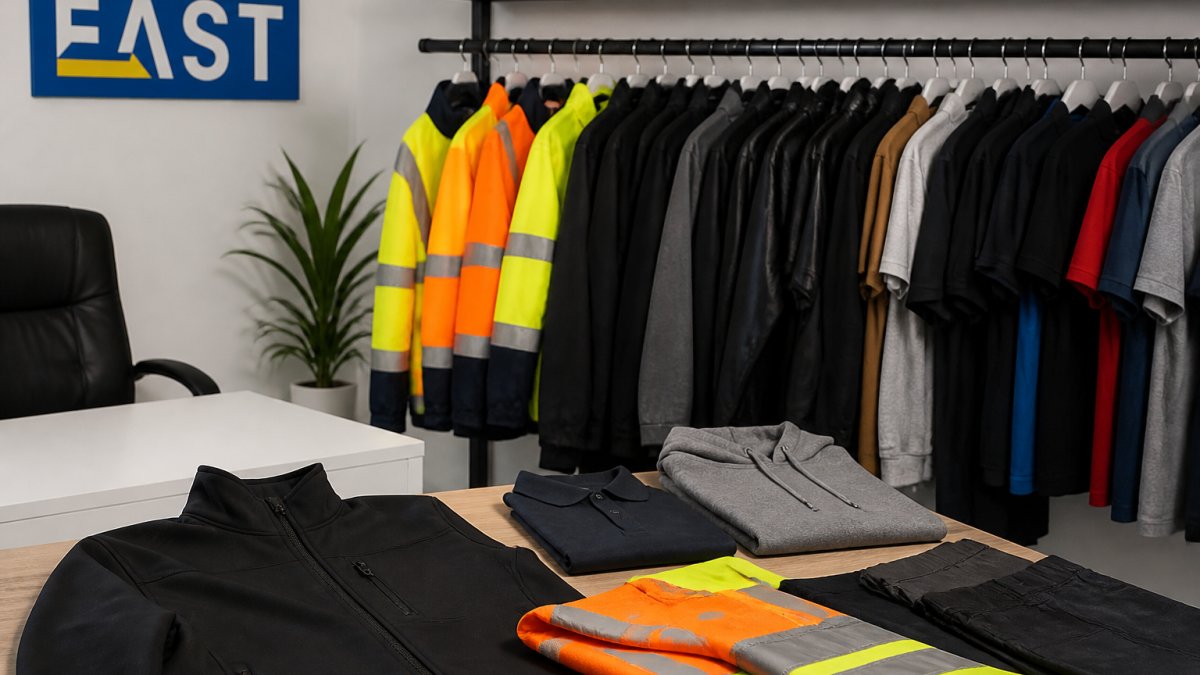
For trade and site-based teams, the priorities are abrasion resistance, freedom of movement and visibility. Look for reinforced knees and hems, hard-wearing cotton-rich blends, and high-visibility garments where site rules require them. Protective footwear and protective outerwear belong in the same conversation, not bolted on afterwards. If your team works near moving machinery, check that cuffs and hems cannot catch, and choose garments with no loose drawstrings or dangling toggles.
Hospitality, Healthcare and Front-of-House Roles
Front-of-house teams need a different balance: easy laundering, colour-fast fabric and a cut that stays smart through a long shift. Chefwear, tunics, scrubs and shirts all live or die on how they handle repeated washing, so check the care label before you fall in love with a colour. In healthcare settings, choose garments that tolerate industrial laundering and avoid designs that trap contaminants in seams or pockets.
Checking Standards and Labels
HSE guidance on workplace PPE explains that employers must provide suitable PPE free of charge where risks cannot be controlled by other means. When you buy, look for the relevant British or European standard marked on the garment or its label, and keep the manufacturer's instructions because they tell you how to wash and maintain the protective properties. A hi-vis jacket that has been washed incorrectly can lose its reflective performance long before it looks worn out.
Embroidered Workwear: When Stitching Beats Printing
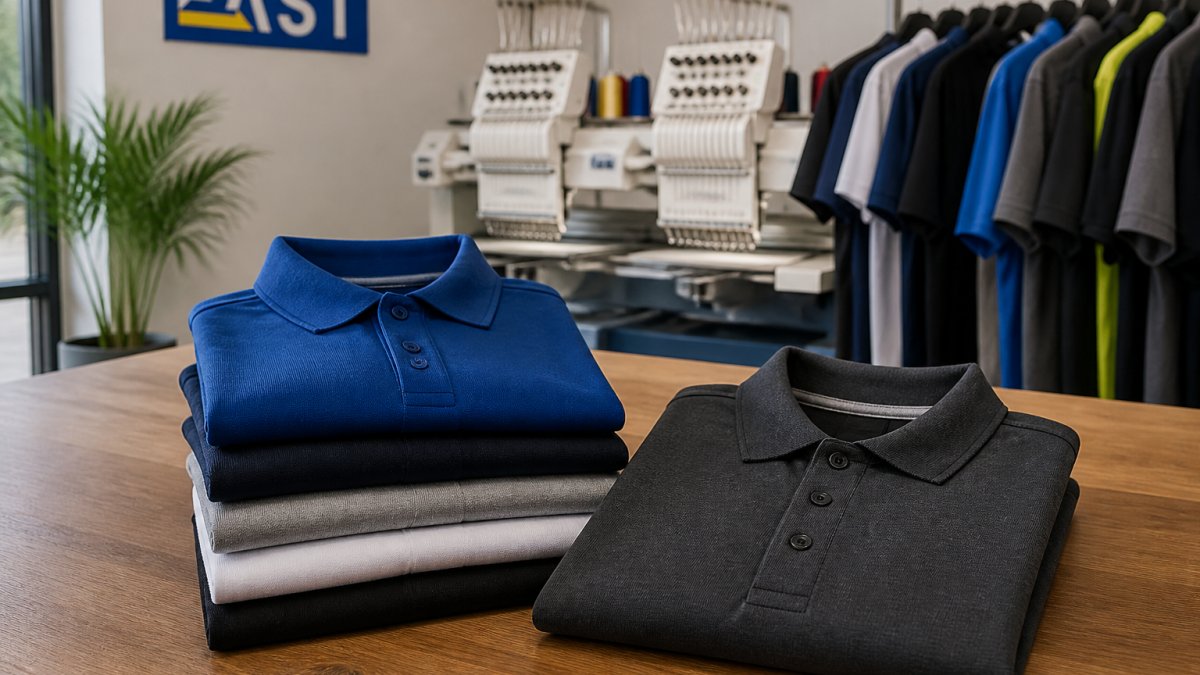
Embroidered workwear is the right choice when the logo needs to survive years of washing and still look sharp. Stitching sits within the fabric rather than on top of it, so it resists cracking, peeling and fading in a way that surface decoration cannot match. For corporate uniforms, polo shirts and outerwear, embroidery is usually the better long-term investment.
The trade-off is detail. Fine text, gradients and photographic images do not translate well to thread, and very small logos can lose legibility. If your branding is simple and bold, embroidery will outlast almost anything else. Our branded polo shirts are a good example of where embroidery earns its place.
Printed Workwear: DTF, Screen Printing and Promotional Apparel
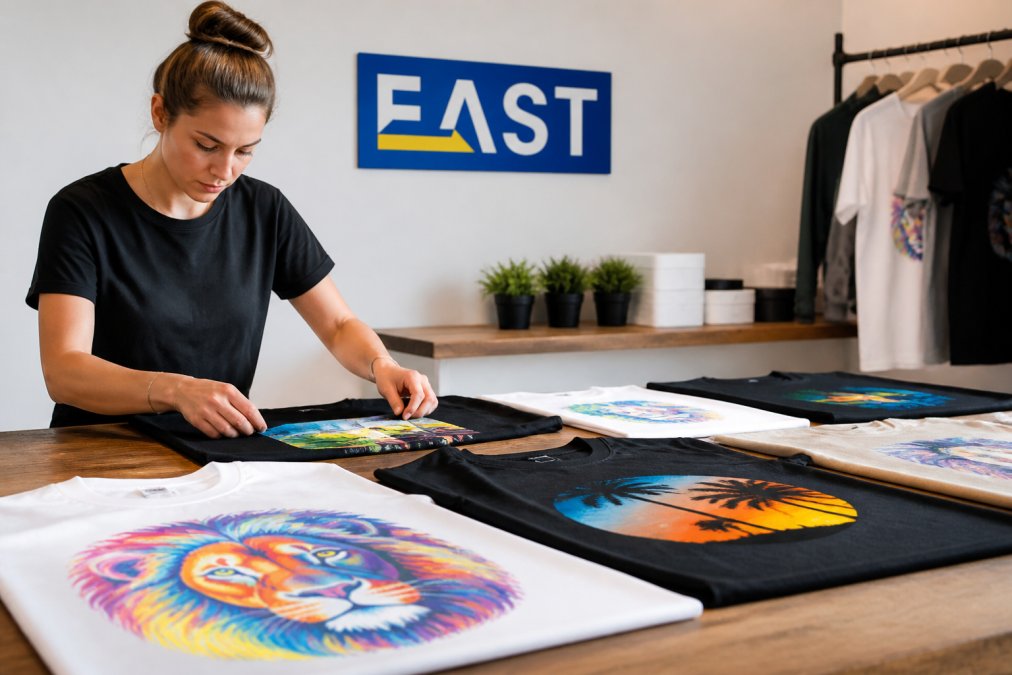
Printed workwear covers the ground embroidery cannot: full-colour artwork, fine detail and photographic images. DTF printing handles complex, multi-colour designs on many fabrics, while screen printing remains the cost-effective route for large single-colour orders. Promotional apparel for events usually suits printing better than embroidery, because the artwork is often more detailed and the garment lifespan shorter.
The thing nobody tells you about printed workwear is that fabric choice matters as much as the print method. A print that performs beautifully on cotton can behave differently on a synthetic blend, so match the technique to the material rather than the other way round.
Custom Workwear: Building a Logo Range That Lasts
Custom workwear works best as a small, consistent range rather than a long list of one-offs. Pick a core set of garments, fix your logo placement and colours, and reorder against that standard. It keeps your team looking uniform and makes future orders straightforward.
A practical range usually includes a polo or shirt for front-facing staff, a mid-layer such as a fleece or hoodie, and outerwear for colder months. Our workwear bundles group these essentials so you are not assembling a range from scratch.
Work Uniforms: Sizing, Fitting and Managing a Multi-Department Rollout
Work uniforms live or die on sizing and fit. A multi-department rollout fails more often on logistics than on product quality, and the fix is a proper sizing process before the order is placed, not after.
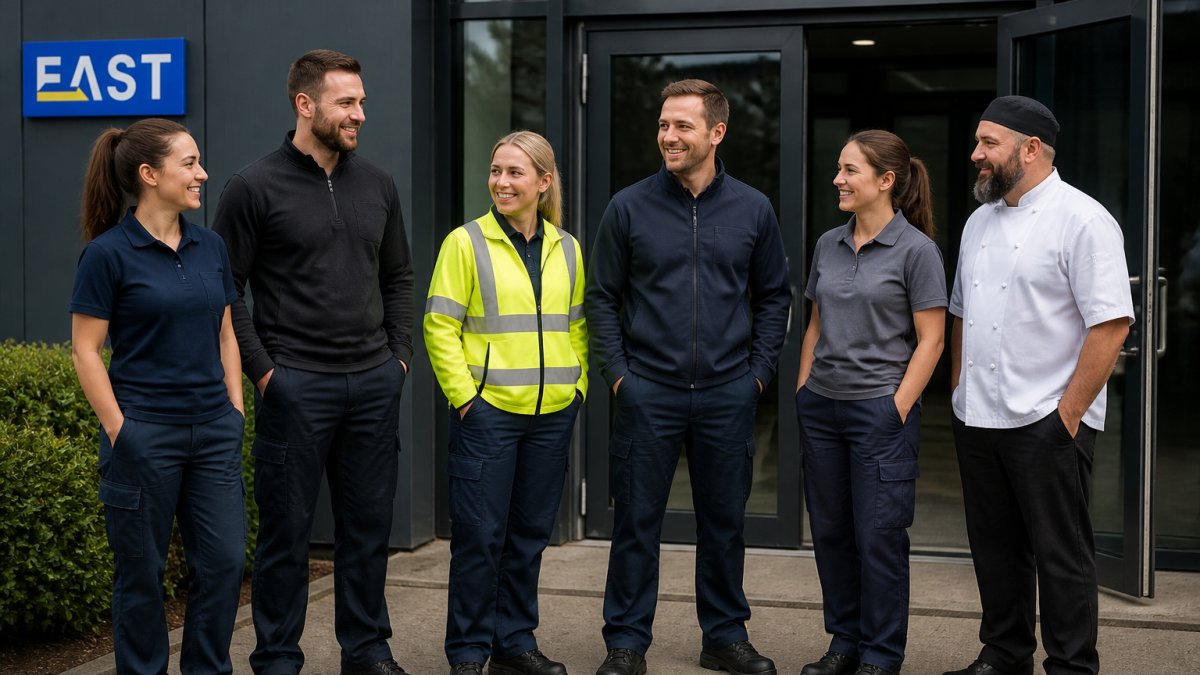
Start with a size set so staff can try garments on before ordering. If you manage staff across several sites, a workwear portal lets individuals order their own sizes against your approved range, which removes most of the back-and-forth.
What Workwear Norfolk Buyers Pay For: Value Over Sticker Price
Value in workwear comes from cost per wear, not the price on the invoice. A cheaper garment that fades, shrinks or loses its logo within a season costs more than a durable one that lasts two or three. When you compare quotes, compare the full picture: fabric weight, decoration method, expected lifespan and how easily the item can be reordered.
The Cost Drivers That Actually Move the Quote
Most workwear quotes are built from a handful of variables. Understanding them helps you compare like for like rather than chasing the lowest headline figure.
- Garment type and fabric weight. A lightweight promotional T-shirt and a heavy-duty work jacket sit at opposite ends of the range. Heavier fabrics and reinforced construction cost more but usually last longer.
- Quantity. Unit costs generally fall as order quantities rise, because setup and decoration preparation are spread across more items. Small top-up orders often carry a higher unit cost than the original bulk order.
- Decoration method and number of positions. Embroidery, DTF and screen printing each have different setup and run costs. A logo on the chest only is cheaper than chest, back and sleeve.
- Colour count and artwork complexity. More colours and finer detail increase preparation time and cost, particularly for screen printing.
- Delivery timescales. Standard lead times are usually more economical than rush orders, which may attract priority charges.
- Replacement frequency. This is the hidden driver. A garment replaced twice a year costs more over three years than one that lasts the distance, even if the initial price is higher.
How to Compare Quotes Properly
Ask each supplier the same questions so the comparison is fair:
- What is the fabric weight and composition?
- Which decoration method is included, and how many positions?
- What is the expected lifespan under your wash regime?
- What is the lead time, and what happens if sizes are wrong?
- Can you reorder the same garment and decoration next year?
A quote that answers all five is worth more than a lower number that leaves you guessing.
Total Cost of Ownership in Practice
A common pattern is that businesses underestimate how much replacement and reordering admin costs. If a garment fades or shrinks, you pay again for the item, the decoration and the staff time to sort it. Choosing a slightly more durable garment and a decoration method that survives industrial washing usually reduces the number of replacement cycles over the garment's life.
Pricing depends on quantity, garment type, decoration method and delivery timescales, so there is no single figure that fits every business. For a current quote on your specific requirements, get in touch with our team or email info@workweareast for a quote and we will work through the numbers with you.
Conclusion: Ordering Workwear in Norfolk Without the Usual Headaches
Getting workwear right comes down to matching garments to the job, choosing the decoration method that suits your logo, and nailing sizing before you order. Do those three things and the usual headaches, cracked logos, wrong sizes and late deliveries, largely disappear. Workwear East handles embroidery, DTF and screen printing from our base in Thetford, with durable garments built for daily wear. Email info@workweareast for a quote and we will help you build a uniform range your team is happy to put on.
Frequently Asked Questions
Where can businesses get branded workwear in Norfolk?
Look for a supplier that handles embroidery, printing and garment sourcing in one place, so you are not coordinating between a blank-garment seller and a separate decorator. Workwear East, based in Thetford, covers embroidered workwear, printed workwear and work uniforms for businesses across the county. Before ordering, ask for sample garments, confirm turnaround times in writing and check whether the supplier offers a portal for managing repeat orders across departments. You can request a quote by emailing info@workweareast.
Is embroidery or printing better for work uniforms?
It depends on the garment and the logo. Embroidered workwear suits polos, fleeces, hoodies, sweatshirts and jackets, and the stitching holds up through repeated industrial laundering. Printed workwear, including DTF and screen printing, handles full-colour designs, fine detail and garments where embroidery would feel too heavy, such as lightweight performance fabrics. Many Norfolk firms use both: embroidery for daily uniforms and printing for promotional items and event apparel.
How do you choose durable workwear for everyday use?
Start with the fabric weight and construction, not the colour. Heavier polycotton blends, reinforced knees and bar-tacked stress points last longer in trade and industrial roles. Check the wash care label against how you actually launder garments, since high-temperature industrial washing shortens the life of both fabric and decoration. Ordering a small trial batch before a full rollout shows you how a garment performs after ten or twenty washes, which is the point where cheap workwear usually fails.
What should I provide when requesting a workwear quote?
Send the garment types you need, the quantity per size, your logo files in a vector format such as EPS, AI or PDF, and the deadline you are working to. Confirm whether you want embroidered workwear, printed workwear or a mix, and note any site requirements such as hi-vis or flame-retardant clothing. The more detail you give upfront, the fewer sizing and delay problems later. Email info@workweareast with these details and the team will come back with options.