 ultimate-guide
Embroidered Polo Shirts Thetford: A 2026 Business Guide
Table of Contents
- Why Embroidered Polo Shirts Are a Smart Choice for Thetford Businesses
- The Benefits of Embroidered Uniforms for Your Team and Brand
- Choosing the Best Fabric for Work Polo Shirts
- Embroidery vs Print: Which Logo Method Suits Your Polo Shirts?
- How to Care for Embroidered Clothing So Logos Last
- Sizing, Lead Times and Managing Orders for Your Whole Team
- Working With a Local Supplier for Embroidered Polo Shirts in Thetford
- Frequently Asked Questions
Last Updated: October 8, 2026
Why Embroidered Polo Shirts Are a Smart Choice for Thetford Businesses
A polo shirt is often the first thing a customer notices about your team. At Workwear East, we supply embroidered and printed workwear across Norfolk, and we see the same pattern repeatedly: a logo that survives the wash cycle protects your brand far better than one that fades by month three.
Here is the practical case. Embroidery stitches your logo directly into the fabric rather than sitting on top of it, so there is no layer to crack, peel, or lift. For a trade firm whose staff are on site daily, that difference decides whether your uniform still looks presentable after a year of hard wear.
The five sections below cover fabric choice, decoration method, care, sizing, and how to brief a local supplier so the whole order lands correctly the first time.
The Benefits of Embroidered Uniforms for Your Team and Brand
The benefits of embroidered uniforms come down to three things: durability, a consistent professional appearance, and the fact that staff tend to treat branded clothing with more care than a plain shirt.
Embroidery holds colour well. Multi-colour logos keep their definition because each colour is a separate thread rather than a mixed ink.
There is a team effect too. When everyone wears the same well-finished polo, customers read the business as organised. Many trade firms find that a uniform removes the daily decision about what to wear.
Choosing the Best Fabric for Work Polo Shirts
The best fabric for work polo shirts depends on where the shirt will be worn, not on what feels softest in the showroom. A cotton-rich polo suits office and front-of-house wear; a polyester or poly-cotton blend suits outdoor and industrial work.
Here is how we would choose:
| Fabric | Best For | Trade-off |
|---|---|---|
| 100% cotton | Office, reception, events | Creases, slower drying |
| Poly-cotton blend | General workwear, mixed roles | Slightly less breathable |
| 100% polyester | Outdoor, industrial, hi-vis layers | Can feel synthetic in heat |
| Performance knit | Active roles, warm environments | Higher unit cost |
Weight matters as much as fibre. If your team works across different settings, consider ordering different weights rather than compromising on one.
For anyone working near moving traffic or on site, a polo worn under or alongside hi-vis needs to fit without bunching. Ask about compatible hi-vis options before you commit to a cut.
Embroidery vs Print: Which Logo Method Suits Your Polo Shirts?
Embroidery suits logos with clear shapes, while print suits fine detail, gradients, and photographic artwork. Neither is universally better; the artwork decides.
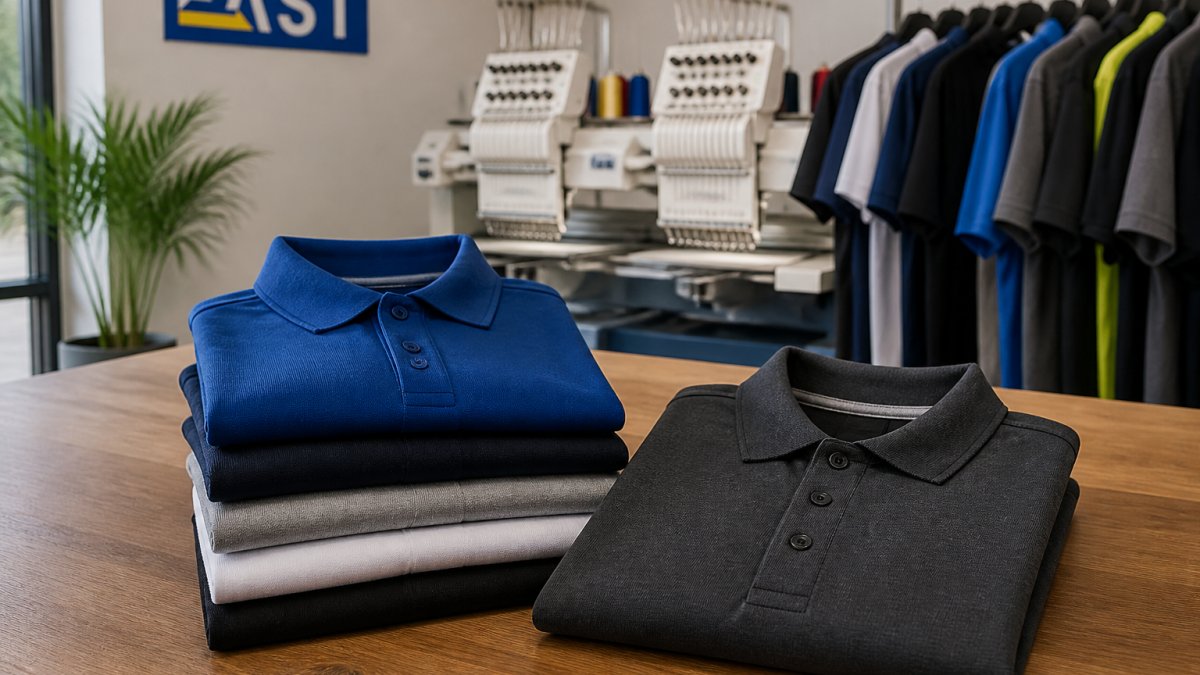
Embroidery gives a raised, textured finish that reads as premium on a polo. It handles curved chest placements and small left-breast logos well. Very fine text, thin lines, and colour gradients do not translate cleanly into thread, so those designs need simplifying or switching to print.
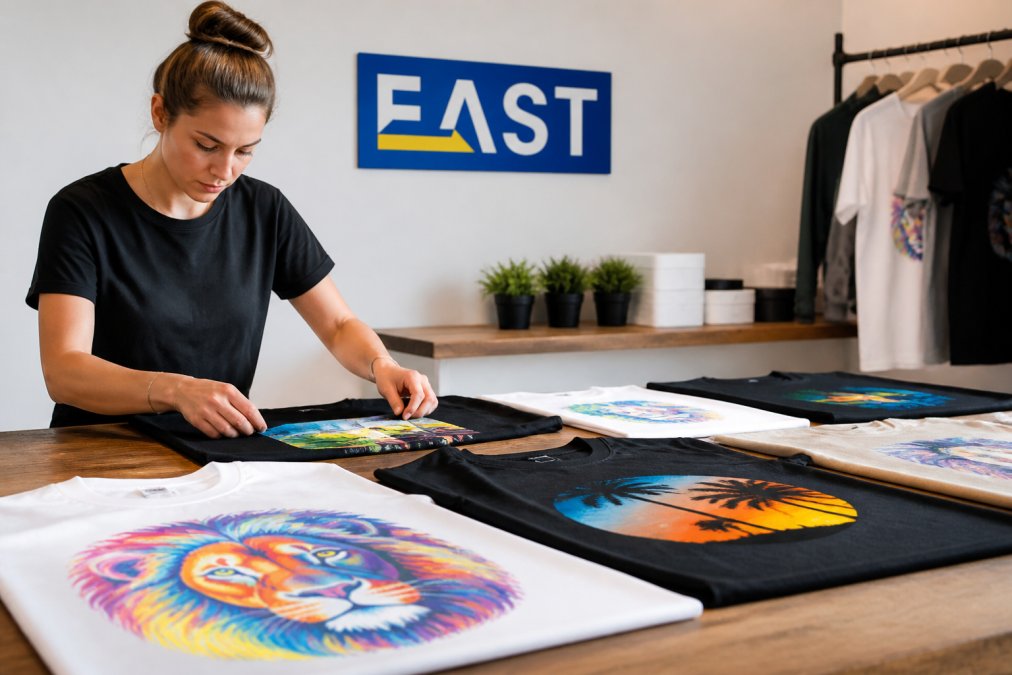
Printing, including DTF and screen printing, reproduces complex artwork faithfully and works well on garments where embroidery might not be suitable. Print sits on the fabric surface and needs careful washing to stay sharp.
How to Care for Embroidered Clothing So Logos Last
Caring for embroidered clothing is simpler than caring for print, but two habits matter: wash inside out and skip the tumble dryer.
Turn garments inside out before washing so the stitching is not rubbed against other items. Wash at a moderate temperature, avoid biological detergent on coloured thread where possible, and never iron directly over the embroidery, as heat can flatten or scorch the thread.
- Turn the garment inside out before every wash
- Wash at 30-40°C on a normal cycle
- Avoid fabric softener, which coats the thread
- Air dry or tumble on low heat only
- Iron around the embroidery, never directly on it
- Check stitching after the first few washes and report faults early
Follow that routine and embroidery can be very durable. Where print is involved, the same rules apply with extra care around heat, since high dryer temperatures can contribute to cracking and peeling.
Sizing, Lead Times and Managing Orders for Your Whole Team
Sizing and lead time are common challenges with uniform orders, and both can be managed with a proper process.
Collect sizes before you order, not after. Ask staff for their usual size and offer a fit sample in two or three sizes for anyone between sizes. Getting this wrong can lead to reorders and wasted spend.
On timing, embroidery is a production step, not an instant service. Digitising your logo happens once, then each garment is stitched individually. Larger orders and peak periods extend the timeline, so build in a buffer rather than planning to the last day.
For teams spread across departments and sites, a workwear portal lets managers order approved garments for their own staff within agreed limits, which removes the back-and-forth of collecting sizes centrally.
Working With a Local Supplier for Embroidered Polo Shirts in Thetford
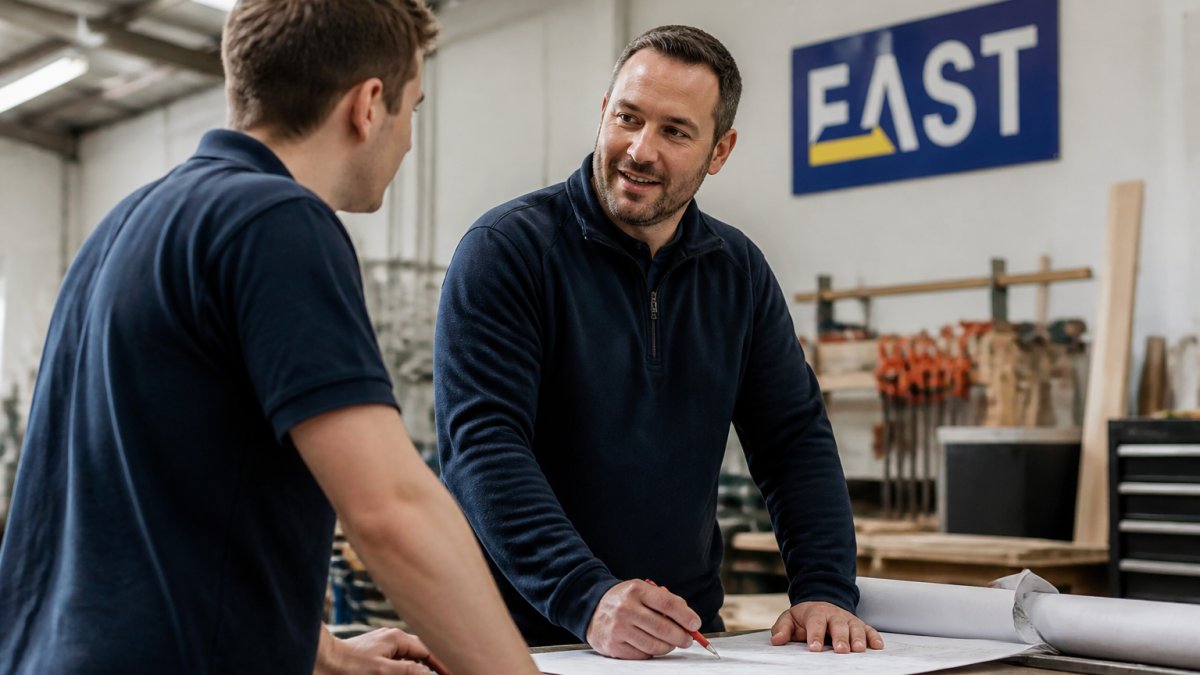
A local supplier can help with sizing problems and fixes. When something does not fit or a logo needs adjusting, being able to bring the garment in rather than post it back can save time.
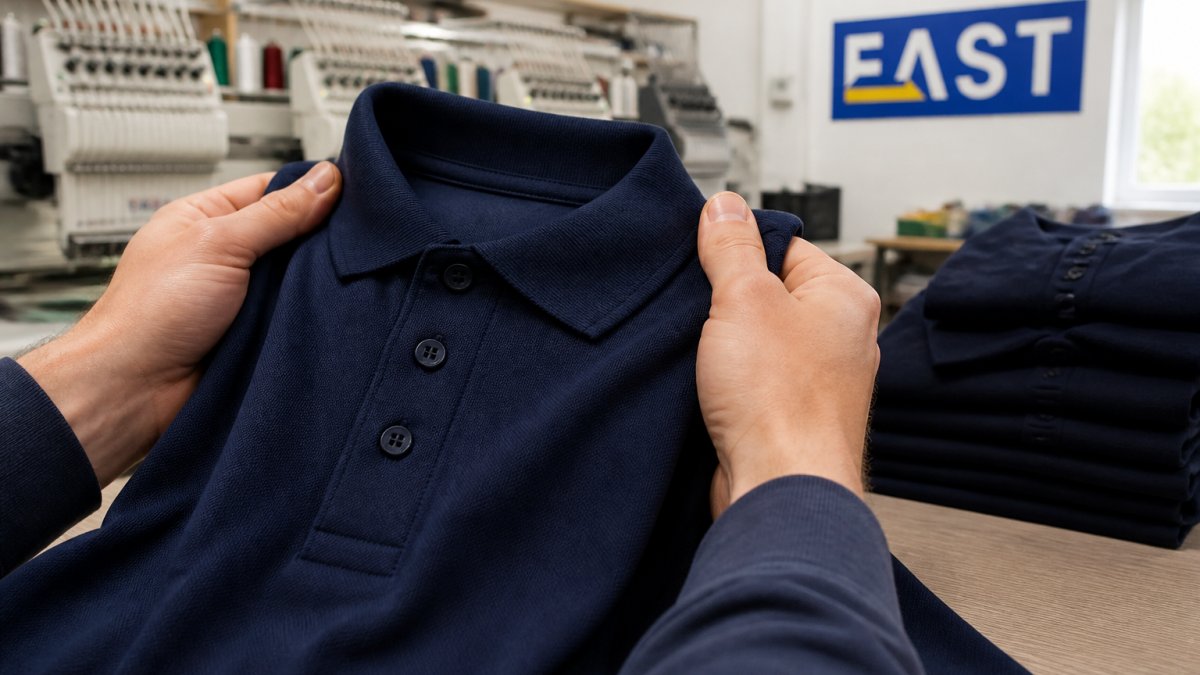
We recommend starting with a small trial order before committing the whole team. Order two or three garments in your chosen fabric and logo placement, wash them a few times, and check the stitching and fit.
When briefing a supplier, bring your logo as a vector file if you have one, confirm the placement and size in millimetres, and state the fabric and quantity. Clear briefs reduce reprints and delays.
Workwear East supplies branded polo shirts and full workwear bundles with embroidery, DTF printing, and screen printing, all handled locally. Our team can advise on fabric, placement, and sizing before you order, and we will tell you honestly when print suits your artwork better than embroidery.
Getting a uniform order right takes planning, a sensible fabric choice, and a supplier who answers the phone when a size is wrong. Workwear East handles embroidery, DTF printing, and screen printing in-house, offers workwear portals for managing orders across departments, and supplies hi-vis and branded polos as part of a complete uniform package. Visit workweareast.co.uk to see the range, or email info@workweareast for a quote and we will work through fabric, sizing, and lead times with you.
Frequently Asked Questions
What are the benefits of choosing embroidery over screen printing for polo shirts?
Embroidery stitches your logo directly into the fabric, so it will not crack, peel or fade the way printed transfers can after repeated washing. It gives a raised, professional finish that suits corporate uniforms and customer-facing staff. Screen printing can work well for large, colourful designs on flat fabrics, but for a small chest logo on a polo shirt, embroidery usually lasts longer and looks smarter. If you need a mix of both methods across different garments, email info@workweareast for a quote.
How do I choose the right fabric for embroidered workwear?
The best fabric for work polo shirts depends on where your team works. Cotton feels soft and breathes well for office or retail staff, while polyester and cotton blends hold their shape and colour through frequent washing, which suits trade and industrial roles. Heavier fabrics cope better with embroidery because they support the stitching without puckering. Tell your supplier what your team does each day and they can match the fabric to the job.
How long does it take to get custom embroidered uniforms produced?
Lead times depend on garment availability, the number of logos and how many sizes you need. A straightforward order of plain polos with a single logo can often be turned around faster than a mixed order with several departments and garment types. If you have an event or a fixed start date, share it upfront so your supplier can confirm what is achievable. Rush orders are sometimes possible, so it is always worth asking before you assume a deadline cannot be met.
What is the best way to care for embroidered polo shirts to ensure longevity?
Wash embroidered clothing inside out at a low temperature and avoid fabric softener, which can break down threads over time. Do not iron directly over the stitching, as heat can flatten or scorch the logo. Tumble drying on a high setting causes shrinkage and wear, so air drying is kinder to both fabric and embroidery. Following these steps keeps logos looking sharp and helps garments last through daily wear, which matters when you are kitting out a full team.