 Ultimate guide
Workwear Suffolk: A Complete Buying Guide for 2026
Table of Contents
- Workwear Suffolk: What Local Businesses Need to Know
- The Core Garment Range: From Polos to Coveralls
- Embroidered Workwear Suffolk Teams Wear With Pride
- Printed Workwear Suffolk: DTF, Screen Printing and More
- Custom Workwear Suffolk: Building a Full Uniform Programme
- Work Uniforms Suffolk: Compliance, Safety and Footwear
- What Affects Cost and How to Get Value
- Choosing a Supplier: A Practical Checklist
- Frequently Asked Questions
Last Updated: October 18, 2026
Workwear Suffolk: What Local Businesses Need to Know
Workwear East supplies embroidered and printed garments across the region. Here's how to specify, size and buy workwear that survives daily wear.
Buying close to home rests on three things: lead times you can plan around, decoration you can inspect before it ships, and a named contact who answers when a size run goes wrong.
Why Local Sourcing Beats National Suppliers
Speed and accountability are what national suppliers struggle to match.
Problems surface at the decoration stage: a logo sitting too low on a collar, a print that cracks after ten washes, a shade that shifts between batches.
Bulk orders and trade accounts work differently locally too. A local supplier can hold stock for repeat orders, add new starters to an existing run, and keep your logo files on record so reordering doesn't mean resending artwork.
The Core Garment Range: From Polos to Coveralls
A complete range covers five categories: polos and sweatshirts for smart-casual roles, fleeces and jackets for cold or outdoor work, trousers and bib and braces for trade and industrial use, coveralls for dirty or hazardous environments, and hi-vis and PPE for site compliance. Most businesses need pieces from at least three.
Matching Garments to Roles
Role determines fabric, fit and decoration method. A hospitality team in polos needs something that washes well and holds colour; a construction crew in coveralls needs abrasion resistance and room to move. Getting this mapping right prevents buying one uniform for everyone and pleasing nobody.
| Role | Typical garments | Decoration | Priority |
|---|---|---|---|
| Office and reception | Polo shirts, sweatshirts, softshell jackets | Left-chest embroidery | Neat, colourfast finish |
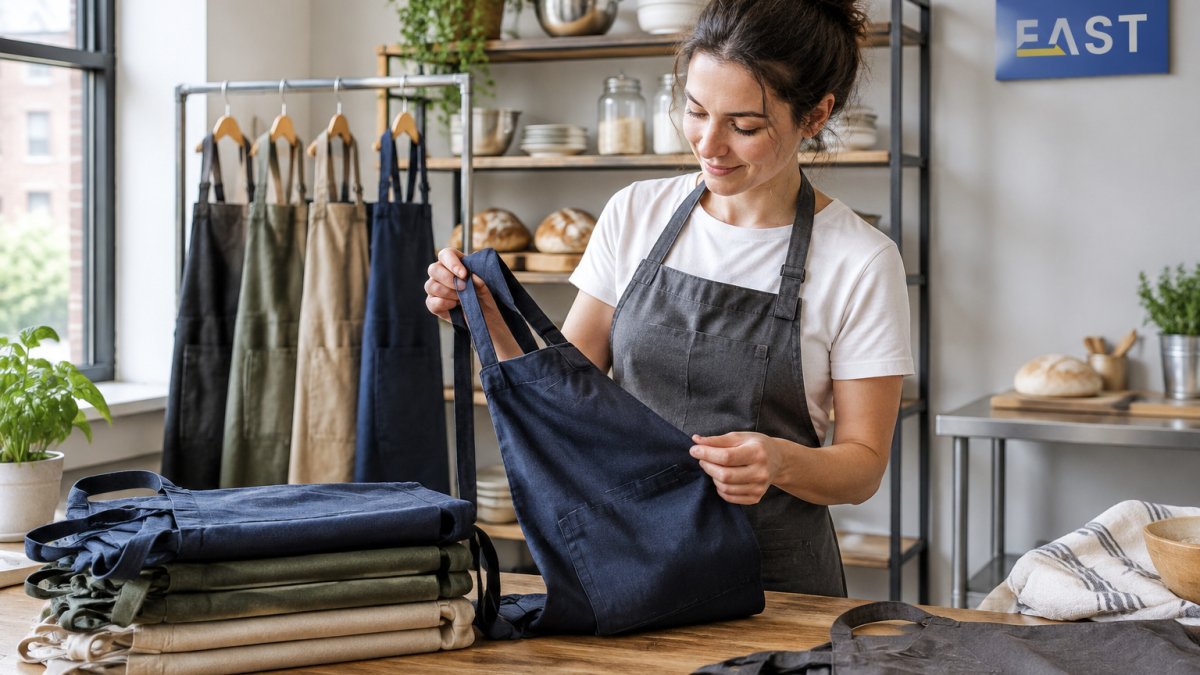
| Hospitality and service | Polos, aprons, trousers | Embroidery or small print | Wash durability |
| Trade and industrial | Coveralls, bib and braces, work trousers | Embroidery or screen print | Fabric strength, fit |
| Site and outdoor | Hi-vis vests, jackets, fleeces | Reflective-safe embroidery | Visibility, compliance |
| Events and promo | T-shirts, vests, hoodies | DTF or screen print | Speed, vibrant colour |
Cheaper garments are rarely cheaper overall. A lightweight polo that fades after a season costs more per wear than a heavier one lasting three years, especially once you count redecoration and admin time.
Embroidered Workwear Suffolk Teams Wear With Pride
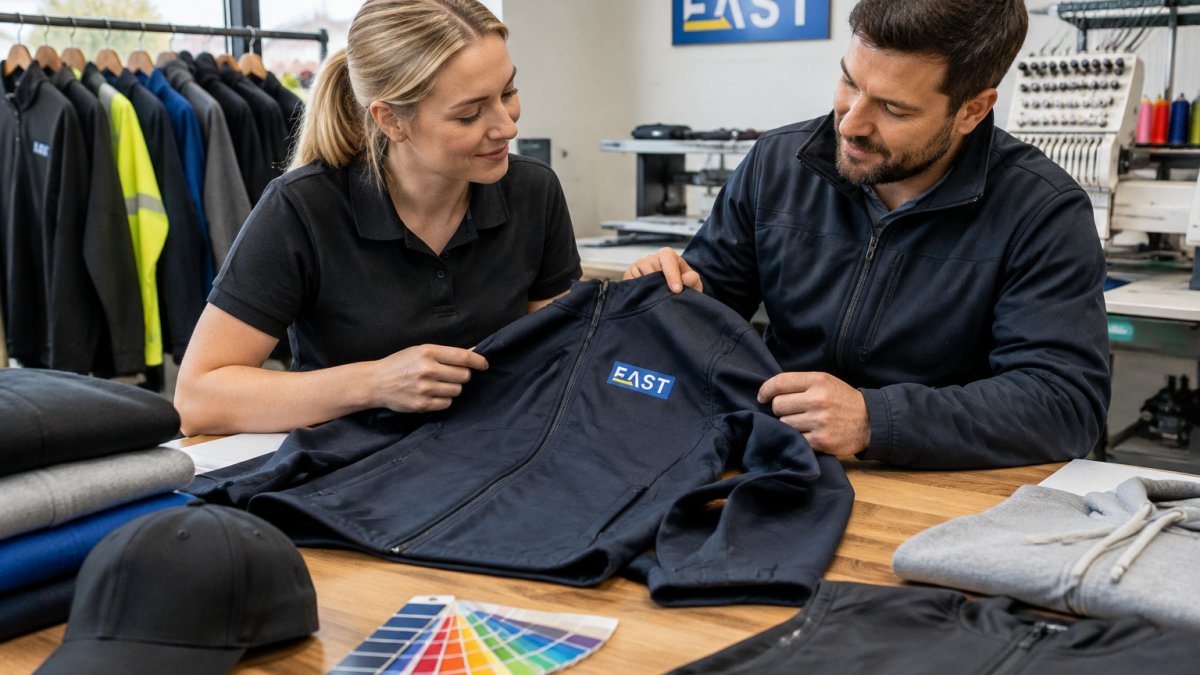
Embroidery is the default for corporate uniforms because it looks considered and survives repeated laundering better than most print methods. Multi-colour logo embroidery handles fine detail and small text that would blur in print.
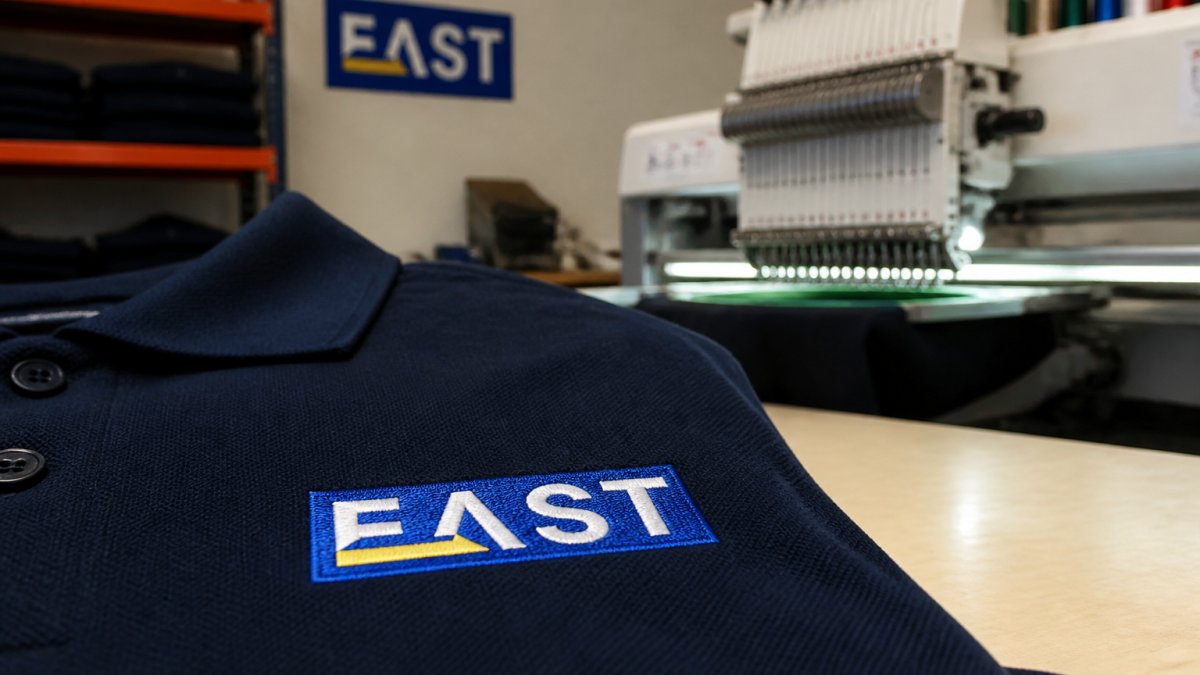
Dense fills and small lettering need a higher stitch count, which affects both cost and how the garment feels. Ask for a digitised proof before a bulk run: it shows exactly how your logo will translate to thread.
Printed Workwear Suffolk: DTF, Screen Printing and More
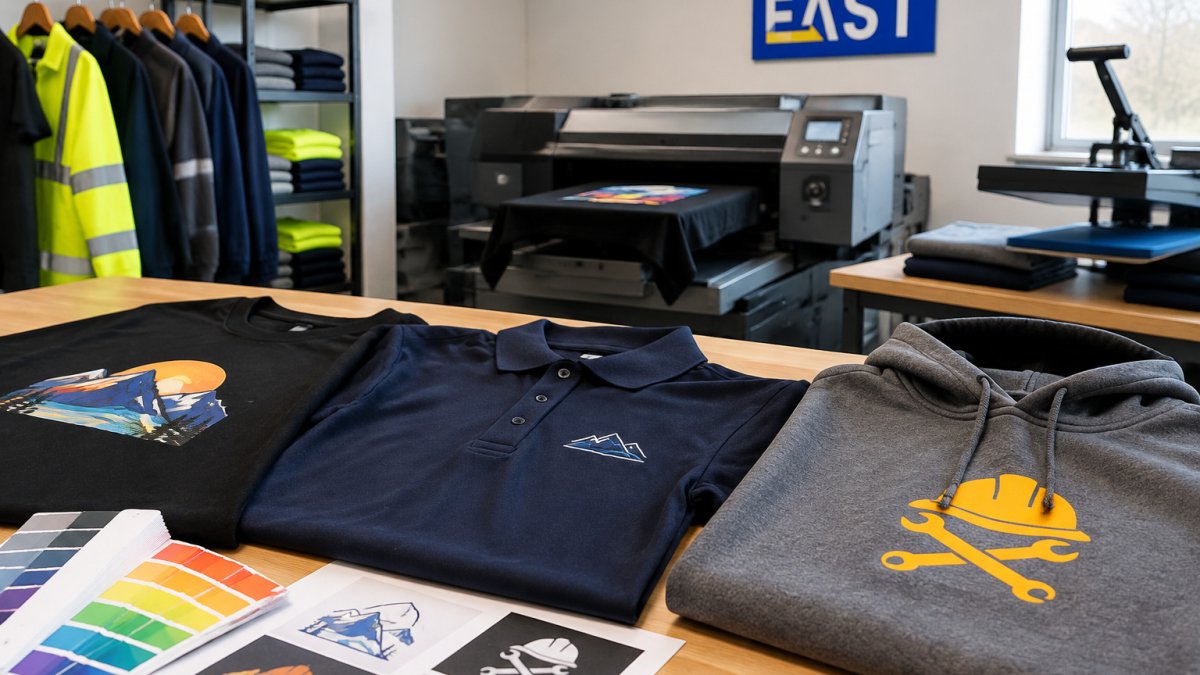
Printing suits designs embroidery can't handle: full-colour images, photographic detail, large back prints and gradients. Choose the method to follow the artwork and order size, not the other way round.
- DTF printing transfers full-colour designs onto many fabrics, including cottons, blends and some synthetics. It handles fine detail and photographic imagery well, and it's the practical choice for small-to-medium runs with complex artwork.
- Screen printing remains the most cost-effective option for large orders of simple designs. Each colour needs its own screen, so it rewards bold, limited-palette artwork and high volumes.
- Vinyl and transfer printing works for names, numbers and single-colour logos where speed matters more than subtlety.
A common mistake is choosing screen printing for a five-colour photographic design on a short run, then finding the per-colour setup cost makes it uneconomic. Send the artwork first and let the method follow.
Durability depends as much on application as method. Correct curing and the right fabric match determine whether a print survives many washes. Ask any supplier how they cure prints and what wash testing they do.
Custom Workwear Suffolk: Building a Full Uniform Programme
A uniform programme is a system: a core range, a decoration spec, a sizing process, a reorder route and a review cycle. Businesses that treat it that way spend less and look more consistent.
Start with a core range of three to five garments covering most roles, then add specialist pieces only where the work demands them. Standardise logo placement, hold stock for new starters and replacements, and review annually against wear patterns and staff feedback.
Sizing, Fit and Inclusive Ordering
Sizing is where most programmes quietly fail. Manufacturers cut differently, so a medium from one range isn't a medium from another. Order from a size chart, not habit, and measure new staff fresh rather than assuming last year's size holds.
- Collect chest, waist and inside-leg measurements for every team member
- Order one sample garment per size band and have staff try it on
- Record preferred fit (regular, relaxed, tall) against each name
- Build a size matrix by department before placing the bulk order
- Hold spare stock in the two most common sizes
- Set a simple process for new starters to submit sizes
A size matrix prevents fifty staff across departments all needing different fits, and makes repeat orders straightforward because the data already exists.
Work Uniforms Suffolk: Compliance, Safety and Footwear
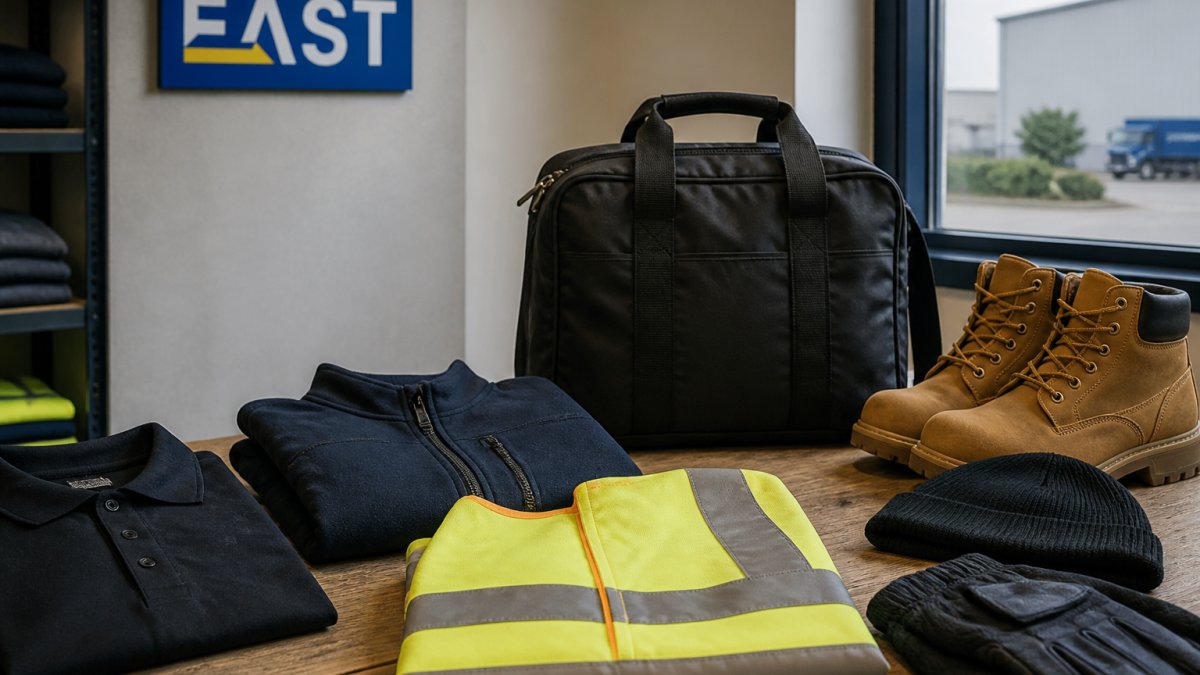
Compliance is the part buyers underestimate. Where work involves risk, the garment is part of the control measure, not just branding. High-visibility clothing, safety footwear and protective equipment must be fit for purpose and correctly specified for the task.
The Personal Protective Equipment at Work Regulations 1992 (as amended) require employers to provide suitable PPE where risks cannot be adequately controlled by other means, and to maintain and replace it when necessary. The Health and Safety at Work etc. Act 1974 sets the overarching duty to protect employees and others affected by the work.
Standards to Look For
Rather than trusting a product description, check the label and the declaration of conformity. Common standards you will see on workwear include:
- EN ISO 20471 for high-visibility clothing, with three classes based on the area of fluorescent and retroreflective material.
- EN ISO 11612 for clothing protecting against heat and flame, relevant to welding, foundry and some utility work.
- EN 343 for waterproof clothing, rated on water penetration resistance and breathability.
- EN ISO 20345 for safety footwear, with S1, S2, S3 and higher ratings covering toe protection, antistatic properties, penetration resistance and water resistance.
- EN 388 for gloves protecting against mechanical risks.
A garment can carry more than one standard. Ask for the certificate or declaration of conformity, not just a logo on the swing tag.
Footwear and Fit
For footwear, fit and slip resistance matter more than appearance. Buy ranges rated for the environment your team actually works in, and replace worn soles promptly. Slip resistance is tested under different conditions, so a sole rated for dry warehouse floors may not suit a wet kitchen, match the rating to your surface.
Documentation and Record-Keeping
If you are unsure which standards apply to your roles, email info@workweareast for a quote and we will help you specify garments that meet the relevant requirements. You can also browse the full range at https://www.workweareast.co.uk/
What Affects Cost and How to Get Value
Cost in decorated workwear is driven by five variables: garment quality, decoration method, artwork complexity, order quantity and turnaround. Understanding how they interact is how you get value without cutting corners.
| Cost driver | What pushes it up | How to control it |
|---|---|---|
| Garment quality | Heavier fabrics, brand-name ranges | Standardise on one core range |
| Decoration method | Multi-colour screens, dense embroidery | Match method to artwork and volume |
| Artwork complexity | Fine detail, many colours | Simplify where the logo allows |
| Order quantity | Small runs, one-off pieces | Consolidate orders, hold stock |
| Turnaround | Rush deadlines, split deliveries | Plan around seasonal peaks |
Pricing depends on quantity, garment choice, decoration and delivery, so we quote each job individually rather than publish a rate card. For a current price on your specification, email info@workweareast for a quote.
Choosing a Supplier: A Practical Checklist
The right supplier answers questions before you order and fixes problems after. Use this checklist on any supplier you're considering, including us, and score each item so you compare on evidence rather than impression.
Capability and Decoration
- Can they show physical samples of decoration, not just digital proofs?
- Do they digitise logos in-house?
- Can they explain how they cure prints?
- Do they offer embroidery, DTF and screen printing, so the method can follow the artwork?
Lead Times and Stock
- What is the realistic lead time on a repeat order, not just the first?
- Can they hold stock and add new starters to an existing run?
- Do they carry core sizes in stock, or order everything in from a wholesaler?
- What happens if a garment is out of stock mid-run, do they substitute, back-order or delay the whole order?
Sizing and Reorders
- Do they offer a size matrix and a simple reorder process?
- Can they supply one sample garment per size band before a bulk order?
- Will they keep your logo files and size data on record for future orders?
Local Service and Accountability
- Is there a named contact, or a ticket queue?
- [ ]
- Do they deliver across the county and surrounding area?
- [ ]
Commercial Terms
- Will they put decoration placement and lead times in writing?
- Is there a clear process for faulty garments or decoration errors?
- [ ]
A supplier who can't answer four of these clearly is a risk to your programme. The strongest local suppliers welcome the questions, because the answers are where they beat a national account.
To discuss your requirements and get a quote, email info@workweareast for a quote or visit https://www.workweareast.co.uk/ to see the full range.
Frequently Asked Questions
Should I choose embroidered or printed workwear?
It depends on the design and the garment. Embroidery suits logos with a small number of colours and works well on polos, fleeces, jackets and sweatshirts, giving a durable, professional finish that holds up to repeated washing. Printed workwear, especially DTF printing, handles detailed, full-colour artwork and is a good fit for promotional clothing and event apparel. Screen printing is cost-effective for large runs of simple designs. Many businesses use both: embroidery for day-to-day uniforms and printing for marketing items.
What should I provide when requesting a workwear quote?
Give the supplier your garment types, quantities, sizes, decoration method and any deadline. Send your logo as a high-resolution file, ideally a vector format, and state where it should sit on each garment. Mention whether you need safety footwear or PPE included, and whether you want a managed uniform programme or a one-off bulk order. The clearer the brief, the more accurate the quote and the fewer delays later. Email info@workweareast for a quote tailored to your requirements.
How do I choose durable workwear for a team?
Look at fabric weight and composition, reinforced seams and the quality of the decoration. Heavier polycotton blends generally last longer in trade and industrial roles, while lighter fabrics suit hospitality and office uniforms. Ask how the logo is applied. Check that garments are suitable for the role, and confirm sizing before ordering. A supplier that offers samples and clear care guidance will help you avoid early replacement costs.
Can you handle a rush order for branded polo shirts before an event?
Rush orders are often possible, but lead times depend on stock availability, decoration method and quantity. Embroidery and DTF printing both take time to set up and complete, so contact the supplier as early as possible with your deadline. Provide artwork and size breakdowns upfront to avoid back-and-forth. A local supplier with in-house production can usually turn things around faster than one that outsources decoration. Email info@workweareast to discuss your date and quantities.