 listicle
Affordable Custom Embroidery for Uniforms: A 2026 Guide
Table of Contents
- Why Custom Embroidery Works for Professional Uniforms
- How to Choose Workwear for Embroidery: Fabric and Durability
- Custom Logo Embroidery Turnaround Time: What to Expect
- Best Embroidery File Formats for Logos and Design Setup
- Pricing and Cost Per Garment: Understanding the Real Numbers
- Garment Selection and Product Range for Embroidered Uniforms
- Sustainable and Eco-Friendly Uniform Options
- Common Mistakes to Avoid When Ordering Embroidered Uniforms
- Getting Started with Affordable Custom Embroidery for Uniforms
- Frequently Asked Questions
Last Updated: August 9, 2026
Why Custom Embroidery Works for Professional Uniforms
Affordable custom embroidery for uniforms transforms how businesses build team identity and brand recognition. Unlike screen printing, embroidery creates a durable, professional finish that withstands repeated washing and daily wear in industrial environments.
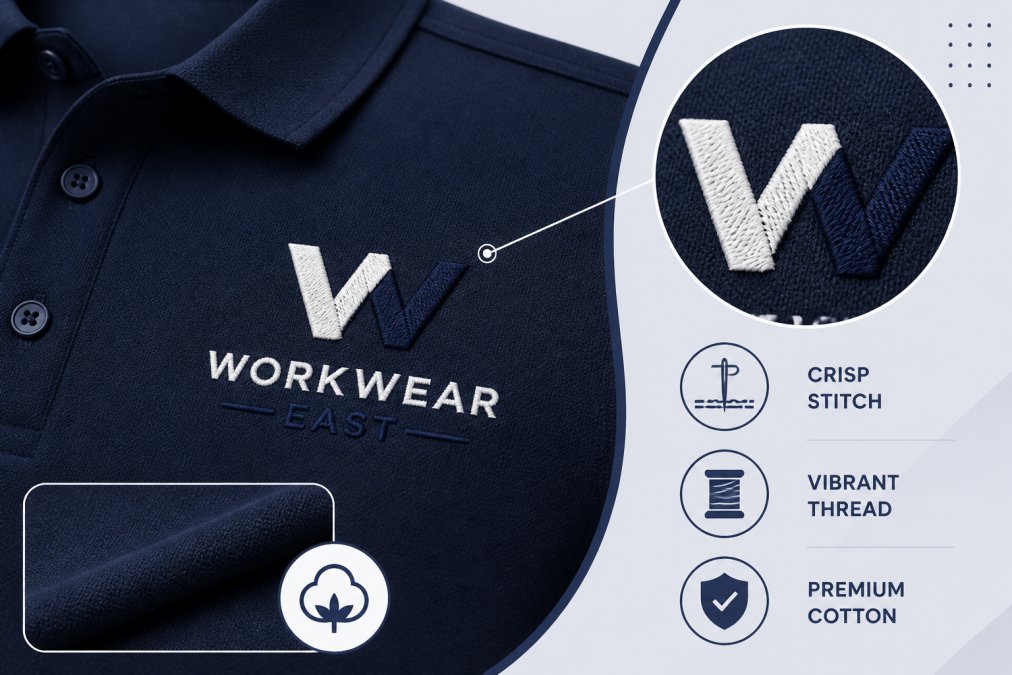
At Workwear East, we've worked with construction firms and trade companies across Norfolk who discovered that embroidered logos outlast cheaper alternatives. The thread sits slightly raised on the fabric, catching light and creating depth that flat printing can't match. Embroidered uniforms signal investment in your staff and professionalism to clients far more effectively than plain garments with cracking screen-printed logos.
How to Choose Workwear for Embroidery: Fabric and Durability
The fabric you select determines whether your embroidered uniforms look sharp for six months or three years. Cotton and cotton-blend fabrics are the industry standard because the thread grips the weave securely. Polyester blends work well too, especially for workwear needing moisture-wicking properties.
Avoid heavily textured or loose-weave fabrics, they allow thread to sink into the material, creating an uneven, puckered appearance. Weight matters more than most businesses realise. Mid-weight polos and shirts (180-220 gsm) provide the sweet spot: enough fabric density to anchor the thread without being so heavy that embroidery becomes difficult to execute.
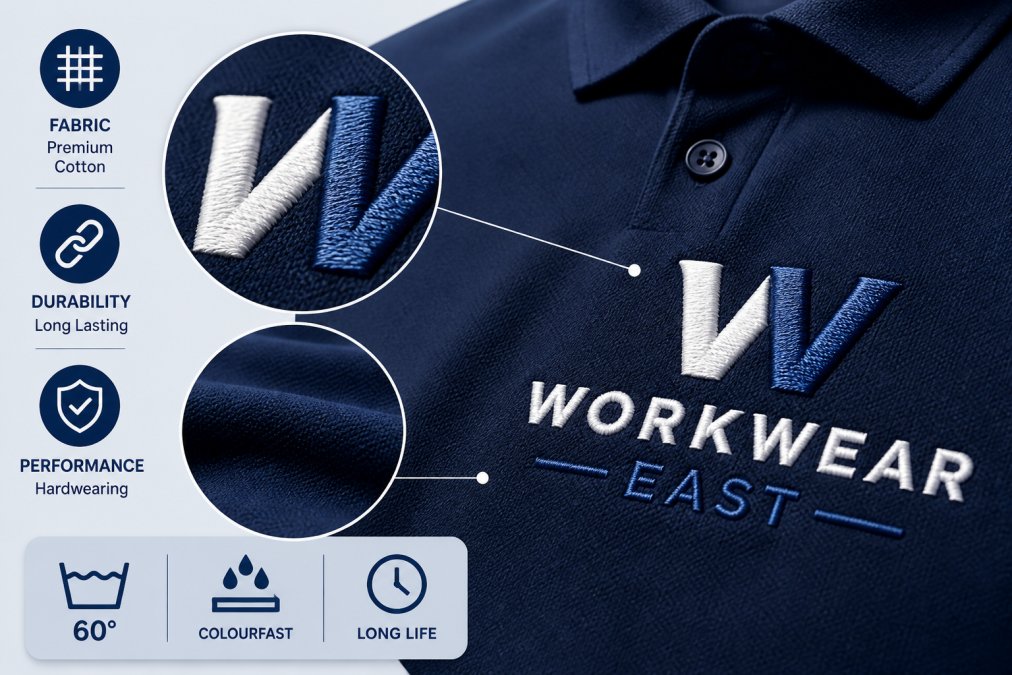
Embroidery Durability: What Determines Longevity
Three factors determine how long your embroidered logos survive: thread quality, stitch density, and garment care.
High-quality polyester embroidery thread resists fading and fraying far better than cheaper alternatives. The thread density, measured in stitches per inch, directly affects durability. Dense embroidery creates a more secure bond with the fabric and resists snagging. A well-executed embroidered logo on quality fabric typically survives 100+ wash cycles without visible degradation. Screen-printed logos on the same garment often show cracking or peeling by wash 40-50.
Comparing Embroidery vs. Screen Printing for Workwear
Screen printing costs less upfront for large orders but the long-term cost of replacement uniforms often exceeds initial savings. Screen printing applies ink to the fabric surface, which cracks when the garment flexes. Embroidery stitches thread directly through the fabric, creating a mechanical bond that becomes part of the garment.
For small runs (under 20 garments), embroidery costs more per unit. For orders over 50 garments, embroidery becomes competitive because there's no per-garment setup fee once digitisation is complete. For teams ordering 100+ uniforms annually, embroidery is cheaper over three years despite higher initial costs.
Custom Logo Embroidery Turnaround Time: What to Expect
Turnaround time depends on order complexity, quantity, and whether your logo requires digitisation. A simple, pre-digitised logo on 20 polo shirts typically takes 7-10 working days from approval to delivery. Complex multi-colour designs or large orders can extend this to 14-21 working days.
The digitisation step, converting your logo into embroidery-ready format, adds 2-5 working days if your file isn't already prepared.
Bulk Order Timelines and No Minimum Order Options
Many suppliers offer no minimum order policies, meaning you can order 5 polo shirts or 500 without penalty. However, no-minimum suppliers often charge higher per-unit prices to offset the lack of volume discount.
For bulk orders (50+ garments), turnaround times improve because embroidery machines work more efficiently on large batches. A 100-unit order might take 12 working days, while a 20-unit order takes 14 days. Rush orders are possible but come with a premium. Always request a proof before committing to a rush order.
Best Embroidery File Formats for Logos and Design Setup
Your logo file format determines whether embroidery machines can read it and how cleanly they execute it. Vector files (AI, EPS, PDF) are ideal because they're resolution-independent. Raster files (JPG, PNG) are problematic, embroidery machines struggle to interpret pixels as stitches, often producing blurry or distorted results.
Logo Digitization and Setup Fees Explained
Digitisation converts your logo into embroidery machine code. A simple single-colour logo (under 5,000 stitches) requires a digitisation fee. Complex multi-colour designs can cost more.
Some suppliers include one free digitisation with orders over a certain value. The digitisation fee reflects real work: a digitiser must decide stitch direction, thread colours, and underlay stitches to ensure the logo doesn't pucker or distort. Always request a digitisation proof before committing.
Pricing and Cost Per Garment: Understanding the Real Numbers
Embroidery pricing depends on garment type, quantity, stitch count, and number of embroidery locations. For accurate pricing tailored to your requirements, email info@workweareast for a detailed quote at https://www.workweareast.co.uk/.
The key variables affecting cost are:
- Garment base price: Premium fabrics cost more than budget alternatives
- Embroidery complexity: Simple logos cost less than intricate multi-colour designs
- Stitch count: Designs with more stitches take longer to embroider
- Quantity: Per-unit costs decrease as order size increases
- Number of locations: Embroidering front and back costs more than front only
- Digitisation: If your logo requires digitisation, this is a separate, one-time fee
Bulk Order Discounts and Quantity Breaks
Most suppliers structure pricing so that cost per garment drops significantly at certain quantity thresholds. An order of 25 units might cost more per shirt than an order of 50 units. For businesses ordering regularly, ask about corporate accounts or standing orders for better per-unit pricing.
| Order Size | Typical Per-Unit Cost Range | Setup Included | Delivery |
|---|---|---|---|
| 10-25 units | Higher per unit | Usually separate | Standard |
| 26-50 units | Moderate reduction | Often included | Standard |
| 51-100 units | Significant reduction | Included | Often free |
| 100+ units | Best pricing | Included | Free |
Garment Selection and Product Range for Embroidered Uniforms
Polo shirts dominate workwear embroidery because they're professional, durable, and accept embroidery cleanly. They work for construction, trade, hospitality, and corporate environments.
Workwear East offers branded polo shirts (https://www.workweareast.co.uk/create/Polos?c=8796831) specifically designed for embroidery, ensuring the fabric weight and weave support clean execution. For teams needing variety, workwear bundles (https://www.workweareast.co.uk/create/8805281?c=8805281) combine multiple garment types at better per-unit pricing.
Left Chest Embroidery and Placement Options
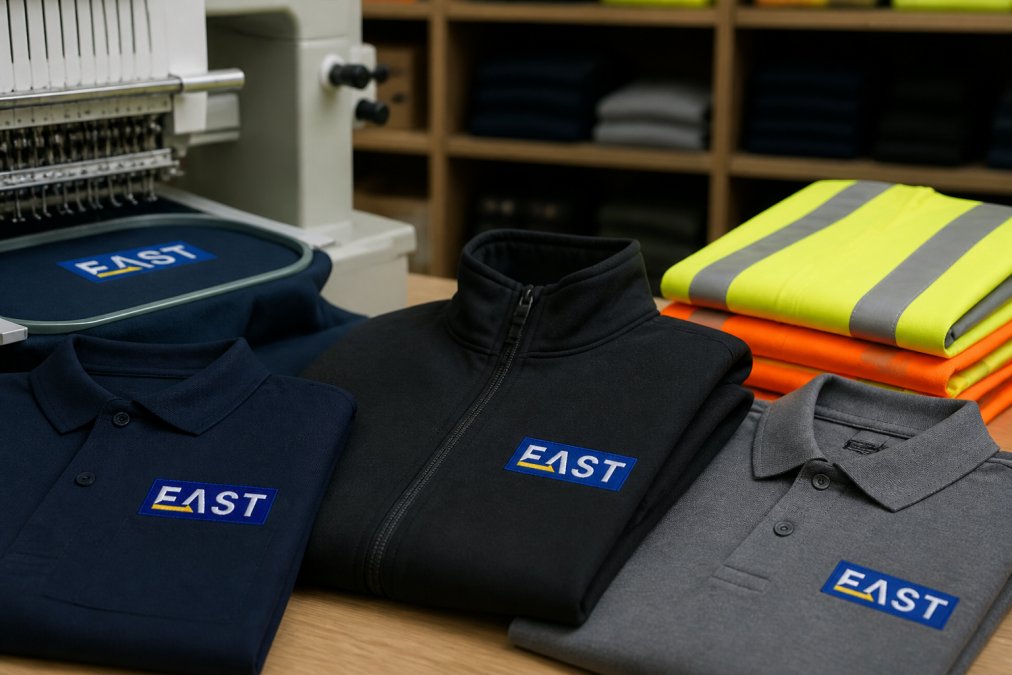
Left chest embroidery is the industry standard for professional uniforms. It's visible when someone's wearing the garment and durable because the chest area experiences less friction than sleeves. Back embroidery works for high-visibility uniforms or event apparel but costs more. Sleeve embroidery is risky, sleeves flex constantly, causing thread stress and premature fraying.
For maximum durability and professional appearance, stick with left chest placement. Some suppliers offer multiple embroidery locations at tiered pricing: left chest plus back costs more than left chest alone, but not double.
Sustainable and Eco-Friendly Uniform Options
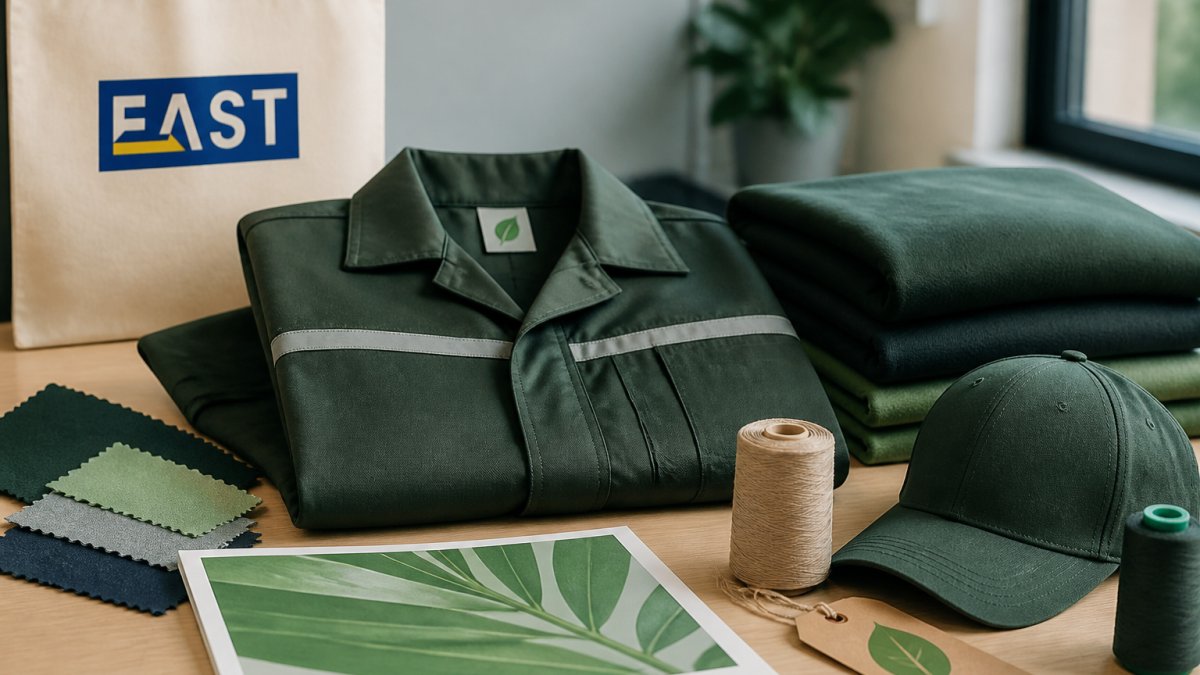
Businesses increasingly seek sustainable workwear to align with environmental commitments. Several suppliers now offer organic cotton garments and eco-friendly embroidery thread options.
Organic cotton reduces pesticide use and water consumption compared to conventional cotton. The fabric quality is comparable, accepting embroidery as cleanly as standard cotton. The cost premium is typically 10-15% above conventional garments.
The durability advantage of embroidery becomes even more relevant when using sustainable fabrics. A uniform that lasts three years instead of one dramatically reduces waste and total environmental impact, offsetting any premium paid for eco-friendly materials.
Common Mistakes to Avoid When Ordering Embroidered Uniforms
Mistake 1: Submitting low-resolution logo files. JPG files from your website are often 72 dpi, too low for clean digitisation. Always provide vector files (AI, EPS) or high-resolution PNG files (300+ dpi).
Mistake 2: Underestimating sizing variation. Teams of 50+ people span multiple sizes. You must specify exact quantities per size during ordering to avoid costly problems.
Mistake 3: Ignoring turnaround time. Always add two weeks to your timeline and communicate deadlines clearly with your supplier.
Mistake 4: Choosing fabric based on price alone. A cheaper polo shirt that puckers around embroidery costs more through replacement cycles. Mid-weight cotton blends consistently outperform budget alternatives.
Mistake 5: Failing to request a proof. Always ask to see a digitisation proof or sample before full production. Catching issues at this stage costs nothing; fixing them after 100 shirts are embroidered is expensive.
Mistake 6: Not discussing placement clearly. Specify left chest, exact position, and size to avoid miscommunication.
Getting Started with Affordable Custom Embroidery for Uniforms
Building a professional, durable uniform programme doesn't require choosing between quality and cost. Embroidery delivers both: logos that outlast cheaper alternatives by years, and transparent pricing that scales with your order size.
For businesses in Thetford and Norfolk, Workwear East combines local service with advanced embroidery technology, delivering consistent results designed to withstand daily wear. Whether you're outfitting 15 construction workers or managing uniforms for 50+ staff, we handle sizing, digitisation, and delivery efficiently.
Request a quote from Workwear East today at https://www.workweareast.co.uk/ or email info@workweareast to discuss your specific requirements, timeline, and budget. We'll provide itemised pricing covering garment cost, embroidery, digitisation, delivery, and any setup fees so you know exactly what to expect.
Frequently Asked Questions
How can I get affordable custom embroidery for my staff uniforms?
Start by requesting quotes from multiple suppliers and comparing bulk discounts. Many UK providers offer no minimum order requirements, so you can start small and scale up. Look for suppliers that include free logo digitization on larger orders, as setup fees can add cost. Contact Workwear East at info@workweareast for a personalised quote based on your team size, garment choice, and order quantity.
What is the difference between embroidery and screen printing for workwear?
Embroidery uses thread stitched into fabric, creating a three-dimensional, durable finish that resists cracking and peeling after washing. Screen printing applies ink directly to the garment surface, which is ideal for large-scale designs but can fade or crack with heavy wear. For uniforms in industrial or construction settings, embroidery typically offers superior durability and professional appearance, especially for logos on polo shirts and workwear.
How long does it typically take to get custom embroidered uniforms delivered?
Standard turnaround time for custom embroidered uniforms is 10-15 working days from artwork approval, depending on order size and supplier workload. Some UK suppliers offer next working day delivery on pre-made stock, but custom embroidery requires digitization, setup, and production. Rush orders may be possible at additional cost. Always confirm turnaround time when requesting your quote from Workwear East.
What file formats should I use for my logo embroidery?
Vector artwork (AI, PDF, EPS) is ideal for embroidery as it allows clean digitization without quality loss. PNG or high-resolution JPG files (300 DPI minimum) also work well. Avoid low-resolution images or compressed formats, as they produce blurry stitching. Most suppliers, including Workwear East, offer free logo digitization or will advise on the best format for your design before charging any setup fees.
Are there bulk discounts for custom uniform embroidery in the UK?
Yes, most UK embroidery suppliers offer automatic bulk discounts that increase with order value. Common discount thresholds start at £100-£250 and can reach 15% or more on orders over £1,000. Many also waive or reduce logo setup fees on larger orders. Request a detailed quote with your exact quantities to see the exact savings available for your team size.
This article was written using GrandRanker