 How-to
Custom Uniforms Norfolk: 2026 Business Buying Guide
Table of Contents
- Why Custom Uniforms Norfolk Businesses Order From a Local Supplier
- Embroidered Workwear Norfolk Teams Wear Every Day
- Printed Workwear Norfolk: DTF and Screen Printing Explained
- Custom Workwear for Businesses: Sizing, Fit and Inclusive Ordering
- Branded Staff Uniforms by Sector: Trade, Hospitality and Office
- What Drives the Cost of a Uniform Order
- Care, Wash Life and Replacement Planning
- How to Order: A Step-by-Step Process
- Frequently Asked Questions
Last Updated: October 17, 2026
Why Custom Uniforms Norfolk Businesses Order From a Local Supplier
Custom uniforms are branded garments, embroidered or printed with a company logo, that staff wear as a working uniform. At Workwear East, we supply custom uniforms across Norfolk from our base in Thetford, and the single biggest difference a local supplier makes is this: you can talk to the person producing your order.
Ordering branded clothing from a distant national website usually means picking a size from a chart, hoping the fabric matches the photo, and waiting. When something arrives wrong, you deal with a returns portal. Local service changes that. You get garment selection advice before you commit, a real person to check your logo artwork, and a straightforward route back if a size is off.
Below, we break down garment choice, decoration methods, sizing, sector-specific uniforms, cost factors and the ordering process, so you can brief a supplier properly and avoid the delays that hurt most.
Embroidered Workwear Norfolk Teams Wear Every Day
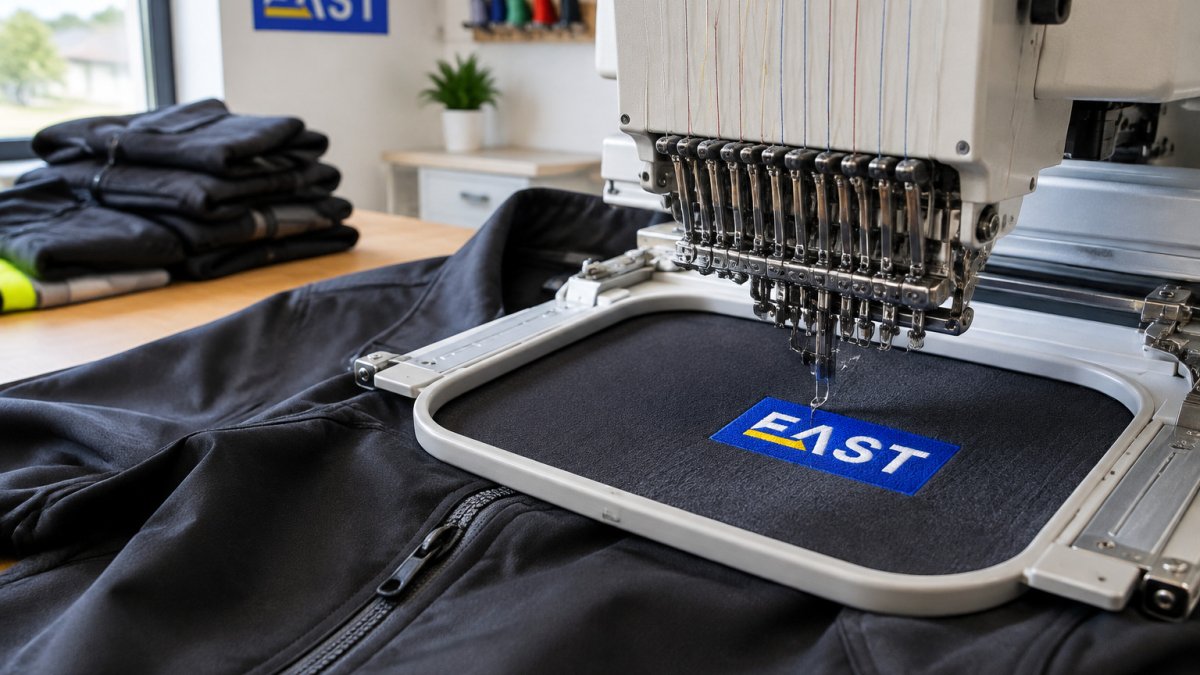
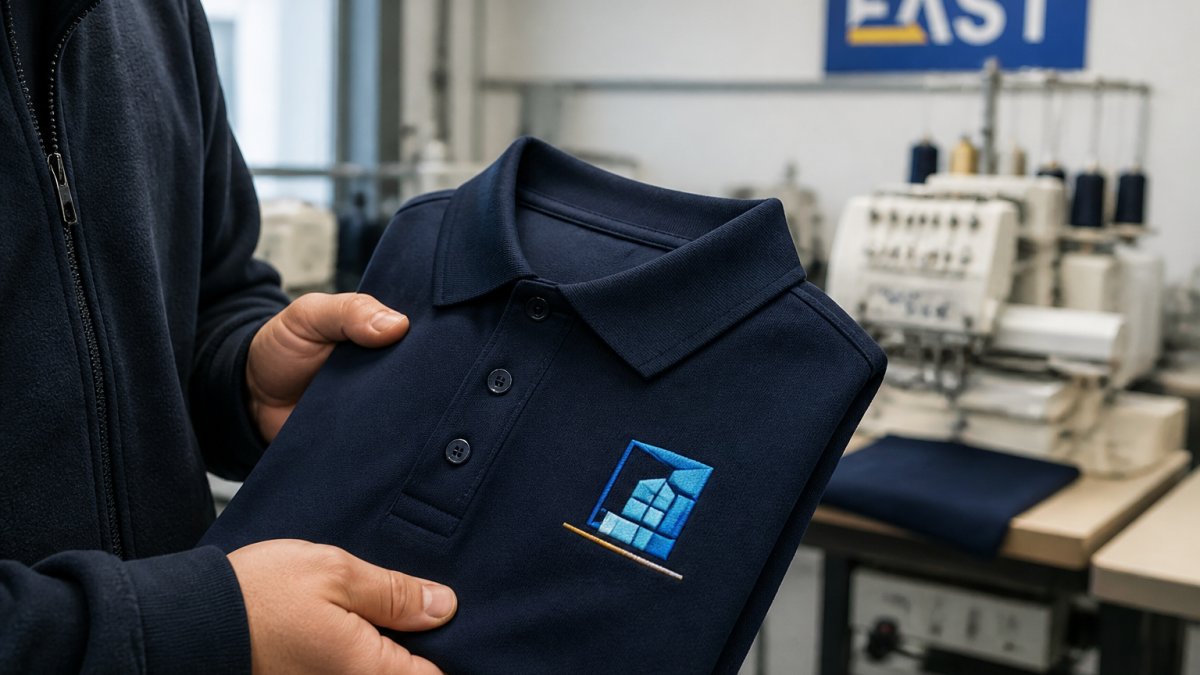
Embroidery is the right choice for most everyday staff uniforms in Norfolk. It stitches your logo directly into the fabric using coloured thread, which means the branding becomes part of the garment rather than sitting on top of it.
That matters for durability. Embroidered logos do not crack, peel or fade in the wash the way surface decoration can, so work shirts, polos and fleeces carrying embroidery tend to stay presentable through heavy rotation.
Which Garments Suit Embroidery Best
Not every garment takes embroidery equally well. These are the ones we would point you towards first:
- Polo shirts and work shirts - the standard base for trade and office uniforms
- Fleeces and softshells - embroidery sits well on the chest and holds its shape
- Chef jackets and aprons - a clean left-chest logo reads as professional in a kitchen
- Caps and beanies - small, simple logos work best on structured headwear
Avoid embroidery on very lightweight, stretchy fabrics, where a dense logo can pull the material. For those, printing is usually the better answer.
Printed Workwear Norfolk: DTF and Screen Printing Explained
Printing suits detailed, multi-colour artwork and large designs. We use two methods, and the right one depends on your logo and your order size.
DTF printing transfers a full-colour design onto the garment using a printed film. It handles gradients, fine detail and photographic artwork well, and it works across many fabrics. For a detailed logo or a one-off event design, DTF is usually our recommendation.
Screen printing pushes ink through a mesh screen and is the cost-effective choice for large orders with a simple, limited-colour design. Setup takes a little longer because screens must be prepared, but the per-garment cost drops as quantities rise.
A common mistake is choosing screen printing for a complex logo with many colours, then being disappointed that fine detail is lost. Send us the artwork and we will tell you honestly which method does it justice.
Embroidery or Printing? A Decision Guide
Use this to choose quickly:
| Your situation | Best method | Why |
|---|---|---|
| Simple logo, everyday staff uniform | Embroidery | Durable, professional, wash-resistant |
| Detailed or multi-colour logo | DTF printing | Captures fine detail and gradients |
| Large order, simple design, tight budget | Screen printing | Lowest per-item cost at volume |
| Lightweight or stretchy fabric | DTF printing | Embroidery can distort the fabric |
| Event or promotional apparel | DTF printing | Fast, full-colour, versatile |
If you are still unsure, embroidery is the safer default for uniforms that will be worn and washed constantly.
Custom Workwear for Businesses: Sizing, Fit and Inclusive Ordering
Sizing is where most uniform orders go wrong, and it is entirely preventable. Custom workwear for businesses should fit every member of staff, not just the average build, so we build the order around a proper size set rather than guesswork.
Our approach is simple. We ask for a size breakdown across your team and, where possible, a fit sample in one or two key garments. Staff try them on, you confirm the sizes, and only then do we produce the full run. That extra step prevents the delays and re-orders that come from a shirt that is too tight across the shoulders.
A few practical points we would raise with any business:
- Collect sizes in writing, with each person confirming their own
- Account for layers: a polo worn under a fleece needs a little room
- Offer a range of fits where the garment line allows, rather than one cut for everyone
- Order a small number of spare garments in common sizes for new starters
Get this right and the rest of the order runs smoothly.
Branded Staff Uniforms by Sector: Trade, Hospitality and Office
Different sectors need different branded staff uniforms, and the garment has to match the work.
Trade and construction. Durability and safety come first. Hard-wearing work trousers, polos and hi-vis garments that take embroidery and survive daily wear.
Hospitality and catering. Chef jackets, aprons and hospitality uniforms need to look sharp and wash well. Look for garments that can take a commercial wash cycle, and consider colour-fastness if you wash whites and colours together.
Office and corporate. Embroidered polos, shirts and fleeces present a consistent front-of-house image. This is where a tidy, small logo on a good-quality garment does the most work.
Healthcare and schools. Uniforms for care settings and schools benefit from simple, durable decoration and a reliable repeat-order process as staff change.
If you are unsure which garments suit your sector, our branded polo shirts and hi-vis range are good starting points. For sector-specific advice, email info@workweareast and we will help you specify the right garments.
What Drives the Cost of a Uniform Order
We do not publish fixed prices because uniform costs genuinely vary, and quoting a single figure would be misleading. What we can do is explain what moves the number, so you can see where your budget goes and ask the right questions when you request a quote.
- Garment quality - a heavier fabric and better construction cost more but last longer. A 220gsm polo will outlast a 180gsm one through repeated washing, and the difference in unit cost is usually small compared with the cost of replacing cheap garments mid-year.
- Quantity - larger orders bring the per-item cost down, especially with screen printing where the setup cost is spread across more garments. A run of 50 shirts will have a lower unit decoration cost than a run of 10.
- Decoration method - embroidery and DTF carry different setup and per-item costs. Embroidery is priced by stitch count, so a dense logo costs more than a simple one. DTF has a setup cost for the film but handles full-colour detail without extra charges per colour. Screen printing requires a screen per colour, so a four-colour design has four setup charges.
- Logo complexity - more colours and finer detail take longer to set up. A simple one-colour logo is quicker to embroider or print than a detailed crest with small text.
- Turnaround time - rush orders can carry a premium, so plan ahead where you can. Standard lead times are usually measured in weeks, not days, and building in a buffer avoids express charges.
The cheapest garment is rarely the best value if it needs replacing within a year. For a firm with fifteen staff, a slightly better polo that survives heavy washing usually costs less over two years than a cheap one bought twice.
A common pattern is that businesses underestimate the cost of repeat orders when they choose a cheap garment first. Our workwear portal is built for exactly this, letting you manage repeat orders and staff sizes in one place.
For a quote based on your actual garments, quantities and logo, email info@workweareast and we will work through the numbers with you. We will tell you where the cost sits and whether a different garment or decoration method would give you better value for your budget.
Care, Wash Life and Replacement Planning
How you wash branded workwear determines how long it lasts. A few habits make a real difference:
- Wash at the temperature on the garment label, not hotter "to be safe"
- Turn garments inside out to protect embroidery and prints
- Avoid fabric softener on printed items, as it can affect the print surface
- Skip the tumble dryer where the label allows, or use a low setting
- Keep a small stock of spares so a damaged garment never leaves someone without a uniform
Plan replacements rather than reacting to them. If you know your team's garments take heavy wear, set a rough replacement cycle and re-order before the current set fails. A supplier who keeps your logo and size details on file makes that repeat order quick. Our workwear portal is built for exactly this, letting you manage repeat orders and staff sizes in one place.
How to Order: A Step-by-Step Process
Ordering custom uniforms should be straightforward. Here is the process we follow, and it works whether you need fifteen polos or a full company rollout.
- Tell us what you need. Sector, garments, approximate quantities and any deadline. Email info@workweareast to start.
- Send your logo. A vector file is ideal. We will advise on the best decoration method for it.
- Choose garments and method. We recommend fabrics and decoration based on your work and budget.
- Confirm sizes. Collect a written size breakdown, or trial a fit sample for larger orders.
- Approve a proof. You sign off the logo placement and colours before production.
- Production and delivery. We produce the order and arrange delivery to you.
For multi-site teams or businesses that order regularly, a workwear bundle keeps the whole team kitted out in one consistent order.
Frequently Asked Questions
Is embroidery or printing better for work uniforms?
It depends on the garment and the logo. Embroidery suits polos, work shirts, fleeces and jackets because stitched logos cope with repeated industrial washing and keep a professional finish. Printing, including DTF and screen printing, works better for detailed multi-colour artwork, large chest or back designs, and lighter T-shirts. Many teams mix both: embroidered polos for customer-facing staff and printed T-shirts for events. Ask for a sample of each on your chosen fabric before committing to a full order.
What information should you provide when requesting a uniform quote?
Send garment type, colour, quantity per size, logo artwork in a vector format such as AI, EPS or PDF, and where the logo should sit. State your deadline and whether any items need high-visibility or other protective features. The more precise the brief, the more accurate the quote. Email info@workweareast for a quote and the team can confirm artwork suitability and turnaround before you commit.
How can a business keep branded uniforms looking professional?
Wash garments inside out at the temperature on the care label, avoid fabric conditioner on embroidered or printed areas, and never iron directly over a logo. Rotate uniforms between wears so each garment recovers, and replace items once logos fade or stitching pulls. Ordering a small number of spares at the initial order keeps new starters and replacements covered without a second minimum order.
Can uniforms be customised with a company logo?
Yes. Logo personalisation covers embroidery, DTF printing and screen printing, applied to polos, work shirts, fleeces, hi-vis and T-shirts. Send artwork and the team will advise which method suits the fabric and design. For multi-colour or photographic logos, printing usually gives the cleaner result; for simple text and badges, embroidery is more durable. Visit https://www.workweareast.co.uk/ to see the ranges available.
Getting branded uniforms right takes a little planning up front, and the payoff is a team that looks consistent and professional every day. If you are weighing up garment options, decoration methods or sizing for a mixed team, we can talk it through and recommend what actually suits your work. Get started with Workwear East by emailing info@workweareast for a quote, or visit our site to see the full uniform range.