 How-to
How Do You Keep Staff Uniforms Looking New?
Last Updated: October 27, 2026
Quick Summary
Keep staff uniforms looking new by washing them inside out at the coolest temperature that cleans the soil, using a colour-safe detergent and skipping bleach and optical brighteners. Air dry where possible, and tumble dry on the lowest heat setting only.
- Turn garments inside out so abrasion hits the inside, not the printed or embroidered face.
- Wash similar colours together and never mix new dark garments with pale ones.
- Skip fabric conditioner on technical fabrics because it coats fibres and reduces breathability.
- Keep heat low, as hot washes and hot tumble drying are the main causes of cracked prints.
- Hold garments against an unworn reference sample under daylight to spot fading early.
Table of Contents
- Why Colour Fades on Staff Uniforms (and What It Costs You)
- How to Wash Work Uniforms Without Stripping the Colour
- Washing Printed Workwear: Protecting Logos and DTF Prints
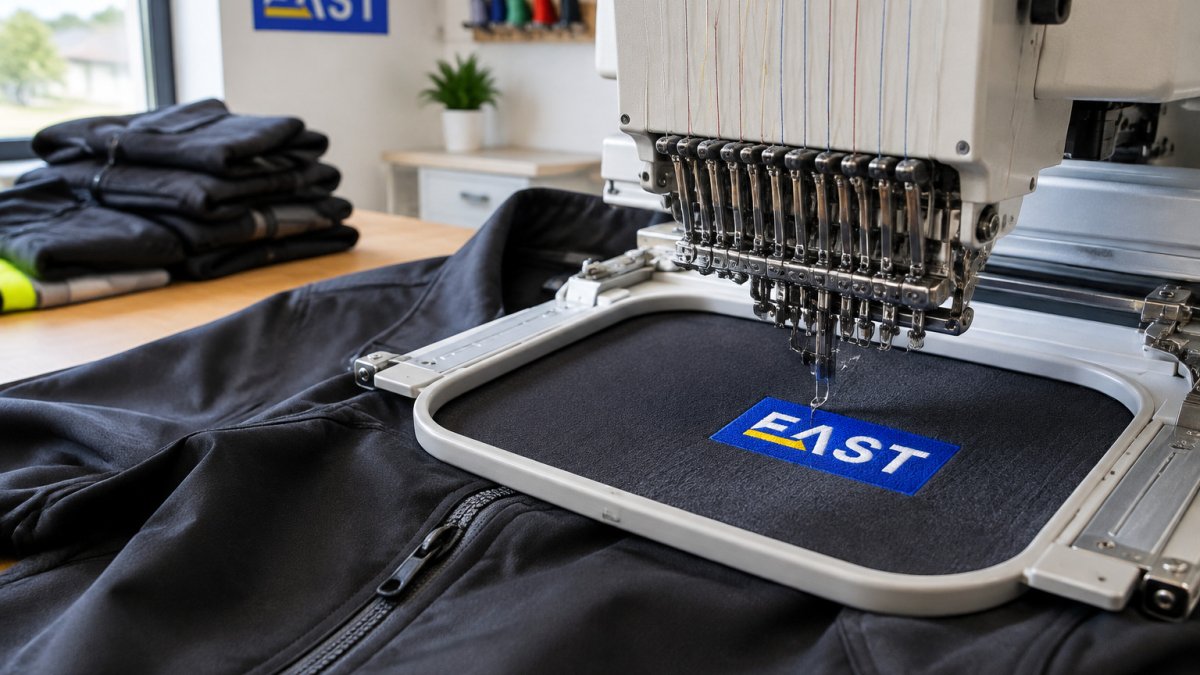
- Caring for Embroidered Uniforms So Stitching Stays Sharp
- Removing Stains from Coloured Workwear Without Bleaching
- Managing Uniform Colour Across a Whole Team
- Ordering Uniforms That Hold Their Colour From Day One
- Frequently Asked Questions
Why Colour Fades on Staff Uniforms (and What It Costs You)
Colour fading on staff uniforms is the loss of dye intensity caused by washing, sunlight, friction and heat. It makes a team look scruffy and quietly damages the brand every wearer represents.
The damage builds from four sources:
- Washing: detergent, agitation and warm water lift dye from fabric fibres
- Drying: high heat and tumble drying shrink fibres and crack prints
- Sunlight: UV breaks down dye molecules, especially on hi-vis and outdoor workwear
- Friction: straps, seatbelts and tool belts rub colour from contact points
None of this is dramatic on day one. It shows up months later, when half the team is in pale blue and the other half is in navy.
How to Wash Work Uniforms Without Stripping the Colour
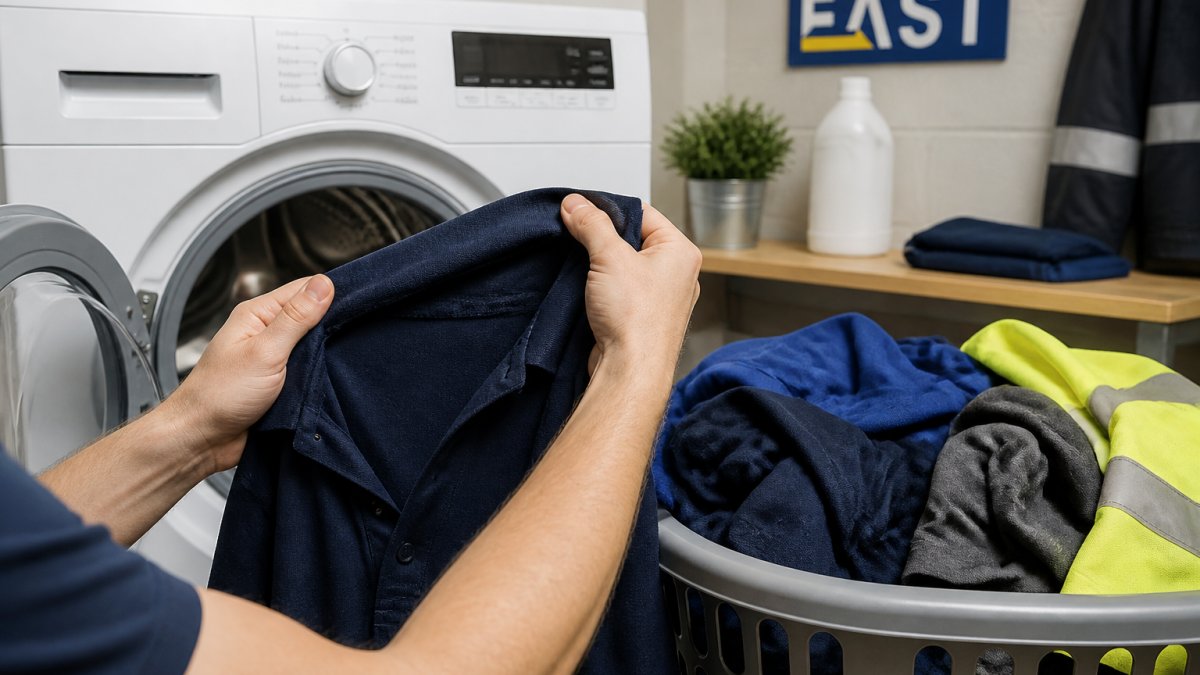
Follow this routine:
- Read the care label first. It is the only instruction that matches the actual fabric and dye.
- Turn garments inside out. This puts abrasion on the inside, not the printed or embroidered face.
- Close zips and fasten buttons. Open zips snag and abrade neighbouring garments.
- Wash at the coolest temperature that cleans the soil. For most trade and office uniforms, a cool or low-temperature cycle is enough.
- Use a colour-safe detergent. Avoid bleach and optical brighteners, which dull dark shades.
- Wash similar colours together. Never mix new dark garments with pale ones; fresh dye can transfer.
- Skip fabric conditioner on technical fabrics. It coats fibres and reduces breathability on hi-vis and moisture-wicking kit.
- Air dry where possible. If you tumble dry, use the lowest heat setting.
Here is the wash routine that keeps dye in the fabric rather than down the drain.
| Step | What to do | Note |
|---|---|---|
| 1 | Read the care label first | Only instruction matching fabric and dye |
| 2 | Turn garments inside out | Puts abrasion on the inside |
| 3 | Close zips and fasten buttons | Open zips snag neighbouring garments |
| 4 | Wash at coolest temperature that cleans | Cool or low-temperature cycle is enough |
| 5 | Use a colour-safe detergent | Avoid bleach and optical brighteners |
| 6 | Wash similar colours together | Never mix new dark with pale |
| 7 | Skip fabric conditioner on technical fabrics | Coats fibres and reduces breathability |
| 8 | Air dry where possible | Tumble dry on lowest heat only |
Washing Printed Workwear: Protecting Logos and DTF Prints
Protect printed workwear with four rules:
- Wash inside out, always. The print should never rub against the drum or other garments.
- Keep heat low. Hot washes and hot tumble drying are the main causes of cracked prints. For a deeper comparison, see our DTF vs screen printing durability wash tests.
- Avoid ironing directly on the print. If pressing is needed, iron the reverse side.
- Do not dry clean printed garments unless the label says it is safe.
Caring for Embroidered Uniforms So Stitching Stays Sharp
Care for embroidered uniforms like this:
- Wash inside out so the embroidery does not snag on zips or hooks
- Use a mesh laundry bag for small embroidered items
- Avoid high heat, which dulls thread colour and can shrink backing
- Never pull loose threads; trim them carefully with sharp scissors
- Check the backing after washing and reseal any lifting edges
Removing Stains from Coloured Workwear Without Bleaching
Work through this order:
- Blot, don't rub. Rubbing pushes stains deeper into fibres.
- Scrape off solids with a blunt edge before washing.
- Test any product on an inside seam first.
- Use a colour-safe stain remover or a small amount of gentle detergent.
- Work from the outside of the stain inward to stop it spreading.
- Rinse thoroughly before washing the whole garment.
- Wash as normal once the stain has lifted.
Managing Uniform Colour Across a Whole Team
A team in mismatched shades looks worse than a team in plain clothing. Colour consistency across a staff group is not just about ordering the same colour code; it depends on how garments are washed, rotated, inspected and replaced over time. The following system is what most operations settle into after a few cycles of trial and error.
Shared and commercial laundry: the hidden variable
When uniforms go through a shared laundry, whether an on-site machine used by multiple staff or an industrial laundry service, colour consistency becomes harder to control. Industrial washing uses higher temperatures, stronger agitation and larger drum loads than domestic machines, all of which accelerate dye loss. If you use a commercial laundry, ask them:
- What wash temperature and cycle they use for coloured workwear
- Whether they separate light and dark loads by garment type
- Whether they use a colour-safe detergent or a standard industrial product
- How they handle heavily soiled items (trade workwear, kitchen uniforms) versus office wear
Garment rotation: spreading the wash load
- Number or label garments so you can track which items are in heaviest use
- Rotate spares into the main pool rather than keeping them aside for new starters
- Assign garments per role, not per person, where hygiene rules allow, so wear is shared
- Wash full loads rather than small ones; a half-empty drum increases abrasion per garment
Setting replacement thresholds: when to retire a garment
A practical inspection routine:
- Hold the garment against a retained reference sample, keep one unworn garment from each dye lot as a colour benchmark.
- Check under daylight, not artificial light, which can mask yellowing or dulling.
- Inspect high-abrasion areas, cuffs, collars, underarms, seat and thigh, where fading appears first.
- Compare within the team, if one garment is visibly lighter than the rest, it is a candidate for replacement even if it is structurally sound.
- Record the date a garment enters service and review at 6 and 12 months for daily-wear items.
Keeping spares and new starters consistent
For help setting up a rotation and replacement schedule across departments, email info@workweareast for a quote and we can advise on batch sizes and spare stock levels. Our step-by-step guide to managing staff uniform sizes covers measurement, tracking and reordering in one system.
Ordering Uniforms That Hold Their Colour From Day One
The best colour protection starts before the first wash. Fabric choice, dye method and decoration decide how well a uniform holds colour over its life, and cheap fabric rarely survives a year of daily wear. See our guide to the best fabrics for durable work uniforms for colourfast options. Most buyers focus on price per garment and only discover colourfastness problems after the first few washes. A more useful approach is to specify colour performance at the ordering stage.
What to ask for: colourfastness and wash durability
Colourfastness is the fabric's ability to retain dye under washing, light, rubbing and perspiration. You do not need a laboratory to ask sensible questions. When specifying uniforms, ask suppliers:
- What wash fastness rating does the fabric carry? Most workwear fabrics are tested to a standard scale (typically 1-5, where 5 is best). A rating of 4 or above for washing and rubbing is a reasonable benchmark for daily-wear uniforms.
- Has the garment been tested for light fastness? This matters for outdoor and window-facing roles, where UV exposure fades dye quickly.
- Is the dye lot consistent across the order? Ask for confirmation that the full order will be produced from one dye lot, and request a sample before the bulk run.
- What decoration method is used, and how does it perform after repeated washing? Embroidery generally outlasts prints, but thread colour can still fade; DTF prints sit on the surface and are more vulnerable to heat and abrasion. Our embroidered vs printed logo durability comparison breaks this down for uniform buyers.
Reading the care label as a procurement document
The care label is not just for the laundry room; it tells you what the garment is designed to survive. Before ordering, check:
- Maximum wash temperature, a 30°C or 40°C limit suggests the dye is not designed for hot washing, which suits most colour-preservation routines.
- Tumble dry suitability, garments that specify low heat or line dry only will fade faster if tumble dried.
- Bleach warnings, any garment that prohibits bleach is already signalling dye sensitivity.
- Ironing instructions, prints and some synthetics require low heat or reverse-side ironing.
Fabric and dye: what holds colour best
Different fibres and dye methods behave differently over time:
- Cotton takes dye well and feels comfortable, but it can fade with repeated hot washing and sunlight. Reactive-dyed cotton holds colour better than cheaper dye methods.
- Polyester is inherently more colourfast because dye is infused into the fibre, but it can still dull with high heat and abrasion. It is a strong choice for hi-vis and outdoor workwear.
- Blends combine properties; a poly-cotton blend often balances comfort with colour retention, but the care routine must suit the dominant fibre.
- Hi-vis garments use fluorescent dyes that are particularly sensitive to UV and repeated washing; specify garments tested to the relevant standard and follow the care label closely.
A simple pre-order checklist
Before placing a bulk order, confirm:
- Wash fastness rating of 4 or above for daily-wear items
- Light fastness confirmed for outdoor roles
- Single dye lot across the order, with a pre-production sample
- Care label supplied and compatible with your laundry routine
- Decoration method matched to fabric and wash conditions
- Spare stock ordered in the same dye lot
We supply embroidered and printed workwear, including branded polo shirts and hi-vis. For a quote, email info@workweareast or visit Workwear East.
Frequently Asked Questions
How do you stop staff uniforms from fading?
Wash at 30°C or lower, turn garments inside out, and use a colour-care detergent rather than a biological one. Skip fabric softener, which coats fibres and can dull dye. Dry away from direct sunlight and never tumble dry on high heat. Rotate garments between wears so each one is washed less often, and keep a spare set in circulation. These habits slow colour loss on staff uniforms far more than any single product.
Should staff uniforms be washed inside out?
Yes, and it matters most for printed and embroidered items. Turning garments inside out puts the decoration against the drum's inner surface rather than rubbing against other clothes, which reduces abrasion on DTF prints, screen prints and embroidery threads. It also limits colour transfer between garments in the same load. Build it into your uniform care policy so every member of staff does it the same way.
Can fabric softener cause uniform colours to fade?
It can contribute. Softeners leave a residue on fabric fibres that traps detergent and reduces absorbency, and over time this dulls the surface appearance of dyed fabric. On printed workwear the residue can also weaken the bond between the print and the garment. Use a colour-care detergent and skip softener entirely, or use it only occasionally on plain cotton items without decoration.
How do you remove stains from coloured uniforms without bleaching them?
Blot the stain rather than rubbing it, then rinse with cold water as soon as possible. Apply a small amount of colour-safe detergent directly and leave it for ten minutes before washing. Never use chlorine bleach on coloured workwear; use an oxygen-based colour-safe stain remover instead. For oil and grease on trade uniforms, a drop of washing-up liquid worked in before washing lifts most marks without affecting the dye.