 Ultimate guide
Embroidered Fleeces for Workwear: A Practical Buyer's Guide
Quick Summary
Embroidered fleeces are a practical workwear choice because thread sits within the fabric's knit, so the logo resists cracking and peeling better than surface prints. Fleeces keep wearers warm without bulk and suit mixed teams working outdoors or on site. Choose the fabric weight and fibre for each role before ordering.
- Thread sits within the knit of the fabric, so embroidery resists cracking and peeling better than surface prints.
- Fleece weight is measured in grams per square metre (GSM), the most useful number when comparing garments.
- Agree on logo position and size before ordering so the whole team looks consistent from day one.
- Ask each person for their size or collect measurements, then order a sample set to check fit.
- Wash inside out, avoid high-heat tumble drying, and use fabric softener sparingly or not at all.
Table of Contents
- Why Embroidered Fleeces Suit Workwear
- Choosing the Right Fleece Fabric and Weight
- Logo Embroidery Services: Placement, Digitising and Quality
- Workwear Embroidery Techniques Compared With Print
- How Long Embroidered Logos Last and How to Care for Them
- Durable Corporate Uniforms: Sizing, Fit and Bulk Orders
- Ordering Your Embroidered Fleeces From Workwear East
- Frequently Asked Questions
Why Embroidered Fleeces Suit Workwear
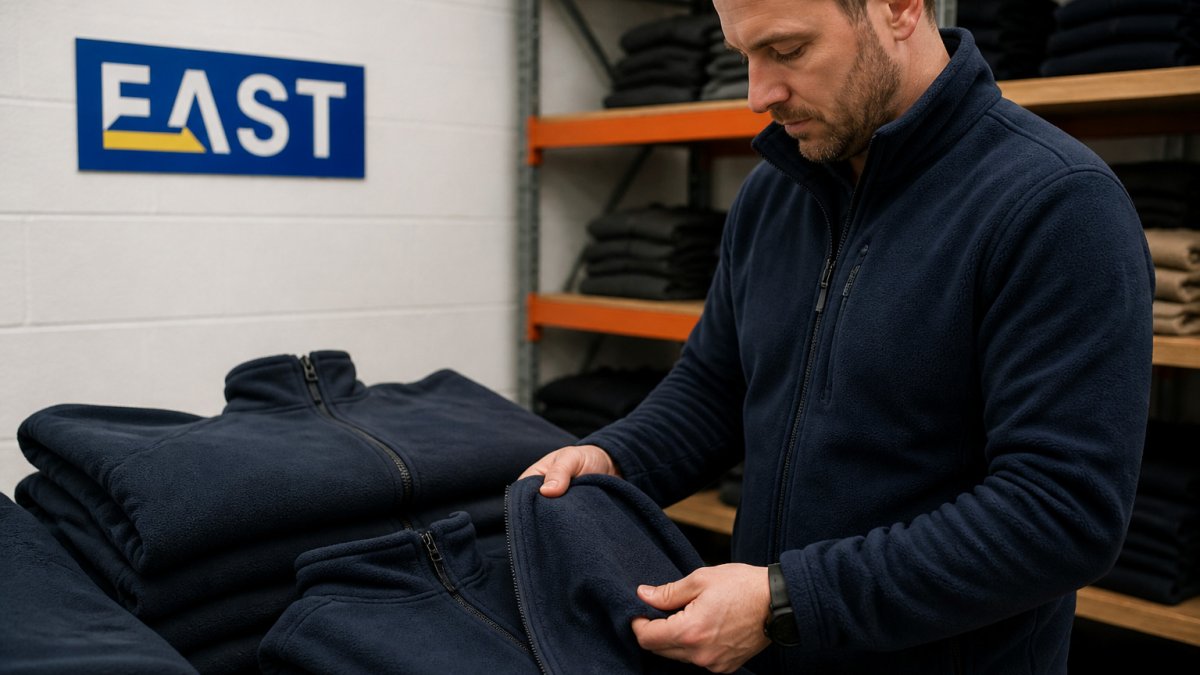
Embroidered fleeces are one of the most practical choices for teams who work outdoors, in unheated spaces or on site. Our Suffolk embroidery ordering guide covers how to plan logo preparation and garment choice before you order. A fleece keeps the wearer warm without the bulk of a jacket, and an embroidered logo stays put through daily use in a way that printed graphics often do not. At Workwear East, we supply embroidered and printed workwear to businesses across Thetford and Norfolk, and fleeces are among the garments we are asked for most often.
The main appeal is durability in the logo itself. Thread sits within the knit of the fabric rather than on top of it, which is why embroidery is generally regarded as more resistant to cracking and peeling than surface prints. For operations managers planning a uniform budget, that consistency matters as much as the upfront unit price.
Fleeces also suit mixed teams. The same garment can be worn by site staff, drivers and office workers layering under a hi-vis vest, so one order can cover several roles. We recommend agreeing on the logo position and size before ordering, so the whole team looks consistent from the first day. Our guide to ordering uniforms without errors walks through sizing and design checks before you submit.
Choosing the Right Fleece Fabric and Weight
Fleece weight is measured in grams per square metre (GSM), and it is the single most useful number to check when comparing garments.
Fibre content affects both warmth and care. Our guide to choosing durable workwear fabric explains GSM, weaves and fibres in more detail.
Microfleece, Polar Fleece and Anti-Pill Finishes Compared
Most workwear fleeces fall into three main fabric types: microfleece, polar fleece and anti-pill fleece. Understanding the differences helps you match the garment to the role and the wash regime.
At Workwear East, we can advise on the right fabric for your team's roles and wash routine. Email info@workweareast.co.uk for a quote.
The table below sets out the main points to check when comparing fleece garments.
| Factor | What to check | Why it matters |
|---|---|---|
| Fabric weight | Grams per square metre (GSM) | Single most useful number when comparing garments |
| Fibre content | Fabric composition | Affects both warmth and care |
| Fabric type | Microfleece, polar fleece or anti-pill | Match the garment to the role and wash routine |
Logo Embroidery Services: Placement, Digitising and Quality
Logo embroidery starts with the artwork, which is converted into a stitch file that tells the machine where and how to sew.
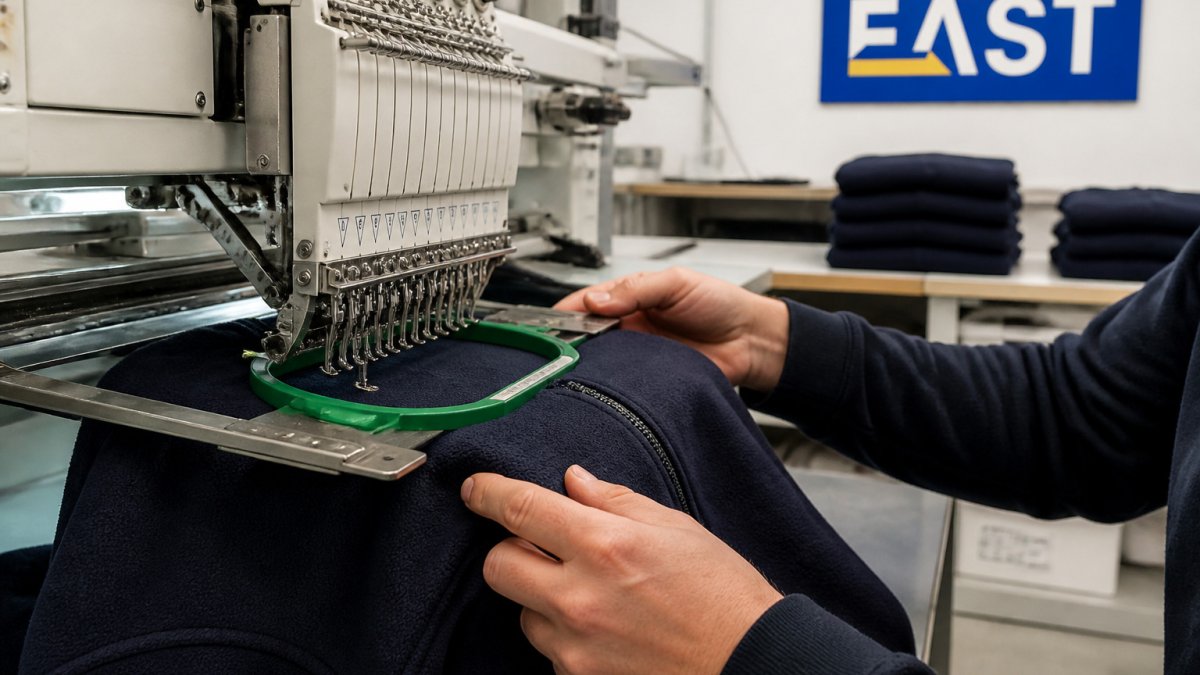
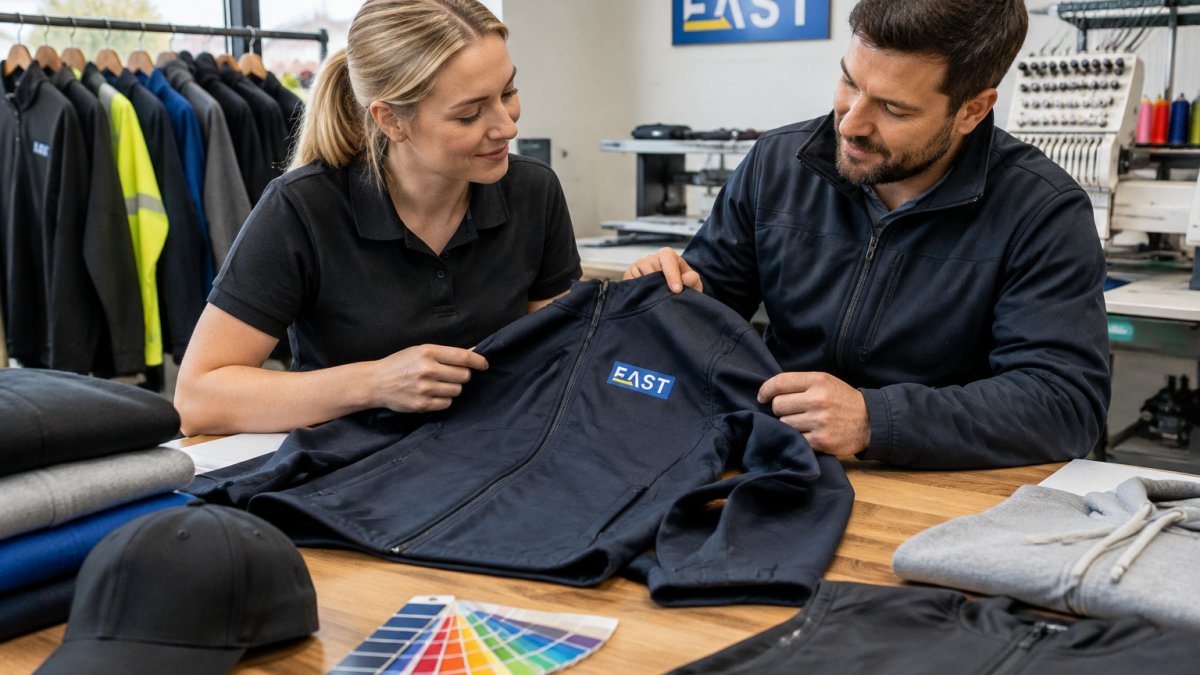
Placement is the next decision. Left chest is a common position for a company logo, with a smaller mark on the back or sleeve for team identification.
Workwear Embroidery Techniques Compared With Print
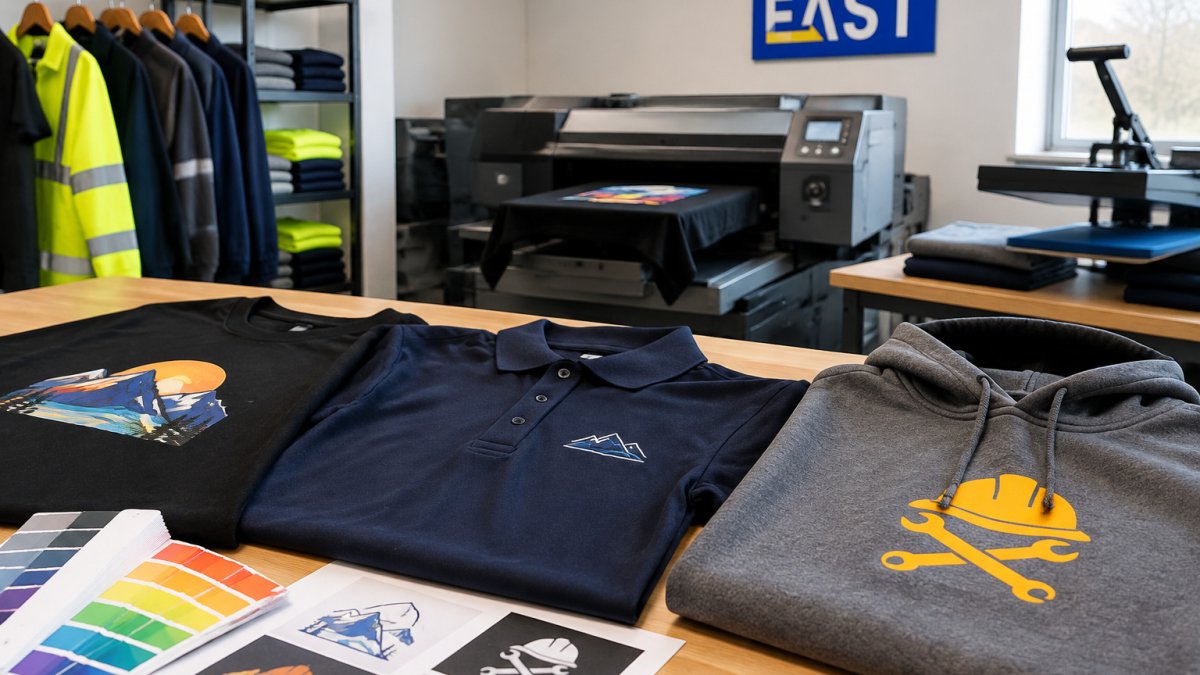
Embroidery and print both work well on workwear, but they behave differently over time. Embroidery builds the design from thread, so the logo has physical texture and sits within the fabric. Our embroidered vs printed uniforms comparison shows how each method performs over time. Print, whether DTF or screen print, sits on the surface of the fabric.
When specifying embroidered fleeces, ask about stitch density and thread type. Our team at Workwear East can advise on your garment and design. Email info@workweareast.co.uk for a quote.
How Long Embroidered Logos Last and How to Care for Them
An embroidered logo's lifespan depends on how often the garment is washed, how it is dried and how hard it is worked in.
Follow the care label, wash inside out where possible, and avoid high heat in the dryer. For a full routine, see our step-by-step guide to washing embroidered company logos. Fabric softener can reduce the wicking performance of fleece over time, so use it sparingly or not at all. Turning the garment inside out and washing at a moderate temperature protects both the logo and the fabric.
Watch out: tumble drying at high heat is the most common reason an embroidered garment loses its shape and finish early. Air drying or a low setting keeps both the fleece and the logo in good condition.
Durable Corporate Uniforms: Sizing, Fit and Bulk Orders
Sizing is where most bulk uniform orders go wrong. Staff vary in build, and a single size chart rarely fits a whole team. Before ordering, ask each person for their size or collect measurements, then order a sample set to check fit across the range. Offering a mix of cuts, such as standard and relaxed fits, helps accommodate different body shapes.
Bulk orders also benefit from planning. Confirm quantities, sizes, logo position and delivery date in one written brief.
Pricing depends on quantity, garment choice, logo complexity and delivery date. For a figure tailored to your team, email info@workweareast.co.uk for a quote.
Ordering Your Embroidered Fleeces From Workwear East
Ordering is straightforward once the key decisions are made. Choose the fleece weight and fibre for your roles, prepare your logo as vector artwork, agree on placement, and confirm the size breakdown for your team. Having these details ready speeds up the proof stage and reduces the risk of costly corrections.
At Workwear East, we work with businesses across Thetford and Norfolk to match the right garment to the right role. For a quote on embroidered fleeces for your team, email info@workweareast.co.uk. You can also explore our full range and find out more at https://www.workweareast.co.uk/
Frequently Asked Questions
What are the benefits of using embroidered fleeces for workwear?
Embroidered fleeces keep a logo stitched into the fabric rather than sitting on top of it. Fleece also gives insulation without bulk, which suits site, yard and warehouse staff working outdoors. Workwear East can advise which fleece weight suits your working conditions. Email info@workweareast.co.uk for a quote tailored to your order.
How do I choose the right fabric for embroidered fleeces?
Start with the working environment. Check the garment weight and whether the fabric has a stable base for embroidery, since dense stitching needs a fabric that will not pucker. If you are unsure, email info@workweareast.co.uk and the team can recommend a fabric for your sector.
Can I add my company logo to any type of fleece?
Most fleece styles can be embroidered, but results depend on fabric weight and stitch density. Very lightweight or stretchy fleeces may need a stabiliser backing, and large or detailed logos work best on mid to heavyweight fabric. Logo digitisation converts your artwork into a stitch file, so supplying clean vector artwork speeds up the process. Placement options such as left chest, back yoke or sleeve should be checked against the garment cut. Contact info@workweareast.co.uk to confirm whether your chosen fleece is suitable for your logo.
How should I care for my embroidered work fleeces?
Wash fleeces inside out at the temperature shown on the care label, and avoid fabric conditioner, which can reduce the wicking and insulation of polyester fleece. Use a mild detergent and turn the garment inside out so the embroidery is protected from abrasion. Tumble drying on a low setting or air drying both work well, but high heat can dull thread colour over time.